

How I Choose Beach-Town Women’s Fiction Novels I’ll Love

I can tell within a page when beach-town women’s fiction novels are going to be my kind of comfort read. It’s the salt air in the setting, the squeak of screen doors, the friendly shop owner who remembers your name, and that quiet sense that a woman can start over without having to explain herself to anyone.
These stories pull me in because the town is small enough to hold you when you’re tired. The best ones give me tight-knit community, fresh starts, and that steady coastal rhythm where healing doesn’t feel rushed. They often blend friendship, family, and romance, but the heart is always the heroine’s journey.

If you’ve ever wondered why these books can feel like a deep breath, I talk about it in Why beach-town fresh-start stories feel therapeutic and Understanding beach therapy concepts. I also like knowing what shelf I’m on, so I keep my own references handy, like What women’s fiction really means and Women’s fiction vs romance explained.
In this post, I’ll share what makes these books work, the themes I watch for, how I pick my next read, and a curated list of authors or series styles to try. If you’re building the perfect reading moment too, my Top beach-read therapy kit ideas might be a fun add-on.

What makes a beach-town story feel like a true getaway
When I pick up beach-town women’s fiction novels, I’m not just looking for “a story at the beach.” I want that vacation feeling in my chest, the kind that makes my shoulders drop as if I just kicked off my shoes at the door of a rental cottage.
The best getaway reads do this by mixing sensory setting, imperfect community, a real second-chance arc, and romance that supports the heroine’s life instead of swallowing it whole. Here’s what I watch for.
The setting is a character, not just a backdrop
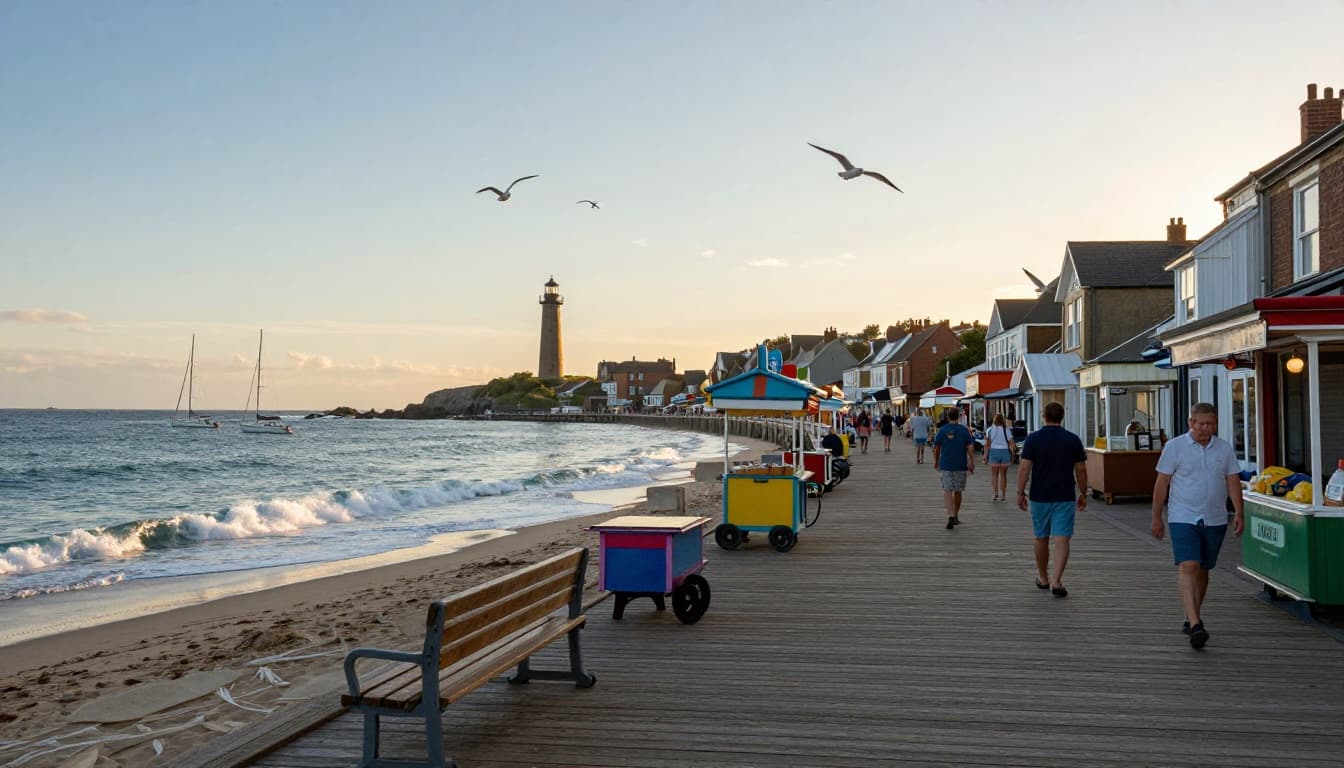 A beach-town boardwalk at golden hour, with the lighthouse and marina in the distance
A true getaway setting doesn’t sit politely in the background. It nudges the plot. It changes the heroine’s mood. It complicates plans. It gives comfort at the exact right moment.
I love when the weather and water have opinions. A surprise squall can push two characters into a cramped marina office, damp hair, awkward smiles, one shared space heater. A heavy fog can turn a simple morning walk into a scene that feels hushed and confessional. A heat wave can make tempers shorter and iced drinks more sacred.
The ocean details matter, too. Tides are like a town’s heartbeat. Low tide can expose sea glass and old pilings, perfect for reflective scenes or discoveries that stir the past. High tide can trap someone’s car too close to the surf, or force a last-minute change to a beach event. Even the smell of the shore changes, clean and briny on one day, seaweed-thick on the next.
Specific local spots make it vivid without needing real business names:
- A sun-faded boardwalk with benches that wobble, and planks that squeak.
- A marina with fuel smell and bait buckets, and boats that knock softly against docks.
- A no-frills seafood shack with paper baskets, picnic tables, and salt on every surface.
- A lighthouse trail with wind-whipped grass, and steps that make your calves burn.
If you crave heavier setting, look for blurbs and reviews that mention atmosphere, sensory detail, or “you can feel like you’re there.” If you prefer lighter setting, aim for books described as fast-paced, dialogue-driven, or “character-forward.” I’m usually happiest in the middle, where the town shows up in every chapter, but never steals the whole book.
A small-town community that feels real, messy, and kind
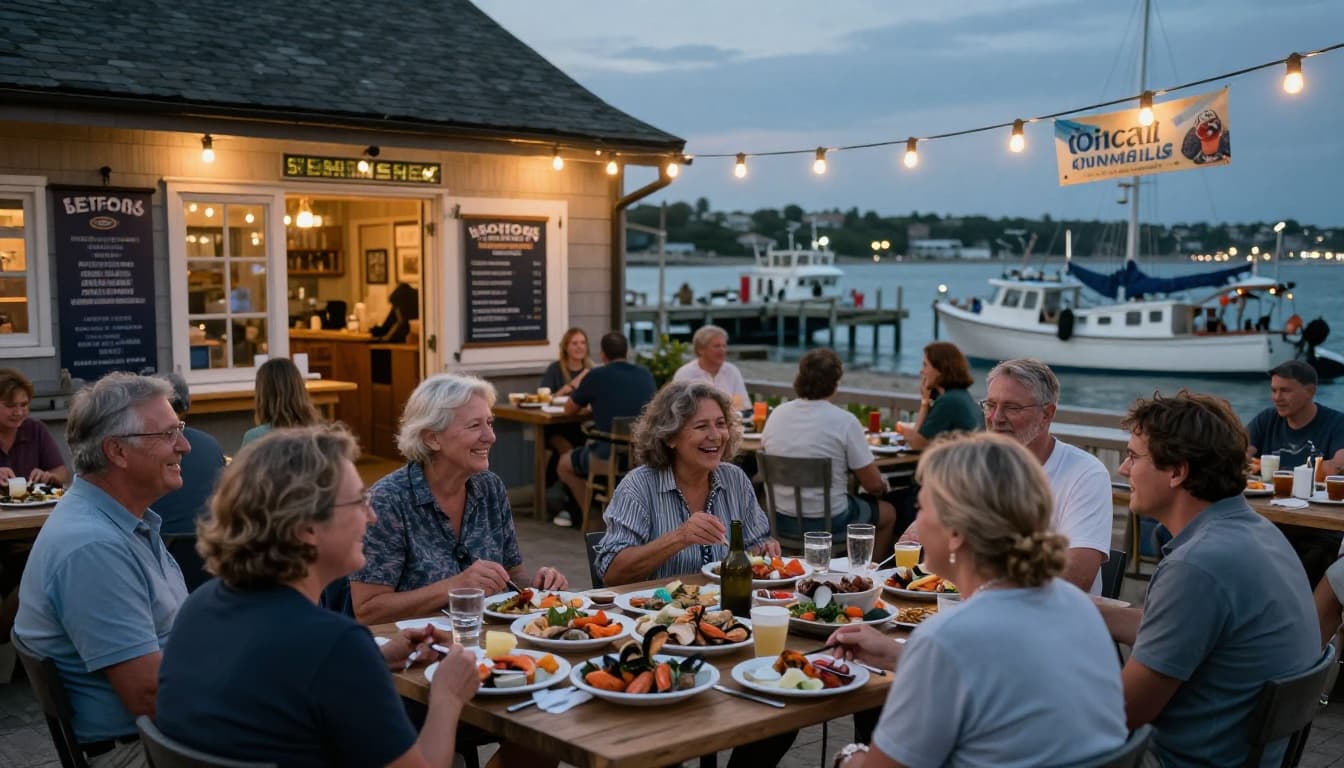 A cozy seaside community gathering outside a seafood shack
My favorite beach towns on the page feel like you could actually live there, which means they have warmth, yes, but they also have history, habits, and a few sharp elbows.
Found family is a big part of the getaway feeling. It’s the older neighbor who drops off soup without asking questions, the friend who insists you join trivia night even when you say no three times, the shop owner who quietly sets aside something you’d like because they’ve been paying attention. That sense of being seen is comforting, especially when the heroine is worn down.
But I also want the town to be a little too curious. Neighbors in beach towns notice everything. They notice the new car in the driveway, the strange man fixing the porch steps, the late-night light in the cottage window. That’s where the story gets texture.
Local traditions help a community feel lived-in:
- An annual summer festival with rival families competing for bragging rights.
- A weekend farmers market that turns into a social hour.
- A beach cleanup that somehow becomes emotional group therapy.
- A town council meeting that is half civic duty, half entertainment.
The key is that kindness exists alongside conflict. The best stories include gossip, old grudges, clashing values, and the occasional “bless your heart” that is not a compliment. If everyone is perfectly supportive all the time, I stop believing in it. If you want more of that realistic small-town push and pull, I also like reading essays and reflections like Life lessons from small coastal towns, because it captures how community can be both comforting and complicated.
A fresh start that still honors the past
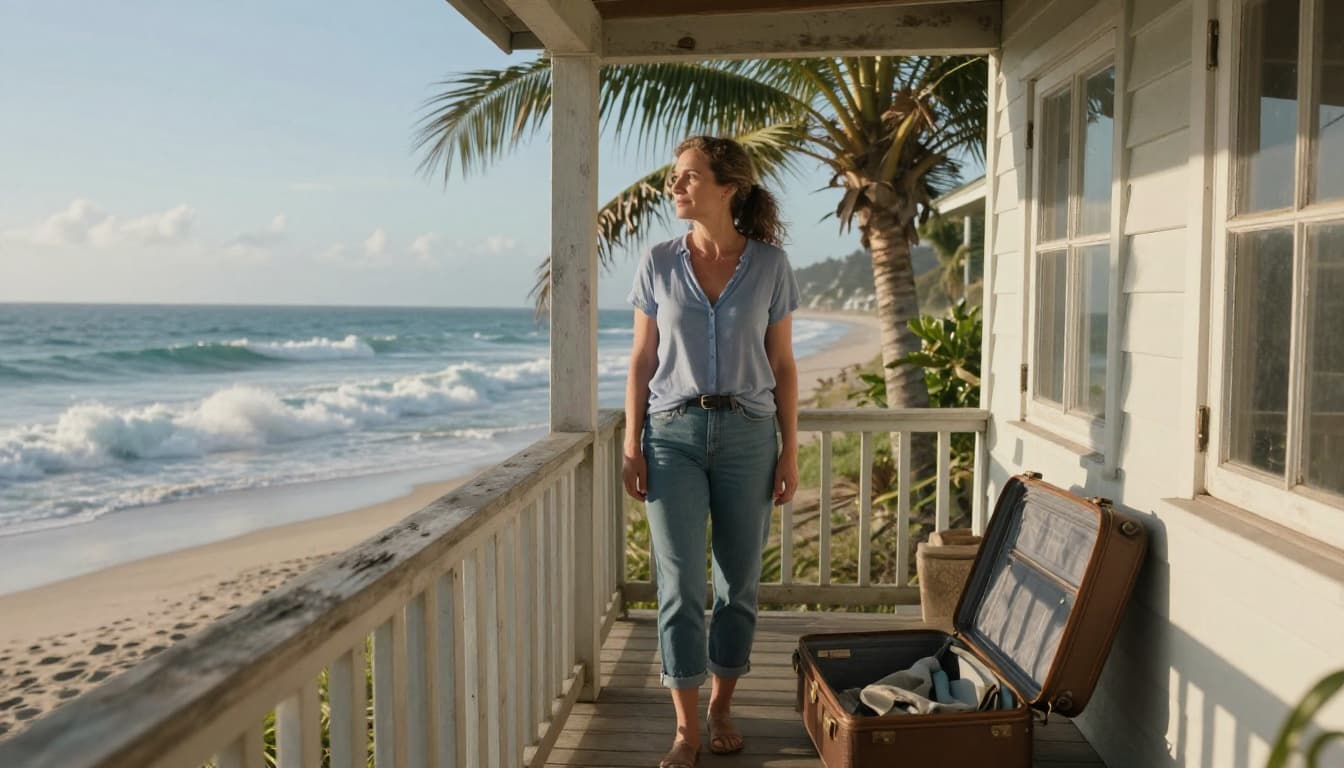 A woman on a beach-cottage porch taking in the ocean as she considers a new start
A beach-town getaway plot almost always starts with a woman who needs air. Not the “new year, new me” kind. The “I can’t keep living like this” kind.
I’m drawn to setups where the move is practical and emotional at the same time:
- Moving back home after a divorce, a breakup, or burnout.
- Inheriting a beach cottage, then realizing it comes with repairs, memories, and family tension.
- Starting a new job that looks simple on paper (until the town gets involved).
- Opening a shop or café because the heroine wants something that’s hers.
- Caring for a parent, which brings old roles rushing back.
- Co-parenting in close quarters, where history sits at the same table as the present.
What makes it work is that the story doesn’t pretend the past disappears once the heroine reaches the water. The ocean might soothe her, but she still has to face what she’s been carrying. That’s the healing arc I’m always hunting. It’s a second chance that feels earned.
I also pay attention to whether the heroine learns to choose herself, not in a selfish way, but in a steady way. She sets a boundary. She tells the truth. She stops apologizing for taking up space. If you love this theme as much as I do, you’ll probably enjoy Why beach-town fresh-start stories feel therapeutic and the more grounded explanation in Understanding beach therapy concepts. Those ideas explain why these books can feel like a reset button for my nervous system.
Romance as a thread, not always the whole sweater
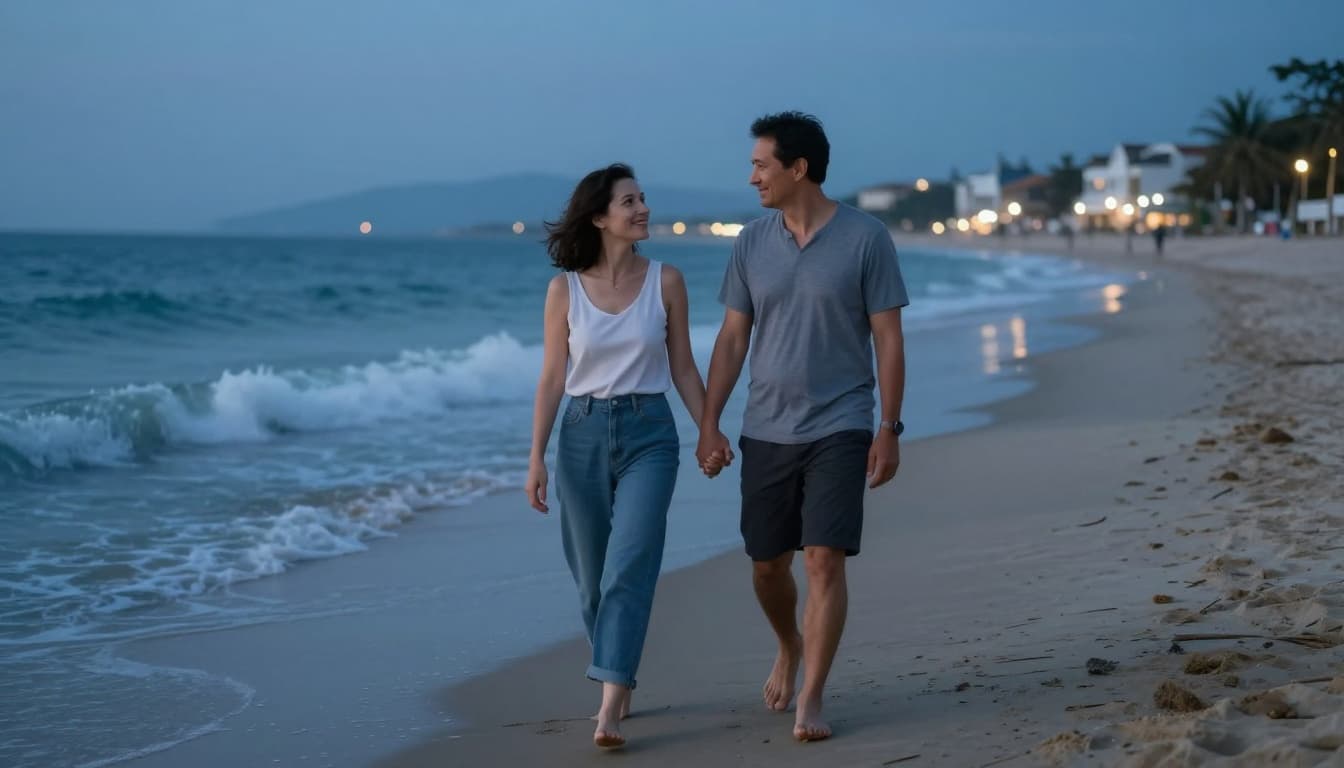 A midlife couple walking the shoreline at twilight
In women’s fiction set in beach towns, I usually want romance, but I don’t always want the book to be the romance genre. There’s a difference, and once I learned it, choosing reads got easier.
Women’s fiction with romance elements keeps the heroine’s personal journey as the main arc. Love can grow, deepen, and matter a lot, but it supports bigger themes like self-worth, friendship, family repair, grief, identity, and building a new life. If you want a quick refresher on shelves and labels, I keep What women’s fiction really means bookmarked, and I point friends to Women’s fiction vs romance explained when they’re not sure what they’re in the mood for.
Romance genre usually centers the love story as the primary plot engine, with a bigger focus on the couple’s relationship beats and the promise of a satisfying romantic resolution. I love it too, I just choose it for a different reading mood.
Here are cues I scan for in book descriptions to judge the balance:
- If the blurb leads with her life shift (divorce, grief, career change, family duty), it’s often women’s fiction first.
- If it leads with the meet-cute, attraction, or a relationship problem to solve, it leans romance.
- Words like friendship, family secrets, starting over, and healing often signal the bigger arc.
- Trope-heavy language (fake dating, enemies-to-lovers, one bed) usually signals romance-forward.
When I want romance as a steady thread, not the whole sweater, I also look for heroines with agency and goals beyond the love interest. For that reading vibe, I’ve pulled ideas from Best romance books with strong female leads, because strong heroines tend to keep the story from shrinking into “will they or won’t they” only.
And if I’m building a full reading moment, I pair these getaway books with little comforts from Top beach-read therapy kit ideas, because a beach-town story hits even better with a cozy setup.
The themes I look for when I want a story with heart
When I’m choosing beach-town women’s fiction novels, I’m usually chasing more than pretty scenery. I want a story that feels like a hand on my shoulder, warm, steady, and honest. The books that stay with me don’t rush healing or tie everything up with a bow. They let people be complicated, let love show up quietly, and let the town itself act like a soft place to land.
Here are the themes I look for when I want a read with real heart, the kind that makes me close the book and stare out at nothing for a second, in the best way.
Second chances that feel earned
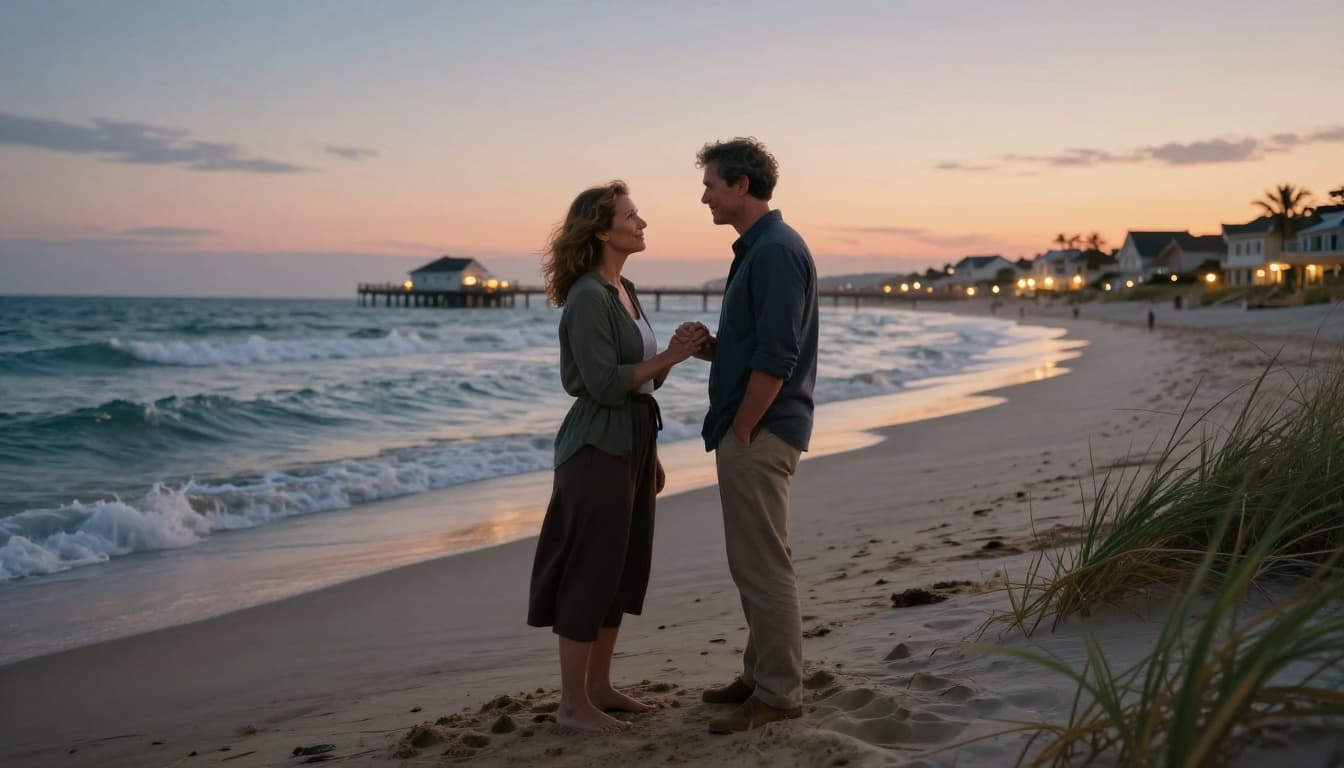 A couple sharing a tentative moment of reconciliation on the shore
I love second-chance arcs, but I’m picky about them. I don’t want “one big speech” and then everything is fine. I want forgiveness that costs something, rebuilding trust like stacking smooth stones, one careful choice at a time.
In beach-town stories, second chances often come with extra salt in the wound, because you can’t hide. Your ex shows up at the marina. An estranged sibling is suddenly three streets away. An old friend who still remembers the worst version of you is behind the coffee counter. And career mistakes follow too, the bad headline, the blown opportunity, the job you left in a blaze of pride.
What makes it work for me is the realism: people try, fail, get defensive, then try again. They backslide. They set a boundary and feel guilty about it. They want to trust, but their body remembers what happened.
When I’m scanning blurbs and reviews, I look for these signs that the second chance is going to feel earned:
- Apology (clear, specific, no excuses).
- Changed behavior (shown in actions, not promises).
- Time (trust has room to rebuild).
- Boundaries (because love without limits isn’t love, it’s chaos).
If a story hits those beats, I’m in. If it skips straight to instant forgiveness, I usually feel cheated.
Friendships that carry the story when romance takes a back seat
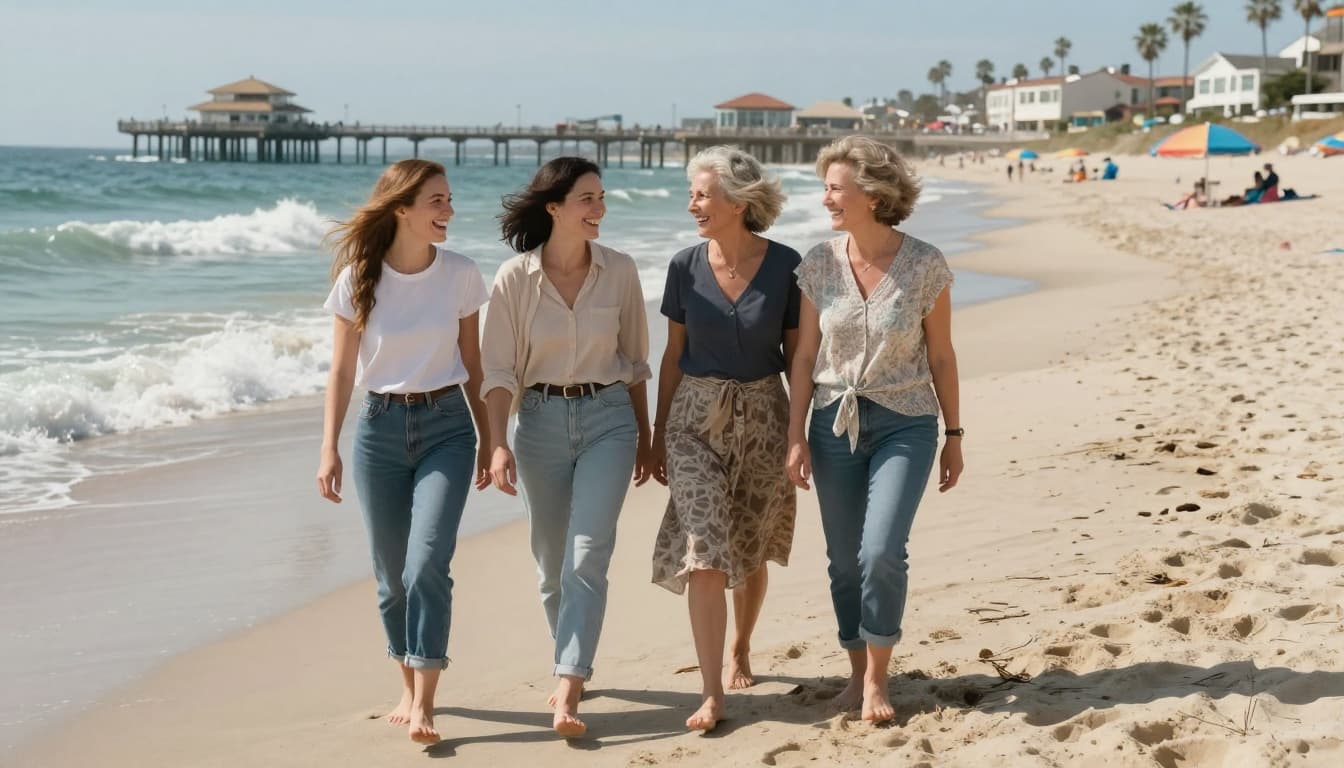 A multi-generational group of friends sharing an easy beach walk together
Some of my favorite beach-town books are love stories, just not always the romantic kind. I’m a sucker for best-friend bonds that feel lived-in, the kind where they can argue in one chapter and still show up with soup in the next.
I especially love:
- Women supporting women without it turning preachy or perfect.
- Friendships with history, including the awkward “we grew apart” years.
- Multi-generational friendships, like a twenty-something and a sixty-something who end up being exactly what the other needs.
Beach towns are perfect for this because friendship can happen in the in-between moments. A morning walk where the truth finally comes out. A small coffee shop where the barista already knows your order, and your friend already knows you’re lying. Community events that force people into the same space, whether they’re ready or not.
That’s why I’m drawn to stories where romance doesn’t bulldoze the rest of the book. The relationship can be sweet and meaningful, but the emotional spine is often the friendships, the women who sit on the porch steps and say, “Tell me what’s really going on.”
If I want that vibe, I also pay attention to whether the heroine feels like a full person on her own, not just someone waiting to be chosen. (This is part of why I think about character work the way I do in what makes a heroine in fiction.)
Family ties, including complicated ones
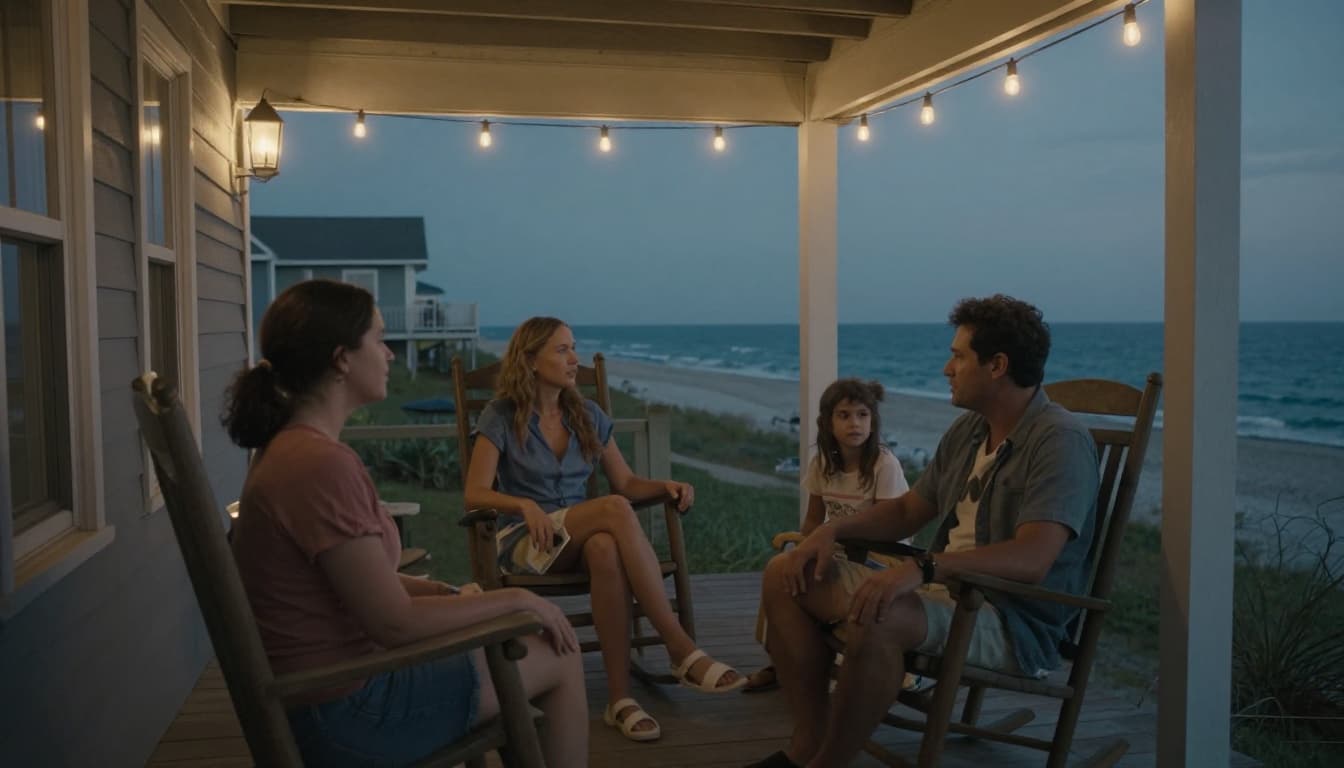 A family sharing a tender but complicated porch moment near the ocean
Give me a beach-town novel with messy family dynamics, and I’m probably staying up too late to finish it. I’m drawn to stories that admit a hard truth: family can be both comfort and pressure, sometimes in the same conversation.
The themes that get me every time:
- Mother-daughter tension that isn’t solved by a single hug.
- Caregiving that’s loving, exhausting, and full of unspoken resentment.
- Blended families trying to figure out new rules.
- Grief that changes the whole weather inside a home.
- Inherited expectations, the quiet “we don’t do that in this family” stuff.
What I love about women’s fiction is how humor and tenderness can sit beside hard topics. A character can be snapping at her sister one minute, then laughing about a shared childhood memory the next. That emotional whiplash feels real to me. It’s like the tide, it pulls back, it rushes in.
A gentle content-awareness tip I use as a reader is to skim for cues in reviews and blurbs, not to avoid every heavy topic, but to choose the right book for the right day. If you’re going through something tender, it can help to watch for mentions of loss, serious illness, or divorce so you’re not blindsided. Sometimes I want that cathartic cry. Sometimes I want a softer landing.
Starting over at any age
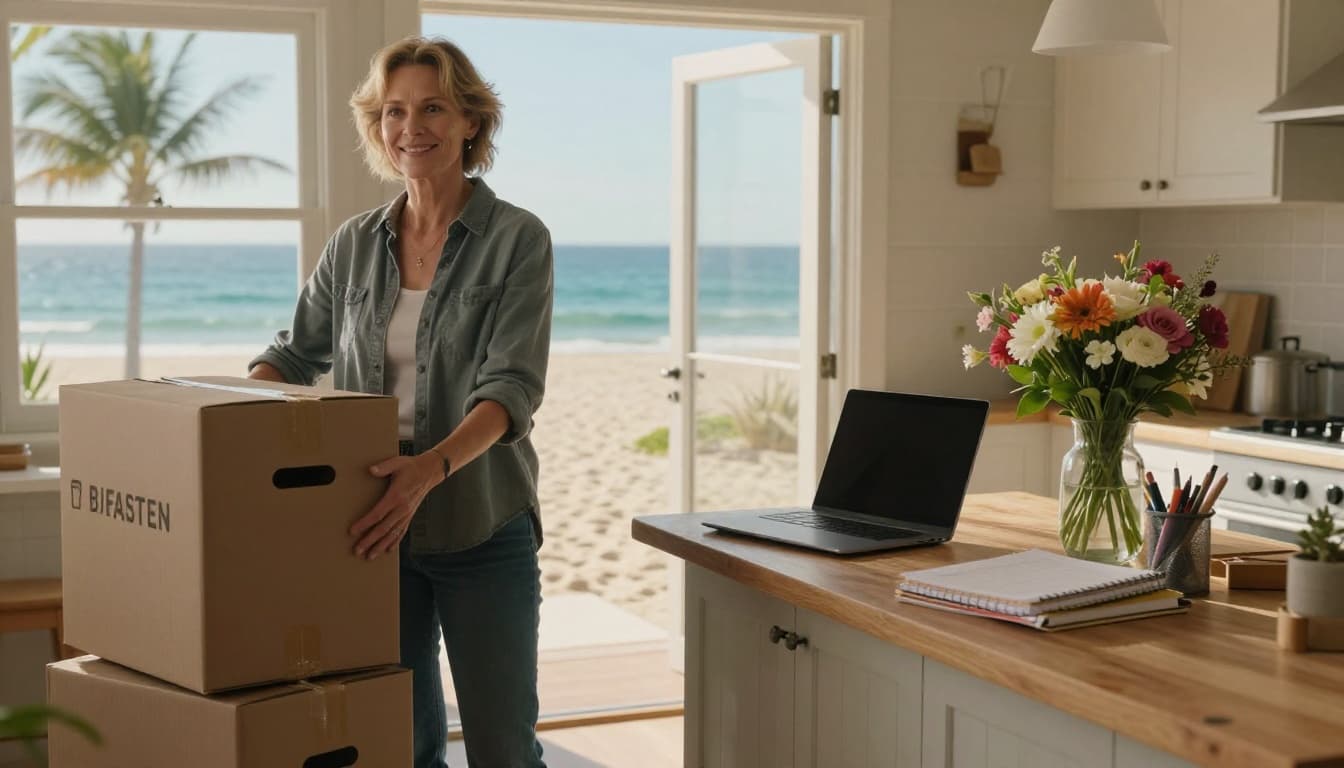 A woman unpacking and setting up a new life in a bright beach cottage kitchen
Starting-over stories are my weakness, and I don’t care how old the heroine is. I love heroines in their 20s, 30s, 40s, 50s, and 60s, because reinvention looks different at every stage, and every version has something to teach.
In the books I tend to love, “starting over” might mean:
- A new career after a public mistake, burnout, or a layoff.
- An empty-nest reset that forces a woman to meet herself again.
- Late-in-life love that feels tender, not frantic.
- Rebuilding after betrayal, with real fear woven through the hope.
Hope is non-negotiable for me, but I don’t want the story to pretend change is easy. I want to see the practical stuff: money worries, paperwork, awkward first days, the mental tug-of-war between “I can do this” and “what was I thinking?”
I also love when the setting supports that growth in quiet ways, a steady coastline, familiar routines, a community that shows up, even if they show up with opinions. If you like books that balance emotional healing with summer-read momentum, recent beachy women’s fiction picks like Other People’s Summers (Sarah Morgan) and Summers at the Saint (Mary Kay Andrews) fit that general comfort-read lane, friendship, family tension, and fresh starts, with plenty of warm-weather atmosphere.
How I choose the right beach read for my mood (and avoid a mismatch)
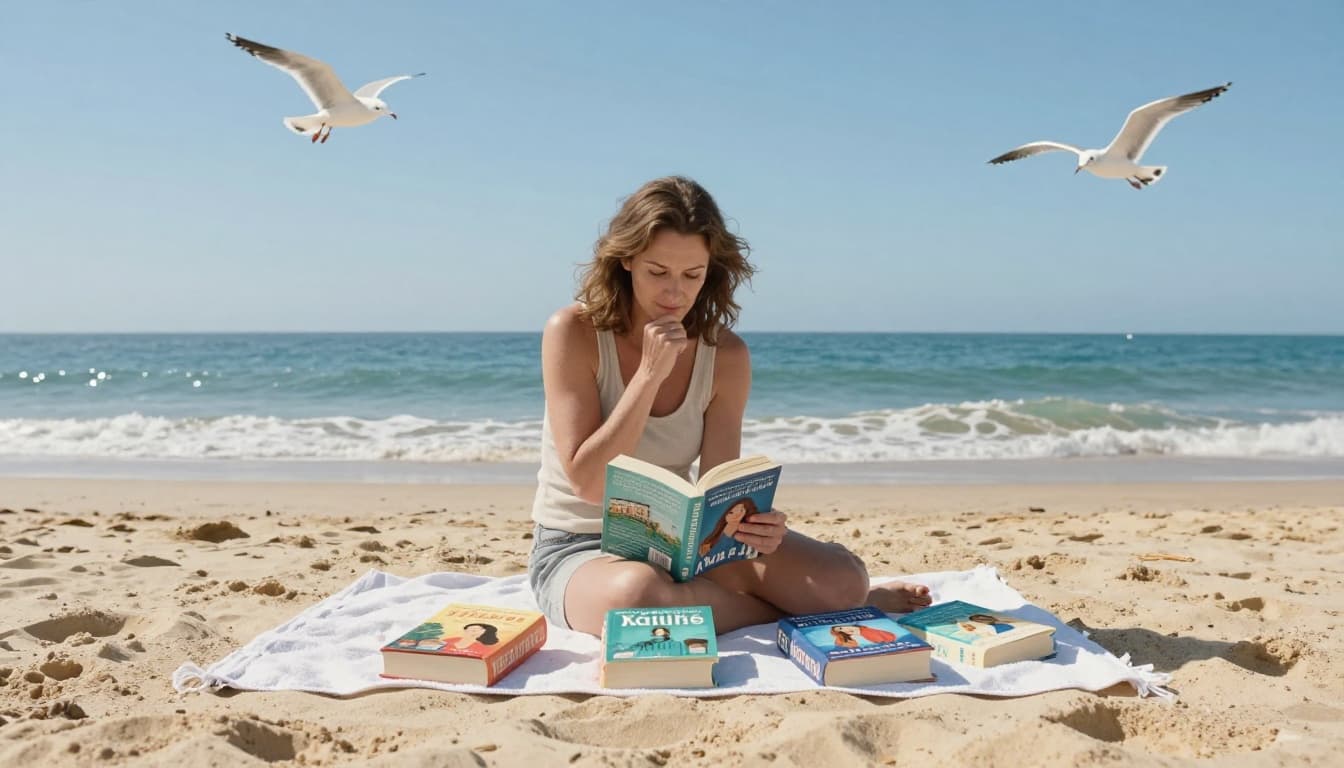 A reader comparing a few beachy novels before choosing one
I’ve learned the hard way that the “wrong” book at the wrong time can sour a whole reading day. Not because the story is bad, but because it asks something from me that I’m not ready to give. When I’m choosing beach-town women’s fiction novels, I treat it like packing for the weather. I don’t bring a heavy sweater to a heat wave, and I don’t start a tearjerker when I’m already running on fumes.
My fix is simple: I decide my mood first, then I shop for a story that matches it. A few quick cues (cover, tagline, first chapter) usually tell me what lane a book lives in.
Pick your vibe: cozy comfort, big emotions, or laugh-out-loud charm
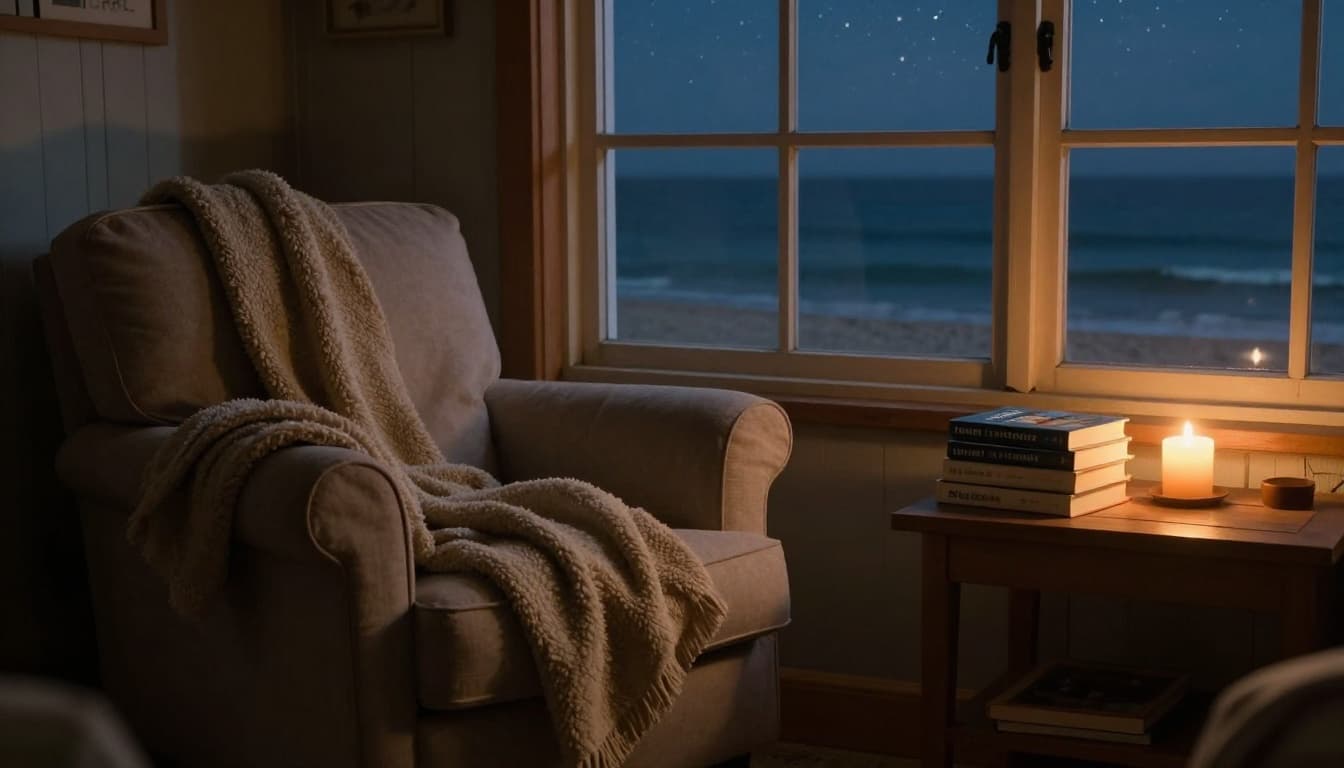 A cozy cottage reading setup with candle light and a stack of beach reads
I think of my beach reads in three lanes, and once I name the lane, my chances of a mismatch drop fast.
1) Cozy comfort (low heat, strong community)
This is my “I want to exhale” pick. The conflict is present, but it’s not relentless. There’s a lot of community texture, found family, and small moments that feel like porch-light comfort. Romance is often sweet or slow-burn, and the story usually leans more “how do I rebuild?” than “how do I survive?”
Cues I notice:
- Covers that look warm and inviting (cottages, bookstores, cafes, soft ocean colors).
- Taglines that hint at fresh starts and coming home more than shock twists.
- Opening chapters that settle in quickly with setting and everyday stakes.
This is also the lane where I tend to want women’s fiction that still feels hopeful. When I’m in that mood, I love stories that echo the emotional comfort I describe in Why beach-town fresh-start stories feel therapeutic and the calmer, grounded ideas in Understanding beach therapy concepts.
2) Big emotions (grief, healing, “pass the tissues”)
This is the lane for a cathartic cry. It often includes grief, divorce, betrayal, illness, estrangement, or a past trauma that keeps tapping the heroine on the shoulder. The best ones still feel safe to me because they aim toward healing, but they don’t skip the hard parts.
Cues I notice:
- Taglines that use words like heartbreaking, unforgettable, life-changing, or emotional.
- First chapters that start with a loss, a rupture, or a big life change.
- A voice that goes straight to the tender truths, even in quiet scenes.
If I’m already raw, I’ll check reviews first so I’m not blindsided. If I’m choosing it on purpose, I want the heroine to feel layered and real, the kind of character talk I love in Why readers love complex, strong heroines and in my own notes on what makes a heroine in fiction.
3) Laugh-out-loud charm (banter, light drama, bright pacing)
This is my “sunny day, iced drink, keep it moving” lane. I want snappy dialogue, playful side characters, and conflict that feels more like romantic tension and small-town chaos than deep heartbreak. The drama is there, but it’s usually lighter, and the book feels quicker on the page.
Cues I notice:
- Covers with brighter colors and a more playful vibe.
- Taglines that promise humor, quirky locals, or a messy summer.
- Opening chapters that hit the voice fast, usually with banter or a comedic complication.
This is also where it helps me to know whether I’m picking women’s fiction or romance-forward. When I want a lot of relationship beats and tropes, I keep Women’s fiction vs romance explained in mind. When I want more of the heroine’s inner arc, I anchor back to What women’s fiction really means.
Standalones versus series, what to read when you want to stay awhile
 Two reading options for vacation mode, a series stack and a standalone stack
This choice matters more than people think, because it changes the whole reading experience. I use a simple rule: if I want to live in the town, I pick a series. If I want a clean hit of story, I pick a standalone.
Series pros:
A series lets me bond with the town like it’s a second home. Side characters get real arcs, friendships deepen, and I start to recognize the “regulars” the way you do in a local coffee shop. This is my favorite format when I want ongoing comfort and that steady beach-town rhythm.
Series cons:
It can feel slower at times, and if I start in the middle, I might miss emotional context. Also, series often assume you enjoy recurring cast dynamics, which is great when you’re in the mood for it, and mildly annoying when you’re not.
Standalone pros:
Standalones are tighter. They’re easier to finish on a trip, and I don’t feel pressure to commit to seven more books. If I’m juggling a busy week, a standalone keeps my reading life simple.
Standalone cons:
I sometimes get attached and wish I had more time in that world. The town can feel like a gorgeous vacation spot I only got to visit once.
A quick reading-order note that saves me frustration: if a book is a true series, I start at book one. If it’s interconnected standalones, each book focuses on a different main character, and you can usually read them in any order. You might catch a spoiler for a previous couple’s happy ending, but you won’t be lost.
If you like the “stay awhile” feeling, it’s also fun to build a longer cozy reading ritual around it, like the comfort ideas in Top beach-read therapy kit ideas or even a quick mindset reset inspired by Life lessons from small coastal towns.
Tropes that show up often in coastal women’s fiction
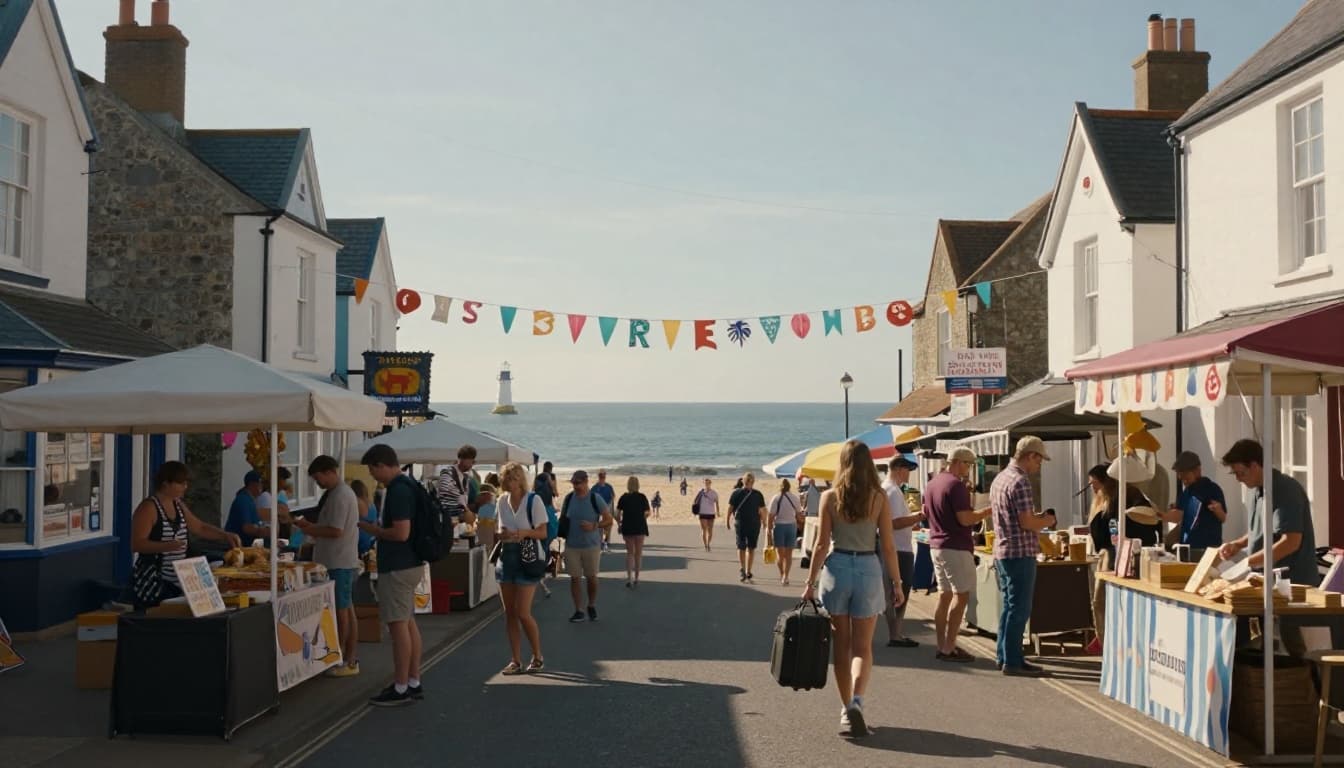 A beach-town homecoming moment during a summer festival
I don’t pick books by trope alone, but tropes help me predict the emotional flavor. Coastal women’s fiction loves the kind of setups that naturally force a woman to slow down and face her life, usually with sand in her shoes.
A few I see all the time: the heroine returning home after a breakup or burnout, an inherited house that comes with repairs and memories, a single-parent storyline that raises the stakes in a grounded way, and the classic grumpy-sunshine dynamic where one person is all sharp edges and the other keeps showing up anyway. I also run into enemies to friends (or frenemies) a lot in small towns, because history has a long memory when everyone shares the same one grocery store.
Sometimes the story leans more romance-forward and throws in fake dating, usually for a practical reason like a family event or a business pitch. Small business revival is another favorite of mine, especially when the town rallies around a bookstore, bakery, inn, or cafe. And if there’s a summer festival, I’m already smiling, because festivals create built-in scenes: forced conversations, accidental volunteering, public announcements, and that one chaotic committee member who should never have been given a clipboard.
Last, there’s forced proximity, which is coastal fiction’s secret sauce. Renovations, storms, full hotels, or a cramped cottage can trap characters together long enough for honesty to slip out. When I want stories like that, I also tend to enjoy the stronger-lead energy I talk about in Best romance books with strong female leads, because those heroines don’t melt into the love story. They still have a spine.
A quick quality check before I commit to a full book
 Sampling a first chapter at a beachside cafe before committing to the full book
If I’m on the fence, I don’t force it. I do a quick “first chapter test” and a small review scan. It takes five minutes and saves me from that sinking feeling of being 40 pages in and realizing the vibe is wrong.
Here’s what I check before I commit:
- Writing style: Do the sentences flow, or do they feel choppy or overwrought? I want a voice that sounds confident, not showy.
- Character voice: Can I tell who’s speaking and what they want, even early on? If the heroine feels flat, I rarely warm up later.
- Stakes: Are there real consequences, even if they’re quiet ones (money, family, self-respect, reputation)? Beach-town women’s fiction novels work best for me when the stakes feel personal.
- Pacing: Does something shift within the first chapter or two? I don’t need explosions, I just need momentum.
- Level of spice: I decide what I want that week and look for cues in reviews. I don’t judge it, I just match it to my mood.
- Believable conflict: Is the tension built on real problems and human choices, or is it all misunderstandings that could be solved with one honest talk?
For reviews, I look for a mix, not just five-star gushes. One thoughtful three-star review often tells me more about tone and pacing than twenty “I loved it!” posts. And if I’m trying to pick between women’s fiction and romance vibes, I’ll circle back to Women’s fiction vs romance explained so I don’t blame a book for being exactly what it promised.
Beach-town women’s fiction novels I recommend by the kind of story you want
When I’m choosing beach-town women’s fiction novels, I match the book to the feeling I want when I close the cover. Do I want to feel like I just spent the weekend with my favorite people? Do I want a good cry that leaves me lighter? Do I want romance that takes the wheel, but still gives the heroine a real life outside the love story?
Below are the story “types” I reach for most, plus what I look for in blurbs and first chapters so I don’t end up with the wrong vibe.
If you want small-town charm with a strong friend group
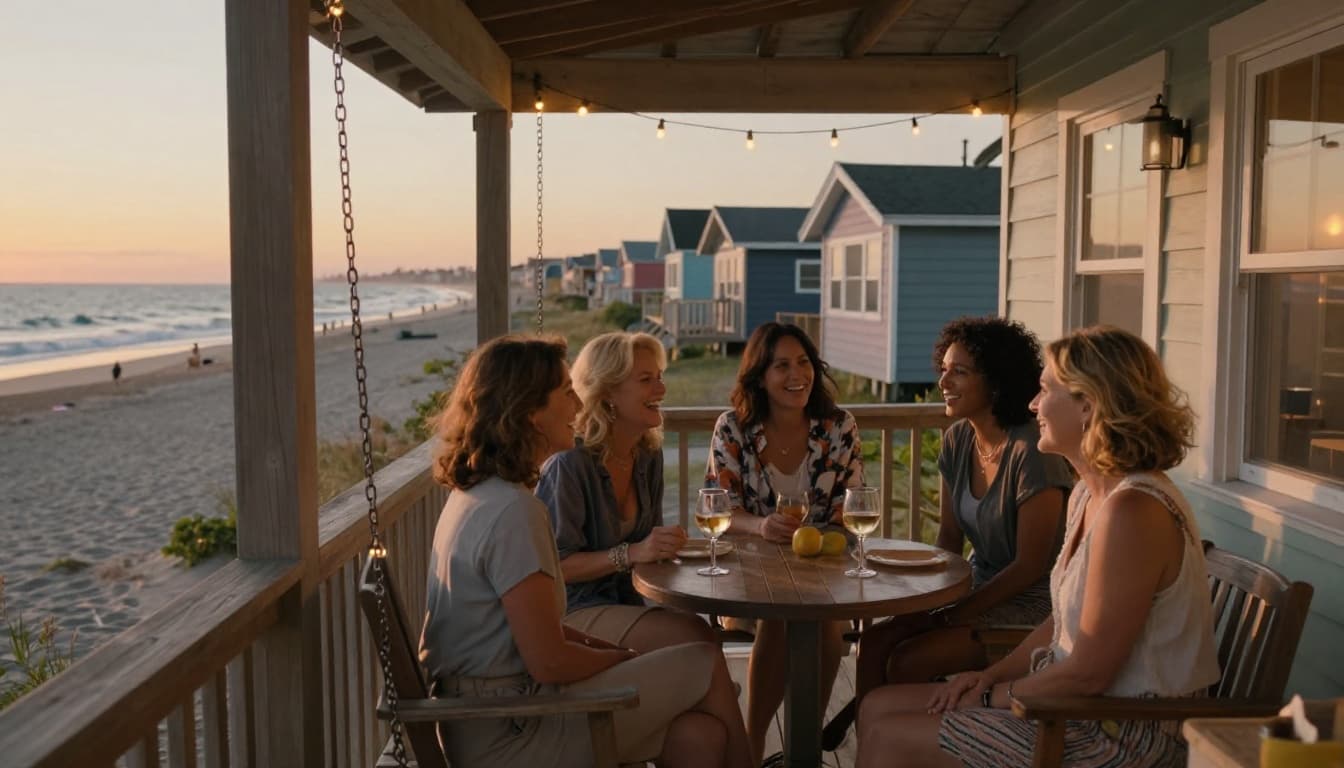 A porch hangout in a cozy beach town
This is my “pour a drink, kick off your sandals, and settle in” kind of read. If you want small-town charm with a strong friend group, I’d look for a book that feels like an ensemble TV show, where the town is the shared stage and everyone has a role.
Here are the tells I watch for:
- Ensemble cast energy: The heroine is central, but side characters feel three-dimensional, not like cardboard cutouts. If the blurb names multiple women (or hints at multiple points of view), that’s a good sign.
- Recurring town events: Farmers markets, summer festivals, library fundraisers, beach cleanups, parades, town council drama. Those scenes are the “bonfire” moments where characters circle up and sparks fly.
- “Girls’ night” scenes: Porches, kitchens, back booths at a diner, someone’s living room with takeout containers and a shared playlist. These scenes are friendship glue.
- Supportive neighbors (with opinions): I want warmth, but I also want the town to feel nosy in a believable way. The best coastal communities help you even while they gossip about you.
For comfort reads, I strongly prefer a coastal series that follows different women over time. That structure is like returning to the same beach rental every summer. New main character, familiar streets, familiar faces, and you already know where the best coffee is. If you like thinking about why certain relationship beats feel so satisfying, I keep posts like What women crave in romance novels bookmarked because it explains why friend groups, community rituals, and emotional safety hit so well.
A beach-town friend-group pick that fits this general lane is The Five-Star Weekend by Elin Hilderbrand (a reunion setup, lots of personality clash, lots of revealing conversation, and that Nantucket atmosphere).
If you want a tearjerker with healing and hope
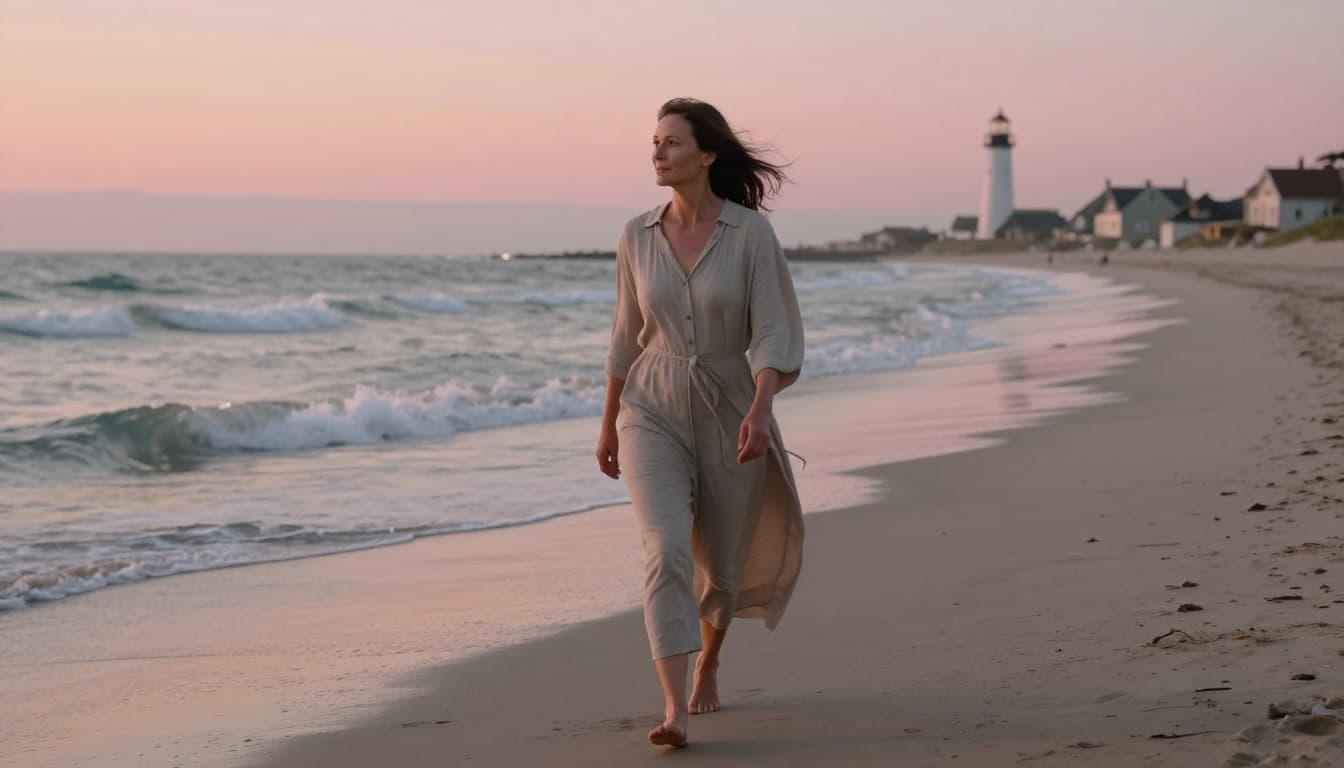 A quiet sunrise walk that matches a healing story mood
When I want a tearjerker, I’m not looking for misery. I’m looking for a story that lets grief exist on the page, then slowly makes room for light. The best beach-town tearjerkers feel like the tide. They pull you under, then bring you back up.
Here’s what I expect from this type of women’s fiction:
The hallmarks
- Grief, regret, or a life rupture: widowhood, divorce, estrangement, a public mistake, a broken dream. The emotional wound is clear early.
- Rebuilding with texture: moving boxes, legal paperwork, learning a new routine, fixing up a house, starting a job you’re not sure you can do. Healing looks like Tuesday, not just a big speech.
- A gentle love interest: someone steady, patient, and kind. Chemistry matters, but pressure doesn’t. (If you want a quick refresher on how character roles work in these stories, understanding heroine vs. protagonist is a helpful lens.)
- Meaningful setting rituals: sunrise walks, volunteering, a regular café stop, a weekly community event. Those rituals act like emotional handrails.
My pacing and intensity note If I’m already emotionally wrung out, I save these for a weekend morning, not a late-night start. Tearjerkers often have a slower, more reflective pace, and the emotional peaks can stack. If the blurb uses words like “heartbreaking,” “moving,” or “unforgettable,” I assume it will ask more from me.
A few beachy, hopeful tearjerker picks that fit this lane:
- The Summer House by Mary Alice Monroe (family of women, beach-town setting, real emotion).
- A Happier Life by Kristy Woodson Harvey (seaside town, secrets, healing energy).
- The Sea Glass Cottage by Irene Hannon (coastal homecoming, gentle mystery, sweet hope).
And if you’re the kind of reader who needs a heroine you can truly root for, I also love posts like traits of strong heroines in women’s fiction because they match what makes these books feel safe even when they hurt.
If you want romance-forward women’s fiction with a beach-town backdrop
 A romance-forward beach-town moment
“Romance-forward” is my sweet spot when I want butterflies and a strong romantic arc, but I still want the book to feel like women’s fiction. In other words, the love story takes more page time and has bigger relationship beats, yet the heroine’s personal growth doesn’t fade into the background.
Here’s how I tell it’s romance-forward (but still women’s fiction) before I commit:
- Chemistry shows up early, often in the first chapter or two. Not necessarily instant love, but there’s a charged interaction, a tug-of-war, a “wait… who is this person?” moment.
- The romantic arc is a main engine: dates, forced proximity, caretaking scenes, jealousy flickers, that satisfying moment when they finally speak honestly.
- A personal growth thread stays present: career decisions, family repair, self-respect, boundaries, identity. If I want examples of heroines who keep that spine while romance heats up, I like browsing modern women’s fiction heroines.
How I spot heat level cues in descriptions Blurbs and retailer copy usually give it away if you know what to look for. If the description uses softer language like “sweet,” “wholesome,” “clean,” or “closed-door,” I expect minimal on-page spice. If it hints at “steamy,” “spicy,” “sizzling,” or focuses heavily on physical attraction, I expect more explicit scenes. Reviews often confirm it quickly.
Also, if you ever feel confused about shelving, you’re not alone. I keep Women’s fiction vs romance explained in mind so I’m not disappointed by a book that’s doing exactly what it promised.
If you want romance-forward energy with heart (not just fluff), Summers at the Saint by Mary Kay Andrews is a fun fit for many readers because it mixes relationship tension with family and resort drama, plus a sunny coastal setting.
If you want a clean, cozy escape you can read in one weekend
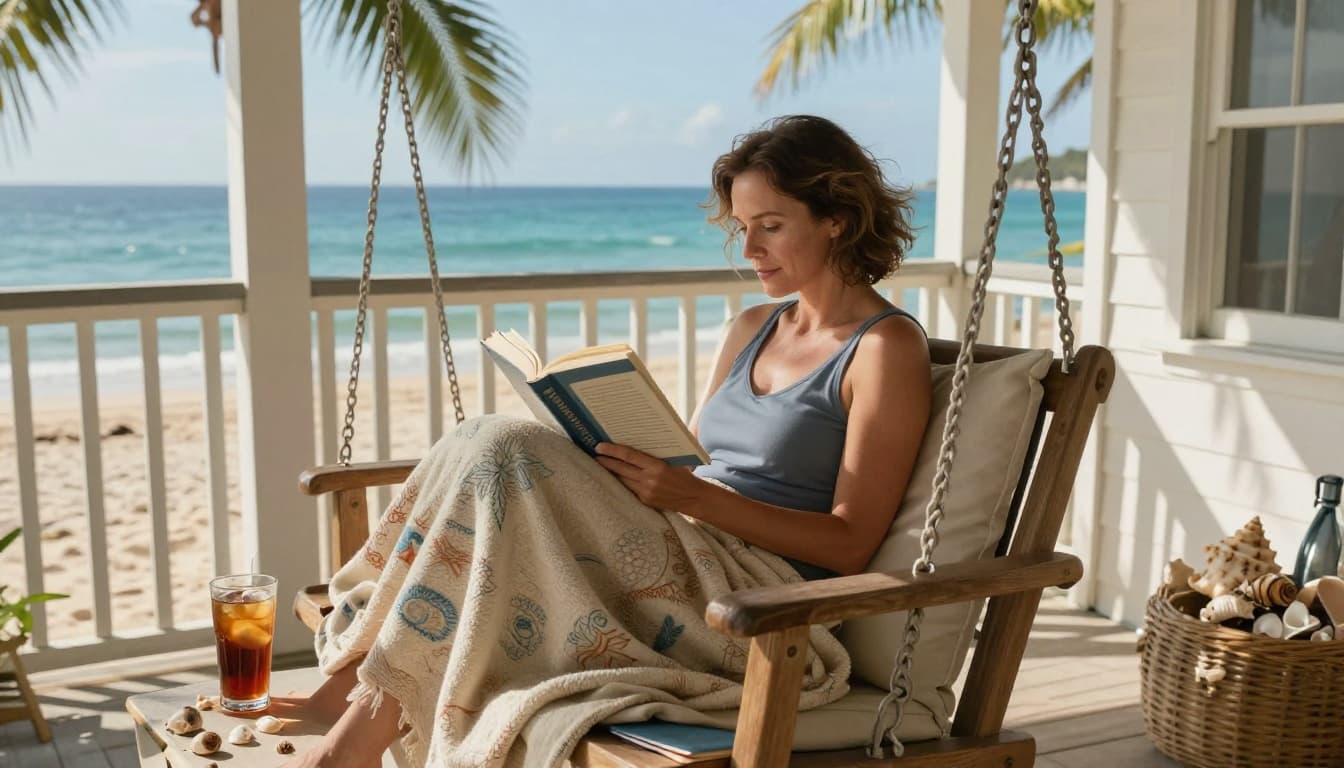 A cozy weekend reading setup on a porch swing
Sometimes I want a book that feels like a warm mug in my hands. Clean and cozy beach-town stories are perfect when I’m tired, busy, or just craving something gentle. These are the reads I can finish in a weekend without feeling emotionally bruised.
What I look for:
- Short chapters and clear momentum: It’s not about being rushed, it’s about being easy to pick up and hard to put down.
- Low drama: conflict exists, but it’s usually grounded (small misunderstandings, life logistics, family quirks), not relentless betrayal or high-stakes chaos.
- Comforting routines: morning coffee runs, beach walks, a familiar porch, volunteering, a small business rhythm. The story has a soothing pattern to it.
- Satisfying endings: I want closure, even if it’s a “new normal” instead of a perfect bow.
If I’m unsure whether a cozy pick still has a strong heroine arc, I think about the qualities that make a character compelling. Posts like differences between heroine and main character help me put words to why some “cozy” books still feel deep.
My favorite pairing tips for a one-weekend binge I keep this simple because the point is ease:
- Porch reading: blanket, iced tea, and one uninterrupted hour.
- Audiobook while walking: especially if the book has those calming setting rituals.
- Rainy-day binge: the cozier the weather, the more I want a soft beach-town escape.
If you’re building a comfort-first reading weekend, I also like browsing cozy women’s fiction gift guide ideas because it’s full of small things that make reading feel like a treat.
And when I want the clean, cozy vibe but still want the beach-town setting to feel vivid, I pick books that mention community, traditions, and everyday life in the blurb. That’s usually where the comfort is hiding.
Conclusion
When I’m picking beach-town women’s fiction novels, I’m really choosing a feeling, salty air, a town that shows up (with opinions), and a heroine who earns her reset. I want the core ingredients: a setting that breathes, community that feels real, and an inner arc that holds the story together (I circle back to what women’s fiction really means and women’s fiction vs romance explained when I’m not sure what shelf I want).
Mood matching keeps me from a mismatch, whether I’m craving comfort (why beach-town fresh-start stories feel therapeutic, understanding beach therapy concepts), big emotion (why readers crave emotionally complex, strong heroines), or romance-forward warmth (best romance books with strong female leads, romance books with strong independent female protagonists, 10 best romance novels with strong, competent heroines). I also love stories that understand community (life lessons from small coastal towns) and character work (what makes a heroine in fiction, heroine vs protagonist, traits of strong heroines in women’s fiction, modern women’s fiction heroines).
Thanks for reading, tell me what beach-town vibe you love most, fresh start, friendship, or second-chance romance, and share your favorites, what you’re reading next, and what’s in your comfort kit (top beach-read therapy kit ideas, cozy women’s fiction gift guide ideas, what women crave in romance novels).


