

What I Notice Most About Themes in First Love Second Chance Romance Novels

There’s something achey and comforting about a first love that never quite stayed in the past. In a first love second chance romance, the couple fell hard first, split up (because life, fear, bad timing, or plain old mistakes), then reunites later with more history, more baggage, and a real shot at doing it right.
In this post, I’m sharing what I notice most about themes in first love second chance romance novels, the emotional beats that make them so satisfying, and why those beats keep showing up across so many reader-favorite stories. I’ll talk about the big repeat players like regret and nostalgia, forgiveness and repair, and the moment when two people choose each other again, on purpose.

The pull of nostalgia, and why the past never stays in the past
One of the most reliable themes in first love second chance romance novels is how the past behaves like a tide. It pulls back, it surges forward, and it leaves things behind that nobody remembers placing there. A first love is rarely just a person. It’s a time capsule, packed with who they were, what they wanted, and what they thought life would be.
Nostalgia in these stories isn’t only “aww, remember prom?” It’s unfinished emotional business. It’s the brain replaying an old song and the heart answering before the character can stop it. And when authors write it well, the past does not overwrite the present. It presses on it, like a thumb on a bruise, forcing the couple to figure out what’s still true.
Shared history as a shortcut to big feelings
 An old photo tucked into a well-loved book beside seashells
Shared history is the romance equivalent of walking into a room where the lights are already on. We do not need a hundred pages of “getting to know you” when they already know each other’s tells, fears, and soft spots. That’s why reunions can hit with instant emotional weight without feeling rushed.
What makes it believable is that the bond shows up in small, human ways. The inside joke that still lands. The nickname said once, quietly, like a test. The way he remembers her family’s weird holiday tradition. The way she knows exactly why he avoids the dock at night. Even when they have not seen each other in years, those details create a shortcut straight to tenderness (and tension).
I also notice how often authors use sensory anchors to make that shared history feel physical, not abstract:
- A yearbook photo with a bent corner, the ink slightly blurred
- An old song that comes on in a grocery store aisle and knocks the air out of them
- Beach bonfires with salt on their lips and smoke in their hair
- Hometown landmarks, like the pier, the diner booth, the cracked basketball court behind the school
Those touches work because they trigger memory the way real life does, through smell, sound, texture. If you like romances that build big feelings through familiar comfort, you might also enjoy the way authors stack reader-favorite emotional beats in things-women-love-to-read-about-in-romance-fiction/ (it’s a great snapshot of why certain moments hit so hard).
The bittersweet ache of “who we were” versus “who we are now”
 Two coffee cups facing each other across a quiet table
Nostalgia gets sharp when it rubs against reality. In second chance first love stories, I often see characters mourning something that technically never existed in a stable form: the “pure” version of love from before bills, grief, divorce, kids, caretaking, and hard-earned self-respect. That ache is the point. The characters are not only asking, “Do I still love you?” They’re also asking, “Do I miss you, or do I miss who I was when I loved you?”
The best books do not pretend people can rewind. Instead, the romance grows up. It becomes less about grand declarations and more about maturity and repair:
- They set new boundaries instead of reusing the old rules that broke them.
- They stop romanticizing the past and start naming what actually went wrong.
- They accept that love can be real and still not be enough, unless behavior changes.
- They learn the difference between chemistry and compatibility.
I love when authors let the characters grieve the old version of the relationship. Not with melodrama, but with honest moments: an awkward pause when they almost fall into the old pattern, a laugh that turns into a swallow, a quick flash of anger that is really fear. This is also where realism matters. A second chance is not a prize for suffering. It’s a choice, and the choice has to be safe.
Small towns, familiar places, and forced run-ins that feel inevitable

Small towns pair so well with first love reunions because the setting refuses to let the past stay quiet. In a city, you can avoid your ex with a few route changes. In a small town, you run into them at the post office, the hardware store, the only decent coffee shop, and your aunt’s backyard barbecue. It starts to feel less like coincidence and more like gravity.
And it’s not only about proximity. It’s about shared context. People remember what happened. Families have opinions. The place itself carries history, like the town is keeping receipts. That pressure can be stressful, but it also makes the romance feel earned, because the couple is not falling in love in a vacuum. They’re doing it under fluorescent grocery lights and in front of the same coastline they once promised each other forever beside.
I also think small towns create a special kind of “nowhere to hide” honesty. When everyone knows everyone, characters cannot keep performing a polished version of themselves. Their roots show. Their old wounds show. Their family ties show. That’s why a reunion in a hometown can feel inevitable, even when the characters are fighting it.
When nostalgia meets a small town, it’s like trying to outwalk your own shadow. You can speed up, you can turn corners, but it still follows. In first love second chance stories, that shadow is not there to punish them. It’s there to ask one simple question: What if this time, you do it with open eyes?
Growth, forgiveness, and the work it takes to earn a true second chance
One of my favorite themes in first love second chance romance novels is that the reunion is not the reward. It’s the test. It’s where the story stops romanticizing the past and starts asking harder questions: Did they actually grow, or did they just miss each other? Can love survive the truth, not just the chemistry?
The books that stick with me don’t treat a second chance like a glittery do-over. They treat it like renovation work. You can keep the bones you loved, but you still have to rip out what rotted, rewire what never worked, and rebuild trust in a way that feels safe. If you like thinking about how romance can comfort us (and sometimes nudge our expectations), I’ve enjoyed exploring that in The Comfort and Consequences of Romantic Fiction and 10 Reasons Real Love Is Messier Than Romance Fiction.
Owning the breakup, no matter who left
 A crumpled letter smoothed out on a kitchen counter
Most first love breakups aren’t cartoon-villain betrayals. They’re quieter and more common, which is why they sting. I see the same causes show up again and again: Bad timing (college, distance, deployment, illness), fear (of commitment, of failure, of being truly seen), career moves, family pressure, misunderstandings that snowball, and the classic, “I thought I was protecting you,” that actually protects the person leaving.
What makes the best second chance romances work is that both characters eventually stop treating the breakup like a courtroom case. No more “here’s why I was right.” Instead, they step into “here’s what I did, and here’s what it cost us.” That’s when the emotional tone shifts from nostalgia to repair.
I also notice authors often keep tension high without leaning on endless confusion, which is something I rant about (lovingly) in Why Won’t They Just Communicate With Each Other? The One Romance Trope We All Yell About. A strong book still has conflict, but it’s grounded in real accountability.
If you want to spot whether a second chance is being earned on the page, I watch for three things that matter more than any bouquet or “big moment”:
- Clear apologies: Not “I’m sorry you felt that way,” but an apology that names the harm and doesn’t argue with the other person’s feelings.
- Repaired patterns: The character doesn’t just regret the past, they behave differently in the present (especially under stress).
- Real follow-through: Grand gestures can be romantic, but I trust the story when the character also does the unsexy work, like showing up on time, making the call they’ve avoided, or telling the truth before they get caught.
This is also where character depth matters. I’m far more invested when the heroine is emotionally layered and allowed to be both strong and bruised, which is why I like posts such as 10 Reasons Readers Crave Emotionally Complex Strong Heroines and 13 Character Traits About Strong Heroines In Women’s Fiction. When the leads feel real, the breakup feels real too, and so does the ownership of it.
Forgiveness is a process, not a switch
 A repaired mug with visible seams
In the most satisfying second chance love stories, forgiveness doesn’t show up as a sudden mood change. It moves in steps. That’s more believable, and honestly, it’s more romantic to me. It says, “I care enough to rebuild this carefully.” On the page, trust usually comes back through a few repeat beats:
First, honest conversations that don’t dodge the hard parts. The couple talks about what happened, what they felt, and what they needed back then but couldn’t say. The goal isn’t to relive pain for fun, it’s to remove the fog. If a misunderstanding drove the breakup, a good author doesn’t fix it with one speech. They fix it with clarity over time.
Next comes consistency, which is where I start believing the story again. The love interest does what they said they would do, again and again, especially when nobody’s watching. Consistency is the slow, steady “I’m here” that replaces the old pattern of disappearing.
Then there are boundaries, which I love seeing in modern second chance romances because they keep the tension sharp without turning the couple toxic. Boundaries create that delicious push-pull, the yearning, the “I want you, but I won’t lose myself again.” It’s the kind of romantic tension that still respects emotional safety.
I also like when authors let forgiveness have texture. Some days the character feels open, some days a memory hits and the wall goes back up. That wobble doesn’t mean the relationship is failing. It means the wound was real.
Proving love with choices that match the words
 Hands holding house keys over a porch rail
A true second chance is built out of choices, not speeches. I can handle a big declaration (I’m still a romance reader), but the stories that satisfy me most make the character prove it in ways that cost them something. On the page, “earning it” often looks like:
Showing up when it’s inconvenient. Staying when it would be easier to run. Making a sacrifice that’s practical, not flashy. Telling the truth sooner, even when the truth risks the relationship. Picking the other person’s dignity over their own comfort. That last one is huge in second chance romance. The past version of the character cared, but not enough to do the hard thing. The present version cares, and chooses differently. It’s the difference between loving someone and being safe for them.
This is also why readers melt for competence and steadiness in a love interest. We don’t only want passion, we want a partner who makes life feel less scary. It’s the same reason so many of us collect books with strong leads who can carry both plot and emotion, like Romance Books With Black Female Leads: Fresh Love Stories to Fall Into.
High-stakes obstacles that test the reunion without breaking the romance
One thing I notice in themes in first love second chance romance novels is how the best obstacles feel serious, but not relationship-ending in a way that makes me stop rooting for them. The tension comes from real consequences: pride, timing, fear, and the messy logistics of adult life.
When the stakes are right, the story feels like watching two people carry something fragile across a crowded room. They can make it, but only if they slow down, pay attention, and stop pretending the past didn’t happen.
The “big misunderstanding” and the truth that finally comes out
 A missed voicemail on a nightstand
The “big misunderstanding” works when it doesn’t make me roll my eyes. I’ll follow it if the reason is believable and emotionally specific, like a dropped call at the worst moment, a letter never delivered, a parent who filtered messages, a panic decision made at nineteen that felt like survival. That kind of mistake isn’t silly. It’s painfully human.
What makes it satisfying is the shape of the reveal. The truth doesn’t just explain the breakup, it changes how the past looks. Suddenly, that cold goodbye isn’t cruelty, it’s fear. That unanswered “I love you” wasn’t indifference, it was chaos, grief, or a secret someone thought they had to carry alone.
I’m also picky about how the characters respond. I want adult reactions: anger, relief, sadness, and then actual problem-solving. If the reveal turns into punishment, it stops being romantic fast. I like when they:
- Name what it cost them (years, trust, choices they can’t get back).
- Own their part without turning it into a trial.
- Ask better questions now, instead of replaying old assumptions.
If you love this kind of tension, the way silence and avoidance can snowball feels very real in Why Silence Creates So Much Drama In Romance. And if you’re ever sorting out why some books treat misunderstandings differently depending on genre expectations, Women’s Fiction vs Romance Fiction: What’s the Difference and Why It Matters puts helpful language to it.
Competing dreams, career choices, and the fear of being left again
 A suitcase by the door next to sandy shoes
Ambition in a second chance love story is complicated in the best way. It’s attractive because it signals purpose and grit. It’s threatening because it can feel like the same old cliff edge: “What if you choose your dream and I’m the thing you drop?”
Career conflict hits hardest when it isn’t framed as one person being selfish and the other being noble. In real life, the line between compromise and self-betrayal is thin. I want the story to admit that truth. A job offer in another state, a promotion that demands travel, a creative breakthrough that takes all their focus, those things can be good and still terrifying.
The most romantic version of this obstacle isn’t, “Give it up for me.” It’s, “How do we build a life where neither of us has to shrink?” That’s why I love when the couple fights for a third option:
- They plan, budget, and adjust timelines.
- They talk about fears out loud, especially the fear of being abandoned again.
- They protect each other’s dignity while negotiating the future.
If the heroine’s growth matters as much as the romance (my favorite mix), it helps to know how women’s fiction tends to treat career and identity shifts alongside love. I’ve pointed friends to What Is Women’s Fiction? My Clear Guide for Readers when they want that bigger life arc. And when I’m craving characters who don’t fold under pressure, I browse 15 Strong Heroines Who Define Modern Women’s Fiction because that same backbone is often what makes a second chance feel possible.
When kids, co-parenting, or pregnancy raise the emotional stakes
 A child drawing chalk hearts while two adults watch
When a reunion includes kids, co-parenting, or pregnancy, the love story tightens. There’s less room for grand speeches and more need for steady actions. It’s not just “Do I trust you with my heart?” It’s “Do I trust you near my child, my schedule, my home, my peace?”
Single parent and blended-family threads change the rhythm of the romance in ways I find quietly moving. Time is limited, because school pickups don’t care about yearning. Privacy is limited, because someone always needs something. And trust is heavier, because it includes a small person who did not ask for any of this.
What I find most romantic here is how the story shows love as care, not performance. I melt when the love interest learns the child’s routines, respects boundaries, and doesn’t push their way into a “family” label. I also like when the parent character stays protective without turning cold. Warmth and caution can exist together.
In these books, the high-stakes obstacle often isn’t the child at all. It’s the adults learning to be honest and consistent, even when they’re tired. When that happens, the reunion feels earned in a deeper way, because it’s not about reclaiming the past. It’s about building a safe present.
What I look for in a satisfying ending (and how to find more books like this)
In first love second chance stories, I’m not just chasing a happy ending. I’m chasing the feeling that the characters built it. The best endings don’t erase the past, they make room for it, then show me the couple can carry it without bleeding on each other. That’s why I pay attention to how an author handles repair. In a lot of themes in first love second chance romance novels, the reunion is the easy part, the real payoff is watching two people become safe for each other.
Signs the happy ending is earned, not rushed
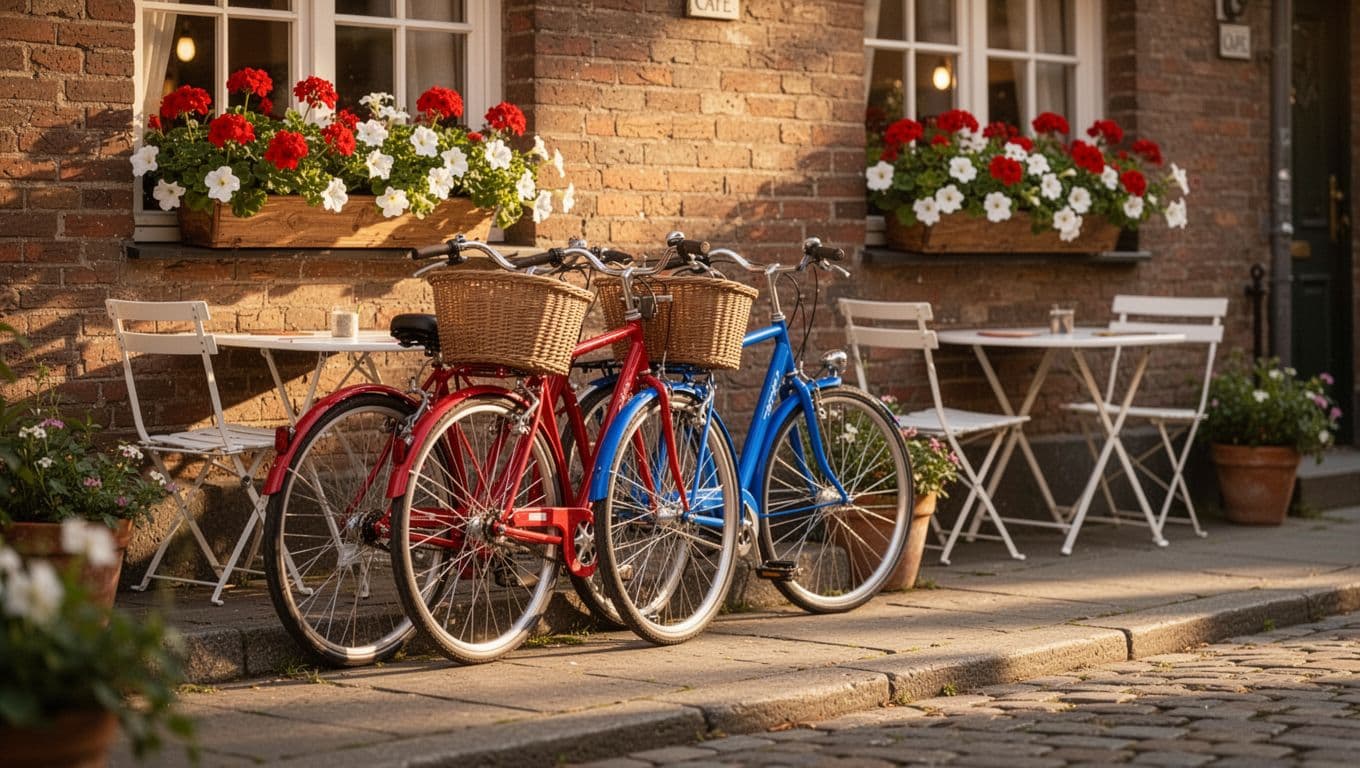 Two bicycles leaning together outside a cafe
A satisfying ending feels like watching a wobbly table finally get fixed. Same table, yes, but now it doesn’t tilt every time someone sets something down. When I finish a second chance romance and feel calm instead of anxious, it’s almost always because the author gave me concrete proof that the relationship has changed.
Here are the quick signals I look for:
- A specific apology that names the harm (not a vague “I’m sorry for everything”). If you also get irritated by dodgey “communication,” you’ll probably relate to.
- Changed behavior under stress, not just during a sweet moment. I want to see the old pattern show up, then get handled differently.
- Mutual effort, where both people do uncomfortable emotional work. That’s the difference between repair and rescue, which connects to the “real love is messier” idea
- Boundaries are honored, even when it’s inconvenient. This is where I trust the couple.
- Future plans are discussed in plain language, not as dreamy fog. Where will they live, what happens with work, what about kids, caregiving, or money?
- Friends or family notice the change, because outside eyes can spot what the couple can’t. I love when a sister, best friend, or even a cranky neighbor quietly admits, “You seem different with him.”
- They can talk about the past calmly, without spiraling into blame. The pain still matters, but it isn’t steering the car anymore.
If you’re trying to screen books before you commit, I’ve found that browsing lists of reader-favorite beats helps. It’s why I keep coming back to things-women-love-to-read-about-in-romance-fiction/ when I want that “yes, that’s the feeling” hit.
If you love this theme, try these adjacent romance flavors
 A stack of romance books with tabs beside a beach tote, created with AI.
When I’m in a first love second chance mood, I usually want more than “they reunite.” I want a familiar ache, grown-up choices, and a real sense of rebuilding. If you’re the same, here are a few directions that scratch a similar itch without feeling like you’re rereading the exact same story.
- Small-town second chance: The setting does half the work because it keeps bumping the characters into each other. If you love the comfort of a place that feels like a warm blanket (with sharp corners), you’ll probably like the way coastal fresh starts get framed in reasons-beach-town-fresh-start-stories-feel-like-therapy.
- Friends-to-lovers with history: It has that same “we already know each other” intimacy, but the risk is different. Often it’s fear of ruining the one steady relationship they’ve had.
- Marriage-in-trouble (with an HEA): The emotional math is similar, because the couple has to earn trust again, not just feel attraction.
- Celebrity exes: Same reunion energy, but with outside pressure turned up. The “past” becomes public, which makes secrecy and pride more expensive.
- Sports second chance: Great for structure and stakes (training schedules, trades, injuries), plus built-in competence.
- High-stakes life stuff that forces honesty: Pregnancy, co-parenting, caretaking, grief, and all the unglamorous realities that make people either grow up or run.
I also broaden my search by following the emotional promise instead of the exact trope. If what you really want is a heroine rebuilding her identity while the romance rebuilds alongside her, you’ll find good crossover picks in strong-heroines-who-define-modern-womens-fiction.
When I pick my next read, I’m basically asking for one promise: give me the comfort of “they still choose each other,” but make it believable enough that I can exhale on the last page.
Conclusion
What I love about the best themes in first love second chance romance novels is how they let tenderness and truth share the page. Nostalgia shows up first, not as a filter, but as a reminder of what mattered and what still aches. Then the story gets serious about growth. The couple has to face who they were, own the breakup, and stop hiding behind old stories. Forgiveness matters here, but it isn’t instant. It’s built through consistency, clear apologies, and choices that finally match the feelings.
High-stakes obstacles make that work visible. Careers, distance, family baggage, co-parenting, or a forced-proximity setup push them into honest moments, and the reunion only lands when it’s earned, not rushed.
Thanks for reading along with me. Which theme pulls you in most, nostalgia, growth, forgiveness, or the pressure of real-life stakes, and what stories have felt healing and real lately?


