

7 Essential Tips for Enjoying a Women’s Fiction Series: Order, Characters, and Payoff

Women’s fiction series hit me like comfort food, the kind I don’t even have to think about to enjoy. I get to stay in the same town awhile, keep running into familiar faces, and watch friendships deepen in the background while life shifts in small, honest ways. That slow-burn change is exactly why these books can feel so addictive.
If you’re wondering how to read a women’s fiction series, the short answer is this, start by figuring out what kind of series you’re holding. Some are strict order, where skipping ahead can spoil relationship arcs and long-running conflicts, and others are connected standalones, where each book wraps up its own main story, but the shared world makes everything richer. I’ll show you how to spot the difference fast, without turning reading into homework.
In this post, I’m going to share a simple, stress-free way to read in the right order, keep characters straight, and land that emotional payoff that makes series reading so satisfying. Along the way, I’ll also point you to a few helpful guides, like what is women’s fiction, women’s fiction vs romance, women’s fiction vs romance fiction, and even character-focused posts like heroine vs protagonist explained and strong heroines in women’s fiction. If you’re in a cozy mood already, beach-town fresh start stories might be your next stop.


First, figure out what kind of series you picked up
When I’m trying to decide how to read a women’s fiction series, I start by naming what kind of series it is. That one step saves me from the two classic mistakes: skipping ahead and spoiling a major emotional turn, or forcing myself to read in order when the books are actually meant to be flexible.
Women’s fiction series usually fall into a few familiar shapes. Some are built like a single long movie chopped into chapters. Others are more like a neighborhood where each book follows a different woman, and you get richer layers if you visit the streets in order. And then there are family sagas, where the story moves through time like a scrapbook passed down the line.
A continuous series: one big story told in parts
 Stack of three paperbacks with sticky notes and a cup of tea
A continuous series is the easiest to define: book two starts right after book one (sometimes the very next morning, sometimes in the same scene). The main conflict stays open across multiple books, and the emotional growth is one long, connected arc. If I skip ahead, I’m not just missing background, I’m jumping into the middle of a conversation.
This is where spoilers hit hardest. If book one ends with a marriage finally breaking, book two might open with the heroine signing papers, moving into a tiny rental, or facing a family reaction she didn’t expect. By book three, she could be rebuilding her identity, changing careers, and reshaping what “home” means. If I start at book three, I’ve basically walked into the final act with none of the buildup.
Here’s a simple example scenario (no real titles, just the shape). A woman leaves a long marriage, not because of a big scandal, but because she wakes up and realizes she’s been shrinking for years. Book one is the decision and the fallout. Book two is the messy recovery (money, friendships, adult kids, the awkward firsts). Book three is the payoff, she’s not “fixed,” but she’s herself again, and the romance thread (if there is one) lands because she’s ready, not because she’s desperate.
When I see a series described as “Book 2 continues…” or I notice one heroine’s journey is the clear focus, I treat it like a straight line. If you love character-first stories, you might also enjoy browsing posts on strong heroines defining modern women’s fiction because continuous series tend to spotlight that long-haul transformation.
Connected standalones: same world, different couple or heroine each book
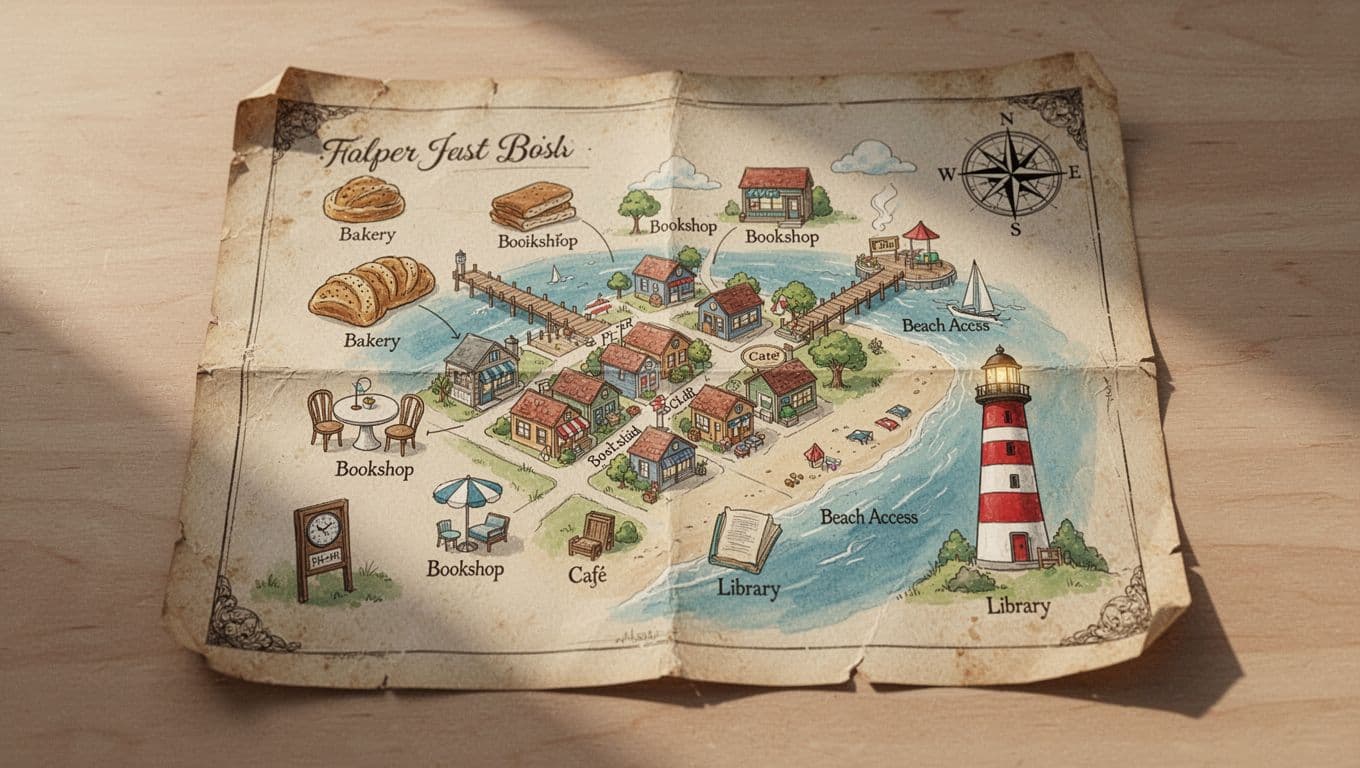 Map of a cozy beach town with familiar local spots
Connected standalones are common in small-town women’s fiction and coastal romance, especially when the setting is half the reason we’re reading. The town is the glue: the bakery where everyone runs into each other, the pier where secrets spill, the bookshop that hosts the local book club, the annual festival nobody can escape.
In this structure, each book usually follows a different heroine (or couple). The main plot wraps up by the end of the book, so I can often read out of order without feeling lost. If I pick up book four first, I’ll still get a full story with a beginning, middle, and a satisfying ending.
But reading out of order does change some things:
- Cameo moments land differently when I don’t know the backstory (the woman making a “quick appearance” might be a former main character).
- Friendships have more weight when I’ve watched them form, fracture, and heal.
- Reveals can get spoiled in casual conversation scenes (engagements, pregnancies, breakups, who moved away, who came back).
I think of it like visiting a beach town on vacation. I can show up and enjoy the ocean on day one, but if I stay a week, I start recognizing faces and routines, and the place starts to feel like mine.
If you’re drawn to heroines who keep their agency while love grows around them, I like pairing connected-standalone series reading with lists like romance books with strong independent female protagonists or best romance books with strong female leads. Those recs make it easier to pick the “right” entry point based on the vibe you want.
Generational or family saga series: keeping track of time and relationships
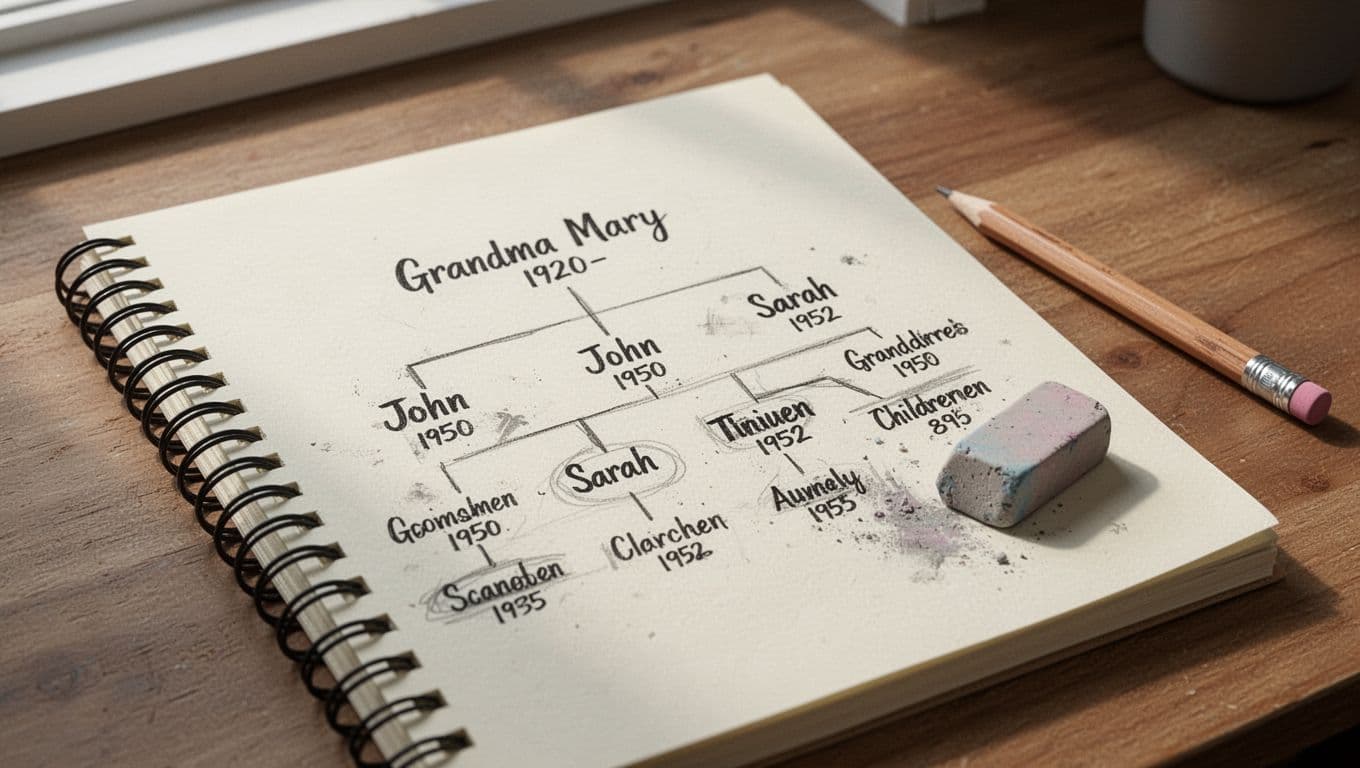 Notebook page with a simple family tree diagram
Family sagas feel different because the story is not only about what happens next, it’s about what happened before and how the past keeps tugging the present by the sleeve. These series often include time jumps, multiple points of view, and a web of relationships (siblings, parents, stepfamilies, exes, found family). Secrets can echo for decades, and a small choice in one book can become the emotional earthquake in the next.
The challenge is not “what order do I read these in?” (usually it’s still best to go in publication order). The challenge is keeping track of who’s who, when things happened, and how old everyone is supposed to be.
My easiest tactic is low-tech and fast: I make a mini family tree and a quick timeline. Nothing fancy, just enough to stop me from flipping back every few chapters.
I jot down:
- Family tree basics: parents at the top, siblings underneath, spouses and kids off to the side.
- Ages (or approximate ages): especially if the story jumps 10 to 20 years.
- Major events by year: weddings, deaths, relocations, “the summer at the lake house,” the year the business burned down, the year the secret came out.
If a saga includes romance threads, this kind of tracking also helps me avoid mixing up who ended up with whom, especially in stories where love interests appear early and come back later. For trope-heavy arcs (surprise pregnancies, long-separated partners, reunions), I’ll sometimes cross-reference my mood with a trope list like best romance books with accidental or unexpected pregnancy so I’m not blindsided by a plot turn I’m not in the mood for.
The payoff of a saga is huge, though. When you reach the point where a daughter finally understands her mother’s choices, or a sibling forgives what seemed unforgivable, it feels like closing a circle that’s been open for generations.
How I choose the right reading order every time
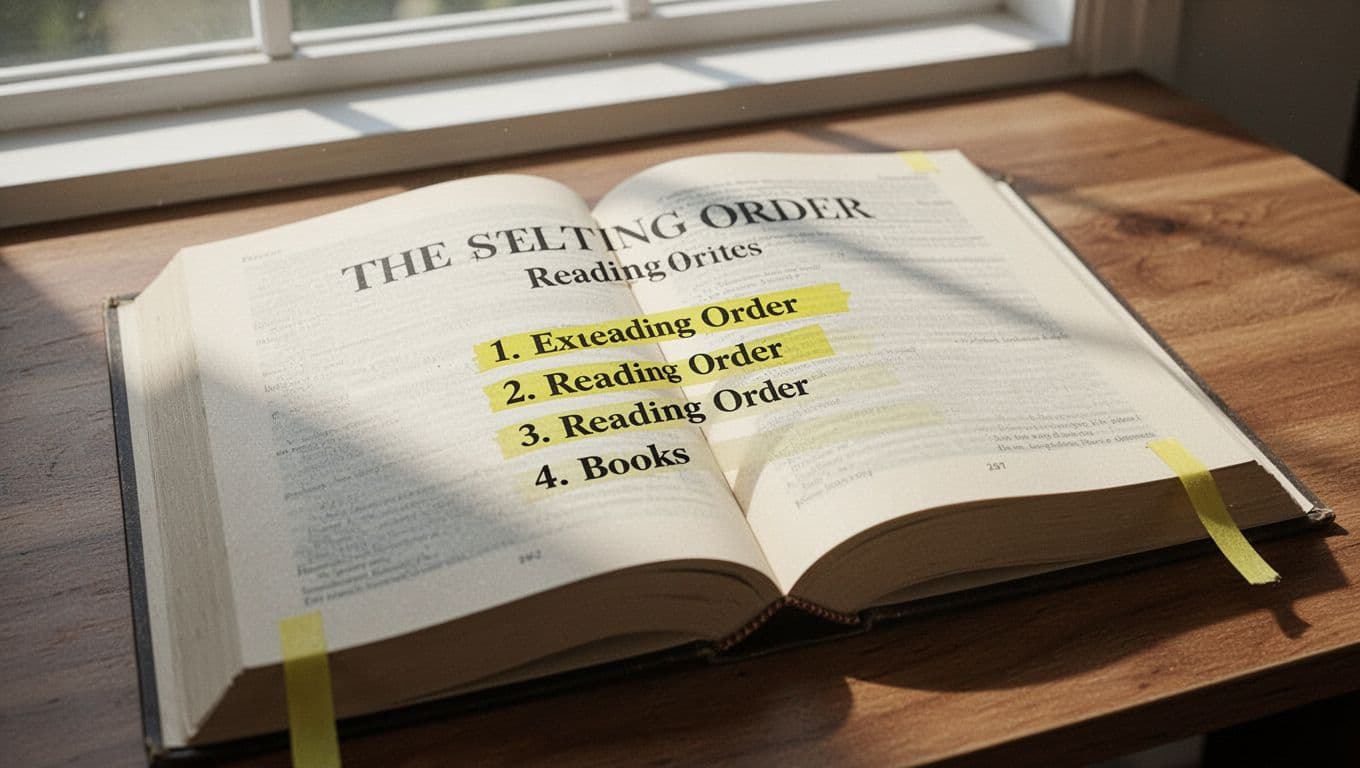 Close-up of a book’s front matter with a series list
When I’m figuring out how to read a women’s fiction series, I treat it like arriving in a new town. I want to start at the front door, not climb in through a window and pretend I didn’t miss the welcome mat. The right order is the difference between savoring the emotional build, and accidentally stepping on a big reveal that was meant to land later.
My goal is simple: maximum payoff, minimum confusion. Here’s the exact process I use when I’m not sure which book comes first, or when a series has prequels, bonus novellas, or “Book 0.5” chaos.
Start with the author’s listed order (and where to look fast)
If I can find the author’s official order, I stop searching and follow it. That list is usually designed to protect character arcs, keep the emotional reveals intact, and make sure recurring side characters show up at the right time.
When I want the answer fast, I check a few simple places (in this order):
- The author’s website series page (often the cleanest, most up to date source)
- The copyright page or front matter inside the book (print or ebook)
- The publisher’s page for the series (especially for traditionally published books)
- The author’s newsletter (many authors send reading order guides and updates there)
If I’m reading on Kindle or using a sample, I also flip through the “look inside” pages. A surprising number of series include a “Also in this series” list right up front. And if I’m holding a paperback, I look at the cover and back cover first because series numbers are often tucked there in tiny print.
This is also where I watch for a key detail: is there a prequel listed as optional? If the author labels it as “a bonus story” or “a companion novella,” I usually save it for when I’m already invested. (I like prequels best when they feel like dessert, not homework.)
If you enjoy women’s fiction that’s built around big life shifts and second chances, I also like pairing series reading with theme-based lists like romance novels with strong, competent heroines, since those books tend to reward reading in a steady order.
When numbering is confusing: publication order vs timeline order
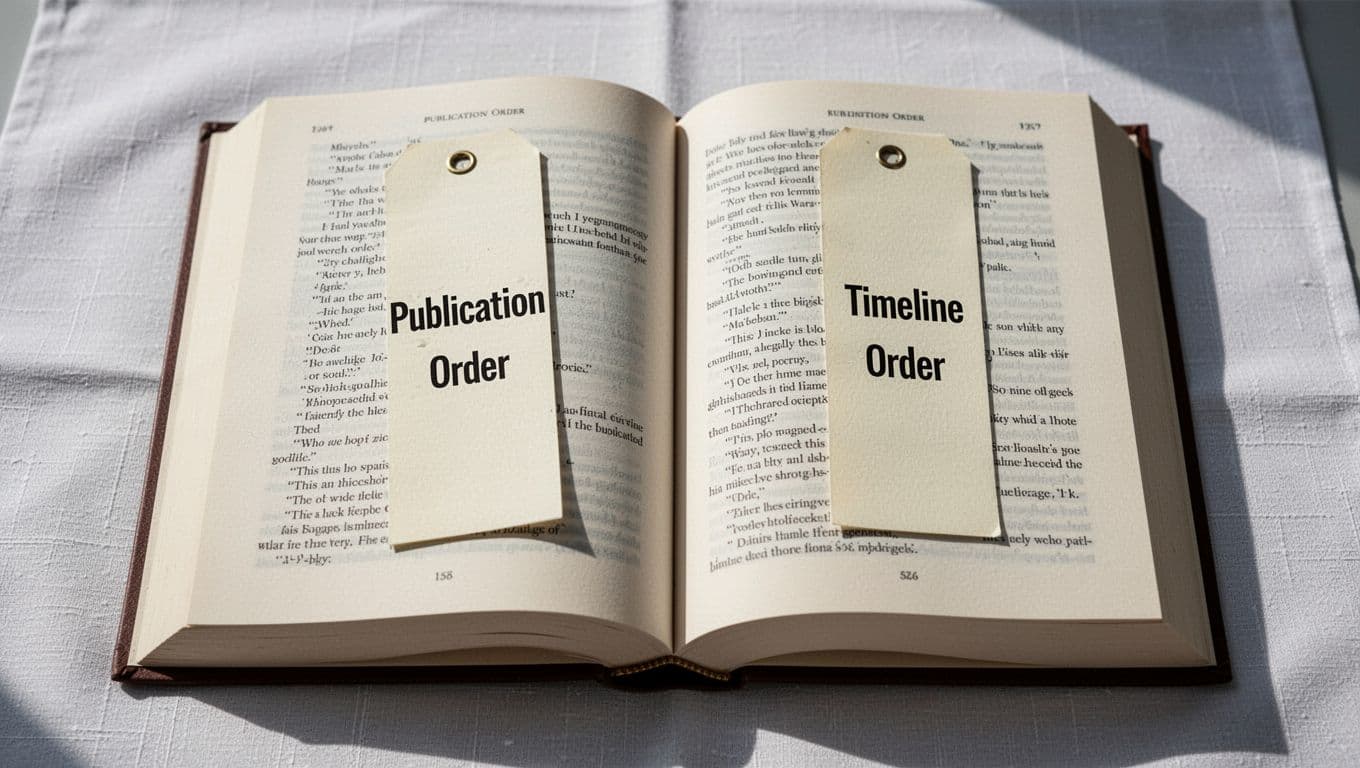 Two bookmarks labeled “Publication Order” and “Timeline Order”
This is where readers get tripped up, and honestly, it’s not your fault. Some series list books by when they were released, and others list them by when the story happens in the characters’ lives. Those are not always the same thing.
Here’s the plain-language difference:
- Publication order means you read in the order the author released the books. This is usually the safest choice because you experience reveals the way the author planned.
- Timeline (chronological) order means you read based on the story’s in-world time, even if that means reading a later-released prequel first.
My personal rule is simple: if I’m unsure, I read publication order first. It protects surprises. It also keeps character growth feeling natural, especially in women’s fiction where emotional healing builds layer by layer.
A few quick guidelines I use:
- If the series is connected standalones (same town, different heroine each book), publication order is usually best because it introduces the community in a steady way. You can still jump around, but publication order makes the town feel more real.
- If a “timeline” book is a prequel that explains a mystery, I don’t read it first. Prequels love to wink at future twists, even when they try not to.
- If a series has a big secret, a betrayal, or a who-is-the-father type of question, I avoid timeline order at the start. Those books are built to drop clues in a very specific rhythm.
If you’re in the mood for a character-first series that stays warm and readable (even when the emotions get real), browsing comfort-forward tropes can help you choose your entry point, like romance books with pregnancy or romance books with accidental or unexpected pregnancy.
A quick “safe to skip?” test before I jump to book two or three

Sometimes I’m tempted to skip book one, especially if book two has the plot hook I want (single mom, beach town, fresh start, you know the vibe). Before I do it, I run a quick yes or no test. It takes about a minute, and it saves me from that “wait, who is this guy and why do we hate him?” feeling.
My safe-to-skip test:
- Does the same main character continue?
If yes, I don’t skip. That’s usually one long emotional arc, and I want the full build. - Does the blurb say “after the events of” or “following what happened in book one”?
If yes, I don’t skip. That’s the book waving a little flag that I’m about to miss something important. - Do reviews hint at spoilers or major reveals?
If yes, I treat that as a sign the books are more connected than the covers suggest.
One extra thing I’ve learned the hard way: later-book blurbs are dangerous. They often spoil relationship status, pregnancies, moves, marriages, or the outcome of a long-running conflict in one casual sentence. If I’m trying to decide whether to start with book two, I read the first couple of lines only, then I stop.
If you like romance-adjacent women’s fiction where the heroine’s identity stays front and center (not just the couple), I often find that character voice matters more than the exact trope. That’s why I keep lists like romance books with plus-size FMCs around when I’m choosing a starting point based on the kind of heroine I want to live with for a few chapters.
My simple spoiler shield for series reading

I love series reading because it feels like staying with friends a little longer, but it also means spoilers can sneak up on me. I don’t want to read like I’m dodging danger, so I keep my “spoiler shield” simple and calm.
Here’s what actually works for me:
- I avoid Goodreads reviews until I finish the current book. Even well-meaning reviews drop details like “I can’t believe she chose him,” which is basically a neon sign.
- I mute a few keywords on social media when I’m mid-series (things like “ending,” “epilogue,” “Book 2,” and the main character’s name).
- I tell friends what book I’m on, especially if we buddy read. Most people are happy to keep it vague if they know where you are.
- I save bonus epilogues until the end of the series if the author uses them to tease the next couple or the next heroine’s setup.
This is especially helpful in women’s fiction series with romance threads, where a “bonus scene” can jump forward and quietly confirm who ends up together, who moves away, or who has a baby next. I want those moments to land when the story wants them to, not because I got curious and flipped ahead.
If you’re building a series TBR and you want stories that center heroines with full lives and real community around them, I also keep an eye on recommendation lists like romance books with Black female leads. Those posts can help you pick series (or connected standalones) where the character payoff is the point, not just the plot twist.
How I keep characters, emotions, and small-town details straight
When I’m figuring out how to read a women’s fiction series without getting lost, I don’t try to memorize everything. I give myself a few simple “memory hooks” that keep the experience cozy instead of confusing.
My goal is to keep three things clear: who everyone is, what the town feels like, and what shifted emotionally. If I can hold onto those, the rest falls into place fast.
Create a “who’s who” list that takes less than five minutes
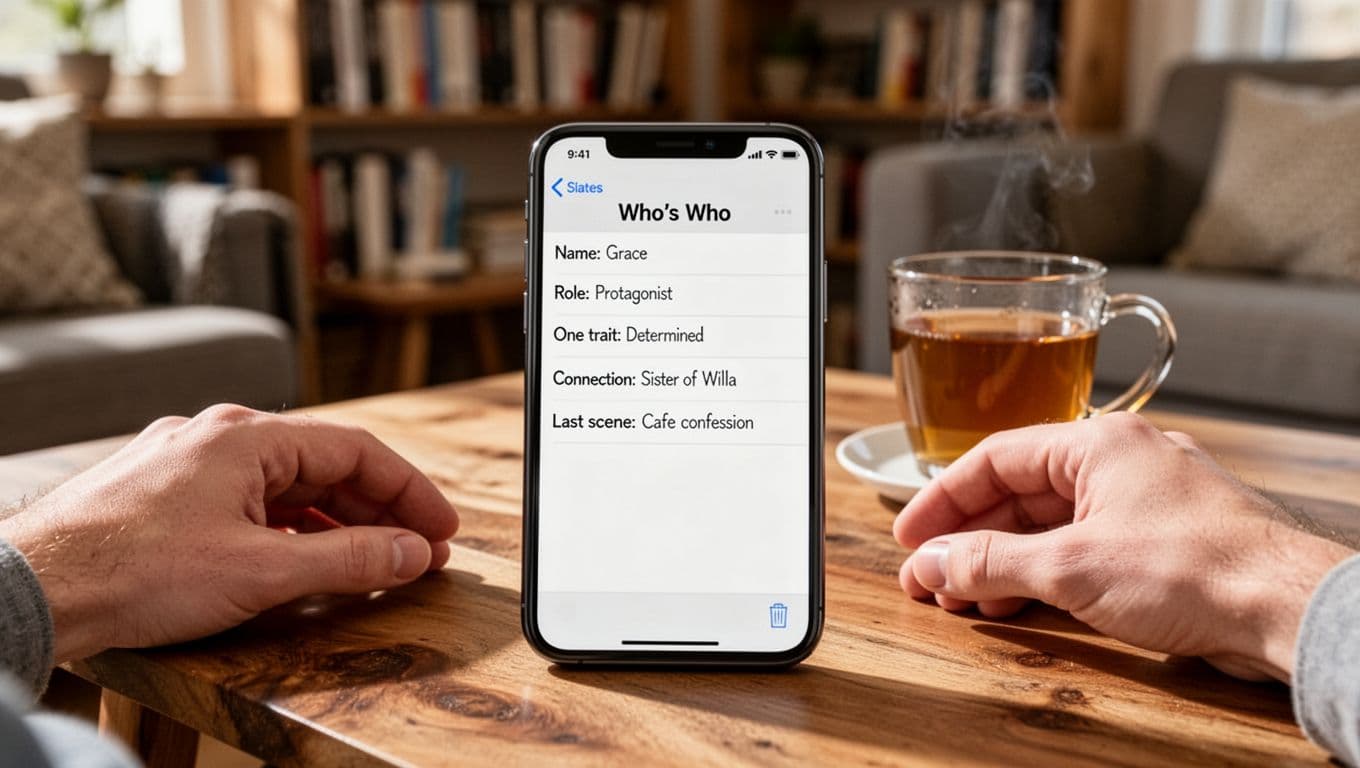 Phone notes app open to a quick character list
If a series has a tight-knit cast, my brain starts mixing people up around book two. That’s normal, especially in small-town stories where everyone is someone’s cousin, former classmate, or “the one who dated so-and-so in high school.”
So I keep a micro “who’s who” list. It’s not a spreadsheet, it’s a tiny cheat sheet I can update in seconds. I usually put it in my phone notes (because it’s always with me), but a reading journal works just as well.
Here’s my quick template:
- Name:
- Role (heroine, sister, best friend, love interest, town busybody):
- One trait (stubborn, nurturing, guarded, funny, anxious):
- Connection (sister of, best friend of, boss of, ex of):
- Last scene I remember (the most recent moment that sticks):
I keep the “last scene” line specific because it acts like a bookmark for my memory. For example: “Saw her at the café, she lied about the letter,” is more useful than “she’s nice.” If you like stories that focus on layered women, this pairs well with what I wrote about in why readers crave emotionally complex heroines, because the more emotional depth a character has, the more those small distinctions matter.
Use place anchors: the café, the dock, the bookstore, the family home

I treat recurring locations like labeled shelves in my head. In a good small-town series, the setting isn’t wallpaper, it’s a stage the characters keep returning to, with new truths each time.
When I remember where something happened, I can usually remember who was there, and what the tension was. The café holds the awkward run-ins. The dock holds the quiet confessions. The bookstore holds the “I didn’t know you felt that way” conversations. The family home holds the history nobody wants to talk about.
To make this easy, I write a one-line “town map” list. Not a real map (unless I’m in the mood to doodle), just a set of anchors like this:
- Café: the apology scene, plus the best friend overheard it.
- Dock: the heroine decided she’s done keeping secrets.
- Bookstore: the mentor figure gave her the hard truth.
- Family home: the boundary finally got set.
This kind of anchor works especially well in women’s fiction and romance, where setting is tied to comfort and mood. If you like noticing what readers tend to gravitate toward in these stories, things women love to read about in romance fiction is a fun companion read, because it lines up with why certain locations (and the scenes they host) stick with us.
Track the emotional arc, not every plot detail

Plot is what happened. Emotional arc is what changed. When I focus on the change, I don’t panic if I forget a side subplot or the name of the heroine’s boss.
Women’s fiction is usually built around internal shifts: trust, grief, self-worth, boundaries, confidence, forgiveness. The romance thread (if there is one) tends to feel satisfying when it matches that inner growth, not when it distracts from it.
So at the end of each book, I write a recap that’s short enough I’ll actually do it. Here’s my three-bullet version:
- What happened: (the headline events, no more than two sentences)
- What it cost: (what she had to face, lose, admit, or give up)
- What hope looks like now: (what’s opened up, what’s possible)
If I can name those three things, I can jump into the next book without spending the first five chapters trying to remember why she’s tense around her sister, or why the bookstore owner keeps giving her that look.
When I take breaks between books, here’s how I restart smoothly
I’m a mood reader. Sometimes I binge a whole series, sometimes I take a break for three weeks and come back like, “Wait, who is Ben again?” When that happens, I don’t restart the whole book. I use a quick routine that gets me back into the story’s emotional frequency.
My restart routine looks like this:
- Skim the last chapter of the previous book (not the whole ending, just enough to catch the tone).
- Reread my notes, even if it’s only five lines.
- Check the “who’s who” list and add any missing relationships.
- Reread one favorite scene (it’s the fastest way to feel connected again).
- Start the next book and trust it to carry me.
If I’m really foggy, audiobooks can be a great refresher. I’ll sometimes listen to the final hour of book one while I’m doing laundry or driving, then switch to book two in print or ebook. Hearing character voices again is like walking back into a familiar room and recognizing everyone at once.
Make the series feel like a treat, not a chore

When I’m learning how to read a women’s fiction series, I try to protect the feeling that made me start in the first place, that “one more chapter” pull. The fastest way to drain that joy is to treat a series like an assignment, where I’m forcing the pace, forcing the mood, and reading out of guilt instead of curiosity.
For me, the fix is simple. I make a few tiny choices that keep the story world close, without letting it take over my whole reading life. Pace, format, and community can all work for me, not against me.
Pick a pace that fits my life (binge, blend, or breathe)
I used to assume a series had to be read one way, start at book one and sprint to the end. Now I pick a pacing style based on my schedule and the emotional weight of the books. That one decision keeps the series feeling like a treat.
Binge (back-to-back) is exactly what it sounds like. I finish one book and roll straight into the next.
Binge works best when:
- The tone is comforting or funny, even if the stakes are real.
- The books end on momentum (big choices, unresolved tension, found-family moments).
- I’m in a season where reading time is steady (vacation, quiet weekends, early bedtimes).
The upside is immersion. I don’t forget side characters, running jokes, or that one complicated sister dynamic. The downside is emotional fatigue if the books are heavy.
Blend (one between other reads) means I read a series like a playlist. One book from the series, then a standalone, then I come back.
Blend works best when:
- I’m a mood reader and don’t want to be locked into one tone.
- The series is connected standalones, where each book wraps up its main arc.
- I’m juggling book club reads or library due dates.
This is my favorite way to keep a long series going without losing my spark. It’s like visiting the same beach town every other week, familiar, but still fresh.
Breathe (intentional breaks) is my reset button. I finish a book, then I pause on purpose.
Breathe works best when:
- The themes are heavier (grief, trauma recovery, complicated family history).
- The story hits close to home and I need time to process.
- I want the next book to feel special, not automatic.
If a book made my chest tight or my eyes sting, I let it settle. I want to come back ready, not wrung out. I’ll sometimes jot one line about the emotional shift at the end of the book, so the break doesn’t turn into confusion later.
Mix formats to stay connected to the story world

If I feel myself stalling mid-series, I don’t assume I’m “over it.” I usually just need a format change. Switching between ebook, print, and audio helps me stay close to the story world, even when my day is busy.
When I’m reading a series, I use formats like tools:
Ebook is my everyday option. It’s always with me, and it’s easy to sneak in a few pages while I’m waiting in line or winding down at night. I also like being able to search a character name if I’m blanking on a detail from two books ago.
Print is what I reach for when I want to slow down and savor. If a series has strong friendships, tender scenes, or those quiet chapters where a heroine finally tells the truth, I like feeling the pages move under my hands. It keeps me present.
Audio is my secret weapon for momentum. It’s perfect for commutes, cooking, laundry, and walking. If I’m between books and I can’t remember where I left off emotionally, hearing voices again can flip the “I’m back” switch fast.
A few small tips that help me get more out of each format:
- Adjust audio speed by scene type. I’ll nudge speed up slightly for recap-heavy chapters, then slow down for emotional scenes where I want every pause and breath.
- Use highlights for the lines I’ll want later. In ebooks, I highlight quotes that capture a character’s growth, a boundary being set, or a truth finally spoken. Those highlights become my quick refresher before the next book.
- Match format to energy. Low energy day, audio. Focused evening, print. Busy week, ebook.
Mixing formats keeps the series from feeling like it’s asking for the same kind of attention every time. I stay connected, but I don’t have to read in only one “correct” way.
Read with friends without ruining surprises

Reading a series with friends can be pure joy, as long as nobody steamrolls the experience with spoilers. I like the feeling of sharing reactions in real time, but I also want the story to unfold the way it’s meant to. So I keep the plan simple and repeatable.
Here’s the book-club structure that works best for a women’s fiction series:
- Discuss one book at a time.
We only talk about the book everyone has finished. If the series is long, we set a steady rhythm (every two to four weeks) and stick to it. - Use clear spoiler rules.
My favorite rule is “no future knowledge.” If you’ve read ahead, you can still join the conversation, but you don’t hint. No “Just wait” comments, no raised eyebrows, no “you’re going to hate him later.” Even tiny hints change how a scene lands. - Focus the discussion on payoff, not plot trivia.
Women’s fiction is built on emotional movement, so I like prompts that honor that:- What belief did the heroine start with, and what cracked it open?
- Where did she finally set a boundary, even a small one?
- Which relationship changed the most, and why?
- Share favorite quotes and growth moments.
I love ending a meetup with one quote we underlined and one “look how far she’s come” moment. It keeps the conversation warm and specific, not just a recap of events.
If your group chat is active, a pinned message helps: “We’re discussing Book 2 only, no references past that point.” It sounds strict, but it saves the magic.
A good series is like a long friendship. Talking about it should feel like passing a plate of cookies around the table, not like getting quizzed.
Conclusion
When I’m deciding how to read a women’s fiction series, I remind myself that the best experience is the one that protects the emotional build. Series are meant to feel lived-in, like returning to the same town and noticing what changed, who grew up, and what finally got said out loud. If I read in a way that keeps me oriented, the payoff hits harder, especially in stories built on relationships, healing, and second chances.
Here’s my quick checklist when I start (or restart) a series:
- Identify the series type (continuous, connected standalones, or family saga)
- Confirm the reading order (author list first, publication order if unsure)
- Avoid spoilers (later blurbs and reviews are risky)
- Keep a simple character and place list (names plus one memorable detail)
- Track emotional change, not every plot point
- Choose a pace that fits my life (binge, blend, or take breaks)
Most of all, I try to stay present with the story, not perfect.
What series are you reading right now, and do you like to binge it or take breaks between books?


