

My Favorite Women’s Fiction Books About Work-Life Balance

Some days I feel like I’m doing five full-time jobs at once. Work needs more hours, family needs more patience, relationships need attention, and my health still wants a walk, a glass of water, and eight hours of sleep. By the time I sit down, my brain is loud, and I just want something that makes me exhale.
That’s where women’s fiction comes in. The best stories don’t pretend balance is easy, they show real choices and real consequences, from the office to the kitchen table to the quiet thoughts nobody says out loud. When I’m craving women’s fiction books about work-life balance, I’m usually looking for a character who tries, fails, adjusts, and keeps going anyway.
In this post, I’m sharing what makes these books hit, the themes that show up again and again (identity, boundaries, ambition, motherhood, friendship, and love), and a curated list of titles across different vibes, funny, heartfelt, hopeful, and messy. If you like stories that blend personal growth with romance, you might also enjoy my notes on Women’s Fiction vs Romance and what women love to read in romance.
I’ll also point out the kinds of heroines I trust most, the ones with agency, flaws, and a life outside the love story, like the characters I talk about in What is a heroine in a novel? and my roundup of strong heroines in modern women’s fiction. If your favorite reads lean romantic, these posts on strong, competent heroines and strong independent female protagonists fit right in, and so do the honest takes on why real love is messier than romance fiction and the comfort and consequences of romantic fiction.

What “work-life balance” looks like in women’s fiction (and why it feels so real)
When I reach for women’s fiction books about work-life balance, I’m not hunting for a perfect schedule color-coded into peace. I’m looking for recognition. The best stories capture that lived-in feeling of being pulled in two directions, then three, then five, until the heroine starts to wonder which version of herself is the “real” one.
What makes these novels land is how ordinary the stress looks. It isn’t always a dramatic blowup in a boardroom. Sometimes it’s a quiet scene with a cold cup of coffee, a calendar full of obligations, and a woman trying to remember if she ordered the birthday gift or only thought about it. Women’s fiction tends to honor that kind of truth, the kind you can’t explain in one sentence.
I also love how the genre keeps the heroine at the center of her own life, whether she’s learning to ask for help, changing a relationship dynamic, or realizing that “having it all” is often a story someone else sold her. If you enjoy character-first storytelling, it helps to understand the differences between women’s fiction and romance and the deeper contrast in women’s fiction vs romance fiction, because work-life balance arcs usually live in that women’s fiction sweet spot: identity, choice, consequences, growth.
The most common pressures heroines face at work and at home
 An overwhelmed woman trying to work from the kitchen while home responsibilities hover
In the women’s fiction I trust most, work-life pressure doesn’t show up as one big villain. It shows up like a thousand paper cuts, and the heroine keeps telling herself she can handle it until she can’t.
Here’s what I see again and again, and why it feels so familiar:
- Demanding bosses show up as last-minute meetings, unclear expectations, and “just one more thing” requests that swallow evenings. The heroine often feels replaceable at work, which makes her over-perform even more.
- Unpaid labor at home becomes its own second shift, meals, laundry, school forms, appointments, and the invisible planning that keeps a household from tipping over.
- The mental load is the constant background hum: remembering, tracking, anticipating, and smoothing. It’s not only doing tasks, it’s being the one who holds the tasks in her head.
- Caregiving for kids or parents adds emotional weight. One sick child or one aging parent can turn an already tight week into a maze with no exit.
- Financial stress raises the stakes on every choice. It’s hard to set boundaries when the mortgage depends on your paycheck, or when leaving a job could mean losing health insurance.
- Relationship expectations can be the quietest pressure, and sometimes the sharpest. The heroine feels she must be pleasant, available, supportive, and attractive, even when she’s running on fumes. That’s part of why I like stories that speak honestly about love, like why real love is messier than romance fiction and the comfort and consequences of romantic fiction.
The most realistic books also admit something that can be hard to say out loud: balance can mean choosing, not doing it all. Sometimes “winning” looks like dropping a ball on purpose, then refusing to pick it back up.
And because I’m a character person, I notice how these pressures shape the type of heroine we root for. If you love capable women on the page, you’ll probably enjoy 13 character traits about strong heroines in women’s fiction and the way those traits show up under stress.
How these stories show burnout without turning into a lecture

Burnout in women’s fiction rarely gets announced with a neat label. It’s shown through behavior, tone, and those little moments where you can tell the heroine is running on a nearly empty tank. That’s why it doesn’t feel preachy. It feels like watching someone you care about start to disappear in slow motion.
The “show, don’t tell” moments tend to look like this:
- She misses a birthday, or she’s physically present but mentally gone.
- She snaps at someone she loves, then immediately hates herself for it.
- She can’t sleep, or she sleeps but never feels rested.
- She numbs out, too much scrolling, too much wine, too much “I’ll deal with it tomorrow.”
- She people-pleases on autopilot, saying yes before she even checks her calendar.
What makes the best books work is that they offer consequences and compassion at the same time. The heroine might lose trust at home, or make a mistake at work, or realize she’s become the friend who never calls back. But the story doesn’t punish her for being human. It lets her feel the grief of what’s been neglected, and it also lets her be understood.
I think this is where women’s fiction shines as a genre. It gives space for the heroine’s inner life, without reducing her to a cautionary tale. If you like that kind of character focus, it helps to remember the distinction between roles in a story, like the difference between a heroine and a protagonist and what that means for whose growth the book is really protecting.
And when there’s romance in the mix, I’m always watching for one key thing: does love add support, or does it become another demand? That’s why I like comparing women’s fiction arcs with romances that keep the heroine’s life intact, like the ones I talk about in best romance books with strong female leads, plus my roundups of best romance novels with strong, competent heroines and romance books with strong independent female protagonists.
The quiet turning points that make balance possible

The turning point in women’s fiction books about work-life balance is rarely a single motivational speech. It’s usually a small decision that finally gets treated as sacred. A boundary held. A truth spoken. A moment of clarity that arrives while folding towels, driving home, or staring at an email she can’t answer one more time.
The shifts that feel most hopeful, and most believable, tend to fall into a few patterns:
- Boundary-setting that sticks. Not a one-time “I can’t” followed by ten apologies, but a new rule she actually keeps. Sometimes it’s as small as no work email after 7 p.m., and sometimes it’s as big as “I’m not available for this role anymore.”
- Asking for help without shame. She stops treating support like failure. She delegates, she hires help if she can, she leans on a friend, she tells the truth about how hard it’s been.
- Redefining success. The heroine notices she’s been chasing someone else’s gold star. She starts valuing time, peace, health, and relationships as real achievements.
- Leaving a job (or changing how she does it). Quitting isn’t always possible, and good books admit that. But sometimes she negotiates, changes departments, takes leave, or starts something new.
- Changing a marriage dynamic. Not necessarily ending the relationship, although sometimes that’s the honest choice. It can also mean naming the imbalance and requiring real change at home, not “helping,” but shared responsibility.
- Choosing a different pace. She stops sprinting through her own life like it’s something to get through. That choice can feel scary at first, because stillness leaves room for feelings.
I love that these books don’t promise a perfect life. They promise a truer one. The heroine still has responsibilities. She still gets tired. But she stops abandoning herself to keep everything else running.
If you want more context on how women’s fiction makes room for this kind of inner shift, these pieces pair well with this theme: strong heroines who define modern women’s fiction, what is a heroine in a novel?, and even the craft-adjacent look at things women love to read about in romance fiction, because balance stories often thread romance in without letting it take over.
How I pick women’s fiction books about work-life balance that actually satisfy
When I’m choosing women’s fiction books about work-life balance, I’m not just picking a plot, I’m picking a feeling. I want a story that meets me where I am, whether I’m frazzled and need to laugh, tender and need a good cry, or worn out and need something steady and warm.
Over time, I’ve noticed three things decide whether a “balance” book hits for me or leaves me annoyed. First, the vibe. Second, the exact kind of balance problem the heroine is facing. Third, the kind of ending I can handle right now. If you want a quick refresher on what makes women’s fiction its own thing (especially when there’s romance involved), this guide helps frame what I’m looking for: What Is Women’s Fiction Explained.
Start with the vibe: funny, tender, gritty, or cozy
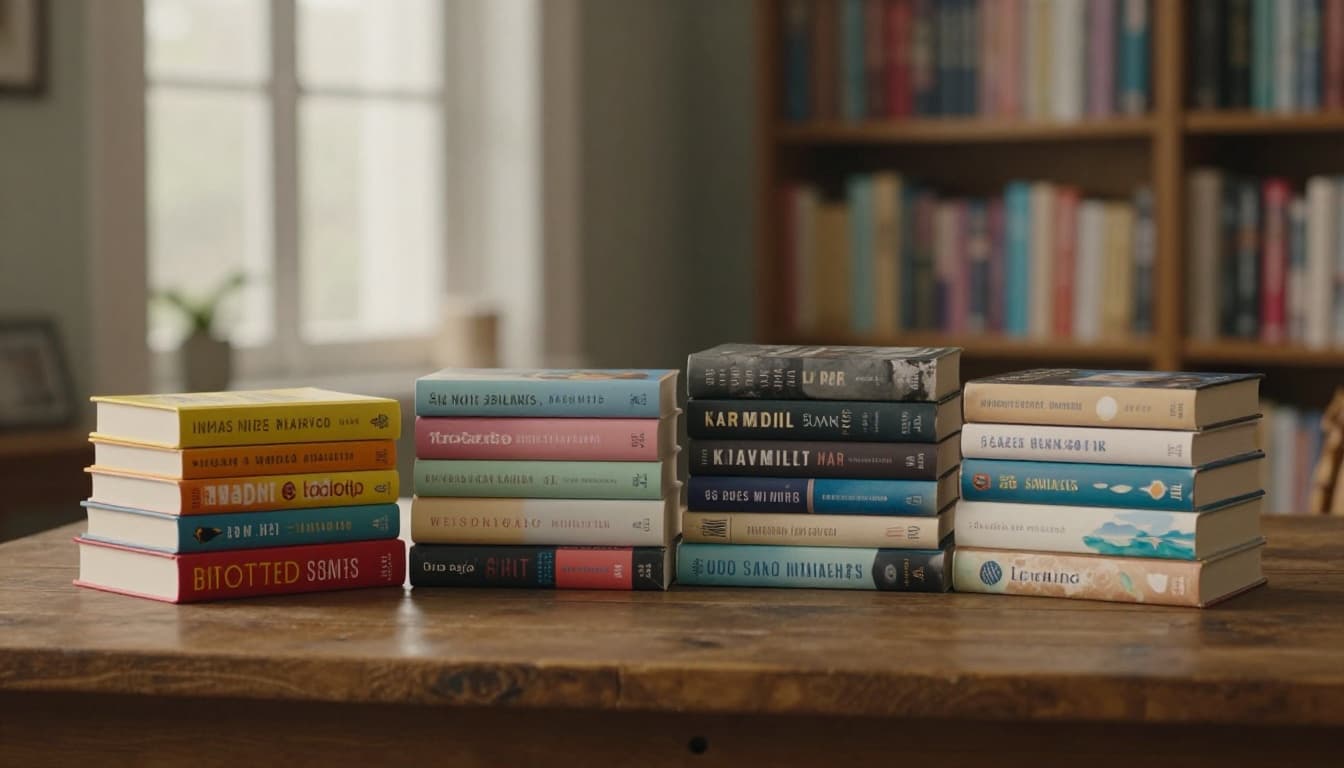 Four different “vibe” stacks for choosing the mood you want.
Tone changes everything. I can read two books with the same setup (overworked woman, family needs, job pressure) and have totally different experiences depending on the vibe. The right tone makes me feel understood. The wrong one makes me feel like I’m forcing myself through someone else’s mood.
Here’s what I expect from each vibe when I’m shopping for work-life balance stories:
- Funny: These are my “I can’t take one more thing seriously” books. I’m looking for sharp dialogue, awkward office moments, group chats that should be illegal to screenshot, and the kind of humor that comes from a woman doing her best while life keeps tossing bananas under her feet. Even when the stakes are real, the story gives me breathing room.
- Tender: This is for when I want softness without sugarcoating. Tender books usually lean into relationships (friendships, siblings, parent-child dynamics) and the quiet ache of identity shifts. Expect scenes like folding laundry at midnight, the heroine noticing she’s been holding her breath for years, and small acts of care that feel huge.
- Gritty: I choose gritty when I’m ready for consequences. These books don’t flinch. The work problems can be sharper (job loss, workplace politics, reputation hits), and the home side can be messier (resentment, long-held secrets, real burnout). I don’t read gritty for comfort, I read it for the clean honesty of watching a woman stop lying to herself.
- Cozy: Cozy doesn’t mean “nothing happens.” It means the story has a steady hand on the wheel. The setting often helps, a town that feels like a net, a familiar café, a porch light, a circle of people who notice when you’re not okay. Cozy balance stories are the ones I pick when I want hope to feel safe, not fragile.
If I’m unsure, I look at how the heroine is described. Is she mostly coping with chaos using humor, or is she doing quiet self-inventory? Is the story pitched as “messy and real,” or “heartwarming and uplifting”? That tiny language difference tells me what kind of emotional ride I’m signing up for.
And when I’m craving a heroine who feels layered, not just “strong” on the surface, I like stories built around inner conflict, not perfection. This breakdown nails why those heroines are so satisfying to read: why readers love complex strong heroines.
Look for the type of “balance problem” you need today
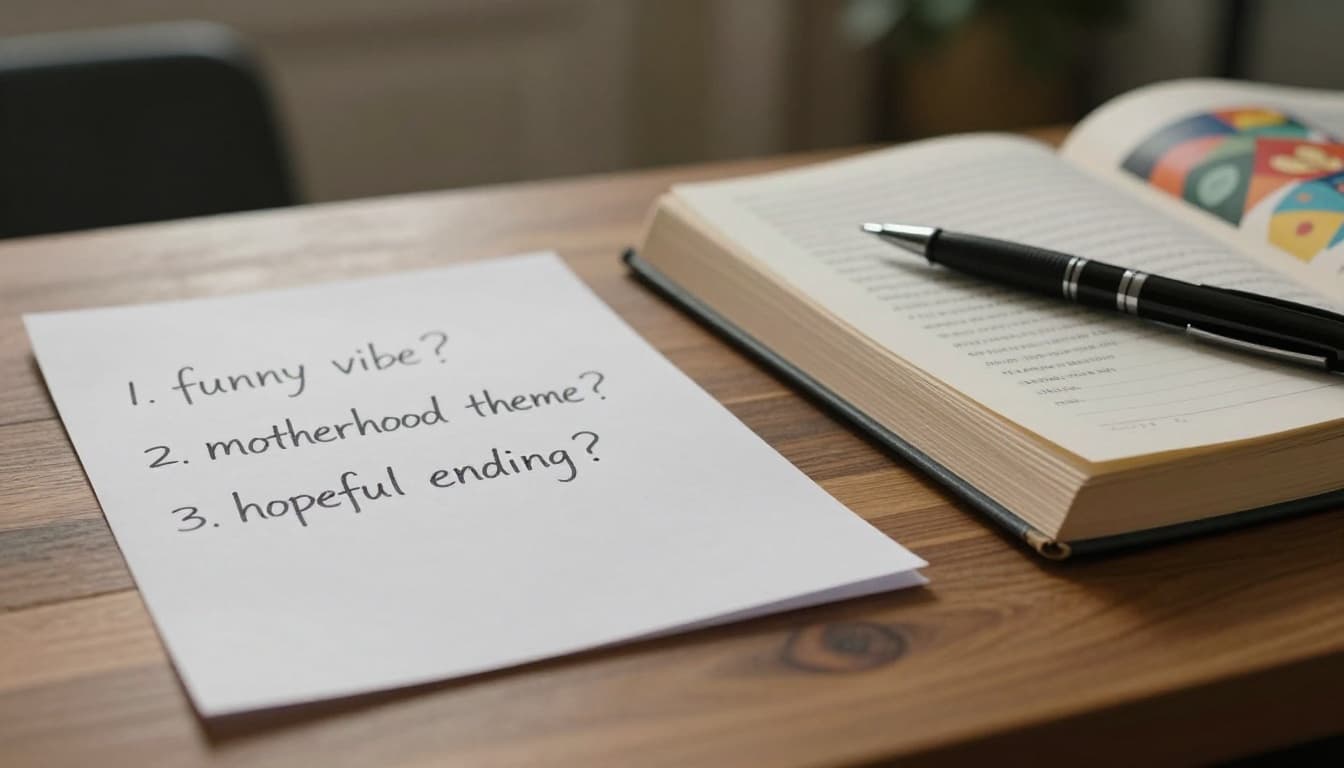 A simple way to match your mood and your life season to the right story
This is the part I wish someone had told me earlier: “work-life balance” is not one problem. It’s a whole shelf of problems wearing the same label. When I pick a book that matches my current season, it’s instantly more satisfying, because the stress on the page looks like the stress in my head.
When I’m choosing, I use a few simple prompts. If one of these makes your chest tighten in recognition, that’s probably your best direction right now:
- If you want new-job stress: Look for a heroine who’s learning a role while trying to prove she belongs. The best ones show how confidence gets built in tiny bricks, not in one big speech.
- If you want motherhood and identity: I want the story to name the mental load without turning the heroine into a stereotype. I’m looking for her desire to be a good mom and still be a whole person.
- If you want marriage strain: I choose books where the tension comes from imbalance, not just one villain moment. The most honest stories show how “small” unfairness becomes a habit, then becomes a marriage.
- If you want creative-career pressure: These are perfect when I feel stuck, behind, or like my work is tied to my worth. I want the story to wrestle with ambition, envy, and the fear of wasting talent.
- If you want caregiving stress: I need realism here. The heroine can love someone deeply and still feel angry, exhausted, and trapped. Those books help me feel less ashamed of complicated feelings.
- If you want divorce recovery: I look for a story that treats divorce like an emotional weather system, not a single event. I want the grief, the relief, the weird freedom, and the rebuilding.
- If you want a midlife reset: Give me the “now what?” question. I want reinvention that isn’t a makeover montage. I want a woman learning how to choose herself without needing permission.
I also pay attention to where the balance problem sits. Is it external (hours, money, logistics), internal (people-pleasing, guilt, perfectionism), or relational (unequal labor, unmet needs, poor communication)? The most satisfying women’s fiction books about work-life balance usually hit at least two of those at once, because that’s how real life works.
Choose endings that fit your heart right now
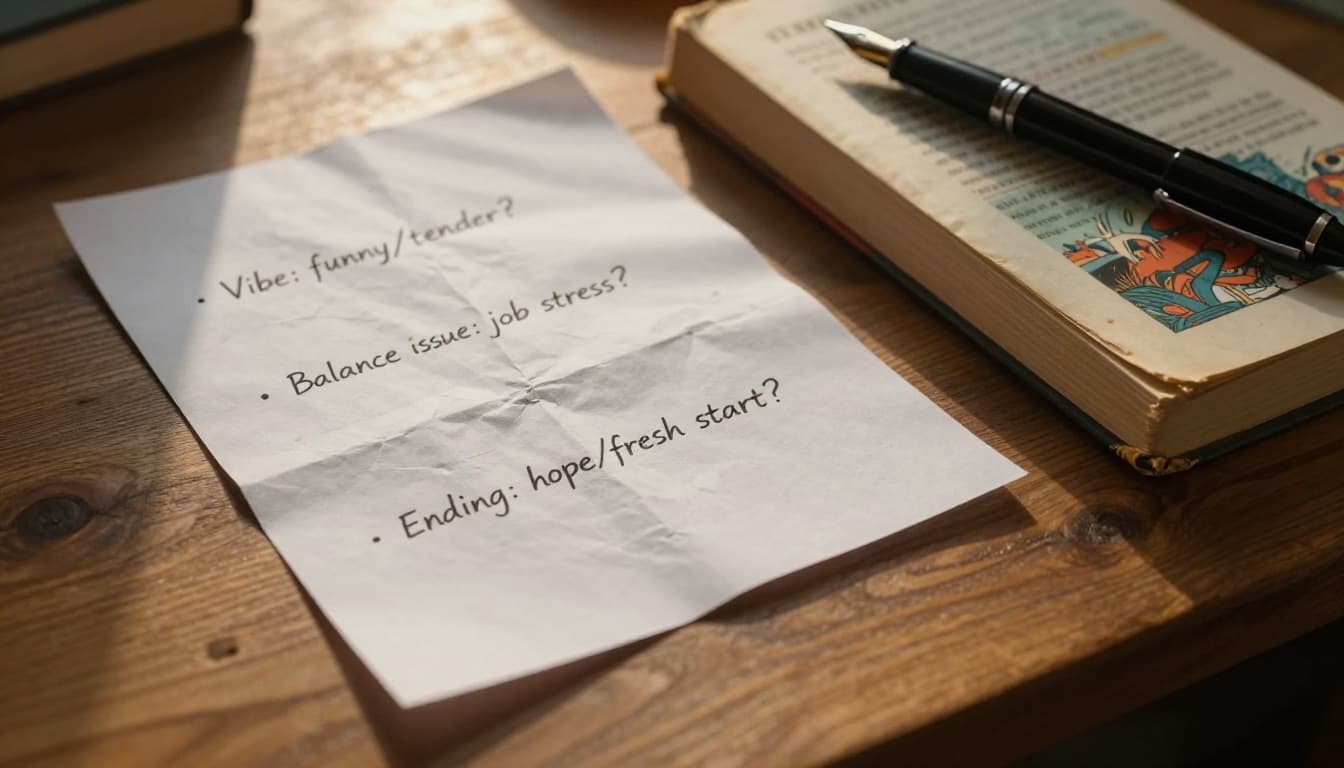
 The kind of reading setup that makes an “earned ending” feel even better
The ending matters more than I want to admit. Not because I need perfection, I don’t. I just need the landing to feel earned. In women’s fiction, a satisfying ending usually isn’t “everything is fixed.” It’s “she’s not stuck anymore.”
When I’m in a tender season, I want an ending with open-ended hope. Not vague, not foggy, but roomy. The kind where the heroine has enough clarity to take the next right step, even if she doesn’t have every answer.
When I’m exhausted, I want a fresh start ending. It can be a new job, a new town, a new boundary, a new way of doing family life, but I need forward motion. I want the sense that she’s done negotiating with the version of herself that always says yes.
And when I’m in my “life surprised me” era, I want second chances. Not just romantic ones. Friendship second chances. Self-trust second chances. The courage to try again after failing loudly, quietly, or both.
This is also where character-driven growth makes or breaks the book for me. If the heroine’s choices don’t change, the ending can’t satisfy, because it feels like watching someone walk in circles. But when the growth is real (even small), the ending lands like setting down a heavy bag I didn’t realize I was holding.
So before I start a new book, I ask myself one honest question: do I want comfort, catharsis, or courage? The right ending gives me what I came for, and I close the cover feeling steadier than when I opened it.
A curated reading list: stories where she’s juggling it all (and something has to give)
When I want women’s fiction books about work-life balance that feel honest, I look for stories where the heroine isn’t just “busy.” She’s stacked. Her calendar is packed, her phone won’t stop, and her sense of self starts to depend on how well she performs for other people.
These picks are for that very specific kind of tension: the moment when she realizes she can’t keep being the glue without losing herself. Each micro-list leans into a different pressure point, career identity, emotional labor at home, and the bold (and scary) decision to reset on purpose.
Career pressure and identity: when ambition starts to cost too much

Some novels understand the quiet panic behind achievement, the fear that if you slow down, everyone will see you as replaceable. I like career-centered stories that show workplace boundary drift, reputation stress, and the way self-worth can get stapled to performance.
Here are my go-to picks when I’m craving that “I’ve built a life I can’t breathe inside” feeling:
- Woman Down by Colleen Hoover (Jan 2026)
This one hits the “creative career pressure” nerve hard. A writer takes a public reputational blow after a film flop, and the fallout turns personal fast. I loved how the story frames ambition like a high-wire act, one slip and the crowd decides who you are. It’s also a sharp look at what happens when your identity is tied to output, reviews, and being seen as legitimate. - Yellowface by R.F. Kuang (2023)
If you want reputation stress with teeth, this is it. The plot centers on publishing, appropriation, and the way the internet turns moral judgment into a sport. It’s not a cozy read, but it’s wildly effective at showing how “success” can become a trap where you’re always defending your right to be there. - The Devil Wears Prada by Lauren Weisberger (2003)
A classic for a reason. It captures the slow erosion of boundaries, the normalization of after-hours demands, and that slippery slope where you stop noticing how much you’ve given away. I come back to it when I need a reminder that a prestigious job can still be a bad deal. - Something Borrowed by Emily Giffin (2004)
This one is more relationship-driven, but the career angle is quietly strong. It shows what happens when you’re “doing everything right” on paper, and still feel like you’re living someone else’s life. The identity pressure here isn’t just workplace-based, it’s social and internal, which makes it a sneaky-good fit for this micro-list.
If you’ve ever answered one more email just to prove you’re “easy to work with,” these stories will feel uncomfortably familiar.
Love, family, and the mental load: balancing relationships without losing yourself
When work-life balance breaks down at home, it rarely looks dramatic at first. It looks like one person remembering everything, planning everything, soothing everyone, and then being called “too sensitive” when she finally snaps. I love books that name emotional labor without turning the heroine into a martyr.
These novels focus on partnership gaps, friendship support, and the way love can be real but still uneven:
- Take What You Can by Naima Coster (July 2026)
This is my “new parenting friendship dynamics” pick, and it’s perfect for the mental load theme. Two friends, now new moms, try to rebuild closeness while their lives are packed with kids, marriage stress, and the weird identity shift that comes with motherhood. The tension isn’t just diapers and schedules, it’s grief for who they used to be, and the need for a friend who remembers you as more than someone’s mom. - Someone’s Gotta Give by Alisha Fernandez Miranda
A sharp, funny look at the relentless logistics of modern motherhood, marriage, and a demanding job. What I appreciate most is how it shows the “nice mom” role as a performance with a high cost. It also nails the specific exhaustion of being the default parent while still trying to show up professionally. - Little Fires Everywhere by Celeste Ng (2017)
This isn’t a light read, but it’s an excellent emotional labor book. It explores motherhood expectations, community judgment, and the way women get punished for choices that men barely get asked about. It’s a reminder that the mental load isn’t only in your home, it’s in the social air you breathe. - The Good Part by Sophie Cousens
A more playful take, with real insight underneath. The premise (skipping ahead in life) creates a great lens for the shock of responsibility, relationships, and parenting demands. It captures that feeling of waking up in a life you didn’t fully choose, then trying to act grateful while quietly panicking.
If you want stories that feel like a hand on your shoulder, these are the ones that say, “You’re not imagining it, it really is a lot.”
Fresh starts and second chances: choosing a new life rhythm on purpose
Fresh start books are my reset button. I read them when I’m tired of “pushing through,” and I want a heroine who chooses a new pace even if it disappoints someone. The best women’s fiction books about work-life balance in this lane aren’t about escaping responsibility, they’re about redefining success so life feels livable again.
These picks bring moving energy, career pivots, crossroads choices, and that hard question: What do I want my days to feel like?
- Once and Again (2026 theme pick)
For that time, choice, crossroads feel, I’m looking for a story where the heroine gets a real hinge moment, the kind where one decision reroutes the rest of her life. The “once and again” vibe works best when it’s not magical perfection, it’s a second chance with consequences, nerves, and hope in the same breath. - Engagement by Gun-Britt Sundström (English translation spotlight, 2026 lists)
This is the independence vs. commitment tension in book form. The heroine fights to keep her autonomy while love keeps asking for more structure, more tradition, more “prove it.” I like it because it treats commitment like a negotiation, not a prize, and it shows how a woman’s time and freedom can become bargaining chips if she isn’t careful. - Last Night in Brooklyn by Xochitl Gonzalez (April 2026)
A modern reinvention story with a messy pulse. It has that “new scene, new self” energy, but it also pays attention to class, identity, and how easy it is to swap one exhausting life for another. I like it for readers who want a reset that feels risky, not tidy. - Eat, Pray, Love by Elizabeth Gilbert (memoir, but a classic reset read)
Not a novel, but it’s a foundational “choose a new rhythm” story for a reason. It captures the craving for space, the need to rebuild self-trust, and the complicated relief of stepping away from a life that looks good from the outside.
This is the reading lane I choose when I need permission to believe that a calmer life can still be a meaningful one.
Make your reading time part of your balance, not another item on your to-do list
When I’m already stretched thin, I don’t need reading to become one more thing I “should” do. I want it to be a small, steady form of care. The good news is that reading time doesn’t have to look like an hour of silence and a perfect routine. It can be five minutes here, ten minutes there, the same way a few sips of water still count.
This is also why I love women’s fiction books about work-life balance. They remind me that rest can be practical. It can live inside real life, not outside it. If you’re the kind of reader who likes character-first stories where the heroine is allowed to be messy and human, you might also like my breakdown of what women’s fiction is, because it explains why these books feel like a hand on your shoulder instead of a lecture.
Small pockets of reading time that actually work
 A paperback next to a coffee cup on a rainy windowsill
I used to think “real reading” only counted if I had a big, uninterrupted block. That mindset turned books into homework. Now I treat reading like stretching. A little still helps, and it adds up faster than you’d think.
Here are a few realistic pockets of time I come back to (gently, not rigidly):
- Lunch break: Even 8 pages can reset my nervous system more than scrolling.
- Waiting rooms: I keep a paperback in my bag or a book app on my phone, no guilt if I only read a paragraph.
- School pickup line: One chapter can fit perfectly inside that slow crawl.
- Before bed: I aim for a stopping point that feels soothing, not a cliffhanger that keeps me awake.
- Weekend morning coffee: Ten quiet minutes feels like staking a flag in the day that says, “I’m here too.”
- Audiobook while cooking: Folding in a plot twist while chopping onions is my kind of multitasking.
- Commute (even short): A few pages or a few minutes of audio turns “dead time” into something that’s mine.
If you like stories that are emotional without being heavy, it helps to know the difference between genres, like in my comparison of women’s fiction vs romance and the deeper look at women’s fiction vs romance fiction. That way, you’re not accidentally picking a book that asks for more emotional energy than you have right now.
Let the book do the comforting, you do not have to “learn a lesson”
 A cozy armchair setup with a throw blanket and a stack of books,
Sometimes I read because I want perspective. Sometimes I read because I want to disappear into someone else’s problems for a while. Both are valid. I don’t need every book to hand me a takeaway like a motivational poster. I need it to make me feel less alone.
This is where women’s fiction earns its keep for me. It can hold complicated emotions without demanding that the heroine fix everything by page 200. It can name resentment without shaming it. It can show a woman wanting more, even when she loves her life. That “naming” is powerful. It’s like turning on a light in a messy room. The mess is still there, but at least I can see what I’m dealing with.
If you tend to judge yourself for needing softness, I’d pair your next comfort read with this reminder: a soft, gentle woman can still be a strong heroine. I come back to that idea a lot, because balance isn’t only about scheduling. It’s also about how much pressure I put on myself to be tough, productive, and “fine.”
And if your comfort reading leans romantic when life feels chaotic, that’s normal too. I’ve written about why readers reach for that steadiness in the comfort and consequences of romantic fiction and how it compares with real-life mess in why real love is messier than romance fiction. Sometimes the comfort is the point, not a side effect.
A quick guide for book clubs: questions that spark real talk about balance
 A book club moment with friends, books, and tea
When I’m in a book club, I don’t want questions that sound like a quiz. I want the kind that opens the door to real life, the quiet stuff we’re all carrying. Women’s fiction books about work-life balance are perfect for this because the conflicts are familiar, even when the plot details aren’t.
Here are discussion questions I’ve found actually get people talking:
- Where did the heroine’s boundaries collapse first, at work, at home, or inside her own head?
- What did she resent, and what was she afraid to say out loud?
- Who benefited from the imbalance, and was it intentional or just “how things drifted”?
- What support system did she have, and what kind of support was missing (practical help, emotional safety, money)?
- How did money shape her options, even in small ways she didn’t want to admit?
- What part of her identity felt threatened, her career self, her mother self, her partner self, her creative self?
- What changed her most, one big event, or a slow build of tiny disappointments?
- What would you do in her place, and what would be hardest to give up?
- What does “enough” look like here, enough work, enough parenting, enough ambition, enough rest?
- What’s one boundary you’d want for her, if you could write it into the next chapter of her life?
If your group enjoys romance-adjacent topics, you can also compare how love shows up in these stories with the dynamics in romance books with plus-size FMCs or even talk through how high-stakes life changes affect relationships in romance books with pregnancy and my roundup of romance books with accidental or unexpected pregnancy. Not because every balance story needs a baby plot, but because big life pressure has a way of exposing what’s real fast.
Conclusion
Women’s fiction books about work-life balance work for me because they tell the truth, the missed dinner, the unfair mental load, the inbox that never quits, and then they still leave room for hope.
If you’re staring at my list and feeling stuck, pick just one book based on the balance problem that pinches the most right now, career pressure, motherhood identity whiplash, caregiving fatigue, or a second-chance reset. If you want extra context while you choose, I’ve got guides on what women’s fiction is, women’s fiction themes and tropes, and women’s fiction with a romance subplot, plus the clear breakdowns of women’s fiction vs romance and women’s fiction vs romance fiction.
I also come back to heroine-focused posts like what is a heroine in a novel?, heroine vs protagonist, strong heroines in modern women’s fiction, character traits of strong heroines, and soft, gentle women as strong heroines.
Thanks for reading, tell me in the comments your favorite women’s fiction books about work-life balance, and what heroine journey you want next (career pivot, motherhood, caregiving, or second-chance love).


