

Women’s Fiction vs Small-Town Romance: My Crossover Test (3 Picks)

Last week, I was scrolling Kindle deals with my coffee, sure I’d found a cozy small-town love story, until the sample opened on a woman quietly falling apart after a big life change. I still wanted to keep reading, but I also wanted to know what I was buying.
That’s the heart of women’s fiction vs small-town romance, and it’s not a snobby debate. It’s a simple question of story engine: is the book powered by her personal transformation, or by a couple’s relationship arc that must land on a solid happily ever after?
In this post, I’ll give you a no-fuss breakdown of what makes a story women’s fiction, what makes it small-town romance, and what happens in the overlap for crossover readers who love both. If you’ve ever wondered why some “love story” books end with a fresh start instead of a final commitment, I’ll set expectations for the endings you’re likely to get.
I’ll also share a quick test you can use in the first chapter to tell which lane the book is driving in (without overthinking it), plus who tends to adore blended books that balance growth and romance. Coastal towns and small towns can show up in both (I’ve written about why those settings feel so comforting), but the promise to the reader is different.
If you want extra background as you read, these posts pair well: Women’s fiction explained for readers, how women’s fiction differs from romance, what readers crave in romance novels, why beach-town fresh-start stories feel therapeutic, what beach therapy means in story form, and life lessons from small coastal towns.

What I mean by women’s fiction and small-town romance (in plain language)

When I say women’s fiction vs small-town romance, I’m not talking about which one is “better.” I’m talking about the promise a book is making to me as a reader. What am I supposed to care about most, and what kind of ending am I being set up to want?
Both genres can be emotional, comforting, and full of heart. Both can have family drama, friendships, and a sweet town you want to move into tomorrow. The difference is what the story treats as the main event: her becoming, or them becoming us.
Women’s fiction is a life-change story first, romance may or may not be central
 Cozy reading nook with a journal and coffee, a simple visual for reflection and growth
Women’s fiction, to me, is a life-change story where a woman’s inner shift drives the plot. The big question isn’t “Will they end up together?” It’s “Who is she becoming now that life knocked her sideways?”
That’s why the catalyst in women’s fiction is often something that forces a reset. Common sparks look like:
- Divorce or separation, including the quiet kind where nothing “big” happened, she just can’t do it anymore.
- Grief, like losing a spouse, a parent, or even the version of life she thought she’d have.
- Empty nest or a change in family role, when her identity has to expand again.
- Career pivots, layoffs, burnout, or finally choosing the dream she shelved.
- Moving home, whether it’s a return to her hometown or a fresh start somewhere new.
- Caregiving, when love and duty collide, and she has to learn boundaries.
If you want my plain-language definition, I lay it out in more detail in my post on what women’s fiction is and what readers can expect.
Romance can absolutely show up in women’s fiction, sometimes as a slow-burn and sometimes as a gentle second chance. But here’s my tell: the story still works without the love interest. If you took him out (or her out), you’d still have a complete arc because the real relationship on the page is often her relationship with herself. The love story, when it’s there, is a thread in a bigger tapestry, not the whole fabric.
If I’m in the mood for a book that highlights a woman’s agency, I also tend to look for stories that understand what makes a main character feel real, not just “nice.” That’s where a piece like what a heroine really is in a novel can be surprisingly helpful as a reader.
Small-town romance is a love story with a tight-knit community as the stage
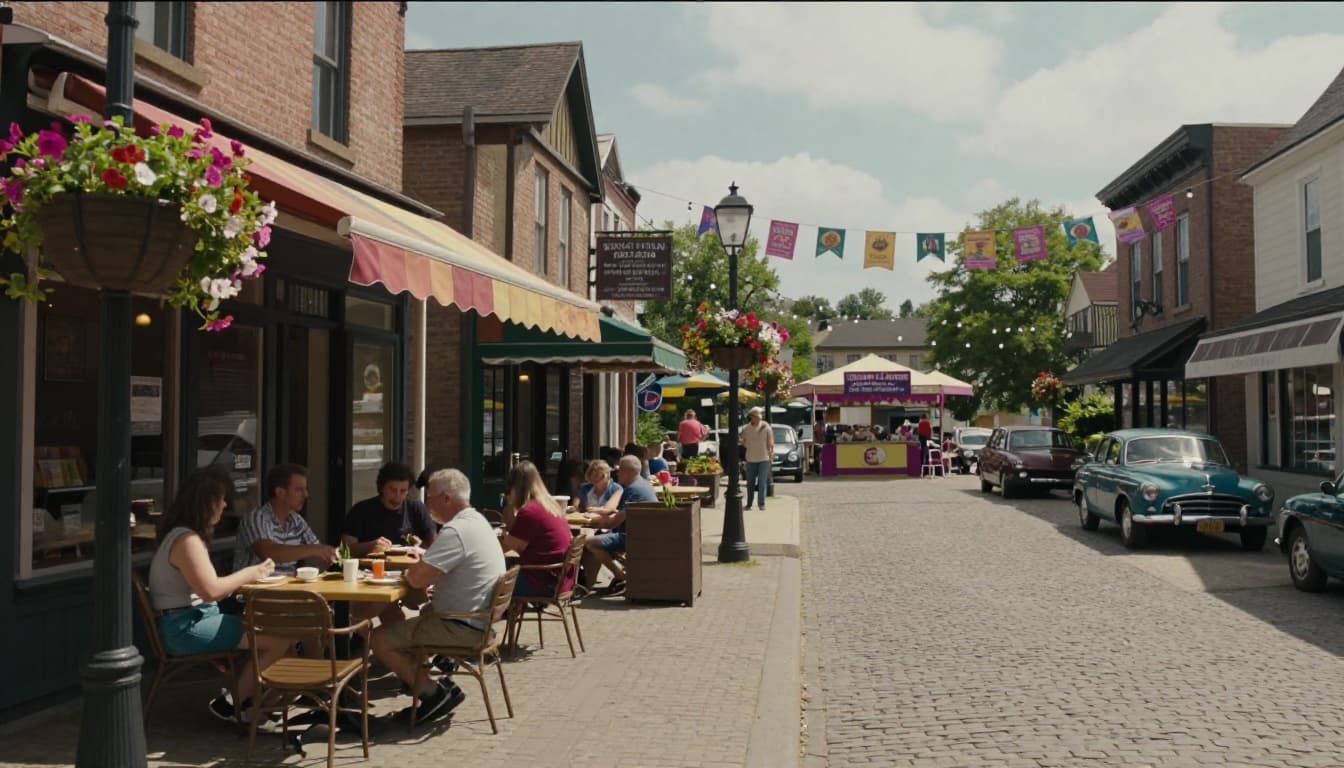 Small-town main street with a café and a town square event vibe, a natural backdrop for romance
Small-town romance makes a different promise. It says, “Settle in, the love story is the main plot, and you’re getting a satisfying romantic ending.” That ending might be a clear happily ever after, or it might be happy for now, but either way the relationship is the point.
The small-town setting isn’t just a cute backdrop either. It’s basically a pressure cooker, in the best way. In a small town:
People know your business, even if they pretend they don’t. The barista remembers your order, your aunt’s friend’s cousin saw you talking to your ex, and the whole town has opinions about it.
There’s shared history. Maybe they dated in high school, maybe their families go way back, maybe one of them left and the town never let them forget it.
There are community events that force proximity. Festivals, bake sales, holiday parades, the “help rebuild the gazebo” committee, the charity auction where you accidentally bid on your enemy’s time.
And there’s that found family feeling, where side characters matter because they make the couple’s world feel safe and alive, even when things get messy between the leads.
Romance has familiar beats (I don’t overthink the labels), but I usually feel them as a rhythm:
- They meet (or collide again).
- The attraction shows up, then the resistance hits.
- Something forces honesty (or blows up the lie they were living with).
- They choose each other, out loud, on purpose.
If you like romance that centers capable women, I’ve got a fun list of romance books with strong, independent female protagonists, and a broader roundup of romance novels with strong, competent heroines. Those lists help me spot the flavor of romance where the heroine doesn’t disappear into the relationship, even when the relationship is the engine.
And if you’ve ever noticed romance shaping what you expect from love stories (and sometimes from real life), my thoughts in how romance fiction influences our expectations of real love connect to why small-town romance often feels so satisfying.
The quick “take out the romance” test that usually tells you the genre
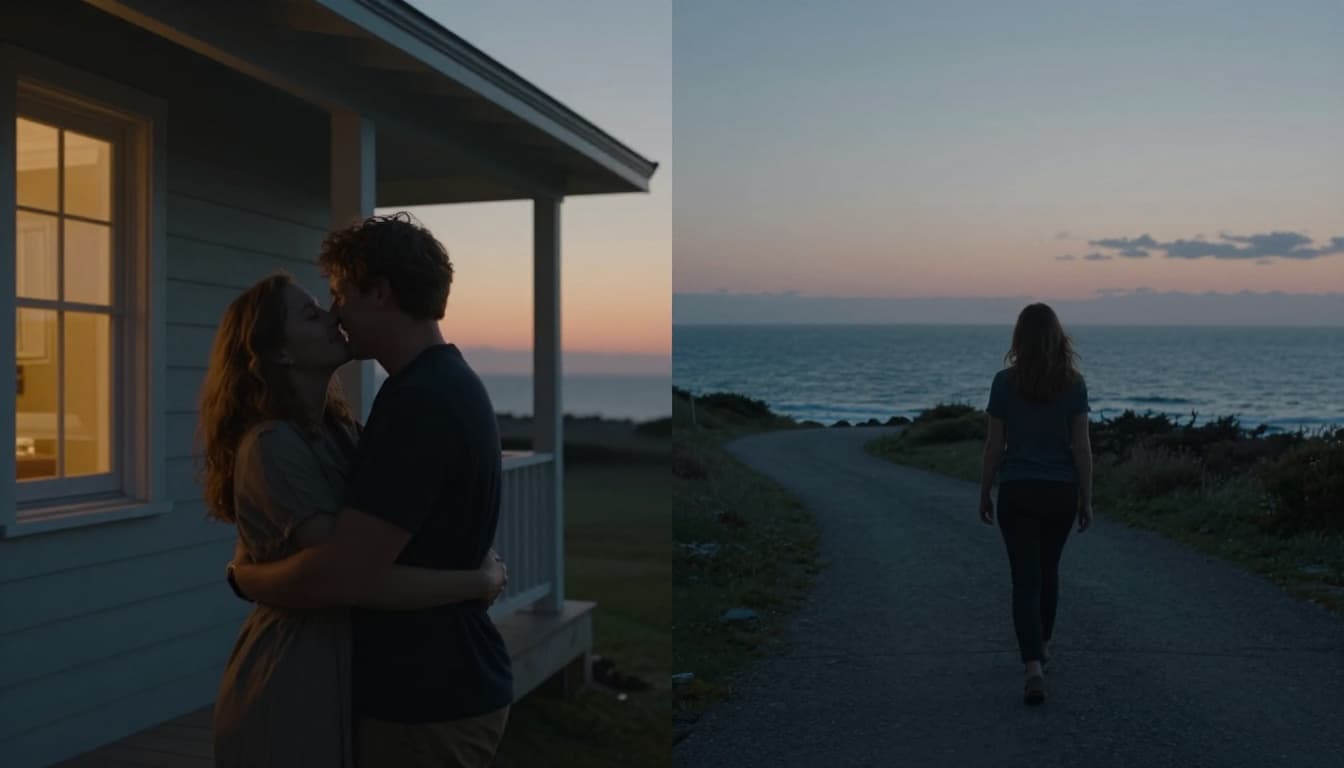 Split-screen concept showing romance on one side and personal growth on the other
When I’m stuck on women’s fiction vs small-town romance, I use one simple test that clears the fog fast:
If you remove the romance, does the story collapse?
- If yes, it’s romance (or romance-forward).
- If no, and the main arc still lands, it leans women’s fiction.
This isn’t about “how much kissing” is in the book. It’s about structure. Romance is built like a bridge between two people. Women’s fiction is built like a path a woman walks, sometimes alone, sometimes with company.
Here’s an easy example of the romance version:
A new teacher comes to town and clashes with the single dad who runs the community center. The whole plot is their push-pull, their growing trust, and the moment they finally commit. If you took out the romantic arc, you’d mostly have a woman doing a job in a town, and the emotional payoff vanishes.
Now the women’s fiction version:
A woman returns to her hometown after her mother’s death and has to clean out the house, face old friendships, and decide what she wants next. A romance might appear, but the book would still be complete if it didn’t, because the real climax is her making peace with her past and choosing her future.
I talk more about that overlap (and why it confuses people) in my post on whether women’s fiction counts as romance. It pairs nicely with my deeper comparison of women’s fiction vs romance fiction, and why the distinction matters.
One more thing I keep in mind: reader expectations are part of the experience. If I pick up a romance, I want that emotional certainty at the end. If I pick up women’s fiction, I’m ready for a more reflective landing, the kind that feels like growth instead of a final bow on a relationship. That’s also why posts like the comfort and consequences of romantic fiction and why real love is messier than romance fiction help me stay clear on what I’m craving before I start chapter one.
What readers expect from each genre (tone, themes, and endings)
When I’m choosing between women’s fiction vs small-town romance, I’m really choosing a reading promise. Not a label. A promise about tone (how it feels), themes (what it’s about), and endings (what kind of closure I’ll get).
Both genres can be tender, funny, and full of heart. Both can include grief, divorce, and hard seasons. The difference is where the story puts the weight. Women’s fiction usually puts the weight on her inner change, while small-town romance puts it on the relationship, with the town acting like a cozy stage crew.
Emotional focus: personal healing and relationships in women’s fiction
 Two friends sharing a light moment on a beach walk
In women’s fiction, I expect the emotional center to be a woman rebuilding herself in a way that feels honest. Romance might show up, but it’s rarely the only thread. The book is more like a quilt than a straight line, stitched from relationships that aren’t just romantic, but life-defining.
That’s why women’s fiction tends to hold themes like:
- Family ties that comfort and complicate.
- Friendship that acts like a lifeline (the friend who shows up with coffee, not advice).
- Identity shifts (empty nest, career shake-up, caring for a parent, a move that changes everything).
- Motherhood and caretaking, including the messy feelings people don’t always say out loud.
- Starting over, not as a makeover montage, but as a slow return to self.
- Community support that feels earned, not magically granted.
The tone I’m looking for here is emotional realism. Characters can still be witty, even cozy, but the story doesn’t flinch from hard truths. It lets a woman be contradictory, exhausted, brave, and unsure, sometimes in the same scene. If you like a deeper look at the patterns that show up again and again, these are the themes and tropes I see most often.
This is also where character depth matters more than sparkle. I notice how much agency the main character has, and whether her “strength” is more than a tagline. Posts like 13 Character Traits About Strong Heroines In Women’s Fiction and 10 Reasons Readers Crave Emotionally Complex Strong Heroines match what I’m always chasing as a reader: women who feel like real people, not inspirational posters.
Comfort focus: hope, chemistry, and a guaranteed couple ending in small-town romance
 A couple soaking up the warmth of a small-town market day
Small-town romance is where I go when I want to exhale. The comfort factor is real, and it’s not just about low angst or sweet scenes. It’s about the safety of the story’s backbone: the love story is the main plot, and the book is working toward a couple-centered ending I can trust.
The setting is part of that comfort. In a good small-town romance, the town isn’t wallpaper, it’s a living, nosy, warm-hearted force. I expect:
- A charming place I want to move into, even if it’s only in my head for a weekend.
- Recurring side characters who feel like friends (or lovable busybodies) and make the world feel ongoing.
- Community moments that pull the couple into the same orbit, festivals, farmers markets, town projects, family dinners, charity events.
- Chemistry that keeps building, even when they’re trying to be “reasonable.”
For me, the emotional tone is hopeful by design. Even if the characters have baggage, even if there’s grief or divorce or money stress in the mix, the story is still arranged to be soothing. The love story stays the spine.
That’s an important point: small-town romance can still tackle serious issues, it just doesn’t ask the relationship to carry the weight of every theme. The couple grows, yes, but the book keeps its promise that love is not a side plot.
When I’m thinking about what makes a romantic lead feel satisfying in this kind of story, I also like having clear language for roles. This post on understanding the heroine vs protagonist distinction helps me explain why some romances feel balanced, while others feel like one character disappears into the relationship.
Endings: HEA, HFN, and realistic wraps, what I watch for as a reader
 A book closing at sunset, a simple symbol of satisfying closure
Endings are where women’s fiction vs small-town romance becomes most obvious to me, because endings are part of the deal I’m making when I start chapter one.
Here’s the plain-language breakdown:
- HEA (Happily Ever After) means the couple ends up together, committed, and the book makes it feel settled. It’s the “we’re solid” landing.
- HFN (Happy For Now) means the couple ends up together, and it feels good and right, but there’s a little more openness. They’re choosing each other, but the future isn’t fully tied up with a bow.
In small-town romance, I expect some version of HEA or HFN. Even if the story gets intense, the ending comes back to love as the final answer. That’s why romance can feel like a warm blanket. It closes the door gently.
Women’s fiction endings work differently. They’re often satisfying, but they’re not always romance-centered. Sometimes the happiest ending is a woman choosing peace. Sometimes it’s a repaired relationship with a sister, a new boundary with a parent, or a brave decision that changes her whole life. It can be bittersweet, it can be open, but it still needs to feel earned.
Women’s fiction can absolutely have a happy ending. It just might be a different kind of happy than “ring, wedding, epilogue baby.” I wrote more about how happy endings work in women’s fiction, because once I understood that difference, I stopped feeling “surprised” when a women’s fiction book ended with a fresh start instead of a final romantic lock-in.
And if I’m picking up a romance because I want that couple-focused payoff, I tend to look for stories where the heroine stays strong inside the love story, not flattened by it. That’s why I like browsing lists like Best Romance Books With Strong Female Leads (Favorites and Fresh 2026 Picks) when I’m choosing my next comfort read.
So where does small-town romance fit inside women’s fiction (and when it does not)
For me, women’s fiction vs small-town romance gets clearest when I stop looking at the town and start looking at the story’s heartbeat. A small-town (or coastal) setting can hold either genre beautifully, but it doesn’t decide the genre by itself.
The real question I ask is simple: What is the book mainly trying to heal or solve? If the core engine is her internal reset, then the small-town romance often fits as a strong supporting thread. If the core engine is the couple’s relationship arc landing in a guaranteed romantic ending, it’s romance, even if there’s a bakery, a festival, and a meddling aunt on every other page.
The crossover sweet spot: a fresh start in a small town with romance as part of the rebuild
 Woman unpacking in a coastal rental cottage, a visual cue for new beginnings
This is my favorite overlap: she arrives in a small town with her life in boxes (sometimes literal), and the story is about becoming herself again. The romance is real and meaningful, but it isn’t the only thing holding the plot together. It’s the tender part of the rebuild, not the whole house.
The blended reading experience usually feels like this:
- Her old life cracks (divorce, grief, burnout, betrayal, empty nest).
- The town gives her friction and comfort at the same time.
- The love interest shows up as a mirror, not a rescue boat.
- The community becomes a quiet chorus, nudging her toward connection.
In this crossover sweet spot, the “main problem” is often internal: confidence, self-worth, identity, grief, or the fear that it’s too late to start over. That’s where a romance subplot can shine, because love becomes a safe place to practice being honest again. It can support her growth without replacing it.
I also notice the town doing real story work here. It’s not just charming scenery. It’s a container for change, the café where she meets new friends, the neighbor who notices she hasn’t eaten, the local event that forces her to show up as herself. If you want a clean way to separate the lanes, this breakdown on how I tell romance fiction from women’s fiction lines up with the exact test I use when I’m deciding what I’m in the mood for.
And if you’re drawn to women who feel human (not polished), you’ll probably like the way modern women’s fiction leans into complicated main characters, which is why lists like strong heroines shaping modern women’s fiction can be such a good “yes, this is my kind of book” shortcut.
When a small-town setting does not make it women’s fiction
 Town sign at the edge of a coastal road, a reminder that setting alone isn’t the story
A town can’t do genre’s job. I’ve read plenty of small-town books that are romance through and through, because the story mostly tracks the couple’s push-pull, their conflict, and the emotional payoff of commitment. That’s not “less deep.” It’s just a different promise.
Same in reverse: I’ve read women’s fiction set in big cities where the heroine’s growth arc takes center stage and the romance is either secondary or not present at all. A city skyline can hold a life reset just as well as a sleepy harbor.
When I’m sorting women’s fiction vs small-town romance, I use a quick signal check. Women’s fiction tends to show up with:
- A growth arc that drives the plot: she changes how she sees herself, not just who she dates.
- Multiple relationship threads: family, friendship, community, work, motherhood, or caregiving pressures share page time.
- An identity shift: she’s building a new life shape, not just reaching a relationship milestone.
If you want the “clean” angle clarified too, this comparison of clean romance vs women’s fiction helps because heat level and genre are different questions. A romance can be sweet and still be romance, because the spine is the relationship.
And if you’ve ever gotten halfway through a book and realized you’re tracking the wrong emotional scoreboard, Romance Subplot vs Main Plot (How It Works, With Clear Examples) is the kind of guide I wish everyone had before judging a story by its setting.
If you love one, why you might love the other (and what might not work for you)
 Two genres side by side on a nightstand, a simple way to show crossover reading
When I’m talking to women’s fiction readers, I put it this way: romance can add lightness, hope, and that spark of chemistry that makes even hard seasons feel survivable. A good love story can be the breath between heavier chapters, the reminder that she’s still desirable, still seen, still allowed joy.
What might feel different for you is emphasis. In romance-forward small-town books, you’ll usually get:
- More couple time (more scenes built around them together).
- A faster march toward commitment.
- More focus on romantic beats than on every other relationship in her life.
If you want women’s fiction that keeps the growth front and center but still lets love matter, I love this framing of women’s fiction with a romance subplot, because it describes that “yes, I want feelings, but I also want her life” craving perfectly.
For romance readers, women’s fiction can be a surprisingly satisfying shift, because it often gives you deeper life themes: reinvention, belonging, family wounds, friendship repair, the slow work of learning who you are when nobody is applauding. What might not work is that you can get less page time on romantic beats, or a less couple-centered ending, even if the romance is lovely.
If you’re trying to predict which side you’ll land on, who women’s fiction tends to click with is a helpful gut-check. And if you’ve ever wondered whether “women’s fiction” is a real genre or just shelf language, Is Women’s Fiction a Genre, or Just a Marketing Label? puts words to the exact confusion that crossover readers run into.
Finally, when I want a quick mood match, I look at themes. Women’s fiction often signals itself through emotional patterns (identity shifts, healing, relationship webs), which is why Women’s Fiction Themes and Tropes: The Emotional Patterns Readers Love is such an easy way to figure out what kind of story you’re actually craving tonight.
How to choose your next read (and avoid genre disappointment)
When I get “genre disappointed,” it’s rarely because the book is bad. It’s because I brought the wrong expectations to the first chapter. With women’s fiction vs small-town romance, that mismatch happens all the time, because both can have charming towns, second chances, and a love interest that feels promising.
So when I’m browsing, I try to figure out the book’s main engine before I buy. I want to know what problem the story is really trying to solve, and what kind of ending I’m being set up to want.
The back-cover checklist I use: what is the main problem, and who must change to solve it?
 Reading a book blurb on a phone in a bookstore aisle
I treat the back cover like a movie trailer. It won’t tell me everything, but it will tell me what the story thinks is most important. My goal is simple: figure out the main problem, and figure out who has to change to solve it.
Here are the quick questions I ask while I’m browsing (I keep them in my head, not as homework):
- What is the main tension about? Is it mostly about the relationship, or her life transition (divorce, grief, burnout, moving, empty nest)?
- Who has the biggest problem to fix? Is it “they must learn to trust each other,” or “she must rebuild her life”?
- If the love interest vanished, would the book still work? If yes, it likely leans women’s fiction. If no, it’s probably romance-forward.
- Are there multiple key relationships named? Sisters, kids, best friends, parents, neighbors, a whole community. That usually points to women’s fiction, or at least crossover.
- Does the town get “personality” paragraphs? If the town is described like a character (quirky events, local traditions, everyone knows everyone), it often leans small-town romance vibes.
- Is the promise a clear HEA? If the blurb hints at a guaranteed couple ending, that’s a romance signal. If it hints at “finding herself,” it’s usually women’s fiction.
- What’s the big emotional word? Words like healing, forgiveness, starting over, and coming home to herself often mean the inner journey is the point.
This tiny checklist saves me from buying a “cute love story” when I actually want a deep, personal reset book (and vice versa). It also keeps me from blaming a book for being exactly what it said it was.
Look for signal words in reviews, they usually tell the truth faster than blurbs
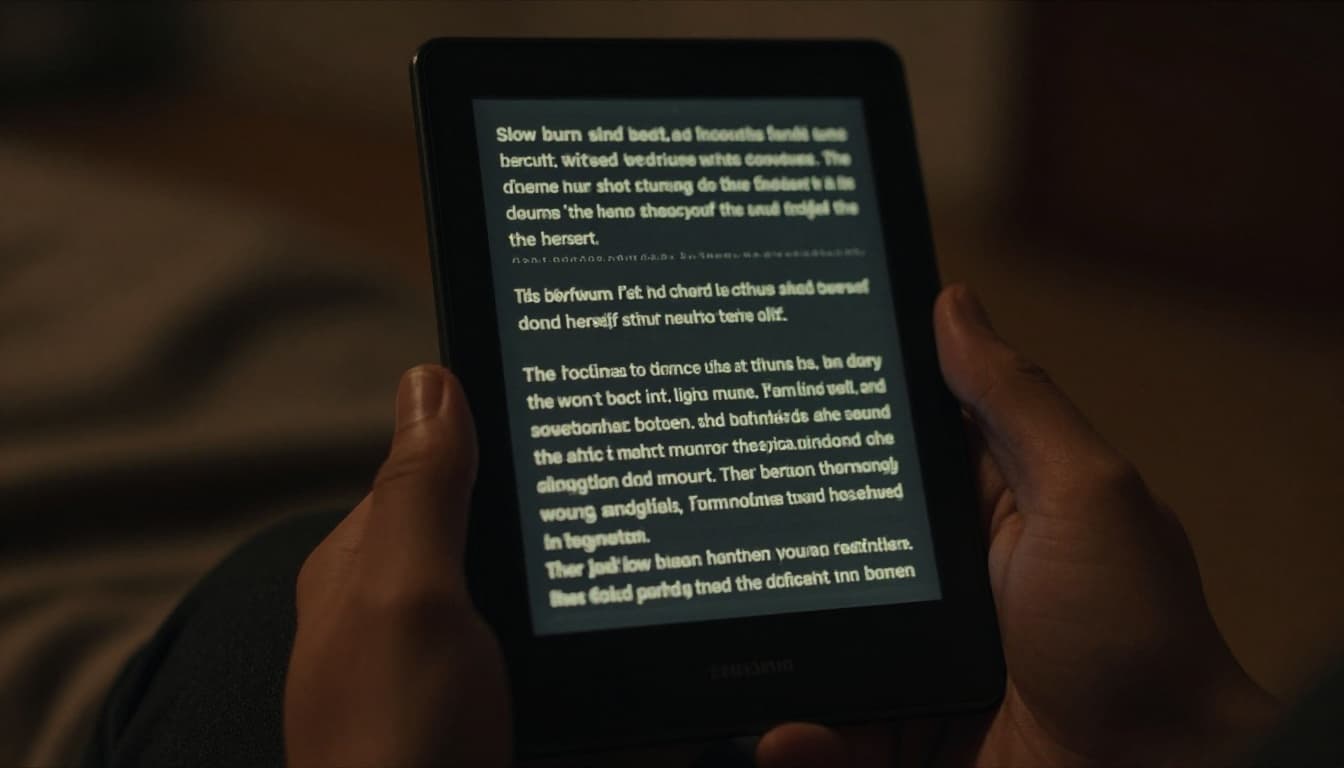 Highlighted review phrases on an e-reader screen
Blurbs are written to sell the book. Reviews are written to explain the experience. That’s why I skim a handful of reader reviews (good and bad) before I commit, especially when I’m trying to avoid the women’s fiction vs small-town romance switch-up.
I’m not looking for spoilers. I’m looking for “signal words,” the phrases readers repeat when they’re trying to describe the book’s emotional center.
Here are review phrases that often signal women’s fiction energy:
- “This book helped me heal.”
- “She really found herself.”
- “So much about friendship.”
- “Family secrets everywhere.”
- “I cried through the grief scenes.”
- “Beautiful second chances (not just romance).”
- “A story about rebuilding her life.”
And here are review phrases that often signal small-town romance energy:
- “So swoony.”
- “Their chemistry was everything.”
- “Slow burn done right.”
- “Spicy (or sweet/closed-door).”
- “Adorable small town.”
- “Loved the banter.”
- “Guaranteed HEA, so satisfying.”
I also pay attention to what reviewers complain about, because complaints are accidentally honest. If someone says, “Not enough romance,” that can be a green light for me when I’m in a women’s fiction mood. If someone says, “Too much focus on her family issues,” that’s useful too when I’m craving a couple-first story.
And if you ever feel like reviews and hype move faster than your own taste, it helps to remember why that happens. The way readers talk about books now is shaped by social platforms, quick reactions, and “moment” scenes, which is something I’ve noticed more and more (and it’s discussed in posts like https://meganholleyauthor.com/blog/ways-social-media-is-transforming-the-romance-genre/).
If you want “heartwarming with depth,” try these overlap lanes
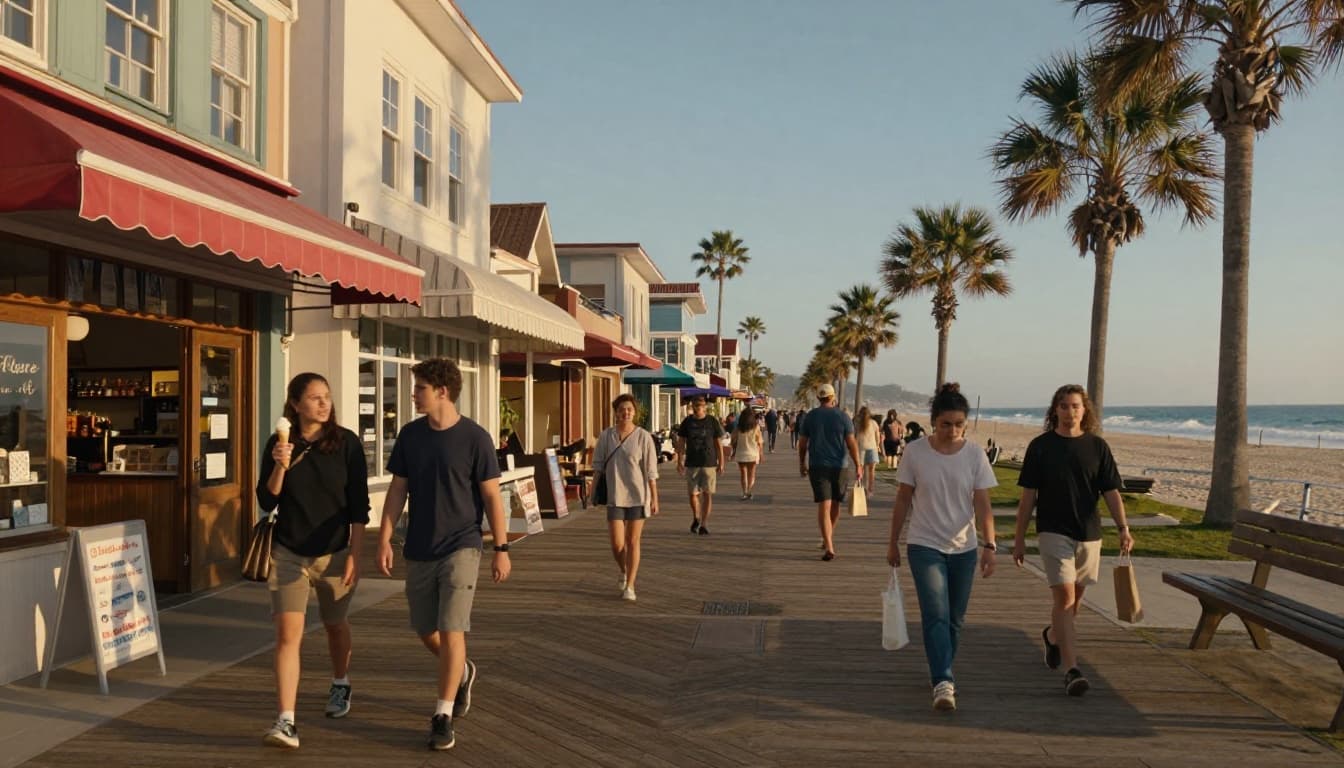 Cozy coastal boardwalk in a beach town
Sometimes I don’t want to choose sides. I want the comfort of a small-town setting and the emotional weight of a woman figuring her life out. If that’s you, these are the overlap lanes I look for, because they scratch the “heartwarming with depth” itch without leaving me feeling tricked.
Lane 1: Clean small-town romance with a strong heroine arc
I look for a romance that still gives her a real problem outside the relationship. A job crisis, a confidence rebuild, a fresh start, a new role in town. The romance is central, but she grows too, not just the couple.
Lane 2: Women’s fiction with a romantic subplot
This is my go-to when I want the emotional layers first, but I still want a steady thread of hope. If you like that structure, you’ll probably also enjoy getting clear on subplot expectations (https://meganholleyauthor.com/blog/romance-subplot-vs-main-plot/).
Lane 3: Community-focused stories with interwoven relationships
I love books where the town feels like a web of connections, not just a backdrop. You get friendships, family tension, neighbor bonds, and yes, romance. If the story feels like a quilt instead of a straight line, I’m usually in the right place.
Lane 4: Second-chance love after a life shake-up
This lane often blends both genres naturally: she’s rebuilding, and love shows up as part of that rebuild. The key difference is what the book treats as the “final answer,” the relationship, her new life, or both.
If you’re still unsure about the tone you want, it can help to triangulate with adjacent genres. I break it down here, with a clear look at how romcom differs from women’s fiction: https://meganholleyauthor.com/blog/womens-fiction-vs-romantic-comedy/
And when I’m picking from overlap lanes, I also like browsing by what kind of heroine I’m getting. If I want romance-forward but still emotionally safe and affirming, I’ll use a topic guide like https://meganholleyauthor.com/blog/romance-books-with-plus-size-fmcs/ to find stories that match my comfort level. If I’m craving fresh voices and different life textures, I’ll scan lists like https://meganholleyauthor.com/blog/romance-books-with-black-female-leads-fresh-love-stories-to-fall-into/ and choose by vibe instead of hype.
The goal is not to label books perfectly. It’s to pick the story that will actually satisfy you tonight.
Conclusion
When I think about women’s fiction vs small-town romance, I come back to one simple line: women’s fiction is driven by her life change, small-town romance is driven by the couple’s relationship arc and payoff (and that’s the whole point). If you want a refresher, I keep it clear in what women’s fiction is and women’s fiction vs romance, plus the deeper cut in women’s fiction vs romance fiction.
It’s also completely normal to love both, I bounce between them depending on what I need, comfort or clarity, swoon or self-rebuild. When I’m on the fence, I use the take-out-the-romance test, then I double-check my ending expectations in is women’s fiction romance and can women’s fiction have a happily ever after.
If you like overlap reads, these help: women’s fiction with a romance subplot, romance subplot vs main plot, women’s fiction themes and tropes, women’s fiction target audience, and is women’s fiction a genre.
When you want comfort, do you reach for the town-and-chemistry vibe in what readers crave in romance and strong female leads in romance, or for the deeper reset of emotionally complex heroines and strong heroines in women’s fiction, and why?


