

Women’s Fiction vs Contemporary Romance: Similarities, Differences, and How I Choose

A reader once asked me, “So… do you write women’s fiction, or do you write romance?” and I could practically see the bookstore shelves behind her. Two sections, two vibes, and two very different promises.
That confusion is normal, because these genres overlap a lot. Still, labels matter because they’re basically a promise about what kind of satisfaction you’ll get at the end.
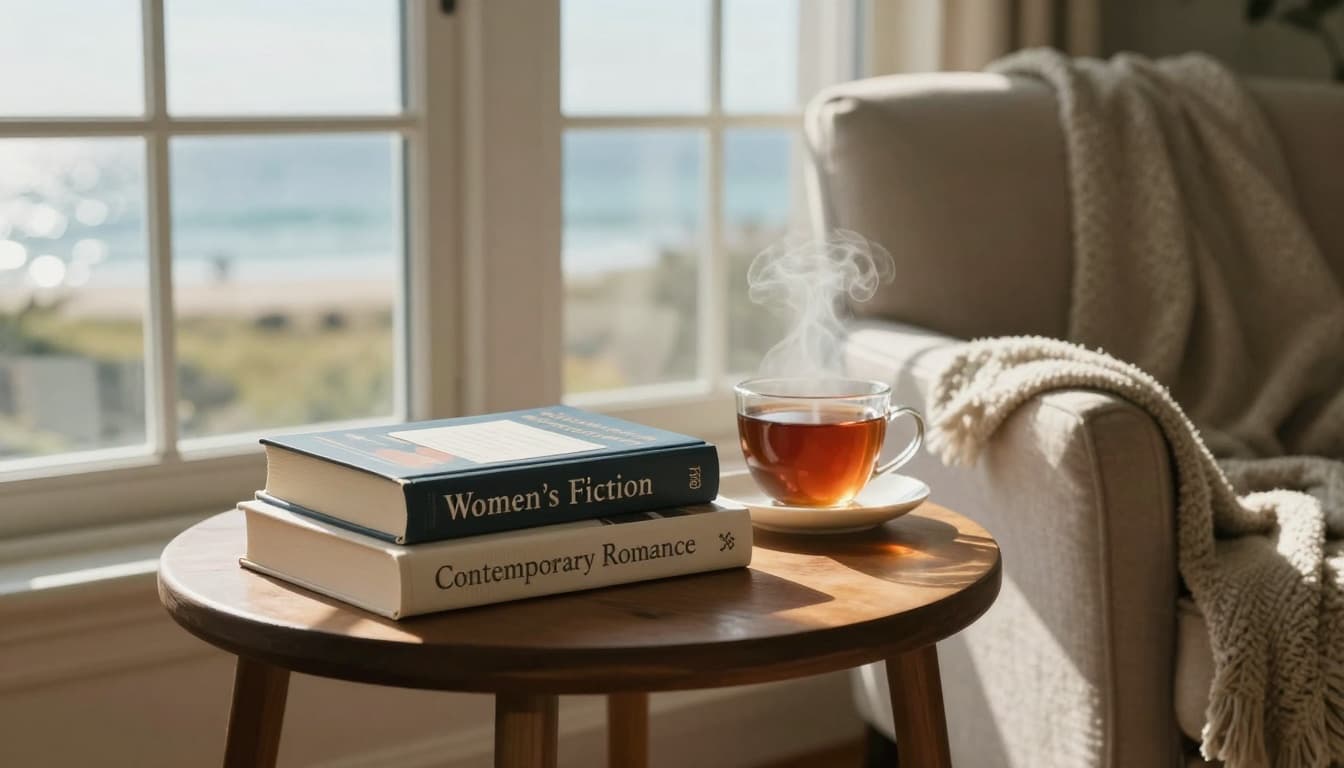 Two “genre shelf” choices in one cozy reading moment
Here’s the simplest way I explain Women’s Fiction vs Contemporary Romance: women’s fiction centers a woman’s life change, contemporary romance centers the love story. Both can be emotional, funny, tender, and page-turny, but they aim their spotlight in different directions.
This post breaks down Women’s Fiction vs Contemporary Romance in plain language, adds how “romance” fits in, and shares how I decide what shelf a story belongs on. And yes, plenty of books blend both, which is half the fun. None of these categories is “better.” They just serve different moods.

What Each Genre is Really Promising You as a Reader
When I’m explaining the difference, I like to treat genres like a menu. You’re not judging the food, you’re deciding what you’re hungry for.
Women’s fiction usually promises a woman-centered life story, where love may be present, but personal change is the main event.
Romance promises that the romantic relationship is central, and that the ending is emotionally satisfying and optimistic (HEA or HFN).
Contemporary romance is romance that feels rooted in “now.” Same romance promise, but with modern pressures, modern dating, and modern life on the page.
Women’s Fiction: The Love Story Can Be There, But the Life Story Leads
 A reflective, life-journey moment that matches women’s fiction themes
Women’s fiction tends to center a woman’s inner life and her relationships as a whole. That can mean family tension, friendships, identity, caregiving, career shifts, healing after loss, or learning how to want things again.
A romance thread can absolutely be part of it, but it’s usually not the engine pulling the train. If the relationship disappears, the story still stands because the core question is: Who is she becoming?
Endings often lean hopeful, but women’s fiction doesn’t have to deliver a neat romantic bow. She might end single and content. She might choose herself first. She might walk toward love, but not all the way there yet.
If you want a deeper definition, this breakdown of what women’s fiction is lays it out clearly. For a look at what readers are anticipating in the category lately, Penguin Random House’s roundup of most anticipated women’s fiction of 2026 is a good snapshot of what’s getting attention.
Contemporary Romance: Modern-day Love With a Guaranteed Romantic Payoff
 A modern, present-day love story vibe
Contemporary romance is romance set in the present day. The love story is the main plot, and the book is built to deliver a romantic payoff: Happily Ever After or Happy For Now.
That ending expectation is the big difference. You can still have grief, trauma, divorce, or money stress, but the story is steering toward the couple choosing each other in a clear, satisfying way.
Because it’s “now,” you’ll often see setups like dating apps, workplace pressure, single parenting, co-parenting drama, small-town fresh starts, or the particular exhaustion of modern life. The vibe can be funny, spicy, sweet, or emotional, but it’s still romance at its core.
If you like spotting what readers are buzzing about, Book Riot’s list of most anticipated romance books of 2026 is a fun place to build your TBR. And if you want a quick tour of common hooks and reader cravings, you’ll enjoy things women love to read about in romance fiction.
Women’s Fiction vs Contemporary Romance: the Clearest Difference in One Quick Check
When you’re standing in a bookstore aisle (or scrolling at midnight), you don’t need a lecture. You need a fast way to tell what you’re getting.
Here’s the simplest check I know:
If you remove the romance, what’s left?
If the remaining story still feels complete and satisfying, you’re likely in women’s fiction territory. If the story collapses because the relationship is the whole spine, you’re in romance.
A few other tells show up in pacing and page time.
Women’s fiction often lingers on a wider cast: sisters, kids, best friends, parents, coworkers, neighbors. Those relationships aren’t just color, they’re part of the emotional work. The pacing can be more spacious because the story is about a full life, not only the couple’s momentum.
Contemporary romance tends to keep its camera trained on the couple. Side characters matter, but they usually support the relationship arc. Even when the couple is apart, the plot is still about what keeps them apart and what brings them back together.
If you’ve ever felt “Wait, why am I crying about her relationship with her mom?” that’s often a women’s fiction signal. If you’ve ever thought “Get them back on the page together,” that’s often romance brain kicking in.
The Differences: Focus, Ending, and What the Story Promises You
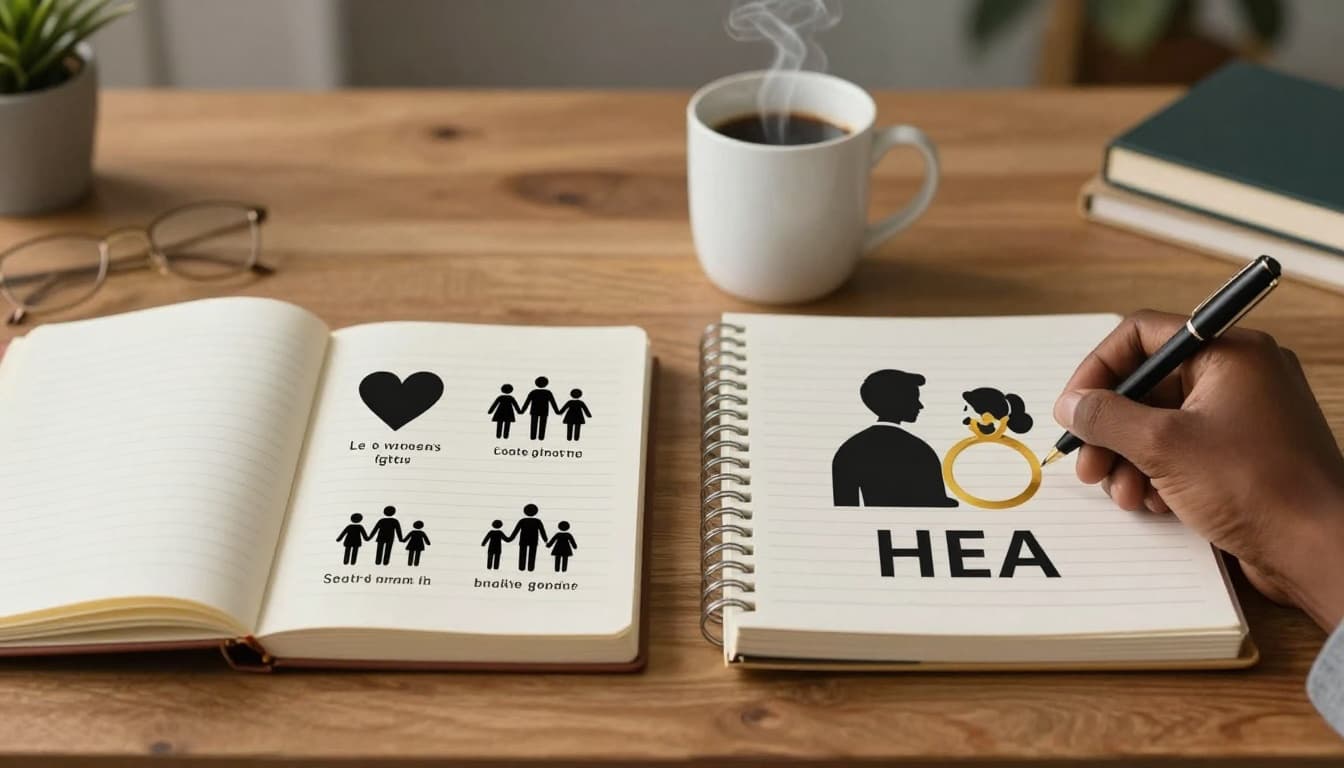 A quick visual way to remember the key differences
When I’m sorting out Women’s Fiction vs Contemporary Romance, I come back to one phrase: story promise. That’s the quiet agreement the book makes with you before page one. It shapes what you expect, what you’ll forgive, and what will feel satisfying at the end.
Here’s a mini comparison I keep in my head:
| Element | Women’s Fiction (typical) | Contemporary Romance (typical) |
|---|---|---|
| Main focus | Her life change and growth | The couple’s relationship arc |
| Ending promise | Hopeful, not always couple-focused | HEA or HFN for the couple |
| POV patterns | Often single POV (not always) | Often dual POV (not always) |
| Heat level | Varies widely | Varies widely (not a requirement either way) |
Heat is not the deciding factor. I’ve read sweet romances and steamy women’s fiction with romantic threads. Focus and ending are the real tells.
What these Two Genres Have in Common (and Why they Get Mixed Up)
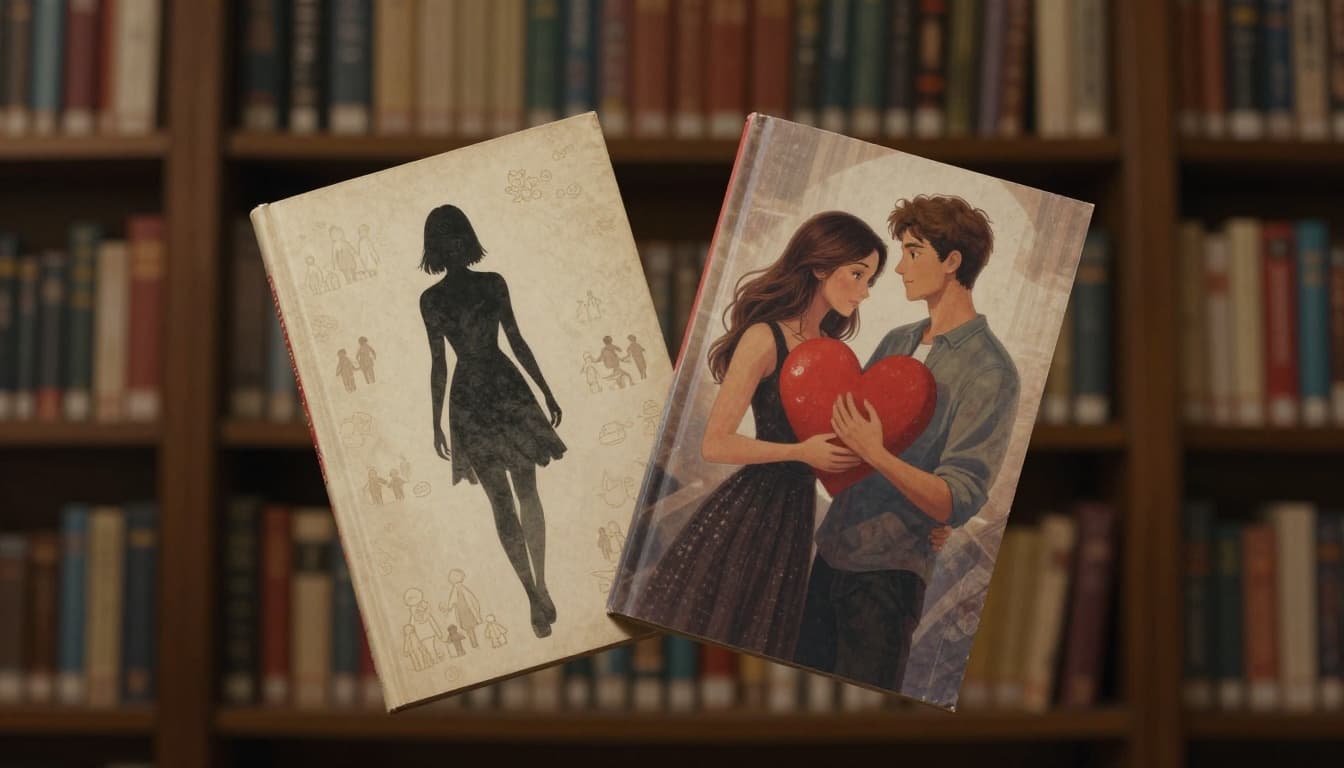 The overlap between genres is real
Women’s fiction and contemporary romance get tangled up for a good reason: they often feel similar while you’re reading them. They both live in the “I’m invested in these people” lane, not the “watch explosions from a distance” lane.
A beach-town story about starting over can sit comfortably in women’s fiction, and it can also be a contemporary romance if the couple’s relationship is the spine. A small-town book with found family, a fresh start, and a slow-burn love thread can legitimately be either, depending on what the story keeps returning to.
Nowadays, I see more genre blending on shelves and in reader conversations. Romance is everywhere right now, and a lot of stories borrow romance beats because readers love that emotional payoff. At the same time, women’s fiction keeps delivering those deeply discussable, character-first stories that feel perfect for book clubs and long talks over coffee.
Both are Built for Feelings, Not Just Plot Twists
 The ultimate “one more chapter” setup.
In both genres, emotion is the engine. Even when big things happen (a divorce, a job loss, a family secret), the heart of the story is still internal: how the characters cope, what they learn, what they choose.
That’s why readers who love either genre often want the same things:
- Comfort after a hard day
- Hope that doesn’t feel fake
- Catharsis (the kind where you cry, then breathe easier)
- Connection to characters who feel like real people
Sometimes the “plot” is simple, but the emotional stakes are huge. A conversation at a kitchen sink can hit harder than a car chase if it’s the moment she finally admits what she wants.
Both often Feature Strong Heroines and Real-life Problems
Women’s fiction and contemporary romance both tend to give us heroines dealing with recognizable pressure: family expectations, work stress, caregiving, grief, money worries, parenting, loneliness, starting over in midlife, or trying to rebuild confidence after life knocked them flat.
This is where the genres become a soft place to land. A strong heroine doesn’t have to be fearless or tough all the time. Strength can look like showing up, making one hard phone call, setting one boundary, or letting someone help.
If you’re in the mood to browse heroines who carry a story on their shoulders, I keep a running list of favorites in my post on popular strong heroines readers love.
In Women’s Fiction, the Main Love Story is Often Her Relationship with Her Own Life

In women’s fiction, romance can be present, even important, but it’s usually not the spine. The spine is her transformation: reclaiming identity, healing, rebuilding after loss, learning to trust herself, repairing a friendship, choosing a new path, or redefining what “home” means.
That’s why women’s fiction often leans into themes like:
- friendship and sisterhood
- family ties (supportive, messy, or both)
- grief and recovery
- motherhood and caregiving
- empty nest or midlife resets
- reinvention and second chances
The ending is typically satisfying and hopeful, but it doesn’t have to end with “the couple is together forever.” Sometimes the biggest win is that she finally chooses herself, or makes peace with a past she couldn’t change.
For readers who like this cozy, feelings-first experience, I also love the rituals around it, like turning reading into a full comfort night. My bookish gift guides for women’s fiction lovers are basically a love letter to that vibe.
In Contemporary Romance, the Love Story is the Main Plot, and the Ending Matters

In contemporary romance, the relationship is the central question. Everything else supports it.
Romance readers usually expect one thing: an emotionally satisfying, optimistic ending for the couple, whether that’s Happy Ever After (HEA) or Happy For Now (HFN). That expectation isn’t “being picky.” It’s the genre’s foundation. If you want a clear industry definition, RWA’s description of the romance genre lays it out plainly.
Romance also tends to hit familiar beats (not always, but often): meeting, spark, resistance, deeper connection, conflict, a low moment, then a resolution that proves they’re choosing each other on purpose.
If you’re curious about why real relationships don’t always look as neat as romance structure, my post on why real love is messier than romance fiction gets into the “crunchy” truth of it.
And if you want a quick browsing path for strong heroines in love stories, I’ve collected a bunch in romance books with strong female leads.
My Personal Decision Tree: How I Decide What I’m Writing (and What You’re Reading)
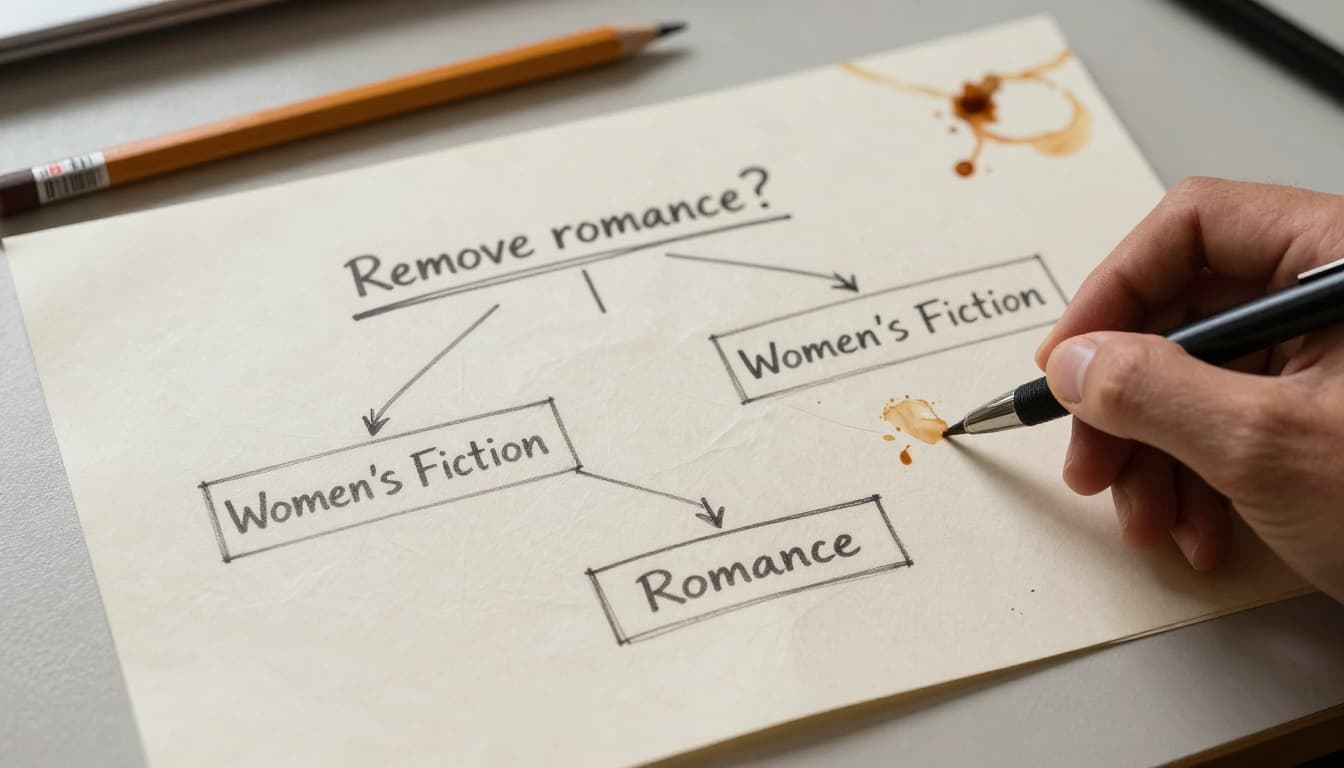
When I’m planning a story, I don’t start by forcing a label. I start by listening for what the story keeps insisting on. Then I choose the shelf that fits best, so readers get what they came for.
This matters because the “right” label sets the right expectations, and expectations shape enjoyment. Nobody likes feeling tricked by a book’s category, even if the writing is gorgeous.
The 5 Questions I Ask Before I Label a Story
Here’s my personal checklist. It’s simple, and it saves me every time:
- What would break if I removed the romance? If the whole story collapses, it’s probably romance. If the story still stands (and the core arc stays intact), it leans women’s fiction.
- Is the ending about the couple or her new life? If the final emotional payoff is “they choose each other,” romance. If it’s “she becomes someone new,” women’s fiction (even if love is part of it).
- Whose growth is the point? In romance, both characters usually grow in a way that makes the relationship possible. In women’s fiction, her growth is usually the center of gravity.
- Do I need dual POV to tell it right? Not a strict rule, but romance often benefits from it because the relationship is the main event.
- What promise am I making about the ending? If I’m not willing to commit to an HEA or HFN, I’m careful about calling it romance.
Some stories are true hybrids. When that happens, I pick the “primary” shelf based on what drives the biggest scenes. The scenes that get the most page time usually reveal the real genre.
Quick “If You Liked this, Try that” Guide for Readers Who Want a Specific Vibe
When I’m choosing what to read, I don’t always want a genre label. I want a feeling. Here’s how I sort by vibe:
- If you want friendship, family threads, and personal healing, look for women’s fiction that mentions life change, starting over, or sisterhood.
- If you want the couple front and center, pick contemporary romance (and check reviews for “HEA/HFN” language).
- If you want both, look for romance-forward women’s fiction, often set in small towns, with community, comfort, and a relationship arc that still lands with a happy ending.
If your favorite part of romance is a capable heroine with her own goals, you might enjoy my list of strong, independent female protagonists in romance. And if you’re craving fresh love stories with different perspectives and experiences, I also have a roundup of romance books with Black female leads.
How to Spot the Genre Fast, When You’re Browsing, Buying, or Borrowing
 Back-cover copy is often the fastest clue
If I’m in a bookstore (or scrolling online), I don’t have time to overthink it. I want the quick signal: what am I being promised, and will I be happy when I get it?
Genre blur is common, especially now, because publishers know many readers enjoy both. That means you can’t rely only on a cover style or a beachy setting. You have to look at language.
What the Back Cover and Reviews Usually Tell You
Back cover copy for women’s fiction often leans on phrases like: “starting over,” “a life upended,” “a family secret,” “a second chance at home,” “friendship,” “sisterhood,” or “finding herself.”
Contemporary romance copy tends to spotlight the relationship and chemistry: “sparks fly,” “can’t resist,” “will they or won’t they,” “falling for,” “fake dating,” “enemies-to-lovers,” “only one bed,” or direct mention of “HEA.”
If you want a deeper breakdown from a craft and publishing perspective, Writer’s Digest’s guide to women’s fiction vs romance is a solid read.
One more quick tip: reviews often reveal what the marketing won’t. If reviewers keep talking about the heroine’s healing journey, it’s probably women’s fiction. If they keep talking about “their relationship” and “the ending,” it’s probably romance.
Tropes and Topics Can Overlap, So I Watch the “Center of Gravity”
Tropes like second chance, small town, workplace, pregnancy, or single parenthood can show up in both genres. The difference is where the story returns when it wants to hit you in the heart.
A women’s fiction story might use a romance thread to support her growth, but keep circling back to her family, identity, or rebuilding a life. A romance will use the same setting or trope, but the relationship stays in the driver’s seat.
If you like browsing by trope, pregnancy is a great example of how wide the spectrum is. Some books use it as a life-change theme, while others use it to deepen the relationship arc and raise the stakes for the couple. For trope-first romance picks, you can start with my pregnancy romance comfort reads or my list of accidental or unexpected pregnancy romances.
Frequently Asked Questions
1. What’s the main difference between women’s fiction and contemporary romance?
Women’s fiction centers on a woman’s personal journey, her emotional growth, and how she handles life changes. The heart of the story is often about identity, family, friendship, grief, starting over, or rebuilding after a setback. Romance can be part of the book, but it usually isn’t the engine that drives every major plot turn.
Contemporary romance is built around a central love story. The main plot question is whether the couple will end up together, and the ending must deliver a happy ever after (HEA) or at least a happy for now (HFN). Characters can grow a lot along the way, but that growth supports the relationship arc rather than replacing it.
If you finish the book and your biggest takeaway is her life transformation, it’s likely women’s fiction. If your biggest takeaway is the couple’s relationship journey and payoff, it’s romance.
2. Do women’s fiction books have to include a love story?
No. Women’s fiction often includes romantic elements, but it doesn’t require them. A women’s fiction novel can focus on healing after loss, repairing a mother daughter relationship, or finding purpose after a career shift, with little or no romance on the page.
When romance is included, it’s usually one thread among several. The story can still end on a hopeful note without promising that the relationship works out long term.
That’s a key reader expectation difference. In contemporary romance, the relationship is the main event and the ending is part of the genre promise. In women’s fiction, the promise is about emotional payoff and change, not a guaranteed romantic outcome.
3. Does contemporary romance always need a happy ending?
Yes. For a book to fit the romance genre (including contemporary romance), it needs an HEA or HFN. That’s one of the clearest, most widely understood genre rules, and it shapes how readers choose books.
That doesn’t mean the story is light or easy. Contemporary romance can tackle heavy topics, family conflict, or personal trauma. The difference is that the plot still builds toward the couple choosing each other in a satisfying way.
If a book ends with the couple breaking up for good, or the love story is left unresolved, readers will usually file it as women’s fiction (or another category), even if the romantic relationship was a big part of the story.
4. If a book has both, how do you decide where it belongs?
Look at what the plot is designed to do.
If most scenes and turning points serve the relationship arc (meet, connect, conflict, commitment), it fits contemporary romance. If most scenes serve the protagonist’s broader life arc (family issues, self-worth, big life decisions) and the romance is supportive, it leans women’s fiction.
Also consider what would break the book. If removing the romance collapses the entire story, it’s probably romance. If removing the romance still leaves a complete, powerful story about her growth, it’s probably women’s fiction.
Some books sit right in the middle. Hybrids are common, and readers who love character-driven, emotionally warm stories often enjoy both.
5. Which genre should you pick if you want a cozy, small-town feel?
Both can deliver that cozy coastal or small-town vibe, but they emphasize different payoffs.
Choose contemporary romance if you want the town as the backdrop for a focused love story, with strong couple chemistry and a clear HEA or HFN.
Choose women’s fiction if you want more room for community, family dynamics, and second-chance life moments, with romance as a meaningful layer but not the whole point.
If you like stories that balance love, family, and fresh starts, you’ll probably enjoy crossover titles, especially the kind that blend heartfelt relationship stakes with a bigger personal journey.
Conclusion
When I’m choosing between women’s fiction and contemporary romance, I come back to two things: what the story is truly about, and what kind of ending it promises. Both genres can be heart-hugging, tear-jerking, and comforting, but they aim that emotional punch at different targets.
If you’ve read this far, tell me what you reach for most, a heroine rebuilding her life, a couple fighting their way to a happy ending, or the sweet spot where you get both. And if you’re in the mood for body-positive love stories, my list of romance books with plus-size FMCs is a great place to start.


