

Women’s Fiction vs Literary Fiction: Differences, Similarities, and the Overlap Readers Actually Live In

I love character-driven stories, the kind that make you sit in the car after you’ve parked because you need a minute to feel things. That’s also why the labels can get annoying fast. Women’s fiction vs literary fiction sounds like a clean either-or choice, but when you’re a reader (or a writer like me), it often isn’t. The confusion isn’t just on us, either. A publisher might pitch a book one way, a bookstore might shelve it another way, and a reader might describe it in a third. None of them are “wrong.” They’re answering different questions.
Also, two quick truths that need to be said out loud: women’s fiction is not the same thing as romance, and literary fiction is not automatically “better.” Sometimes the same novel is “women’s fiction” when you’re browsing a beach-read table, and “literary fiction” when it’s chosen for a serious book club. Same story, different doorway.

What Women’s Fiction Usually Means (and What it Does Not)

When I say “women’s fiction,” I’m talking about stories that center a woman’s life, relationships, and emotional change. The main plot is usually tied to a personal turning point: divorce, grief, motherhood, caregiving, friendship shifts, starting over, identity questions, or choosing a new life when the old one stops fitting. The key piece is this: the story’s engine is the woman’s internal journey, not just what happens to her, but how she changes because of it.
What women’s fiction is not is a code word for “light” or “fluffy,” and it’s not a synonym for romance. Women’s fiction can include a love story, even a strong one, but it doesn’t have to. If the book’s main promise is “watch her rebuild her life,” it often lands in women’s fiction, even if there’s romance on the side.
If you’ve ever felt weird about the label (especially if you love romance and don’t want anyone looking down on your taste), you’re not alone. A lot of the frustration comes from how the term has been marketed. Publishing conversations about the category often circle around that tension, as discussed in a genre guide on women’s fiction and literary overlap.
The Heart of Women’s Fiction: A Woman’s Inner Change
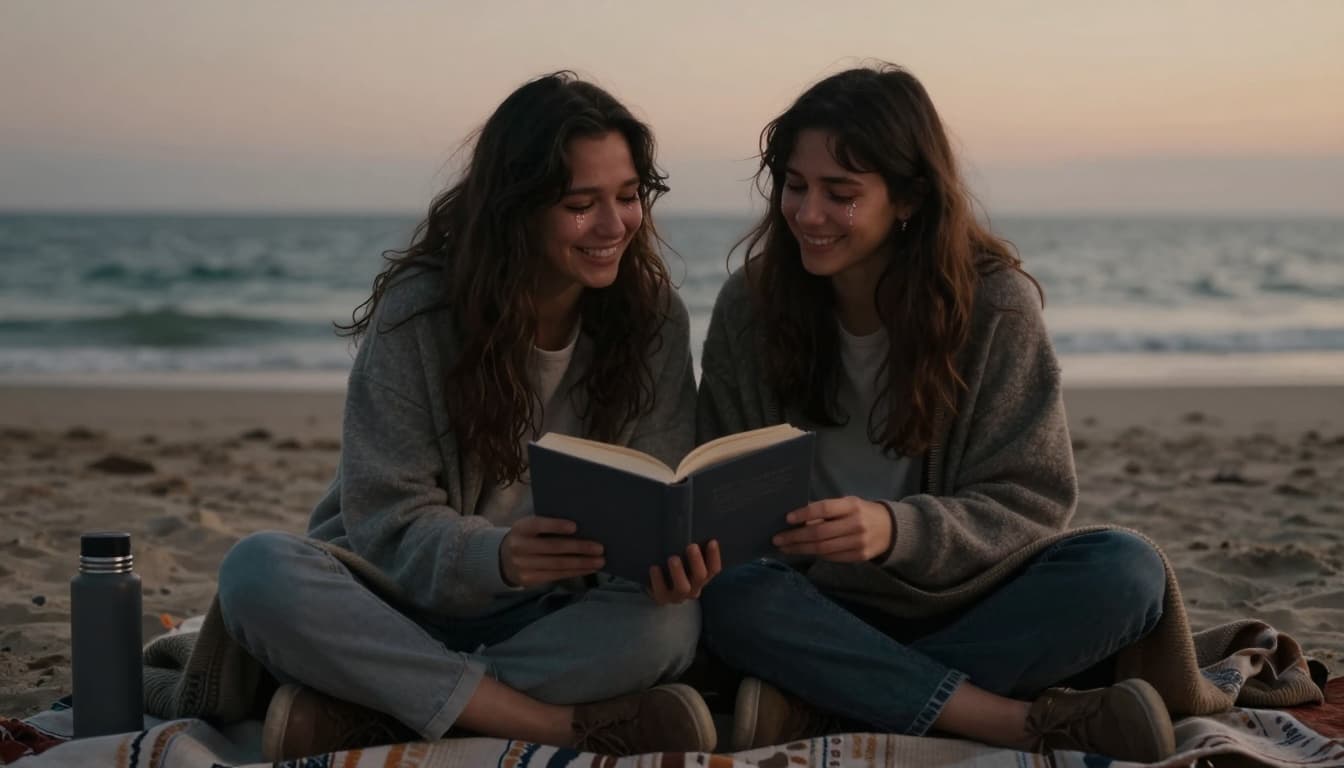 Two friends sharing a story that hits close to home
Here’s the reader promise I tend to feel in women’s fiction: I’m going to care about the people in this woman’s orbit, and by the end, she won’t be exactly who she was on page one. That “orbit” is often what makes the genre feel comforting. Relationships matter, and family dynamics matter. Friendships and community can matter as much as romance. The book might say, “Here’s a life that’s messy, and here’s a woman learning to live inside it with more honesty.”
Common tones range from warm and hopeful to bittersweet and reflective. And yes, you’ll often see small towns, close-knit communities, and a sense of place that acts like a secondary character. Not because women’s fiction must be cozy, but because settings like that naturally amplify connection, gossip, support, and pressure, all the stuff that makes emotional stakes land. If you like stories about second chances and complicated family ties, this is exactly why I write what I write, and why books like my seabrook Island series sit so naturally in the women’s fiction space.
What Literary Fiction Usually Means, and Why it can Feel Intimidating
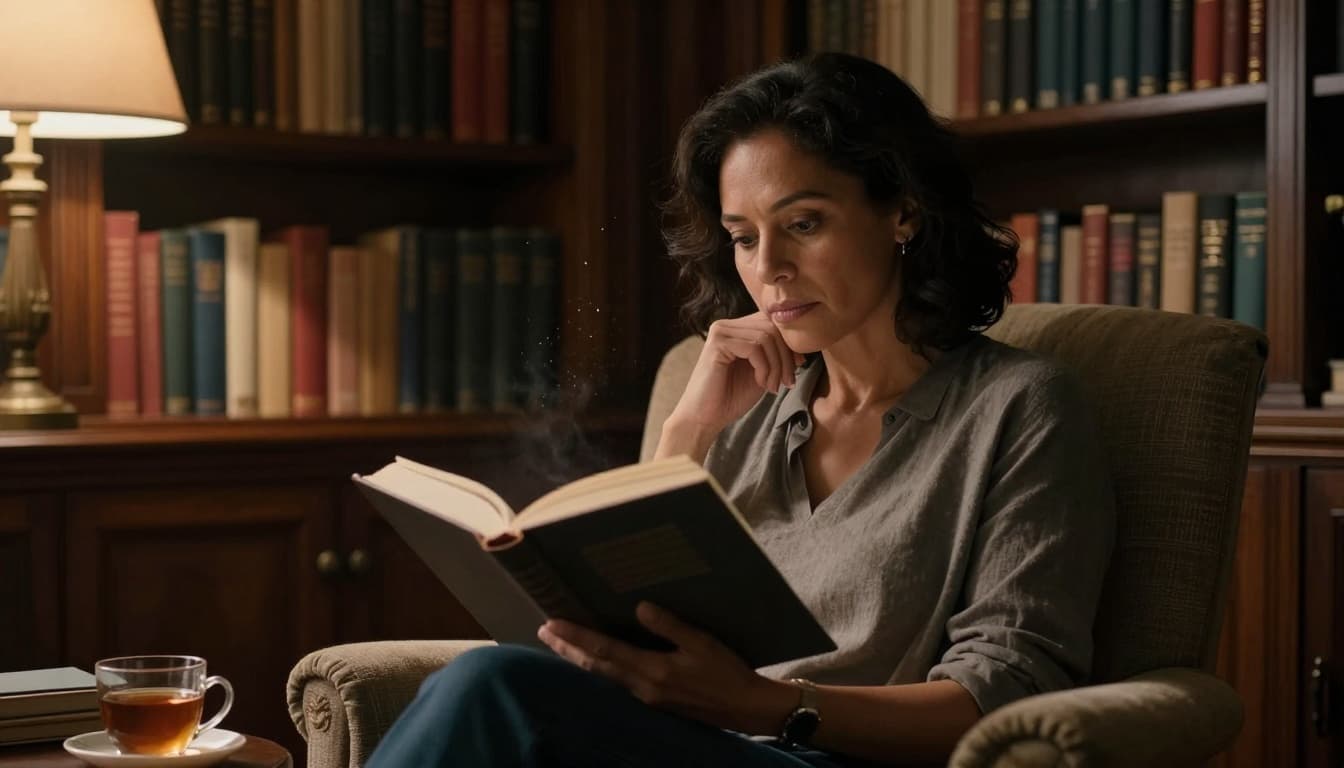 A quiet, thoughtful reading space that fits a slower, deeper story
“Literary fiction” is one of those labels that can sound like homework. I get it. But when I strip away the vibe and focus on the practical meaning, it’s simpler: literary fiction often puts language and theme at the center. That can show up as a strong voice, more attention to style, and characters who feel layered and complicated. Pacing can be slower, not because “nothing happens,” but because the book lingers on meaning. A scene might matter less for what it accomplishes and more for what it reveals.
Literary fiction also isn’t limited to any gender, and it’s definitely not limited to “serious men thinking serious thoughts.” Plenty of literary novels center women, mothers, daughters, friendships, and domestic life, but they might approach those topics with a different set of priorities than women’s fiction does.
If the term still feels fuzzy, I like Mary Adkins’ plainspoken approach in her discussion of what counts as literary fiction. Even when you don’t agree with every take, it helps to see the assumptions laid out.
The Focus in Literary Fiction: Language, Themes, and Complexity

A good way to spot the difference is to ask what the book wants you to notice. In women’s fiction, I often notice emotional cause and effect: she’s hurt, she tries, she fails, she grows. In literary fiction, I’m more likely to notice the writing itself, the patterns, the symbols, the moral gray areas. It’s not “plot doesn’t matter,” it’s “plot isn’t the only point.”
Endings can be a big tell. Women’s fiction often leans toward a clearer emotional landing, even if it’s bittersweet. Literary fiction is more willing to leave the ending open, or complicated, or quietly unresolved in a way that makes you argue with your best friend over coffee. That’s not a value judgment. It’s a mood, and sometimes I want closure. Sometimes I want a book that keeps tapping my shoulder for a week.
How Publishing and Bookstores Shape the Label (and the Cover)
 Bookstore shelving that quietly influences how we think about categories
This is where things get real: categories aren’t only about content. They’re also about sales channels, reviewer habits, awards, bookstore tables, and cover design. A cover can telegraph a promise before you read a single line. Women’s fiction covers often signal intimacy, relationships, and emotion. Literary fiction covers might skew more abstract or “prestige-coded.” Neither is better; both are marketing shortcuts.
And yes, bias can creep in. Literary fiction has often been positioned as “serious,” while women’s fiction is treated as “comfort” or “commercial,” even when the themes are just as sharp. That difference says more about cultural expectations than it does about the skill on the page.
If you want a smart, approachable look at how terms like “upmarket” and “book club” complicate the shelving game, Anne R. Allen explains it clearly in her breakdown of upmarket fiction.
Women’s Fiction vs Literary fiction: The Real Differences, the Big Overlap, and How I Tell Them Apart
 That familiar “what shelf does this belong on?” moment.
When I’m trying to decide what I’m holding in my hands, I don’t ask “Is this literary?” like it’s a test. I ask, “What is the book promising me as a reader?” Here’s the simplest way I explain women’s fiction vs literary fiction without making either one feel like a downgrade:
| What I’m noticing | Women’s Fiction often prioritizes | Literary Fiction often prioritizes |
|---|---|---|
| Core promise | Emotional transformation, relationships, life change | Voice, theme, complexity of meaning |
| Plot feel | Clearer arc, more external movement | Can be quieter, more reflective |
| Ending | More emotional closure (even if bittersweet) | Can be open, layered, unresolved |
| What I remember later | How it made me feel about my own life | The questions it left me with, the language |
Now for the part readers live in most of the time: overlap. A lot of books today sit in the middle, sometimes labeled “upmarket,” “book club fiction,” or “literary women’s fiction.”
As of recent, publishing talk continues to highlight how many successful novels blend emotional accessibility with higher-concept themes, and how genre-mixing is still a major reader draw (especially in spaces like book clubs and online reading communities).
Where They Overlap: Character-driven Stories that Hit You in the Heart

The overlap is where I’m happiest as a reader. Give me beautiful writing that still makes me ugly cry 😭. Give me a woman-centered story with real stakes, but also sentences that make me stop and reread because they’re that good. You get me!
In this blended space, the book might follow a familiar emotional arc (starting over, rebuilding, reconnecting) while also paying close attention to craft, voice, and theme. It might be comforting and unsettling in the same chapter. It might have an easy-to-follow plot, but still ask big questions about identity, class, motherhood, ambition, faith, or belonging.
If you’ve ever finished a novel and thought, “That was a page-turner, but it also wrecked me in a thoughtful way,” you’ve probably found the overlap. And I do hope that’s what my books do (because of course, my readers tell me so! 😊).
Common Mixups: Women’s Fiction, Upmarket, Literary, Book Club Fiction, Genre Fiction
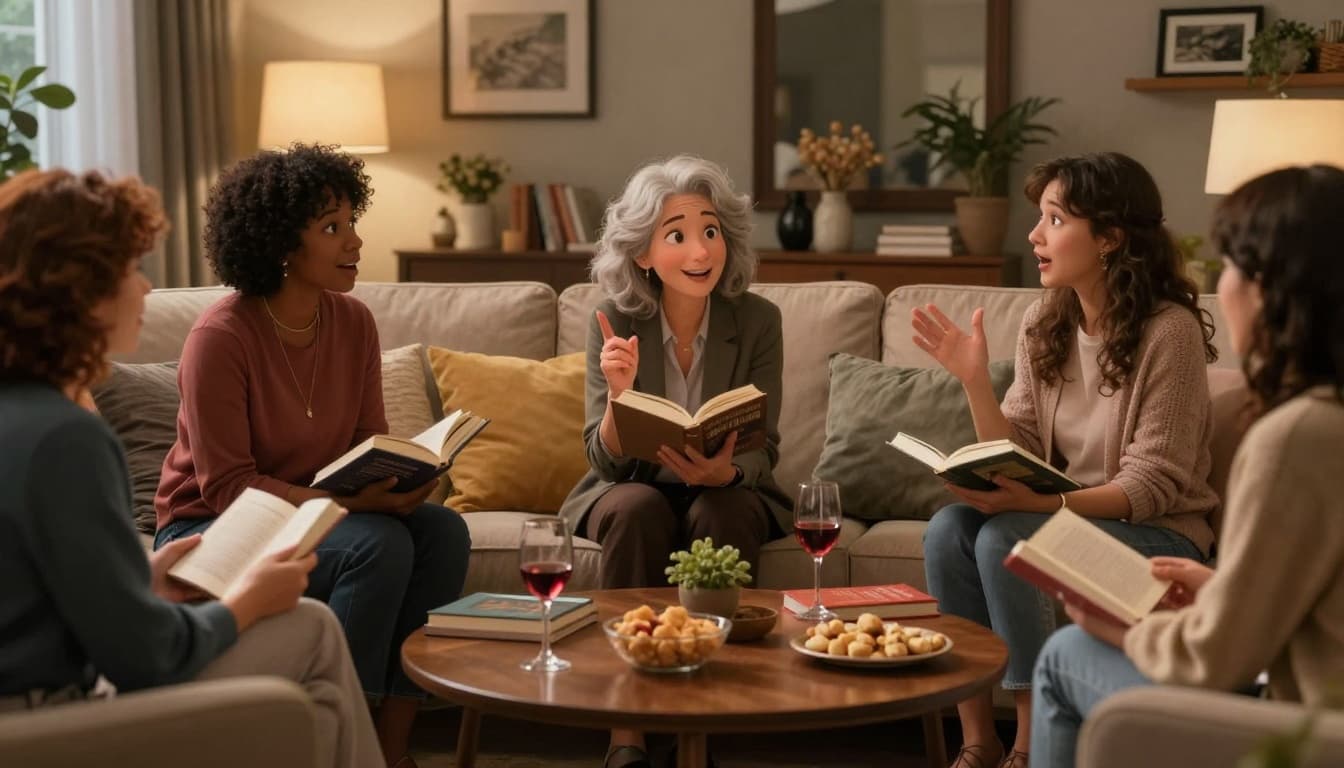 The kind of conversation where one book gets five different labels
Some terms get tossed around like they’re interchangeable, and that’s where readers start feeling like they missed a memo. Here’s how I keep the common mix-ups straight.
Common Mix-ups: Women’s Fiction vs Literary fiction vs Genre Fiction
Genre fiction (romance, mystery, thriller, fantasy, sci-fi) tends to make a very specific promise about what kind of story structure you’re getting. The reader expectations are part of the fun.
Women’s fiction and literary fiction are less about “what happens”, (which is technically “plot”), and more about “what the book focuses on”, (also technically “theme”). A women’s fiction novel can absolutely have genre elements (a mystery thread, a romantic subplot, even speculative touches). A literary novel can, too. The difference is what feels primary.
If you want a broader map of how categories and subgenres get defined, Scribophile’s overview of types of fiction and subgenres is a handy reference.
Common Mix-ups: Women’s Fiction vs Upmarket vs Commercial
“Commercial” usually signals accessibility and a strong hook. “Literary” signals craft and theme. “Upmarket” often tries to bridge them: readable and propulsive, but with more depth on the sentence level and the theme level.
Upmarket isn’t a shelf you’ll see in most bookstores, which is part of the confusion. It’s more of an industry positioning term, often tied to how the book is pitched to agents, editors, and reviewers.
As a reader, I think of upmarket as: “I’ll fly through it, and then I’ll want to talk about it.”
Common Mix-ups: Women’s Fiction vs Book Club Fiction
Book club fiction is less a genre and more a destination. It usually means the story is discussable: layered relationships, ethical tension, secrets, social issues, or a big emotional question.
A lot of women’s fiction is book club friendly because relationships and personal change naturally create discussion. A lot of literary fiction is book club friendly because themes and ambiguity create discussion. It’s overlap again, just described from a different angle.
I also like the honesty in Kathryn Craft’s reflection on how authors use these labels depending on audience, in this discussion of women’s fiction, book club fiction, and literary fiction.
Common Mix-ups: Women’s Fiction vs Romance vs “Chick Lit”
 A lighter, playful reading mood that often gets lumped into the wrong box
Romance is defined by structure: the love story is central, and the ending follows romance reader expectations. That’s not a limitation, it’s the agreement that makes the genre satisfying.
Women’s fiction can include romance, sometimes a lot of it, but it doesn’t have to. The story can end with a relationship beginning, ending, changing form, or staying uncertain, as long as the woman’s personal arc is the focus.
“Chick lit” is trickier. Many readers use it to mean light, funny, contemporary stories (often urban, often dating-focused), especially associated with a particular publishing era. The label can be misleading because it gets used as a brush-off. Some books marketed that way are sharp, insightful, and emotionally real. While others are pure comedy. Tone and marketing have a lot to do with it, and neither automatically tells you the book’s depth.
Here’s the quick contrast in plain prose: romance promises the central love story and a satisfying romantic ending, women’s fiction promises a woman’s emotional growth through life change, and chick lit usually points to a lighter tone and a specific style of marketing.
If you want more in-depth analysis on these, see my guide on women’s fiction vs chick lit.
Frequently Asked Questions About Women’s Fiction vs Literary Fiction
1. What’s the main difference between women’s fiction and literary fiction?
Women’s fiction is built around a woman’s emotional journey and personal growth. The core of the story is who she becomes by the end, after facing a meaningful life change or problem. That change might come through love, family tension, friendship shifts, grief, starting over, or a hard choice, but the point is the inner arc. If there’s romance, it usually supports that growth, it’s not the whole engine of the book.
Literary fiction is often defined less by a specific plot type and more by how it’s written and what it’s trying to examine. It tends to focus on complex character development, layered themes, and intentional prose. The story may move slower, take fewer “expected” turns, or leave more for the reader to interpret. The language, structure, and subtext carry a lot of the weight.
Another practical difference is reader expectation. Women’s fiction usually aims for an accessible, emotionally satisfying experience with a clear arc and resolution, even when the topic is heavy. Literary fiction may be more interested in asking questions than answering them, and it doesn’t always wrap things up neatly.
Neither label means “better.” They’re simply different goals. If you’re picking your next read, ask what you want most right now: a steady emotional ride with growth at the center (women’s fiction), or a book that puts style, theme, and complexity in the driver’s seat (literary fiction).
2. Does women’s fiction always include romance (and how is that different from romance novels)?
Women’s fiction can include romance, but it doesn’t have to. When it does, the relationship is usually one thread in a bigger fabric that includes identity, family, friendship, work, motherhood, caretaking, divorce, grief, or rebuilding after loss. The love story often acts as a catalyst, it can push the main character to make a choice, face a fear, or finally put herself first.
That’s different from genre romance, where the romantic relationship is the central plot and the ending is part of the promise readers expect. In romance, the couple’s relationship is the main arc, and the book typically delivers a clear romantic payoff. In women’s fiction, the payoff is more often the main character’s personal transformation, with romance as a meaningful element but not the whole point.
Literary fiction treats romance differently again. It may include a relationship, but it’s usually there to reveal character, tension, or theme, not to hit familiar relationship beats. A literary novel might explore love in messy, unresolved, or uncomfortable ways because it’s focused on complexity more than comfort.
If you love small-town love stories but also want depth, women’s fiction with romantic elements can be a great fit. You get heart, connection, and change, without requiring the romance to carry every scene.
3. Can a book be both women’s fiction and literary fiction?
Yes, and it happens more than people think. These categories aren’t airtight boxes. A novel can center a woman’s emotional growth (a women’s fiction hallmark) while also using more layered themes, quieter pacing, and more intentional prose (often associated with literary fiction).
Where it gets tricky is that publishing labels are partly about reader expectations and where a book is shelved or marketed, not only about what’s on the page. Two readers can finish the same book and describe it differently depending on what stood out to them. One might talk about the heroine’s healing arc, another might focus on the writing style and thematic depth.
A helpful way to think about it is to ask two questions:
First, what’s the story’s center of gravity? If the emotional journey and personal change are the clear focus, you’re probably in women’s fiction territory.
Second, what’s doing the heavy lifting on the page? If the prose, subtext, and layered meaning are as important as the plot events, it may lean literary.
Many beloved, emotionally rich novels sit in the overlap. If you like character-driven stories with big feelings and sharp writing, that middle space can be the sweet spot. You don’t have to pick a side, you can follow your taste.
4. Which should I choose if I like emotional, character-driven reads (and sometimes romance)?
If you want a story that moves with purpose and leaves you feeling like you’ve walked beside someone through a real change, women’s fiction is often the better starting point. It typically puts you close to the main character’s heart, shows how relationships shape her choices, and builds toward a satisfying emotional resolution. Even when the stakes are everyday life, the feelings aren’t small.
If you also love romance, women’s fiction can be especially enjoyable because it often includes love, attraction, or second chances, but it doesn’t require the relationship to be the only thing that matters. You can get the warmth of connection plus storylines about family, community, healing, or reinvention.
Choose literary fiction when you’re in the mood to slow down and sit with ambiguity. If you like books that make you notice the sentences, think about the themes after you close the cover, or see ordinary events in a sharper light, literary fiction can be deeply rewarding. The emotional punch can still be there, but it may come in a quieter, less predictable form.
A simple way to decide is to match the book to your week. Want comfort, hope, and forward motion? Go women’s fiction (especially if you love cozy coastal or small-town settings). Want challenge, texture, and a story that lingers like a question? Try literary.
Conclusion
When I’m sorting out women’s fiction vs literary fiction, I come back to one clean distinction: women’s fiction centers a woman’s emotional journey and change, while literary fiction often centers language and theme, even when the story is quieter.
The overlap is huge, and it’s where many of my favorite reads live. If you’ve felt pressured to “pick a side,” you don’t have to. Pick the reading experience you want right now.
What book blurred the line for you, the one you’d argue about in the best way? If you want more character-driven stories with heart, I’d love for you to explore more of mine on my site.


