

Can Women’s Fiction Have a Happily Ever After? (HEA vs Realistic Ending)

I read a lot of women’s fiction and a lot of romance, and I love both for different reasons. I also care about emotional payoff. I want to feel like the story kept its promise to me, even if it didn’t tie every ribbon into a bow.
So let’s talk about the big question: can women’s fiction have a Happily ever after? I’m firmly in the “yes” camp: women’s fiction can absolutely have a happily ever after. The difference is what the happiness is built on.
However when it doesn’t have an HEA, is that automatically better, worse, “more real,” or just different? I’m going to break down what counts as an HEA, what a realistic ending can look like, why people argue about HEA vs realistic ending, and how I decide (as a reader) whether an ending feels satisfying or like a cheat.

HEA, Realistic ending, and Sad Ending: What Each One Really Means in Women’s Fiction
A quiet, powerful image of release and forward motion
When I say HEA, I’m talking about an ending that leaves the reader confident the main couple is solid, safe, and staying together. In romance, that’s part of the deal. Romance can put the couple through chaos, but it typically promises an emotionally satisfying, optimistic ending.
Women’s fiction is different. It can center romance, but it often centers the woman’s inner change instead. The love story might be important, but so might her healing, her friendships, family ties, motherhood, grief, career, or the simple courage of starting over. That’s why HEA vs realistic ending shows up so much in women’s fiction conversations. The genre has more freedom to end in more than one “right” way.
If you want a quick grounding point on what women’s fiction is built to do, I explain it plainly in my post on what women’s fiction really means. That foundation helps a lot when you’re trying to predict what kind of ending a book is aiming for.
A realistic ending is often misunderstood. Realistic doesn’t have to mean bleak. It usually means the ending matches the choices, consequences, and emotional truth the story has been building toward.
And then there’s the third category people whisper about like it’s a spoiler: the sad ending. The HEA vs sad ending debate gets heated because sadness can feel either meaningful or pointless, depending on how it’s handled.
What I Count as a True HEA (and What Feels Like a Cheat)
A clear, warm visual of long-term commitment and security.
A true HEA isn’t “they kissed and everything was fine.” It’s more like emotional proof. I need to believe these two people have built something that can hold weight after the last page.
For me, a real Happily ever after usually includes:
- Clear commitment: not vague feelings, but a choice they make out loud.
- Long-term together: marriage isn’t required, but stability is.
- Emotional safety: respect, honesty, and a sense that the worst games are over.
- Problems acknowledged: life isn’t perfect, but they have a plan and a shared direction.
What feels like a cheat is when the book tries to technically hand me an HEA while leaving me uneasy. The biggest offenders are the last-page reunion with no proof, the sudden breakup after all the growth (with no real reason), or a cliffhanger that reads like, “Buy the next book if you want closure.”
If you enjoy romance structure and want to see why readers care so much about that promise, I wrote about it in women’s fiction vs romance expectations. It’s not about being picky, it’s about trust.
What a “Realistic Ending” Can Be (Hopeful Does Not Have to Mean Perfect)

A hopeful, grounded image of self-trust and a new beginning
When I say “realistic ending,” I often mean bittersweet or open-ended, but still emotionally complete. The character doesn’t need a perfect life. She needs a believable next step.
A realistic ending in women’s fiction might look like:
- She leaves an unhealthy relationship, even though it hurts.
- She chooses herself for the first time, and that’s the win.
- She rebuilds family ties slowly, not magically.
- She starts over in a new town, with peace instead of fireworks.
- She finds love, but the bigger victory is learning to accept it.
The key difference, for me, is realistic vs unfinished. Unfinished feels like the author stopped writing. Realistic feels like the author chose a door and let me see her walk through it.
This is why I love beach-town “starting over” stories. The setting almost acts like a deep breath, and endings can be gentle without being fake. If you’re into that vibe, my post on why fresh-start beach reads feel therapeutic explains why those hopeful, grounded endings hit so well.
Yes, Women’s Fiction Can Have a Happily Ever After, But it Needs to Fit the Story
 That last-page feeling when hope lands.
I’m firmly in the “yes” camp: women’s fiction can absolutely have a happily ever after. The difference is what the happiness is built on.
A romance-led HEA is often about the couple as the final proof. A women’s fiction HEA is often about the woman becoming whole enough to choose well, love well, and live well, with or without a ring in the epilogue.
When it works, it feels earned, not pasted on.
And lately, I’ve noticed more books blending love stories into every kind of plot, which means more readers are crossing between categories with different expectations. If you’re curious about that genre-blending conversation, this discussion on romance vs women’s fiction categories puts words to what a lot of us feel when a book sits on the fence.
When an HEA Feels Earned in Women’s Fiction
That final-chapter anticipation we all recognize.
In women’s fiction, I buy the HEA when I can trace it back to the heroine’s choices. A few signals usually tell me I’m in good hands:
- She makes a brave choice that costs her something, even if it’s just comfort.
- She sets a boundary and holds it, especially with family or an old pattern.
- She heals a key wound, not perfectly, but honestly (the kind where she stops lying to herself).
- She repairs a core relationship, sometimes romantic, sometimes with a parent, sister, child, or friend.
- The love story supports her growth, rather than replacing it.
This is where “fresh start” and “second chance” stories shine. The ending can still be happy, but the happiness feels like a new foundation, not a magic trick.
Why Readers Argue About Endings So Much (and Why Both Sides are Right)
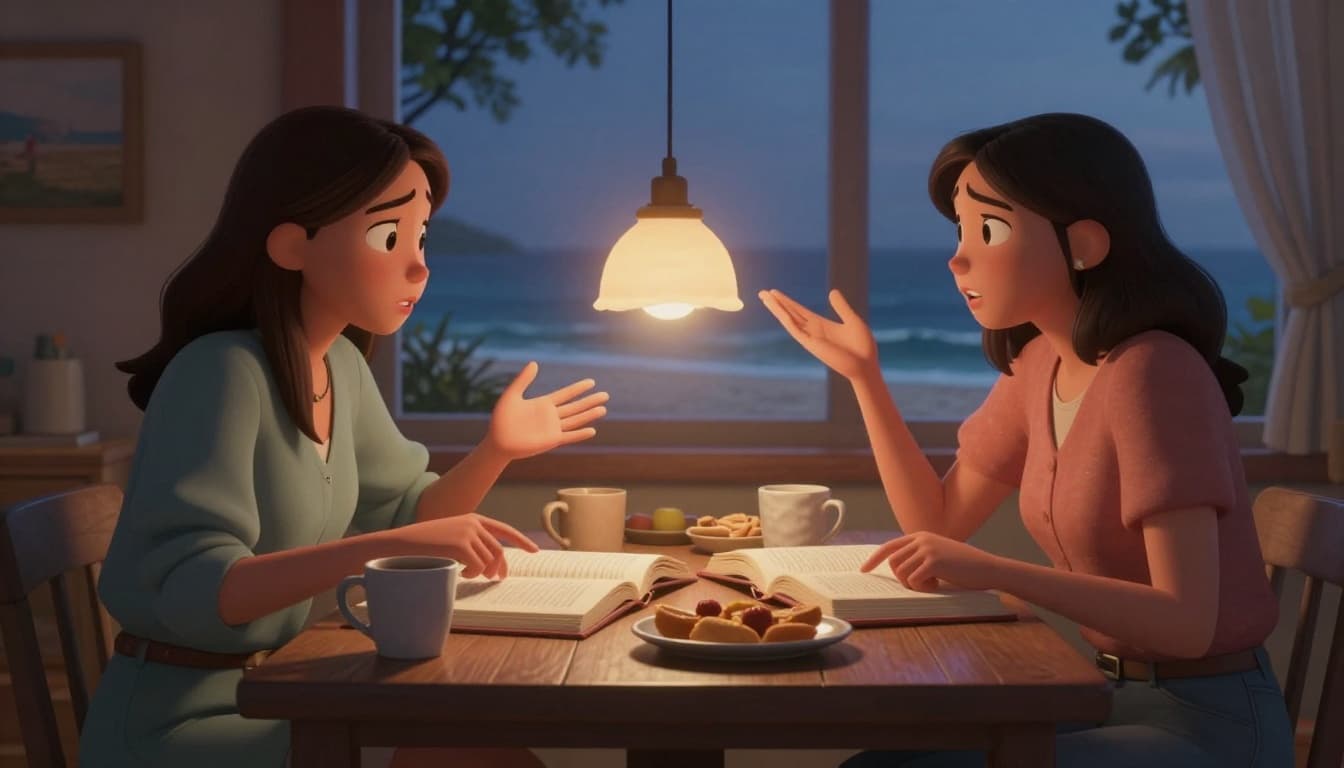
A book-club-style debate where feelings run high.
I’ve watched the same argument play out a hundred ways: one reader says, “I read to feel safe,” and another says, “I read to feel seen.” And honestly, I think both are right.
Endings aren’t just plot, they’re personal. They bump up against what we’re carrying in real life. If you’re exhausted, burned out, grieving, or stressed, an HEA can feel like someone finally turned the noise down. If you’re in a season of change, a realistic ending can feel like the truest kind of hope, the kind you can actually use and believe in.
Genre blending adds fuel to the fire. A lot of women’s fiction borrows romance beats (chemistry, yearning, slow-burn tension), and that can raise expectations for an HEA, even when the book is actually centered on self-growth or family healing.
This is also why people get sensitive about labels. If a book is sold like a romance and ends without a stable couple, readers don’t just feel sad, they feel tricked. It’s not that they can’t handle heartbreak. It’s that they didn’t consent to it.
I also think we’ve widened what “happy” looks like. The old-school version was often marriage, babies, and a neat epilogue. Now, a lot of readers accept HEA variations, as long as the emotional safety is there. Emily Henry said something similar about why “happy endings” matter emotionally, and her essay is worth reading: what we mean by happily ever after.
How to Write a Satisfying HEA that Still Feels Real

As a reader, I don’t need the ending to be problem-free. I need it to be emotionally true. The most satisfying HEAs in women’s fiction tend to do a few things well:
- Keep consequences on the page. If she blew up her life, something has to be rebuilt, not just forgiven.
- Show the work continuing. A quick line about therapy, a support group, a hard conversation, a new habit, it goes a long way.
- Don’t fix every relationship at once. One healed relationship can be powerful, but a sudden group hug with everyone who ever hurt her usually feels false.
- Let side relationships matter. A friend who stayed, a daughter who finally speaks, a neighbor who becomes chosen family, those are often the real love story.
- End with a grounded final scene. A quiet conversation, a decision, a community moment, a first morning in a new place.
If you love stories where setting and emotional repair go hand in hand, this idea of place-based healing can add a lot to an HEA. I talk about that in my guide to beach therapy for fresh starts, because sometimes the “happy” part is simply breathing again.
Three Ending Styles that Work Well in Women’s Fiction
I see three “realistic” ending styles show up again and again, and they work because each one leaves a specific emotional aftertaste.
Bittersweet (loss plus hope): She may lose a person, a dream, a version of her future. But she gains truth, freedom, or peace. The aftertaste is hope with a lump in the throat.
Open but stable (future unknown, self stronger): The job offer is pending, the romance is new, the move is coming, but she’s steady in herself. The aftertaste is calm confidence.
Full-circle growth (returning with new eyes): She comes back to a place, a family, a tradition, or even a love, but she’s changed. The aftertaste is strength and tenderness.
None of these endings require perfect happiness. They require a finished emotional arc.
How I Decide What Ending I Want as a Reader (and What I Aim for as a Writer)
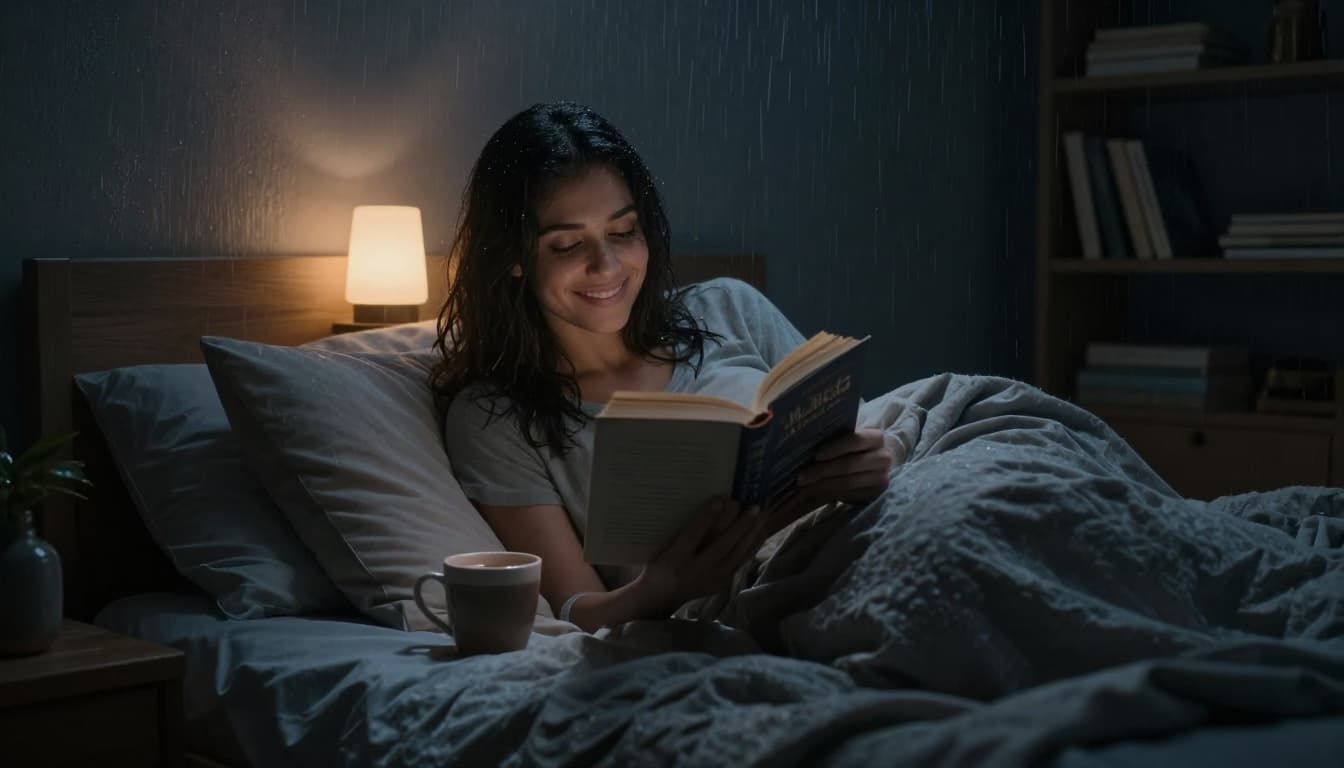
A comfort-reading scene that matches the need for emotional rest
My reading life has seasons. Some weeks I want comfort. I want the feeling that love can win, and that people can build something safe together. Other weeks I want catharsis, the kind that makes me cry and then sleep like a stone.
The trick is matching the ending style to what the book is setting up, and matching the book to what I’m ready for. When those align, I’m happy, even if the final page is quiet instead of triumphant.
I also think readers are getting more flexible, as more books blend romance elements into women’s fiction and even into thrillers, fantasy and mysteries. That can be fun, but it makes “ending expectations” more important than ever.
If I’m unsure, I’ll skim reviews for spoiler-free cues (words like “bittersweet,” “hopeful,” “heartbreaking,” “uplifting”). And I pay attention to how the story frames the central journey. Is it “will they,” or is it “will she”?
Questions I Ask to Check What Kind of Ending I am in the Mood for
Before I start a new book, I’ll do a quick check-in with myself. These questions keep me from picking the “wrong” book for the wrong day:
- Do I want comfort or catharsis?
- Is the relationship the main plot, or one part of her life?
- Do I need clear closure, or can I handle an open door?
- Am I craving a “fresh start” ending where she builds a new life?
- Do I want to feel seen in something hard, or escape into something softer?
- Will I be upset if the romance thread doesn’t end in forever?
- Do I want the final page to feel like a landing, or like a launch?
None of these answers are “better.” They’re just information.
For a fun snapshot of how wide reader preferences can be, this reader discussion on romances and HEAs shows how personal the ending question really is.
What I think the Best Women’s Fiction Endings Have in Common
No matter the ending style, the best women’s fiction endings tend to share a few traits that I can feel in my chest as I read the last chapter.
They have emotional honesty, even when it’s messy. They show a clear change in the heroine, not a personality swap, but a real shift in what she will and won’t accept. They honor meaningful relationships, romantic or not, because women’s lives are built from many kinds of love.
They also keep consequences consistent. If a character has been avoiding the truth for 300 pages, the last five pages can’t pretend that avoidance never happened. And most of all, they leave me with hope, even if that hope is small.
That’s the real takeaway for me: women’s fiction can end happily or realistically, as long as it feels true to her journey.
How to Make Any Ending Feel Earned (so it Does Not Feel Like a Twist for Shock Value)

A reflective, communal moment that fits earned endings and shared reader expectations.
An ending doesn’t need to be cheerful to be satisfying, but it does need to feel earned. These are the signals I look for, and the choices I respect most:
- Plant the outcome early: not by spoiling, but by building the emotional logic.
- Keep choices consistent: growth can surprise us, but it shouldn’t come from nowhere.
- Answer the biggest emotional question: not every subplot, just the heart question.
- Show consequences: especially if the story deals with betrayal or long-term harm.
- Avoid last-minute miracles: nothing breaks my trust faster than a sudden fix.
- End on a clear final image: a scene that says “this is the new truth.”
And about HEA vs sad ending: if an ending is sad, I can handle it, but I need it to have meaning. I need emotional closure, not just pain. The book should leave me with something to hold, even if it hurts.
At the end of the day, women’s fiction can absolutely have an HEA, and it can absolutely choose a realistic ending, and yes, sometimes it can go sad. What matters most to me is whether the ending fulfills the story’s emotional promise. That’s the difference between “I’m wrecked” and “I’m grateful.”
Now I want to know what you prefer. Do you want a guaranteed HEA, or do you like a bittersweet, realistic ending that feels more like life?
Frequently Asked Questions
1. Can women’s fiction have a happily ever after?
Yes. Women’s fiction can absolutely end with a happily ever after. The genre is defined more by what it focuses on, a woman’s emotional journey, growth, and relationships, than by a fixed ending type.
A common mix-up is assuming women’s fiction has to end in a “realistic” or bittersweet way. That’s more of a trend and a reader expectation in some book club circles, not a rule. Women’s fiction can end in a clean HEA, a hopeful fresh start, a complicated but satisfying resolution, or something more open-ended.
If the story is primarily about the main character’s life change (family, identity, friendship, grief, second chances), the ending can be warm and romantic without turning the book into genre romance. In other words, the presence of love and happiness doesn’t disqualify it, it just means the author chose a hopeful landing.
For readers who want comfort, women’s fiction with an HEA often delivers the best of both worlds: real-life problems on the page, plus an ending that feels like a deep breath.
2. What’s the difference between a romance HEA and a women’s fiction happy ending?
In romance, the central promise is the love story, and the ending is expected to be HEA (happily ever after) or at least HFN (happy for now) for the couple. That expectation is a defining feature of the romance genre.
In women’s fiction, the core promise is the protagonist’s emotional arc. Romance can be important, but it usually isn’t the only engine driving the plot. A women’s fiction “happy ending” might look like a repaired relationship with a sibling, choosing a new career, healing after divorce, or finding peace after loss. A romantic relationship can be part of that, but it doesn’t have to be the whole point.
So if the couple ends up together, that can be an HEA. If the character ends stronger and more whole, that can also be a satisfying ending even if the romance is uncertain, secondary, or absent.
3. Does a realistic ending mean there’s no HEA?
Not at all. “Realistic” doesn’t have to mean “sad” or “unresolved.” Plenty of realistic endings are happy, they’re just happy in a way that acknowledges life is messy.
A realistic HEA often includes tradeoffs. The couple might commit, but still have work to do. A family might reconcile, but scars remain. A character might get love and belonging, while also accepting a hard truth or letting go of a dream.
If you like women’s fiction, chances are you enjoy emotional honesty. A realistic ending can still deliver that warm payoff, it just avoids pretending every problem disappears overnight. For many readers, that balance is the sweet spot: hope that feels earned.
4. How can I tell if a book is women’s fiction with romance, or a romance novel?
Look at what the story would still be about if you removed the love story.
If the book would fall apart without the couple’s relationship and the plot is built around them getting together, it’s probably romance. If the book would still make sense because the main thread is her personal change (family, community, identity, starting over), it’s more likely women’s fiction, even if there’s a strong romantic subplot.
Also check how the ending is framed. Romance spotlights the couple’s commitment as the primary resolution. Women’s fiction might end with love, but it usually closes on the character’s bigger emotional milestone, like choosing herself, repairing trust, or stepping into a new life.
5. Is it “wrong” if I only want women’s fiction with an HEA?
No. Reading tastes are personal, and comfort matters.
If you read to relax, recharge, or feel hopeful, it makes sense to seek out women’s fiction that ends on a clear upswing. Many authors write emotionally rich stories that still deliver a satisfying, feel-good finish, including a strong romantic payoff.
The easiest way to avoid disappointment is to look for signals before you buy: publisher descriptions, genre labels (women’s fiction vs romance), and spoiler-free reviews that mention whether the ending is “hopeful,” “bittersweet,” or “open.” If you’re browsing an author’s series that leans cozy and heartwarming, you’re also more likely to get closure and a happier wrap-up.
Conclusion
Women’s fiction can absolutely deliver an HEA, and realistic endings are just as valid. The deciding factor is the story’s emotional promise, what the book asked me to care about, and what kind of change the heroine earned on the page. When that promise is kept, the last chapter feels right, whether it ends in a wedding, a new lease, or one brave exhale. I’d love to know what you reach for most, HEA, HFN, bittersweet, or open, and what makes that ending hit home for you.


