

Romance Subplot vs Main Plot (How It Works, With Clear Examples)

You know that feeling when a story has both high stakes and a love story, and you’re not sure what you’re “supposed” to care about most? That’s the heart of Romance Subplot vs Main Plot.
Readers often use these terms to explain why one book feels like a romance, while another feels like women’s fiction, romantic suspense, fantasy, or a thriller that happens to include love. Writers use them to keep pacing tight and to meet genre expectations without disappointing anyone.
This post keeps it simple: clear definitions, a quick way to identify the A story and B story, and easy examples across genres (including one where romance is the main plot). You’ll finish knowing exactly what role the romance is playing, and how to make it work on purpose.

Romance Subplot vs Main Plot: The Simplest Way to Tell Them Apart
 Two stories side by side, one driven by external stakes, one driven by connection
The easiest way to separate the main plot from a romance subplot is to ask: what must be resolved for the story to feel finished? That’s your main plot.
- Main plot (A story): the central problem the book is built around. It drives the climax, the big turning points, and the ending question.
- Romance subplot (B story): a relationship thread that runs alongside the main plot. It adds feeling, tension, and hard choices, but it isn’t the engine of the book.
In a romance novel, the romance is the main plot by definition. The core question is, “Will these two end up together?” and the ending needs an emotionally satisfying, optimistic payoff. In women’s fiction, fantasy, thrillers, and many romantic suspense books, the love story is often important, but secondary. The characters might fall in love while solving a murder, surviving a dystopia, or rebuilding their lives, but the book’s ending answers a different question.
If you want a reader-focused way to think about it, this Romance vs. Women’s Fiction breakdown explains why expectations change when romance is central versus supportive.
Here’s a quick checklist to identify the A story and B story:
- Page time test: Which thread gets the most scenes, decisions, and consequences?
- Climax test: At the peak moment, what must the protagonist do to “win”?
- Back-cover test: If you summarize the book in two sentences, what comes first?
- Removal test: If the love interest disappears, does the story still have a complete shape?
For a deeper look at what romance readers tend to expect when love is front and center, see what women love in romance fiction.
Main plot: What the Story Would Still be About if You Removed the Love Interest
 The “engine” of a story often looks like a clear goal and a rising problem
The main plot is the spine. It contains the primary goal, the central conflict, and the climax-driving choice. It’s what creates momentum when the characters are tired, scared, stubborn, or tempted to quit.
Mini example: A woman returns to her hometown after her sister’s death and discovers the family business is about to be sold out from under her. She has 30 days to prove fraud, find missing records, and keep the place afloat. If she succeeds, she keeps her home, her history, and her future. If she fails, everything is gone.
The love interest can deepen this story, but the core question is still, “Can she save the business and uncover the truth?”
Romance Subplot: How Love Adds Pressure, Choices, and Emotional stakes
 Romance subplots work best when they create real pressure, not just sweetness
A romance subplot isn’t “extra.” When it’s done well, it tightens the story. It makes every decision heavier because someone else now matters, and because intimacy has a way of poking at old wounds.
Three quick ways a romance subplot supports the main plot:
- Motivation: Love gives the protagonist a stronger reason to act, stay, or fight. They’re not just saving themselves anymore.
- Obstacle: The relationship complicates choices. Trust issues, opposing goals, or timing problems create friction without replacing the main conflict.
- Mirror: The love interest reflects the protagonist’s fear. If she’s terrified of relying on anyone, romance forces the issue in a way the plot alone can’t.
In other words, the romance subplot isn’t there to pause the story. It’s there to raise the cost of failure.
Clear Examples Across Genres, So You Can Spot the Difference Fast
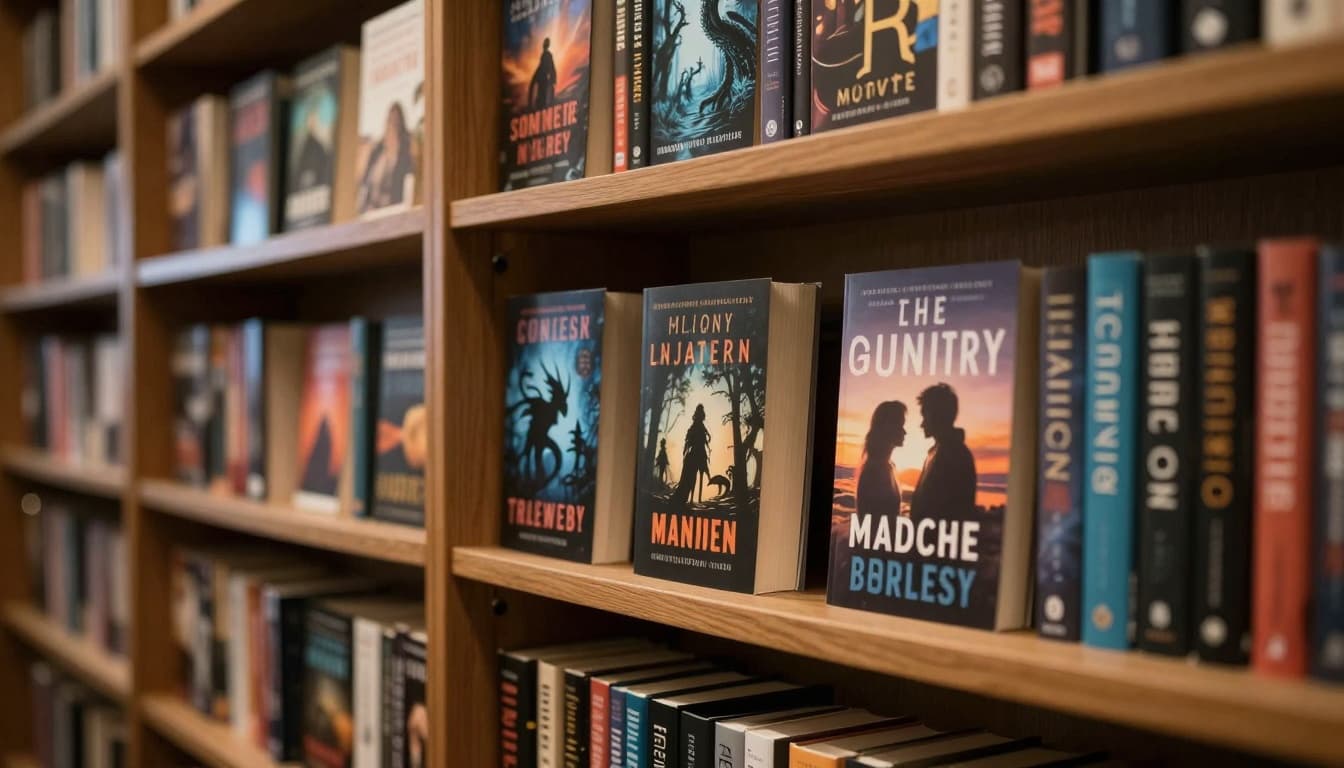 Different genres can carry romance at different “volume levels”
If you’ve been noticing more romance folded into fantasy and suspense lately, you’re not imagining it. In January 2026, romance-forward fantasy (often called romantasy) is still popular, and readers keep asking for big stakes plus big feelings, especially enemies-to-lovers and forbidden romance threads. That trend doesn’t change the definition though. It just means more books are blending the line on purpose.
A helpful way to think about it: the main plot is what the story promises to deliver, and the subplot is what enriches that promise. If you want a broad list of how romance can show up across genres, this roundup of books with romance subplots offers a useful overview.
Here are clear, spoiler-light examples:
Example Where Romance is the Main Plot: a True Romance Novel
 When romance is the main plot, the relationship itself is the story’s finish line
In a romance novel, the couple getting together is the core engine. The big story question is simple: Will they choose each other in the end? The external stuff (work, family, a town festival, a rival business) matters, but it exists to pressure the relationship into growth.
Most romance readers also expect a happy ending (HEA) or happy for now (HFN). That promise changes how readers experience tension because they trust the emotional payoff is coming.
Made-up mini plot (cozy coastal town): Nora inherits her aunt’s seaside gift shop and learns it’s drowning in debt. She plans to sell fast and leave, until she meets Cal, the quiet harbor master who loved the shop as a kid and refuses to watch it disappear. They clash over every decision, but each compromise feels like a step closer to something neither of them wants to admit out loud. When a storm threatens the shoreline and the town rallies, Nora has to decide what she’s really afraid of, failure, or staying long enough to be loved.
Here, saving the shop is important, but the ending has to answer, “Do Nora and Cal end up together?”
Examples Where Romance is a Subplot: Fantasy, Thriller, and Women’s Fiction
 Romance can be present while the action and stakes stay in charge
- The Hunger Games (Suzanne Collins)
Main plot: Katniss is trying to survive a deadly system and protect her family.
Romance subplot role: The love triangle adds tension, strategy, and emotional conflict under pressure.
Why it stays secondary: The story’s end question is about survival, power, and choice, not only pairing. - Harry Potter series (J.K. Rowling)
Main plot: Harry must face a rising threat and fight a larger war.
Romance subplot role: Crushes and relationships add coming-of-age stress and deepen friendships.
Why it stays secondary: The climax hinges on courage, loyalty, and defeating evil, romance supports character growth but doesn’t drive the final win. - The Girl with the Dragon Tattoo (Stieg Larsson)
Main plot: A journalist and a hacker investigate a long-buried disappearance tied to a powerful family.
Romance subplot role: Attraction and intimacy complicate trust and vulnerability while danger builds.
Why it stays secondary: The mystery and its consequences remain the story’s center, the relationship is not the final “answer.”
What Readers Expect in Romance-first Books vs Romance-on-the-side Books
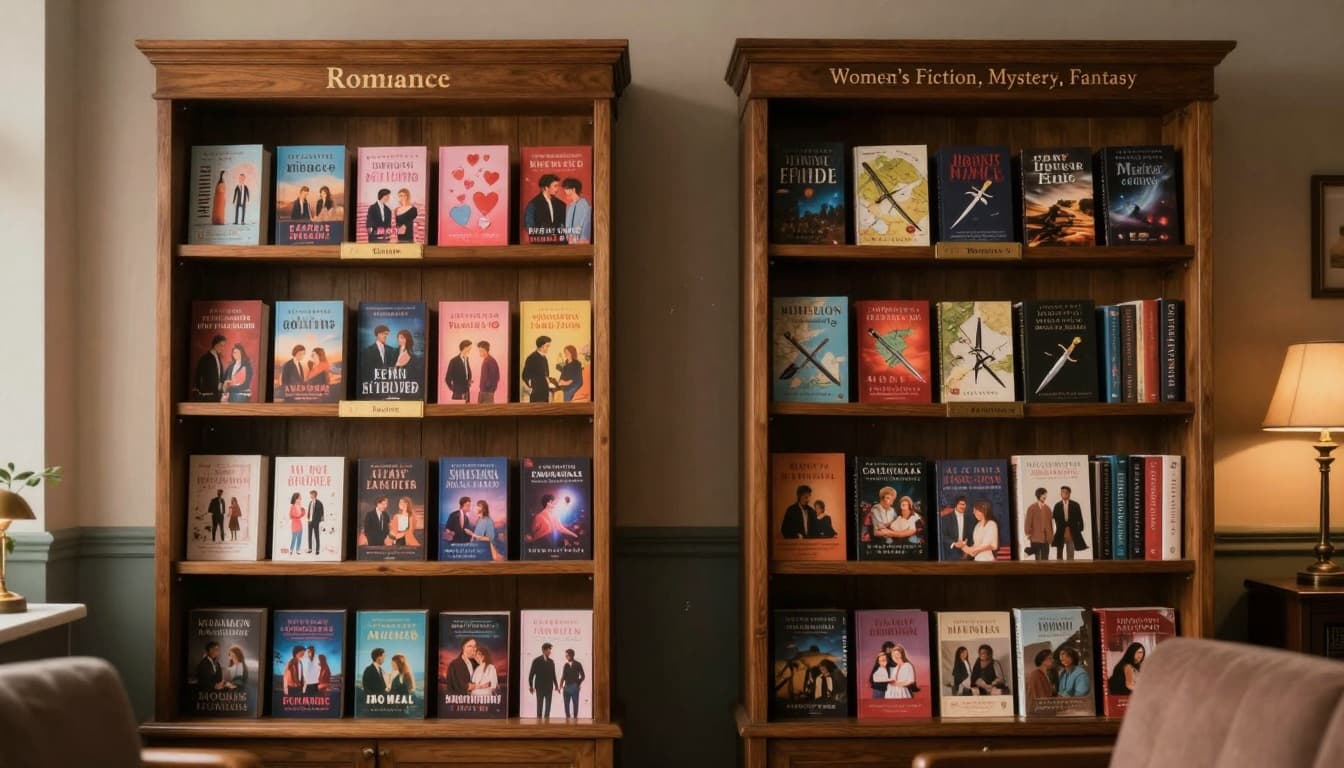 A quick snapshot of how shelves signal different story promises, created with AI.
Romance readers come in for the relationship journey. They want the couple’s bond to be the central arc, with emotional completion at the end. That completion can be quiet or explosive, but it can’t feel half-done.
In women’s fiction, mystery, suspense, and fantasy, readers usually want the external drive to lead. They’re here for the secret to come out, the danger to end, the family to shift, the goal to be reached. Romance can be important, but it shouldn’t replace that forward pull.
This genre blending is especially common right now. Recent publishing chatter keeps highlighting cross-genre stories (women’s fiction with mystery tension, romantasy with big external stakes, suspense with a slow-burn thread). The takeaway for me is simple: readers still want the book to keep its promise. Mix genres all you want, but don’t confuse the “what are we solving?” question.
How to Make a Romance Subplot Work Without Taking Over Your Story
 Balance is about purpose, not equal time
A romance subplot works best when it feels like it belongs to the same book. That sounds obvious, but it’s where many stories wobble. If the main plot is tense and dangerous, the romance should create more meaningful tension, not turn the book into a different genre for three chapters.
A practical approach is to decide early what the romance is doing for your protagonist. Is it pushing her toward bravery? Is it tempting her to choose comfort over truth? Is it showing her the difference between being wanted and being safe?
It also helps to remember that real connection is rarely neat. It’s layered with bad timing, pride, fear, and misunderstanding, which is why a love subplot can feel so human when it’s written honestly. This post on why real love is messier than romance fiction is a great reminder that emotional realism beats perfection.
If you’re a writer, you can also sanity-check your genre promise with this craft-focused piece, Is my book a romance?. It’s helpful when you’re unsure whether your love story has become the A story.
A Simple Balance Rule: Every Love Scene Should Change the Main Story Too
 Romance scenes can be emotional and still move the plot forward
Rule of thumb for non-romance genres: the romance often lands well around 20 to 30 percent of the story’s attention. That’s flexible, and some books go higher (hello, romantasy). The point is that the romance shouldn’t hijack the pacing or solve the wrong problem.
Four fast checks for any romance subplot scene:
- Does it increase danger (someone follows them, someone overhears, someone makes a threat)?
- Does it reveal a clue (a confession, a slip, a piece of backstory that changes the plan)?
- Does it force a choice (duty vs desire, truth vs comfort, mission vs attachment)?
- Does it raise the cost of failure (now losing means losing a person too, not just a goal)?
If the scene does none of these, it may still be sweet, but it’s probably filler.
Three Clean Ways to Weave it in (Parallel, Complication, Convergence)

When I’m planning a romance subplot, I usually fall into one of these patterns.
Parallel: The romance grows as the main plot moves. Scenes alternate naturally, and each one nudges the other forward. Think of it like two candles burning at the same pace.
Complication: Feelings make the main goal harder. Attraction causes bad timing, divided loyalty, jealousy, or hesitation. The romance isn’t a break from the plot, it’s friction against it.
Convergence: The romance choice becomes part of the climax. The couple teams up, one sacrifices, or the character’s decision in love directly changes the outcome of the main problem.
The pattern you choose matters because it controls “page gravity.” Complication and convergence keep romance from floating away from the story you’re really telling
Common Mistakes that Make the Romance Subplot Feel Awkward
A romance subplot usually feels “off” for one of two reasons: it’s too shallow, or it’s taking over. These fixes keep it integrated.
- Insta-love with no pressure: Add friction tied to the main plot, clashing goals work better than random miscommunication.
- Spicy scenes that pause the story: Keep intimacy, but attach it to a consequence (a deadline missed, a truth exposed, a risk taken).
- A love interest with no life: Give them a goal that doesn’t revolve around the protagonist, and make that goal matter to the main plot.
- Breakup loops: If the couple keeps splitting, make each split change the strategy, the stakes, or the protagonist’s self-belief.
- Romance resolves too early: In plot-forward books, keep some emotional tension alive, even after they get together (trust, fear, conflicting responsibilities).
- The romance “fixes” trauma instantly: Let love be support, not a cure. Growth still needs choices and time.
Quick Self Check: Is Your Book Romance-forward or Plot-forward
 A simple self-check can clarify what your story is really about, created with AI.
When you’re unsure, zoom in on the ending. What question does the final scene answer? Then look at what the climax depends on. Is the make-or-break moment about the relationship, or about the external mission?
Try this fast diagnostic:
- If the ending is satisfying only when the couple commits, it’s romance main plot.
- If the ending is satisfying when the central problem is solved, and love is a bonus, it’s romance subplot.
- If you can remove the romance and almost nothing changes, it’s a romance thread that could be cut.
Three quick scenarios:
- Romance main plot: She can accept the dream job across the country, but the true climax is whether they choose a shared life and make it work.
- Romance subplot: He’s the best person to help her expose corruption in a small town, and trust grows while the investigation closes in.
- Romance thread that could be cut: They flirt in two scenes, then fade out, and the protagonist’s choices and ending don’t change.
Conclusion
In the end, the difference between a main plot and a romance subplot is simple: the main plot is the engine, and the romance subplot is the boost (unless you’re writing a romance, where love is the engine). When you know which is which, pacing gets cleaner, scenes feel purposeful, and the ending lands the way readers expect.
Pick a favorite book tonight and name its A story and B story in one sentence each. Then, if you’re writing, try the removal test on your own outline. When the structure is clear, the feelings hit harder, and the story sticks.


