

Is Women’s Fiction a Genre, or Just a Marketing Label?

I can’t count how many times I’ve been browsing a bookstore shelf (or scrolling Amazon categories) and paused at the sign that says “Women’s Fiction.” I know what I tend to find there. I also know I’ve had that little moment of doubt: Wait, is this actually a genre? Or is it more like a vibe?
That question matters more than it seems. Labels shape how readers discover books, how writers pitch them, and what we all expect when we crack the spine. So today I’m answering it plainly: is women’s fiction a genre, a category, or mostly a marketing label, and why the name keeps stirring up debate.
If you love women’s fiction and romance (like I do), this isn’t about gatekeeping. It’s about finding the right book faster, and understanding what promise the cover is trying to make.

What People Mean When they Say “Women’s Fiction”

When most readers say “women’s fiction,” they’re usually pointing to a certain kind of story, not a certain kind of author. The working definition I hear again and again is simple: character-driven novels where the emotional life of the main character is the main event.
Often the heroine is dealing with a big shift, divorce, grief, a new town, an empty nest, a friendship rupture, a career change, a family secret that won’t stay buried. The plot still matters, but the heart of the book is who she becomes while living through it.
That’s also why women’s fiction blends so easily with other genres. It can be set in a small town, wrapped around a family mystery, threaded with romance, or written with that “book club” feel. The emotional journey stays the center beam. For a clear, industry-facing definition, the Women’s Fiction Writers Association explanation of women’s fiction lines up with what many fans already sense when they browse.
One more clarity point: women’s fiction is not the same as “women’s writing.” Women’s writing means books written by women, across every genre. Women’s fiction is about what the story focuses on, and how it’s packaged for readers. The Wikipedia overview of women’s fiction as an umbrella term lays out that distinction in a straightforward way.
The Emotional Journey is the Engine of the Story
 An early-morning beach walk that captures the feeling of a fresh start
When I think about women’s fiction at its best, I think about inner change doing the heavy lifting. The story might include big external events, but the turning points are emotional: choosing forgiveness, setting boundaries, letting go of an old identity, or finally telling the truth.
A thriller is powered by “Who did it?” A fantasy often runs on “How does this world work?” Women’s fiction tends to run on “Who am I now, after this?”
That’s why these books can feel like company. They don’t just entertain, they witness. They make room for messy feelings without treating them like a side quest. And the resolution usually aims for something satisfying, even when life doesn’t tie up neatly. Not every ending is perfect, but it’s usually earned.
This is also why the label can confuse people. If you’re looking for a strict set of rules, like a cozy mystery structure or a romance ending requirement, women’s fiction won’t always behave. It’s more like a compass than a map. It points you toward an emotional experience.
Women’s Fiction Can Include Romance, but Romance is Not Always the Main Promise
 Coffee, quiet talk, and a journal moment that hints at love plus self-reflection
This is where a lot of the “genre or not?” debate gets heated, because romance readers (also me) are trained to look for one clear promise: the love story is central, and you’ll get a happily-ever-after or happy-for-now.
Women’s fiction can absolutely include a love story, sometimes a swoony one. But it doesn’t have to. The romantic relationship might be important, yet the book’s main promise could be healing a family rift, rebuilding a life, or learning how to want something again.
Here’s the simplest way I separate them:
- Romance: the core plot is the relationship, and the ending must leave the couple together in a hopeful, committed way.
- Women’s fiction: the core plot is the character’s growth, and romance is one possible thread, not always the whole fabric.
If you’ve ever finished a book feeling like you just watched someone rebuild their house from the studs, that’s the feeling women’s fiction often aims for. The love story might be part of the rebuild, or it might not.
If you want another clean explanation of how the category is commonly defined, I like The Novelry’s overview of what women’s fiction is, because it keeps the focus on reader expectations instead of academic rules.
So, Is Women’s Fiction a Genre or a Marketing Label? My Honest Take
My honest take is this: women’s fiction often functions more like a marketing label and bookstore category than a tight genre with hard rules.
But it still behaves like a genre in one important way: it carries a set of reader expectations. When I pick up a book labeled women’s fiction, I expect emotional depth, relationships that matter, and a tone that leans hopeful, even if it’s bittersweet.
As of January 2026, the conversation hasn’t cooled off. The most consistent thread I keep seeing is that women’s fiction is “fuzzy” on purpose. It’s a wide container that can hold family drama, romantic elements, “upmarket” writing, and book club hooks. That flexibility is helpful for selling books, and frustrating for people who want neat boxes.
The debate sticks around because both sides are right. It’s a category built for discovery, yet it also signals a real reading experience. If you’re curious about the bigger “what even is a genre?” question, I’ve found the discussion on why genre labels matter to readers and writers surprisingly helpful, because it treats genre as a tool, not a rulebook.
Why Publishers and Bookstores Treat it like a Category
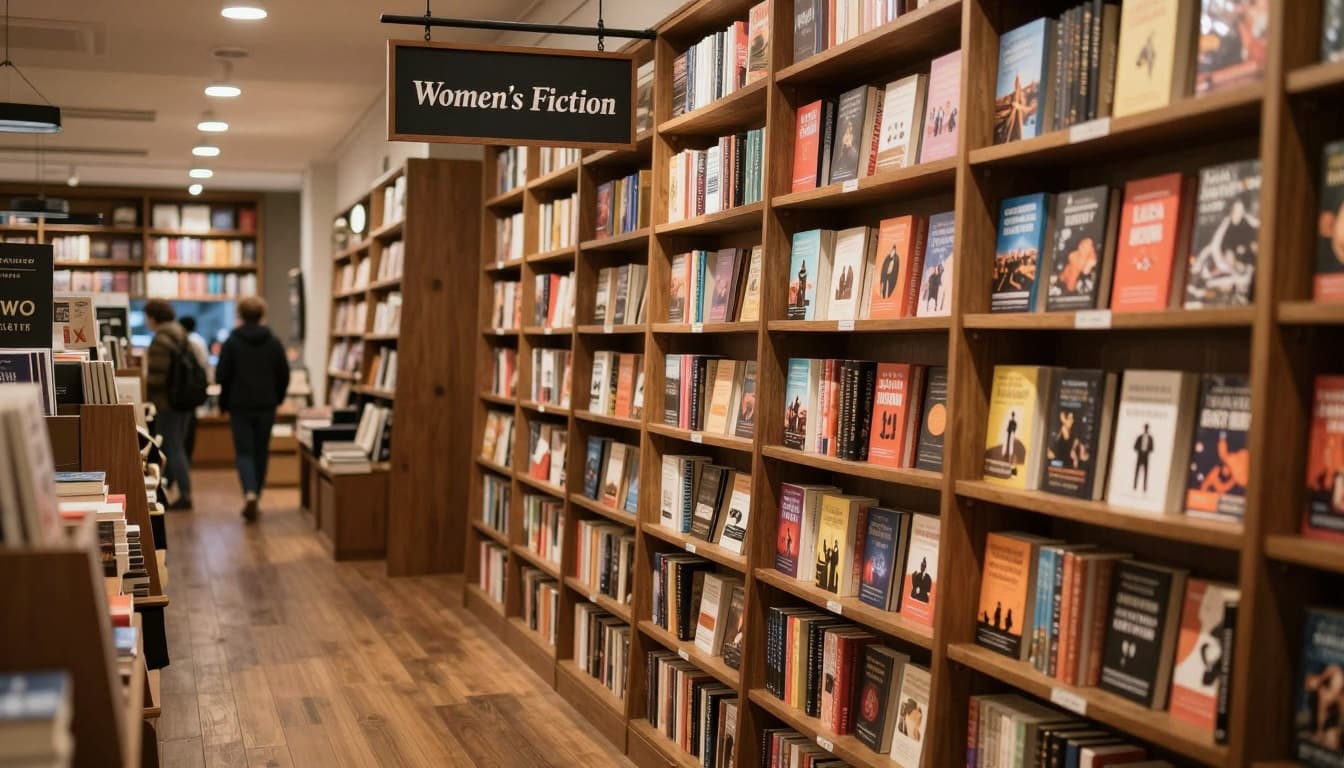 A bookstore shelf view that shows how categories guide browsing
Categories exist because readers don’t have time to read 40 back covers to find “the one.” A shelf sign or an online label is basically a shortcut that says, “If you like this feeling, start here.”
From a business side, it’s also about placement. Bookstores need sections, and online retailers need categories to power recommendations and ads. “Women’s fiction” gathers a lot of character-led novels into one place so the right readers can find them quickly.
And it works, because many readers shop for mood. Sometimes I’m in the mood for a puzzle. Sometimes I’m in the mood for butterflies. Sometimes I want a story that feels like sitting on a porch with a friend who tells the truth kindly.
That’s why you’ll also see more specific spins on the label, like “romantic women’s fiction,” “small-town women’s fiction,” or “book club fiction.” Those add a bit more precision without losing the main promise: emotional change, relationships, and a satisfying landing.
When I’m recommending a cozy, heart-forward read, I’ll often point to something like Beachview Summer Guest ebook by Megan Holley because it’s a good example of how women’s fiction can hold family tension, community warmth, and romance without turning into a pure genre romance template.
Why Some Readers and Writers Push Back on the Name
 A mixed group enjoying a book discussion
The pushback usually comes from a few fair concerns.
First, the label can sound limiting, like it’s “for women only.” That’s not true. Men read women’s fiction. Men write it. Plenty of people just want a character-driven story about relationships and life change, no matter who the main character is.
Second, the name can imply that male-centered stories are the default, while female-centered stories need a special label. People notice that we don’t have a common “men’s fiction” shelf, even though plenty of books are marketed mostly to men.
Third, “women’s fiction” sometimes gets treated like a soft, lesser category, which is frustrating when the books themselves are complex, sharp, funny, and emotionally brave.
I don’t think the answer is to pretend the category doesn’t exist. Readers genuinely use it to find stories they love. But I do think it’s worth saying out loud: the label is about marketing and expectation, not a gate that decides who “should” read something.
If you want a broader history and why the term developed the way it did, Book Riot’s look at what women’s fiction is gives useful context without making it feel like homework.
How to Tell if a Book Fits Women’s Fiction (and What to Read if You Love it)
If you’re standing in a store, or staring at a “Look Inside” sample, you don’t need fancy terms to decide if something is women’s fiction. I focus on what the story is promising emotionally.
Women’s fiction often features:
- a main character at a turning point,
- relationships under pressure (family, friends, community, love),
- a strong inner voice,
- and choices that reshape a life.
That said, there are common crossovers that can help you shop faster. You’ll see women’s fiction bundled with “upmarket” (more polished prose, bigger themes), “book club” (strong discussion points), “romantic women’s fiction” (love story present and meaningful), and “family drama” (multi-generational ties, old wounds, new starts). If you’ve ever loved a novel for its people more than its plot, you’re probably already in this neighborhood.
For a simple, practical breakdown with examples, TCK Publishing’s women’s fiction definition is an easy reference when you’re trying to sort your own reading taste.
A Quick, Reader-friendly Checklist I Use
 A cozy reading setup with a simple checklist feel
When I’m unsure, I run a quick gut-check. I don’t score it like a test, I just look for these signals:
- Emotional growth is central: the character changes in a meaningful way.
- Relationships shape the plot: people and choices matter more than action scenes.
- A big life shift is present: something forces a new chapter.
- Inner conflict is on the page: not just events, but feelings, doubt, hope.
- The ending is satisfying: not always perfect, but it feels like closure, not a cliff.
If most of these are true, it’s likely women’s fiction (or at least adjacent). And if I want a stronger romance promise, I’ll look for romance shelf cues, or for the blurb to clearly center the couple’s relationship as the main plot.
Where Women’s Fiction Overlaps with Romance, Book Club Fiction, and Upmarket Reads
 A visual way to think about genre overlap
This overlap is why the question “is women’s fiction a genre” doesn’t have a clean yes or no. A lot of books live in the in-between on purpose.
Here’s how I picture the most common blends:
Romance-forward women’s fiction often has a strong love story, but it also keeps the heroine’s personal life at center stage, like rebuilding after a breakup, caring for family, or finding a new sense of home.
Family saga or community stories may include romance, but the larger promise is about belonging, forgiveness, and the ties that stretch and snap and mend.
Book club-style women’s fiction usually adds a discussion spark, maybe a moral knot, a secret, a social issue, or a “what would you do?” situation, while staying focused on character and relationships.
Upmarket women’s fiction tends to lean into richer language and bigger themes, but it still wants that readable pull. It’s not trying to be obscure, it’s trying to be memorable.
So if you like a love story that makes you sigh, try romance-forward women’s fiction. If you like emotional storytelling with layers and conversation-worthy choices, try book club fiction that sits close to women’s fiction. If you like beautiful writing plus a strong hook, try upmarket-leaning women’s fiction.
Frequently Asked Questions About Is Women’s Fiction a Genre
1. Is women’s fiction actually a genre in publishing?
Yes. Women’s fiction is a recognized publishing genre and bookstore category, used to describe novels that focus on a character’s emotional life and relationships, usually through a woman’s point of view. It’s a marketing label as much as a storytelling label, which is why you’ll see it used in catalogs, online retailers, and pitching language.
The simplest way to spot it is to look at what drives the book. In women’s fiction, the plot centers on an emotional journey and personal change, often tied to family, friendship, identity, work, community, or starting over after a major life shift. Romance can be part of the story, but it isn’t required to be the main engine.
This is why women’s fiction can overlap with other categories. A book can be women’s fiction with strong romantic elements, or women’s fiction with mystery, historical, or even suspense threads, as long as the heart of the story stays with the character’s inner growth and relationship dynamics.
2. How is women’s fiction different from romance?
The biggest difference is the promise the genre makes to the reader.
In romance, the central plot is the love story, and the ending must deliver a satisfying romantic resolution (often called a happily-ever-after or happy-for-now). If the couple doesn’t end up together in a hopeful way, it won’t fit genre romance expectations.
In women’s fiction, romance may be important, but it’s not required to be the main plot. The ending often aims for hope and forward motion, but it might be about self-worth, family healing, rebuilding life, or choosing a new path, not only “getting the guy.”
If you love small-town stories with second chances, you’ll often see a lot of overlap. The key is what the book is really “about” when you zoom out: the relationship, or the woman’s bigger life arc.
3. Does women’s fiction mean “written by women, for women”?
No. Women’s fiction doesn’t mean only women can write it, and it doesn’t mean only women read it. It’s a genre label that points to theme and focus, not the author’s gender or the reader’s gender.
It’s also not a synonym for “any book with a female main character.” A thriller with a woman detective, a fantasy with a woman warrior, or a sci-fi novel with a woman captain isn’t automatically women’s fiction. Those books are usually shelved by their primary genre because the story’s drive is the mystery, the quest, or the speculative plot.
Women’s fiction is more about emotional stakes, everyday life consequences, and relationship change than about external action. Plenty of men enjoy those stories too, especially when the characters feel real and the problems feel familiar.
4. Is women’s fiction the same as chick lit or “light” books?
Not necessarily. Some women’s fiction is witty and breezy, but the genre itself isn’t defined by a “light” tone. Many women’s fiction novels deal with grief, divorce, caregiving, infertility, addiction, betrayal, or big identity shifts, while still giving readers a sense of hope by the end.
“Chick lit” is a term that’s often used for a specific style of comic, contemporary storytelling (and it can carry baggage). Women’s fiction is broader. It can be funny, tender, heavy, or bittersweet, and it often blends warmth with hard truths.
If you’re choosing your next read, it helps to scan the back cover copy: women’s fiction usually signals life change, relationships, and emotional growth more than it signals tropes, spice level, or a guaranteed couple-centered ending.
Conclusion
For me, the simplest answer is this: women’s fiction is usually a marketing category that still comes with genre-like promises about emotional payoff. That’s why it can feel both slippery and reliable at the same time.
If you could rename the shelf, what would you call it, and what do you look for when you pick up a women’s fiction novel? I’d love to hear what the label means to you, because the best part of these stories is how personal they feel once we’re inside them.


