

Why I Love Women’s Fiction About Divorce (and Starting Over)

I know that moment when I finish a book, close the cover, and just sit there because I feel seen. Not in a dramatic, everything-changes way, but in a quiet, steady way, like the story named something I couldn’t quite say.
When I say women’s fiction about divorce, I mean stories where divorce is a major life shift that pushes a woman to rebuild who she is, not just a breakup plot with paperwork in the background. These books can be messy, funny, painful, and weirdly hopeful, sometimes all in the same chapter.
In this post, I’m sharing the themes I see again and again, what makes these stories so satisfying, and what to look for when you’re choosing your next read (especially if you want growth, not gloom). If you’re also trying to sort out where these books sit on the shelf, my quick guides to what defines women’s fiction and women’s fiction vs romance can help set expectations.
I’ll also include a short list of recommended titles, plus a few “green flags” I watch for in a strong lead (more on strong heroines in women’s fiction and what a heroine really is). Because the best divorce stories don’t pretend it’s easy, they just remind me that starting over is still a beginning.

What makes women’s fiction about divorce different from a romance breakup subplot?
When breakup or divorce shows up in a romance fiction, it often works like a trapdoor. The couple falls, climbs, and lands in a new relationship that becomes the real point of the book.
In women’s fiction about divorce, divorce is the earthquake. It shakes the house, the job, the friendships, the routines, the self-talk. The story isn’t only about “Who will she end up with?” It’s about how she rebuilds a life she can stand inside, even if romance returns later.
If you like sorting shelves as much as I do, it helps to keep the core question in mind. Romance asks if love wins. Women’s fiction asks what changes inside her, and what kind of woman walks out the other side (this is why I like genre comparisons like Women’s Fiction vs Romance Fiction: What’s the Difference and Why It Matters).
The real main plot is identity: who she is after the marriage ends
 An early-morning “who am I now?” moment in front of the mirror
Divorce in women’s fiction doesn’t just end a relationship. It can mess with identity in sneaky ways. If she was “the reliable wife,” “the fun couple,” “the one who holds the family together,” who is she without that role? Even her calendar can feel like a stranger: no shared weekends, no automatic plus-one, no familiar rhythms.
What hits me hardest in these stories is how divorce ripples through the small stuff:
- The friend group that splits like a wishbone.
- The routines that used to anchor her (Sunday dinners, shared errands, inside jokes).
- The self-image that takes a hit, even when the divorce was necessary.
A common internal tangle looks like this: shame (“I failed”), anger (“How could he do this?”), relief (“I can breathe again”), and fear of being alone (“What if I never get picked again?”). Women’s fiction lets all of those feelings sit at the table at the same time, which is one reason I find these books so honest (and why posts about emotional depth in protagonists, like 10 Reasons Readers Crave Emotionally Complex Strong Heroines, feel so connected to divorce stories).
A quick example arc I love: she starts at “I failed,” spirals through comparisons and regret, then lands somewhere steadier: “I get to choose again.” That “choose again” might mean changing her work, moving towns, rebuilding her friendships, or simply learning to trust her own judgment. It’s strength, but not the stiff, unfeeling kind. Sometimes it’s the soft kind too (I think about 8 Reasons Why A Soft, Gentle Woman Can Be A Strong Heroine when a character keeps her kindness without letting people walk all over her).
And when the heroine’s identity becomes the true main plot, I stop reading for the twists and start reading for the transformation.
Love may return, but healing and choices come first
 A cautious but hopeful step forward
I love when a women’s fiction divorce novel includes romance, but doesn’t use it like a bandage. The new relationship often works best when it supports her growth instead of replacing it. It’s less “sweep me away,” and more “walk beside me while I figure myself out.”
That usually means boundaries and pacing show up on the page in ways that feel grounded:
- Taking it slow because she’s rebuilding trust in her own choices.
- Trust issues that aren’t treated like cute quirks, they’re treated like real bruises.
- Learning what she actually wants, not what she’s been trained to accept.
Sometimes her “love story” is really about re-learning consent, comfort, and emotional safety. The romantic interest might be steady, but the book doesn’t pretend steady is the same as perfect. For readers who also bounce between genres, I think it’s useful to compare this vibe to romance conventions and expectations (I like using theme lists like 13 Things Women Love To Read About In Romance Fiction as a reference point).
In romance-forward books, the relationship is the center. In women’s fiction about divorce, the relationship is often a mirror. It reflects her growth back to her. A good partner doesn’t “save” her; he respects her no, supports her independence, and doesn’t treat her past like a threat. That’s why I’m drawn to “independence-first” reading lists like Romance Books With Strong Independent Female Protagonists and Best Romance Books With Strong Female Leads, even when I’m in a women’s fiction mood, the green flags overlap.
Most importantly, endings can still be hopeful without becoming a fairy tale. Sometimes the “win” is a new date that feels safe. Sometimes it’s her choosing to be single on purpose. Either way, healing comes first, and that priority is the point.
The supporting cast matters: friends, family, and the people who pick up the pieces
 The kind of late-night kitchen support scene readers remember
A romance breakup subplot can keep the camera tight on the couple. Women’s fiction opens the lens. Divorce is rarely survived in isolation, and these novels know it.
The supporting cast is often where the comfort lives: friends who bring takeout, siblings who show up with boxes, neighbors who quietly fix the leaky faucet without making it a big deal. Adult kids can add complicated tenderness too, especially when everyone’s adjusting to new traditions and divided holidays.
These are the scenes readers (including me) tend to love and re-read:
- Late-night kitchen talks where she finally says the thing she’s been swallowing.
- Moving day chaos, with someone labeling boxes and someone else making her laugh.
- Group texts that go from memes to “Are you okay?” in two seconds.
- Small acts of care, like a friend stocking her fridge or walking her dog.
That community element isn’t just “nice.” It’s a healing engine. It reminds her she isn’t only someone’s ex-wife. She’s a friend, a sister, a mother, a neighbor, a woman with a place in the world. This is one reason I’m drawn to stories that celebrate layered, capable women, whether I’m reading women’s fiction or romance (lists like 15 Strong Heroines Who Define Modern Women’s Fiction and 10 Best Romance Novels With Strong, Competent Heroines scratch the same itch for me).
And when the setting is a small town, the community can feel like a character all its own. That “everyone shows up” warmth is exactly what I mean, and it’s why I’m so drawn to coastal fresh-start stories (this vibe is captured perfectly in 10 Reasons Beach-Town Fresh-Start Stories Feel Like Therapy).
Divorce changes her relationship status, sure. But women’s fiction shows how it changes her whole web of relationships, and how that web can hold her up while she learns to stand again.
The emotional themes readers come for (and why they hit so hard)
I keep coming back to women’s fiction about divorce because it makes room for the feelings that don’t fit neatly into a single sentence. Divorce is often written like a finish line, but it rarely feels like one. It’s more like walking out of a house you lived in for years, carrying the good memories in one hand and the hard truth in the other. These stories hit because they refuse to pick just one emotion at a time.
Grief, relief, and the weird middle where both are true
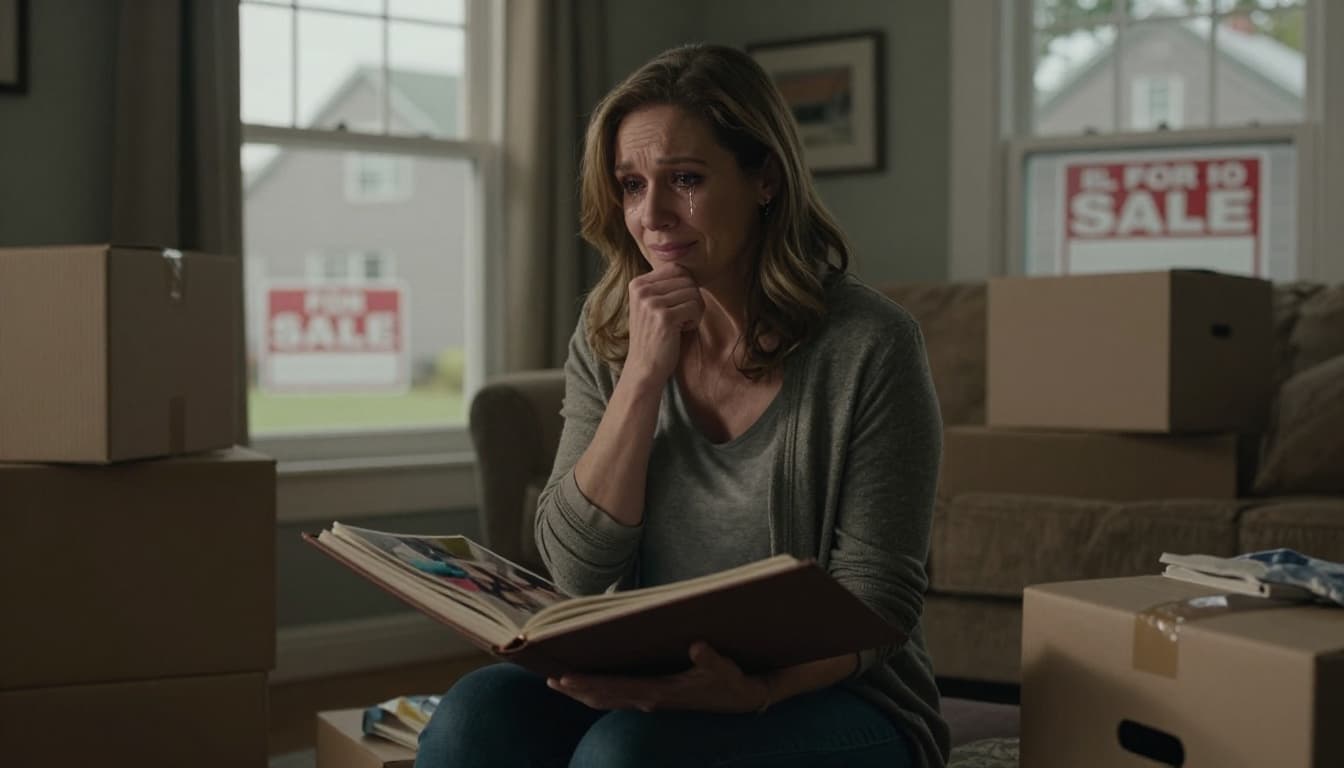 A woman packing up a home while holding on to memories
One of the most honest emotional punches in divorce fiction is the whiplash. She can miss him and still know leaving was the right call. She can mourn the life she planned and feel lighter without the constant tension. That “both are true” space is awkward, tender, and familiar to a lot of readers, even if they’ve never been divorced.
I love when a book lets a character admit, without shame, that she misses the good parts. Not the damage, not the walking-on-eggshells, not the loneliness inside the marriage, but the Sunday coffee routine, the shared jokes, the feeling of being someone’s home base. It’s like grieving a song you used to love, even though you can’t listen to it anymore.
The ritual moments are where this theme gets real, fast. Divorce has its own strange ceremonies, and women’s fiction about divorce often nails them:
- Selling the house, or standing in it one last time after the movers leave.
- Packing boxes and finding a wedding invite, a baby onesie, a receipt from a trip that felt like hope.
- Changing a last name (or choosing not to), and realizing how much identity can cling to paperwork.
- Splitting the photos, the dishes, the holiday decorations, the “ours” that has to become “yours” and “mine.”
Those details matter because they mirror how grief works. It doesn’t always show up as sobbing on the floor. Sometimes it’s staring at an empty closet rod and feeling your throat tighten. Sometimes it’s laughing at something you swore wouldn’t hurt anymore.
Readers connect to that honesty because it’s permission. Permission to say, “I’m relieved,” without having to add a footnote. Permission to say, “I’m heartbroken,” without being told to celebrate the freedom. When a novel allows mixed feelings to stand side by side, I trust it. It feels like real life, not a lesson.
Starting over without becoming a brand-new person overnight
 A quiet morning of rebuilding habits and skills
I’m drawn to stories where “starting over” looks normal. Not a movie-montage makeover, not a sudden personality swap, not an overnight glow-up that fixes everything. Just a woman doing the next right thing, then doing it again the next day, even when she’s tired.
The best reinvention arcs feel like learning to walk in new shoes. You can move forward, but at first you’re clumsy, slow, and very aware of every step. That’s what makes it believable, and comforting.
In grounded divorce novels, starting over often shows up in practical ways:
- New job skills: taking a course, updating a resume, admitting she’s rusty, asking for help anyway.
- Budgeting: realizing the numbers are tight, learning what she can cut, finding pride in paying her own bills.
- Dating later: not because she needs saving, but because she’s curious, lonely, hopeful, or all three.
- Co-parenting: biting her tongue, picking battles, showing up for the kids while swallowing her anger.
- Small wins: fixing a leaky faucet, cooking a meal for one, taking a solo trip to the grocery store without feeling lost.
What I like is how uneven it is. She might crush a work presentation and then cry in her car because a song comes on. She might feel confident signing a lease and then panic at midnight because the apartment is too quiet. Growth isn’t a straight line, it’s more like a tide. It comes in, it pulls back, and it still changes the shore.
This is also where women’s fiction about divorce earns its hope. Not the shiny, “everything is perfect now” kind, but the sturdy kind. The kind where she notices she laughed today, really laughed, and it surprised her. The kind where she realizes she can handle a hard phone call without spiraling afterward. Those moments are small on the page, but they land hard in the reader’s chest.
If I’m being honest, this theme is a big reason I read these books in the first place. They remind me that rebuilding a life is often boring, brave work. And it counts, even when nobody claps for it.
Anger, betrayal, and learning to stop rewriting the past
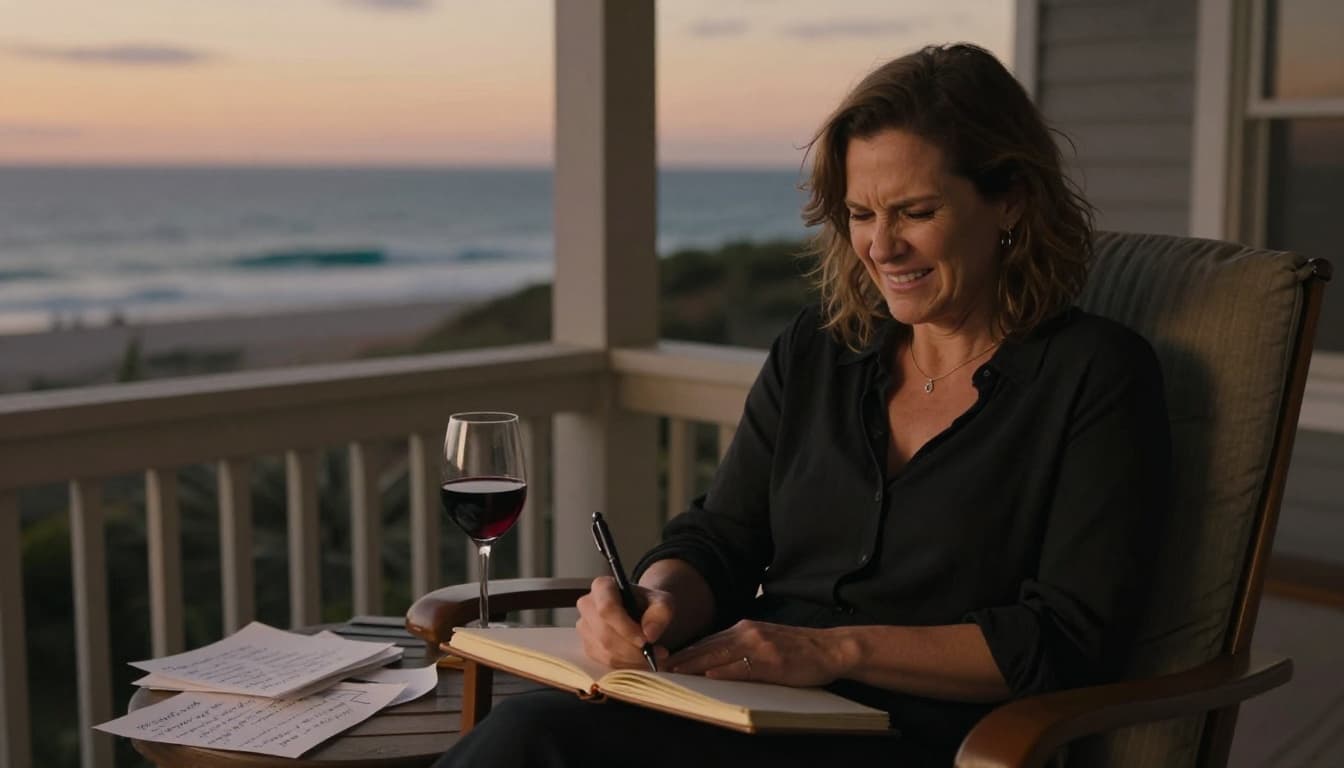 A moment of anger softening into clarity
Anger in divorce stories can be tricky. Too much, and it turns into spectacle. Too little, and it feels fake. The books I trust handle it gently and clearly: anger isn’t there to entertain us, it’s there to tell the truth.
Betrayal can show up in obvious ways, like cheating, lying, or financial secrets. But sometimes it’s quieter, and honestly, that quiet kind can sting more. Emotional neglect. Being dismissed for years. The slow grind of feeling unseen. The “death by a thousand cuts” marriages where nothing is dramatic enough to point to, yet everything hurts.
What makes this theme hit is the way it pushes the character toward a hard realization: she can’t heal if she keeps editing the past to make it make sense. A lot of women (real and fictional) do this. We replay conversations, rewrite motives, and hunt for the missing puzzle piece that will make it all feel fair.
The turning point I love is when she stops asking, “How do I explain him?” and starts asking, “What do I need now?” That shift tends to come with lessons that feel earned:
- Boundaries that sound plain but change everything (no late-night calls, no explaining herself, no rescuing him).
- Self-respect that shows up as action, not slogans.
- Hard conversations where she says the thing she used to swallow, even if her voice shakes.
- Letting go of the courtroom in her head, the one where she keeps trying to win a verdict from someone who will never give it.
And sometimes, thank goodness, humor slips in as a pressure valve. Not to minimize pain, but to give the reader a breath. A snort-laugh over a terrible first date. A sarcastic comment to a best friend. A moment where she realizes she’s arguing with a man who still can’t load a dishwasher correctly, and she actually smiles at the absurdity of it.
That’s when these stories feel most real to me. Not because they avoid the dark parts, but because they show what comes after: the slow, stubborn practice of choosing herself without having to become someone else to do it.
Common tropes and setups, so you can pick the right vibe for your mood

When I’m choosing women’s fiction about divorce, I’m usually not hunting for a plot twist. I’m hunting for a feeling. Do I want a salty-air reset, a contained pressure cooker where everyone’s raw, or a story that deals with kids and calendars and the kind of “moving on” that isn’t clean?
Tropes help because they’re like a shortcut to tone. The setup quietly tells you what kind of healing you’re about to watch: slow and tender, sharp and funny, messy and real, or all of the above.
Fresh start stories: new town, new home, new rules
Fresh-start divorce fiction works because the setting becomes a mirror. A new place gives the heroine permission to stop performing the old version of herself, the “wife-self” who knew every routine and kept everything running.
I love three variations of this setup, and they each carry their own emotional flavor:
- The coastal town move: Salt air, windy hair, and that first walk on the beach where she realizes nobody knows her backstory. The sensory cues are part of the promise, a corner coffee shop where the barista remembers her order by week two, a little local diner with vinyl booths, the beach at dusk when the world finally gets quiet.
- The hometown return: This one comes with history. She’s not just starting over, she’s re-meeting herself at sixteen, twenty-five, thirty. The setting holds receipts, old friends, family expectations, the house she swore she’d never come back to.
- The smaller apartment that becomes a sanctuary: A “downsize” that slowly turns into a victory. The first night feels too silent, then it starts to feel safe. She hangs a picture without asking anyone’s opinion. She eats cereal for dinner and feels oddly proud.
Setting matters in women’s fiction about divorce because it does the same job divorce does: it strips things down to what’s essential. A new address can’t fix a broken heart, but it can give her room to breathe while she builds new rules for her life.
Divorce ranch and retreat setups: a contained place to fall apart and heal
There’s a reason retreat stories work so well in divorce fiction: everyone is going through it, so nobody has to pretend. A ranch, a wellness retreat, a women-only getaway, even a short-term rental shared by strangers can create instant emotional closeness. When the people around you have the same thousand-yard stare, small talk becomes optional.
I’m drawn to these settings because they give the story built-in momentum:
- Instant community: The heroine doesn’t have to earn her way into the group for 200 pages. The setup hands her a circle of women who “get it,” even when their divorces look different on paper.
- Shared truths, fast bonding: Confessions come quicker when nobody’s shocked by the hard parts. Money fears, custody stress, dating dread, the humiliation of realizing you ignored red flags for years, it all lands with less judgment.
- A contained time window: One summer, one month, one week. That ticking clock creates pressure, in a good way. It pushes her to try the thing she’s been avoiding, say what she’s been swallowing, or finally admit what she wants.
I also like how these books handle contrast. She might arrive carrying a suitcase and a knot of shame, then end up laughing around a fire pit with women who feel like lifelines. The place becomes a temporary container for grief and anger, so she can step back into real life with steadier hands.
Co-parenting and blended family stories that feel honest, not perfect
Co-parenting stories hit a nerve because the stakes show up in everyday scenes, the ones that don’t look dramatic until you’re living them. In women’s fiction about divorce, I want the book to admit how weird it is to share a life with someone you no longer share a home with.
The most believable conflicts usually come from regular, high-pressure moments:
- School events where you have to sit near each other and act normal.
- Holidays that turn into negotiations, not traditions.
- New partners entering the picture, and everyone pretending it’s fine until it’s not.
- Money discussions that feel like reopening old fights, even when you’re trying to stay calm.
What I appreciate most is when the story doesn’t turn the ex into a cartoon villain. Some exes are awful, sure, but a lot of marriages end because two people became incompatible, exhausted, or emotionally careless. The same goes for new partners. Not every girlfriend or boyfriend is a threat. Sometimes they’re kind. Sometimes they’re clumsy. Sometimes they’re trying.
The payoff in these books is hard-won and deeply satisfying: a calmer home, clearer boundaries, fewer power struggles, and kids who can relax because the adults finally stop making them the emotional middleman. It’s not perfection. It’s peace, and peace is its own kind of happy ending.
Second chance at love, but only after the second chance at self
I’m a sucker for second-chance love after divorce, but only when the romance comes after the internal shift. Otherwise it can feel like she swapped husbands without learning anything.
My favorite versions tend to fall into three lanes:
- Later-in-life dating: Awkward apps, brave first dates, and the honest fear of, “What if I missed my chance?” I love when the book treats that fear as real, then proves it wrong through small, steady choices.
- Friends-to-lovers after divorce: The slow burn hits harder here because it’s built on safety. He has seen her on bad days, seen her try, seen her rebuild. She doesn’t have to audition.
- The unexpected right person: Not the flashy spark, but the person who respects her boundaries and doesn’t rush her healing.
For me, this trope works best when the heroine’s growth stays front and center. She’s learning how to be alone without feeling abandoned, how to want something without apologizing, how to say no without explaining it to death. Then love becomes a complement, not a rescue.
If I’m in the mood for romance-adjacent reading that still keeps the heroine in focus, I’ll sometimes browse lists like fresh love stories with strong heroines and look for that same emotional backbone. Because the most satisfying love story, at least for me, starts with a woman choosing herself, and meaning it.
A small, strong reading list to start with (classic, sharp, and hopeful picks)
When I’m in the mood for women’s fiction about divorce, I don’t always want a giant list. I want a handful of books that do a few specific things well: tell the truth, keep the writing sharp, and still leave a little light on at the end.
This is my small starter stack. I grouped these by the emotional experience they tend to deliver, because tone matters. A “starting over” story can feel like a clear window or like a storm warning, and both can be right depending on where you are.
Books that feel like a clear-eyed mirror (for readers who want the truth)
Some books don’t comfort you first. They name the thing. They let the messy thoughts exist on the page, the ones we usually edit before we say them out loud. If you want women’s fiction about divorce that feels raw, intimate, and psychologically sharp, I’d start here.
The Days of Abandonment by Elena Ferrante is the one I recommend when a reader wants the unfiltered inner spiral. This is emotionally heavy, with intense grief, anger, and obsessive thinking after a husband leaves. It’s not graphic, but it is relentless in the way it captures a mind trying to survive a rupture.
Ex-Wife by Ursula Parrott is a classic that still reads with a modern bite. A young divorced woman in 1920s New York tries to build a life that isn’t shaped by shame or scarcity. The emotions are complicated, the choices are sometimes messy, and the honesty feels bracing. Content note: heavy emotional fallout and frank relationship dynamics for its time, but it’s more rueful than sensational.
The Divorcées by Rowan Beaird brings the “divorce ranch” setup into a story that’s both historical and sharply personal. It’s about a sheltered woman learning who she is once the marriage story collapses. Content note: tense marriage dynamics and emotional intensity, with a strong focus on awakening and self-respect.
If you’re a reader who likes to underline sentences, these are the books that will give you ink all over your fingers.
Books with humor and bite (for when you need a little air in the room)
I love funny divorce novels because humor can be a pressure valve. Not a way to pretend it didn’t hurt, but a way to keep breathing while it hurts. The best witty women’s fiction about divorce doesn’t make the pain cute, it just refuses to let the pain have the only voice.
Heartburn by Nora Ephron is classic for a reason. It’s smart, sharp, and blisteringly funny about betrayal and disillusionment. The humor lands like a well-aimed dart, and it works because the narrator is clearly wounded, not numb. Content note: emotionally heavy betrayal and anger, handled with wit instead of melodrama.
Really Good, Actually by Monica Heisey is for readers who like cringe-comedy, self-awareness, and a main character who talks a big game while quietly falling apart. It’s hilarious, yes, but it also captures that early post-divorce identity wobble, the part where you’re “fine” in public and spiraling in private. Content note: emotional messiness, dating chaos, and anxiety spirals, but the tone stays comic.
Hot Air by Marcy Dermansky is a good pick if you enjoy social observation and absurd situations that still feel emotionally true. It’s for readers who like uncomfortable laughs, short sharp scenes, and a protagonist who refuses to be a polished inspiration story.
If you love snappy dialogue and a narrator who tells the truth with side-eye, this is the trio I’d hand you.
Books that lean hopeful and tender (for the fresh-start mood)
Sometimes I want the post-divorce book that feels like clean sheets and a window cracked open. Not perfect. Not magical. Just steadier, warmer, and a little brighter by the last page. These are the books I reach for when I want women’s fiction about divorce that ends with a firm footing.
Open House by Elizabeth Berg is quietly wonderful about rebuilding a life from the inside out. A woman is left, she makes practical choices to survive, and she slowly finds connection in ordinary days. The hope here isn’t loud; it’s the kind that shows up through small kindnesses and a growing sense of competence. Content note: sadness and loneliness are present, but the tone is gentle and healing.
It’s Better This Way by Debbie Macomber is a later-in-life, family-centered story that leans toward forgiveness and forward motion. It has warmth, relationship repair, and a sense that life can widen again after a split. Content note: family tension and emotional heartache, but it stays steady and comforting.
The Year I Left by Christine Brae fits the “fresh start in a new place” mood. It’s about stepping out of a life that’s crushing you and letting a new environment help you hear yourself think again. The landing is hopeful without pretending change is easy or instant.
When I’m craving a softer book after a heavier one, these are the stories that help me exhale and believe in next chapters again.
Conclusion
Women’s fiction about divorce sticks with me because it’s about rebuilding a life, not just ending a marriage. These stories hold grief and relief in the same hand, then ask bigger questions about identity, friendship, and what she chooses next (which is why I keep circling back to what defines women’s fiction and the line between women’s fiction vs romance). The best books don’t rush the fix, they give her room to earn peace.
When I’m picking my next read, I keep it simple:
- Mood first, do I want heavier truth or lighter hope (I use why readers crave emotionally complex strong heroines as a gut-check).
- Romance-forward or growth-forward (helpful to compare with women’s fiction vs romance fiction and what I love in women’s fiction with a romance subplot).
- Family drama or community healing (I’m a sucker for beach-town fresh-start stories).
Thanks for reading, I’d love to hear what you’ve loved (or what surprised you). What divorce novel made you feel understood, or surprised you?


