

Women’s Fiction With a Romance Subplot: The Comfort Read That Still Hits Deep

Some books feel like a warm light in a window. You open the first page, and suddenly you’re living in someone else’s skin for a while, feeling what she feels, and hoping right alongside her.
That’s what I go looking for when I want women’s fiction that includes romance, but doesn’t turn the whole story into “Will they or won’t they?” I want the love story, yes, but I also want her choices, her growth, and the parts of life that don’t get wrapped up with a bow.
In this post, I’m going to make the category easy to spot, explain why it’s so satisfying on the page, and share how I personally find the next book that matches the exact mood I’m craving.

What Women’s Fiction With Romance Subplot Really Means (and Why it Feels So Satisfying)
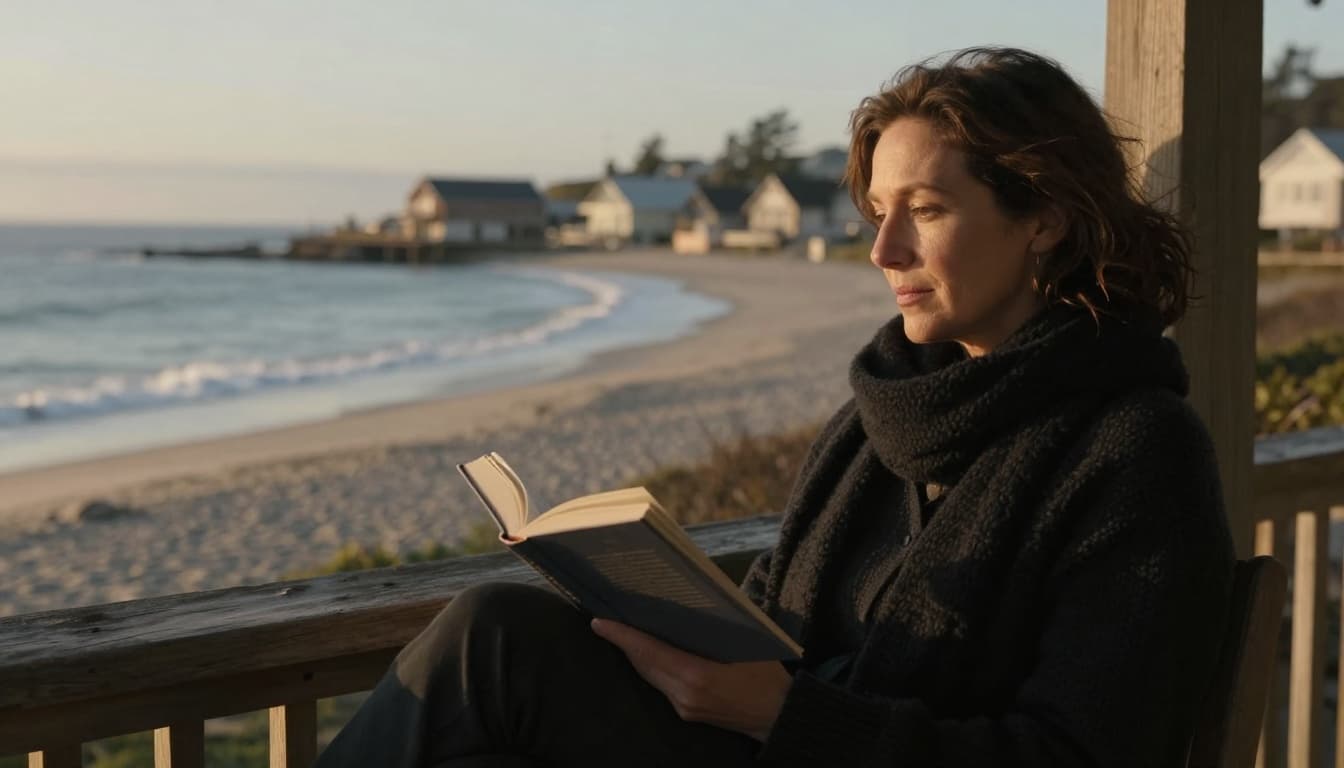 An intimate reading moment by the coast.
When I say women’s fiction with romance subplot, I mean this: the main engine of the story is her life. Her change. Her problem. Her big decision. The romance matters, but it supports the core journey instead of replacing it.
That’s also why these books can feel so emotionally filling. They tend to deliver the payoff of romance (connection, chemistry, hope) along with the deeper satisfaction of watching someone rebuild a life, mend a family tie, or finally choose herself.
A good romance subplot works like seasoning. Too little and it’s bland, too much and you can’t taste anything else. The best books keep the love story present and meaningful while still giving space to grief, friendship, identity, work, parenting, and second chances.
How to Tell What’s the Main Story and What’s the Subplot

Here’s my simplest test: If you remove the romance, does her core problem still exist, and does the book still have a complete story? If the answer is yes, you’re probably in women’s fiction territory.
Common main-plot drivers I see again and again:
- A family shift, like divorce, empty nest, a sibling blow-up, or becoming a caretaker
- A career change, like getting laid off, starting over, or finally chasing the thing she’s been putting off
- Grief and healing after a loss, whether it’s a person, a marriage, or the life she thought she’d have
- Friendship fallout, when the relationship she counted on cracks
- A fresh start, like moving back home, buying a fixer-upper, or taking a temporary job that turns permanent
Now picture what the romance does in those situations. It can add pressure (falling for someone while you’re trying to keep it together), comfort (a safe place to land), or hope (proof that life isn’t over just because one chapter ended). But it doesn’t erase the core problem. It makes it harder, richer, and more human.
Women’s Fiction vs Romance: the Biggest Difference is the Ending Promise

This is where a lot of reader confusion happens, and I get it. Both categories can be tender, funny, spicy, heartbreaking, and joyful.
The big difference is the promise of the ending.
In romance, the couple is the center, and the ending usually guarantees a lasting happy relationship (often called HEA or HFN). In women’s fiction, the ending is centered on her overall life arc. The relationship might work out beautifully, or it might stay complicated, or it might be a “not yet,” but her growth lands.
A quick example: imagine a woman who moves back to her beach-town childhood home to help her mom after a health scare. She reconnects with an old flame, but the real story is her learning to set boundaries, forgive, and build a life that fits who she is now. The romance might bloom, but the deeper win is that she finally feels steady in her own skin.
The Feelings and Themes I Look for When I Want this Kind of Read

When I’m in the mood for this blend, I’m usually not looking for nonstop chaos. I want emotions that feel earned, like a slow tide pulling in.
The tone can range from light to heavy, but the stories often share a few familiar comforts: community, self-discovery, family history, and love that shows up at the exact wrong time and becomes the right thing anyway.
As of January 2026, I’m also noticing more books mixing romance energy into stories that still carry weight, especially healing arcs and “start over” plots. Even in broader romance spaces, those emotional themes are front and center. If you like tracking what’s coming out, lists like Book Riot’s most anticipated romance books of 2026 can help you spot titles that lean emotional and character-driven.
Character Growth Comes First, and the Romance Raises the Stakes

In the best versions of this story, romance doesn’t “save” her. It reveals her.
A love interest can act like a mirror. He (or she) reflects the parts she’s been hiding: fear of being chosen, fear of being left, fear of wanting something bigger. Romance also raises the stakes because it invites vulnerability. It’s one thing to make a new plan. It’s another to let someone see you while you’re still figuring it out.
When I’m scanning a blurb, these are my green flags that it’ll scratch the itch:
- A healing arc: she’s recovering from something real, not just having a bad week
- Strong friendships: at least one relationship that isn’t romantic gets page time
- Family threads: messy, loving, complicated, or all three
- A clear personal goal: a business, a move, a decision, a dream she won’t drop this time
- A supportive love interest: not perfect, but steady enough to respect her growth
If the romance is intense but the heroine has no inner life outside the relationship, I usually know it won’t be the kind of book I’m craving.
Setting Can be the Secret Ingredient (Especially Small Towns and Beach Communities)
 The kind of town where everyone knows your business
Setting does more work in this lane than people give it credit for. In women’s fiction especially, place isn’t just wallpaper. It’s pressure, memory, and sometimes even a second antagonist.
Small towns and beach communities are perfect for these stories because they naturally create:
- Community friction: everyone has opinions, history, and a cousin who heard something
- Built-in support: neighbors show up with casseroles and unwanted advice
- Fresh-start energy: a new job, a new house, a new routine that can change everything
- Romantic proximity: the hardware store, the coffee shop, the marina, the town fundraiser
I also love how coastal settings mirror the emotional rhythm. Grief comes in waves. Hope does too. A storm passes, and the next morning there’s that clean, salty air that makes you think, okay, maybe I can do this.
How to Find Your Next Favorite Book in this Lane
 Choosing the next read is part of the fun
Finding this exact blend can feel weirdly tricky because it lives between shelves. Some bookstores file it as fiction. Some call it romance. Some label it “book club.” Online, it might be tagged three different ways depending on who reviewed it.
So I use a mood-first approach. I’m not trying to “pick the best book.” I’m trying to pick the right book for the version of me that’s reading it.
A few practical ways I narrow things down:
- I read the first paragraph of the blurb and look for her main problem. If it’s about her life shift, I’m interested.
- I skim a couple top reviews, not for spoilers, but for cues like “family drama,” “slow burn,” “emotional,” or “closed door.”
- I check the tone of the cover and title. It’s not perfect, but it’s often a hint.
If you want to browse what’s coming in the wider romance world (and then filter for the more character-led stories), Penguin Random House’s anticipated romance books of 2026 is a handy starting point.
Use a Quick Mood Checklist Before You Buy or Borrow
Before I commit, I ask myself a few fast questions. These keep me from picking a book that’s “good” but wrong for my mood:
- Do I want more family drama or more flirting?
- Do I want light and cozy, or do I have the energy for heavier topics?
- Do I want a story with open-door scenes, closed-door scenes, or something in between?
- Do I want a romance that’s a gentle thread, or one that gets a lot of page time?
- Do I want a standalone, or do I want to live with these characters for a whole series?
If I’m stressed, I usually choose something cozier with strong friendships. If I’m feeling brave, I can handle a deeper grief arc as long as the ending feels hopeful.
If You Love Series, Start With Reading Order So The Relationships Hit Harder
Series are especially satisfying in this category because community becomes part of the emotional payoff. When you watch side characters grow into leads, or see a friendship heal across multiple books, it can feel like moving into a neighborhood where you know everyone’s porch light.
Reading in order also helps the romance subplot land better. You catch the earlier moments: the glance that meant nothing at the time, the old resentment, the small act of kindness that turns out to matter.
If you’re hunting for series that fit your vibe, I recommend checking lists and release trackers so you can plan ahead. A giant list like Goodreads’ 2026 adult romance releases can be overwhelming, but it’s useful when you want to spot new books, follow authors, and build a future TBR.
Common Misconceptions that Can Ruin Expectations (and How I Avoid Them)

A lot of disappointment comes from picking up the right kind of book for someone else’s mood.
I’ve seen readers get irritated because they expected more romance scenes, or more plot twists, or less grief, or a neat ending with no loose threads. And I get it. Nobody likes feeling blindsided, especially when they went to fiction for comfort.
Here are the expectations I keep straight so I don’t ruin my own reading experience:
- This isn’t always a fast, sparkly love story. Sometimes love arrives slowly.
- There can be real-life mess here: money, family tension, health issues, divorce, parenting, aging parents.
- The ending is often hopeful, but it may not be a perfect bow.
When I treat the romance as one part of a bigger emotional meal, I enjoy the book more.
It’s Not “Less Romantic”, it’s Just Not Only About the Couple
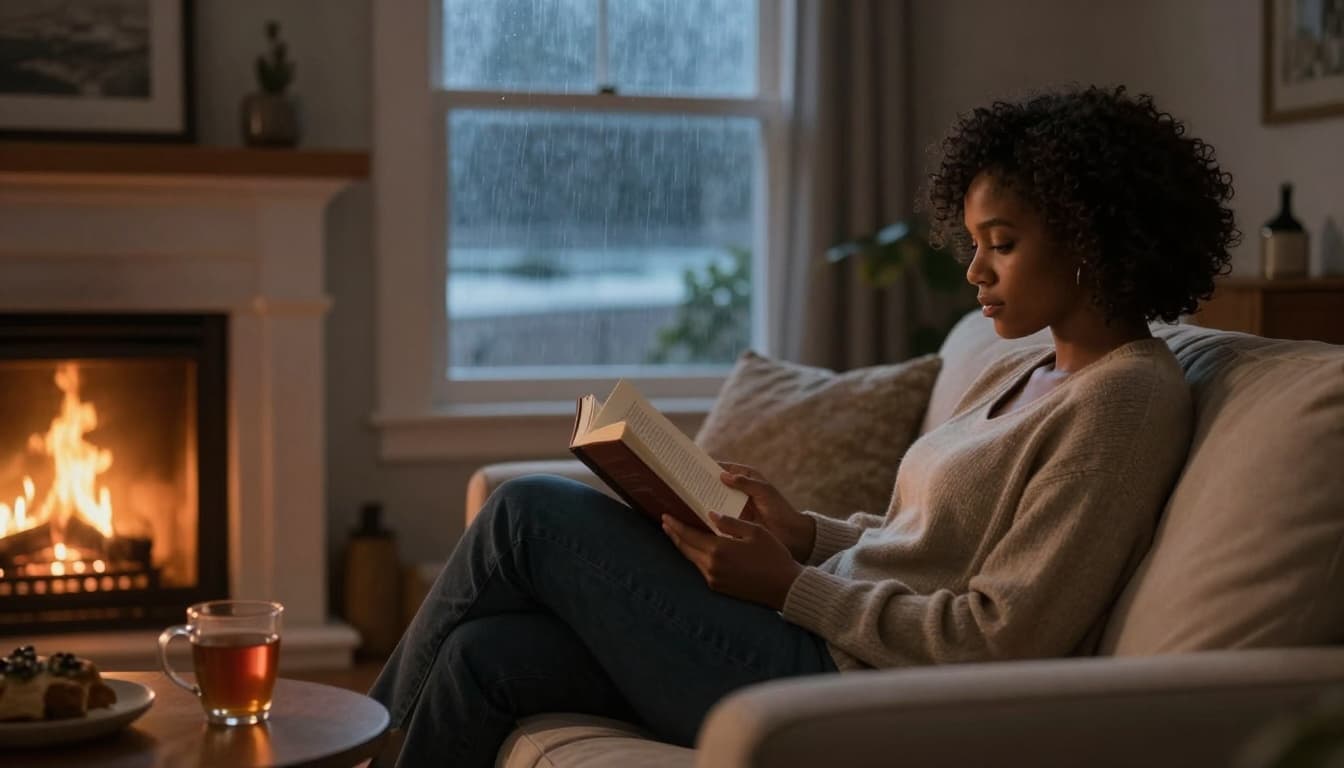 The cozy reading mood many of these stories fit best
I don’t think of these books as romance-lite. I think of them as romance-plus.
The love story still gets to be swoony and meaningful. It just shares page time with the friendships that keep her afloat, the family dynamics that shaped her, and the personal change she can’t avoid anymore.
When I’m unsure how romance-forward a book is, I look for clues in reviews like “more women’s fiction than romance,” “strong found family,” “slow burn,” or “the romance is a subplot.” Those phrases aren’t warnings. They’re directions. They help me match the story to what I want right now.
If I’m craving a big romantic high, I’ll pick something where reviewers talk about the couple nonstop. If I’m craving a deeper emotional landing, I’ll pick the one where people keep mentioning her journey.
Frequently Asked Questions About Women’s Fiction With a Romance Subplot
1. What makes women’s fiction with a romance subplot different from a romance novel?
In women’s fiction with a romance subplot, the main story is the heroine’s personal arc. That usually means growth, healing, hard choices, or a big life change tied to family, work, friendship, identity, or community. The love story matters, but it’s not the engine that drives every major plot turn.
In a romance novel, the central relationship is the main plot, and the genre typically promises a happily-ever-after (HEA) or happy-for-now ending. Women’s fiction is more flexible. The romantic relationship can work out, change shape, or even end, as long as the heroine’s emotional journey lands in a way that feels honest and complete.
A quick gut check: if you removed the romance and the book still “works,” you’re usually in women’s fiction territory.
2. Does women’s fiction with a romance subplot always have a happy ending?
It usually aims for a hopeful ending, but it doesn’t have to follow the romance genre’s strict rules. Many books still deliver a satisfying love outcome, but the bigger promise is that the heroine reaches a new, steadier place in her life.
That can look like rebuilding after divorce, coming back from grief, choosing a new path, or repairing a family bond. Romance might be part of that healing, but it isn’t required to be the final “win.”
If you like stories where love is important but not the only thing that matters, this subgenre tends to hit that sweet spot.
3. What themes should I expect, and why do readers love this blend?
Common themes include second chances, starting over, friendship, motherhood, caregiving, career pivots, and the push and pull of family expectations. The romance subplot often adds warmth and tension without taking over the heroine’s bigger decisions.
Readers often love this blend because it feels close to real life. You get the comfort of emotional connection and chemistry, plus the deeper payoff of watching a character change in a believable way.
Recent reader trends also point toward more genre blending, like women’s fiction that mixes in elements of mystery, crime, or light speculative touches while keeping a grounded emotional core.
4. How “spicy” is it, usually?
It varies a lot, and there’s no single standard. Some books are closed-door or fade-to-black, focusing more on emotional intimacy than explicit scenes. Others include on-page heat, but still keep the heroine’s broader life story as the main focus.
The safest way to tell is to check the book’s description, look for content notes, or skim a few reviews. Reviewers often mention heat level quickly, even when the back cover copy doesn’t.
If you’re browsing an author’s catalog, heat level is often consistent across a series, but it’s still worth double-checking, especially if the author writes both women’s fiction and romance.
5. If I like cozy coastal settings and second chances, where’s a good place to start?
Look for books that pair a strong sense of place with a clear personal turning point, like a move, a breakup, or a fresh start. That structure tends to deliver the best of both worlds: a heartfelt main arc and a romantic thread that supports it.
If you’re exploring Megan Holley’s style specifically, The Beach Cottage (Seabrook Island, Book 1) is a common starting point, and it has a strong reader rating on Goodreads (4.26 average from 122 ratings at the time of the referenced snapshot). Her work is often described as heartwarming, character-driven, and rooted in themes like love, family, and new beginnings in small-town coastal settings.
If you want a lighter read, start with the book that promises the clearest “fresh start” premise, then follow the series order from there.
Conclusion
Women’s fiction with a romance subplot works because it gives me two kinds of satisfaction at once: the comfort of connection and the deeper relief of watching a woman find her footing again. Her journey leads, love supports, and the best stories leave me with a steady kind of hope I can carry into my own week.
If you’re choosing your next read, pick based on mood, not hype. Look for the heroine’s problem first, then decide how much romance you want riding alongside it. When you find the right match, women’s fiction with romance subplot can feel like coming home.


