

What Makes A Romance Feel Swoony, Sweet & Small town? (Not cheesy)

When a swoony sweet small town romance works for me, it feels like stepping into a place that already has a heartbeat. The love story doesn’t float in empty space. It’s rooted in routines, familiar faces, and the kind of community details that make me think, “Yes, I’d move here too.”
The “not cheesy” part comes down to restraint and specificity. I want warmth without cloying perfection, tension without cruelty, and big feelings without big speeches that sound rehearsed. The best books make the romance feel earned, and the town feel real enough to smell like coffee and ocean air.

The small town itself is part of the love story
A small town romance turns swoony fast when the setting isn’t just “quaint.” It’s functional. People have places they go on purpose, and those places create meaningful collisions. The local diner is where you can’t hide, because the waitress remembers your order and your business. The bakery has a line out the door on Saturday mornings, and the person behind the counter knows exactly who’s secretly sweet on whom. The hardware store doubles as unofficial town council, and the bookstore hosts the one event everyone attends, even the people who claim they hate crowds.
I also love the way gossip can shift into support in a truly sweet story. It starts as whispering, then turns into casseroles on the porch, a last-minute fundraiser, or someone “accidentally” making sure the right two people are scheduled for the same volunteer shift. That’s the small town magic that doesn’t feel corny, because it’s not about being nosy. It’s about being seen.
While I’m reading, I use a quick gut-check to see if the town is doing real work on the page:
- Do I know where people hang out? (diner, marina, library, town pier, farmers market)
- Do I know who runs the bakery or coffee shop, and why they matter?
- Do the characters have familiar routines? (morning walk, Friday fish fry, Sunday service, open-mic night)
- Is there a local tradition that actually affects the plot? (festival, fundraiser, parade, summer concert series)
- Does the community feel like belonging, not a backdrop?
If those answers are clear, the romance usually feels more grounded, and the sweet moments land harder.
Sweet romance still has tension, it is just kinder
 Two mugs on a porch swing at sunset
Sweet doesn’t mean boring. It means the tension comes from human problems, not from one person being cruel and calling it chemistry. In my favorite sweet romances, the conflict still has bite, but it’s handled with care. When there’s a misunderstanding, it doesn’t drag on for ten chapters while everyone refuses to speak like an adult. It gets cleared up, or at least clarified enough that I don’t feel manipulated as a reader.
The kindness shows up in the basics: boundaries are respected, “no” is treated as a full sentence, and people take responsibility when they mess up. That doesn’t erase tension. It changes the flavor of it. Instead of dread, I feel anticipation. I keep turning pages because I want to watch two decent people figure it out.
The most satisfying “real” problems in sweet small town romance often look like this:
Work stress that matters, like trying to keep a family business afloat, starting a new job in a town where everyone knows your name, or risking a dream that could flop in public.
Family pressure, like caring for a parent, navigating an ex who’s still tangled into the community, or dealing with siblings who treat the hometown like a stage for old roles.
Fear of starting over, especially when someone returns home after divorce, loss, or burnout, and has to rebuild their identity in front of people who remember who they used to be.
Heat level can vary a lot in sweet books, and I keep it simple in my head: some are closed-door (fade to black), some are lightly open-door (more suggestive than explicit), and some are moderate while still feeling tender and consent-forward. The key for me is that the intimacy matches the tone. If the book is gentle and cozy, I want the romance to feel like a warm hand at my back, not a hard left turn.
If you like thinking about how romance shapes what we hope for, I also have thoughts on how romance fiction influences our expectations of real love, especially when we crave comfort reads.
Swoony moments that make me sigh (and why they work)
Swoon is rarely about money, status, or flashy speeches. It’s about attention. It’s the quiet proof that one person is really watching the other, then choosing them on purpose. These are the moments that make me exhale into the page:
- Thoughtful acts that cost time, not dollars: He drops off soup and a new phone charger because she always forgets hers, then leaves without expecting an invite in.
- Steady protection (not controlling): She walks him to his car after a hard family scene, gives him a way out, and says, “We can leave whenever you want.” No pressure, just support.
- Inside jokes that feel earned: A silly phrase from an early scene becomes their shorthand for “I’m here” later, especially in a tense moment.
- Showing up at the hard moment: Not the glamorous moment. The uncomfortable one. A courthouse day. A hospital waiting room. A bad-news phone call.
- Cooking for someone like it’s care: A love interest makes breakfast the way the other person likes it, then actually cleans up after, because love is also dishes.
- Remembering small facts: She remembers he hates driving at night, so she plans the trip with that in mind, and he notices. Being remembered is romantic.
- Dancing at a town event: A string-light festival, a barn dance, a summer concert on the green, and the “I’m not a dancer” person still says yes because the other person wants it.
- A sincere apology with changed behavior: Not a dramatic speech. A specific apology that names the harm, followed by real effort that sticks.
These moments work because they build trust without fanfare. They also fit the small town tone, where love shows up in public and private, and the community quietly notices who keeps showing up for whom.
If you enjoy romances that stay tender while still feeling emotionally true, it can help to understand the comfort and consequences of romantic fiction, especially if you’ve ever finished a sweet book and wished real life had that same softness.
Tropes that shine in sweet small town romance
Some tropes feel like they were made for a small town setting, because the town itself adds pressure, warmth, and timing. In a swoony sweet small town romance, I want the love story to grow in plain sight, with neighbors who notice, routines that force closeness, and a community that nudges people toward healing without turning it into spectacle.
Below are the setups I come back to when I want comfort, chemistry, and that cozy feeling of being held by a place as much as by a person.
Fresh start in a new town (my favorite comfort setup)
 Starting over with moving boxes outside a cottage
I’ll never get tired of the “move to town” hook, because it turns page one into possibility. A new town is like a blank notebook, the past still exists, but the heroine finally has space to write something different.
The reasons she arrives can be heavy, but in sweet romance they land with an empowering tilt. Maybe she’s fresh from a divorce and wants a life that feels like hers again. Maybe she changed jobs after burnout and needs quiet mornings, not constant noise. Maybe she inherited a shop she never expected to own, or she’s healing after a loss and can’t keep walking the same city blocks that hold too many ghosts.
What makes this trope shine in a small town is the community support. Not in a pushy, “tell me your business” way, but in practical, human ways:
- The librarian sets aside a stack of “new in town” reads, plus a list of local clubs.
- The diner owner slips her an extra muffin because “you look like you forgot to eat.”
- Someone shows up with a toolbox, not advice, and helps her hang curtains or fix a leaky faucet.
I also love how a fresh start trope gives the romance room to breathe. The love interest can be a steady presence while she rebuilds, not a rescue boat that replaces her own choices. That’s the sweet spot for me, watching her confidence come back one small decision at a time. If you like stories that sit right on the line between personal reinvention and romance payoff, Women’s Fiction vs Romance: What’s the Real Difference? is a helpful way to name what you’re craving before you pick your next book.
Grumpy sunshine and the softening effect of community
 Porch repairs and quiet smiles
Grumpy sunshine works anywhere, but it hits different in a small town because the whole place becomes a gentle spotlight. The grump can pretend he doesn’t care, but the town has receipts. People remember the good he did when he thought nobody was looking. They also notice the way his voice changes when he talks to her.
In a swoony sweet small town romance, the community acts like warm water on a tight knot. It doesn’t “fix” him. It gives him chances to show up, again and again, until his actions start to match what the sunshine character has suspected all along.
Here are a few mini scenarios that always get me:
- Fundraiser chaos: He agrees to help at a church fundraiser (strictly because the mayor begged). The sunshine heroine is running the donation table. He “complains” the whole time, but he’s also the one carrying heavy boxes, calming a crying kid, and quietly donating more than he admits.
- Porch step rescue: Someone’s porch step breaks right before company arrives. He shows up with tools, fixes it fast, and tries to leave before anyone makes it a thing. The sunshine heroine catches him, thanks him, and offers lemonade like it’s a peace treaty.
- Soup delivery with no speech: She’s sick. He drops off soup and cough drops, knocks once, then walks away. The next day, he pretends it was “nothing.” The town’s oldest gossip is the one who tells her, “He doesn’t do nothing.”
The best part is that the romance stays kind. The sunshine character doesn’t tolerate cruelty, and the town doesn’t romanticize bad behavior. What they do is make space for growth, and for the grump to practice being cared for without flinching. If you love spotting the patterns readers cling to, 13 Things Women Love To Read About In Romance Fiction puts language to a lot of those “why did that make me melt?” moments.
Friends to lovers in a town where everyone sees it coming
 Cozy board game night with a spark in the air
Friends to lovers is my go-to when I want a slow burn that feels safe. In a small town, shared history becomes its own kind of intimacy. They know each other’s families, their embarrassing phases, and their soft spots. That trust is the foundation, and the romance is the house they finally admit they’ve been building for years.
What I adore is the low-pressure closeness. Nobody needs a dramatic “who are you?” conversation because they already know. Instead, the tension comes from the smallest shifts: a hand that lingers, a look that holds too long, a sudden awareness that “best friend” isn’t big enough anymore.
Small-town beats make this trope feel inevitable in the best way:
- Game night where the entire table watches them bicker like an old married couple, then immediately share snacks like they’re a unit.
- Volunteering side by side, stacking chairs after a fundraiser, painting set pieces for the school play, sorting donations at the community center.
- Family dinners where someone’s mom casually sets two place settings next to each other, like it’s already decided.
I also love the “everyone sees it coming” layer, because it adds humor without turning the romance into a joke. The town’s teasing can act like a mirror. It forces both characters to ask themselves what they’re actually afraid of. Losing the friendship? Changing the dynamic? Being the one who wants more?
When friends to lovers works, it feels like watching a familiar song turn into a love song. And if you tend to gravitate toward heroines who feel steady and real in these setups, Best Romance Books With Strong Female Leads is a great next stop for that specific kind of satisfying.
Second chances that feel earned (not rushed)
Second-chance romance is pure catnip for me in sweet stories, but only when it’s handled with patience. A small town makes it even better because history is everywhere. Their past isn’t a vague backstory, it’s the diner booth they used to sit in, the annual festival where they stopped speaking, the mutual friends who still remember what happened.
In sweet romance, I want the second chance to come with real growth. That means the apology is clear, not poetic. The behavior changes, not just the mood. And the person who was hurt gets to have standards without being painted as “cold.”
I also love how the town can support the process without forcing it. Neighbors can encourage kindness and reconciliation, but the couple still has to do the work. When done right, it feels like watching someone replant a garden after a hard winter. You don’t get blooms overnight, but the care is obvious.
When I’m deciding if a second chance feels earned, I look for a few simple signals:
- Accountability: They name what they did, without blaming stress, youth, or misunderstandings.
- Time: The story gives space for trust to rebuild, even if it’s in small steps.
- Respect: They accept boundaries without pouting, pushing, or punishing.
- Action: They show change through choices, not speeches.
Second chances are extra satisfying because the romance doesn’t rely on novelty. It relies on proof. It says, “I know who you are at your worst, and I still choose you, because you did the work to become someone safe to love.” And if you’re someone who reads small towns for that sense of place and meaning, 10 Life Lessons Small Coastal Towns Teach You pairs beautifully with this trope, because it captures the values that make a second chance believable in the first place.
How I pick the right read for my mood (spice, angst, and pacing)
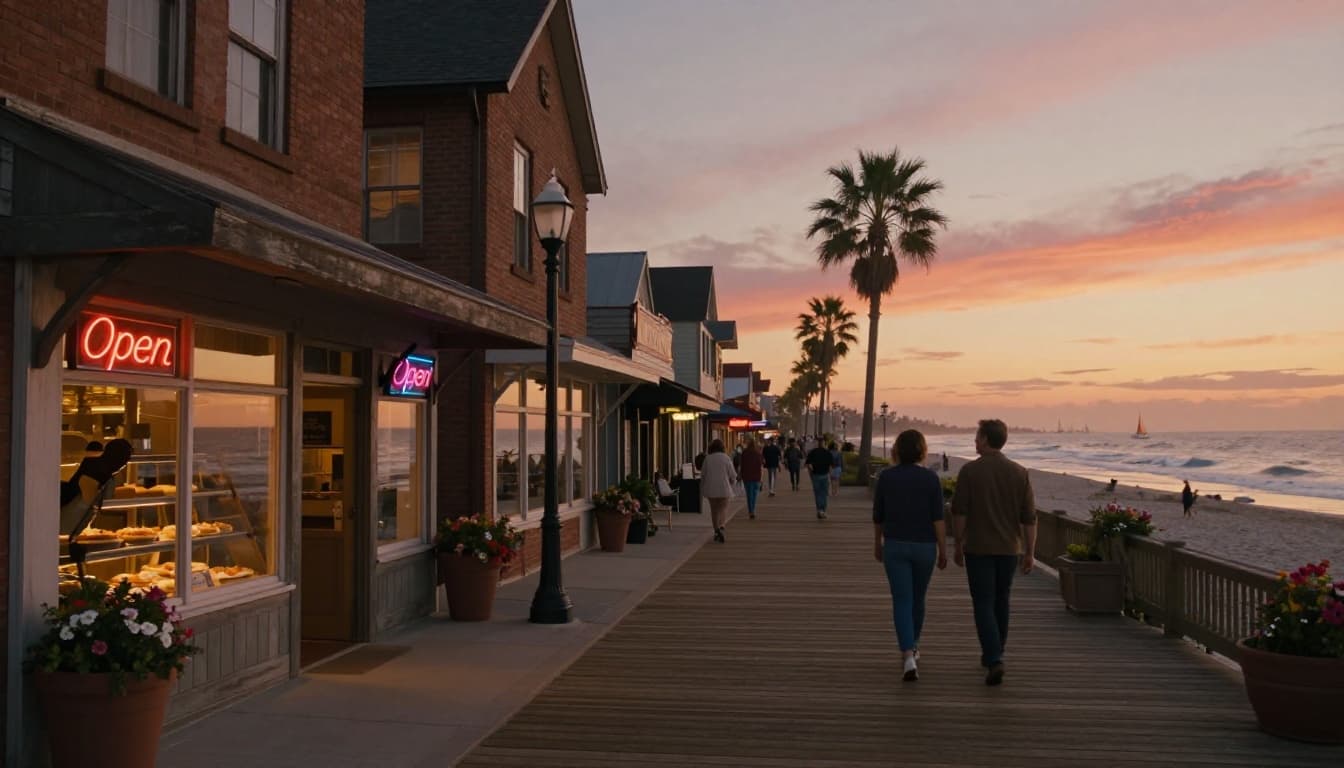 Cozy main street energy rolling into a seaside boardwalk at sunset
When I’m choosing my next swoony sweet small town romance, I don’t start with a trope list. I start with my nervous system. Some days I want a gentle, cinnamon-roll story that feels like a warm kitchen light. Other days, I want a little edge, a little bite, and a faster page-turn.
The trick, for me, is naming what I actually want before I commit. A series is a relationship, it takes time, attention, and emotional bandwidth. I’d rather pick the book that fits my mood than force my mood to fit the book.
A simple vibe test I use before I commit to a series
Before I sink into book one, I do a quick 60-second check-in. I keep it simple because my brain will happily overthink me into reading nothing.
Answer these five questions with your gut (yes, no, or “meh”):
- Do I want laughs right now?
If yes, I look for playful banter, quirky side characters, and town event chaos (parades, festivals, baking contests). - Do I want family drama, or do I need a break from it?
If yes, I’m open to complicated sibling dynamics, grief, caregiving, or a return-home storyline. If no, I stick to lighter, more external conflict. - Do I want a beach town, or a landlocked cozy town?
Beach town usually reads like open air, salt, and fresh starts. Landlocked cozy town reads like flannel, fall fairs, and everybody-knows-everybody comfort. - Do I want a single parent storyline?
If yes, I’m signing up for tenderness, practical intimacy, and a hero who proves he’s safe through actions. If no, I skip the extra parenting stress. - Do I want a slow burn?
If yes, I want longing, proximity, and emotional trust before anything physical. If no, I choose a quicker spark with early chemistry.
If you’re someone who also bounces between romance and women’s fiction depending on the day, it helps to know what’s driving the craving. I like revisiting Women’s Fiction vs Romance: What’s the Real Difference? when I’m not sure which lane I’m in, and Women’s Fiction With a Romance Subplot when I want love plus life change.
My rule at the end of this mini-quiz is always the same: match the book to the mood, not the other way around.
Signs a book will feel safe and satisfying
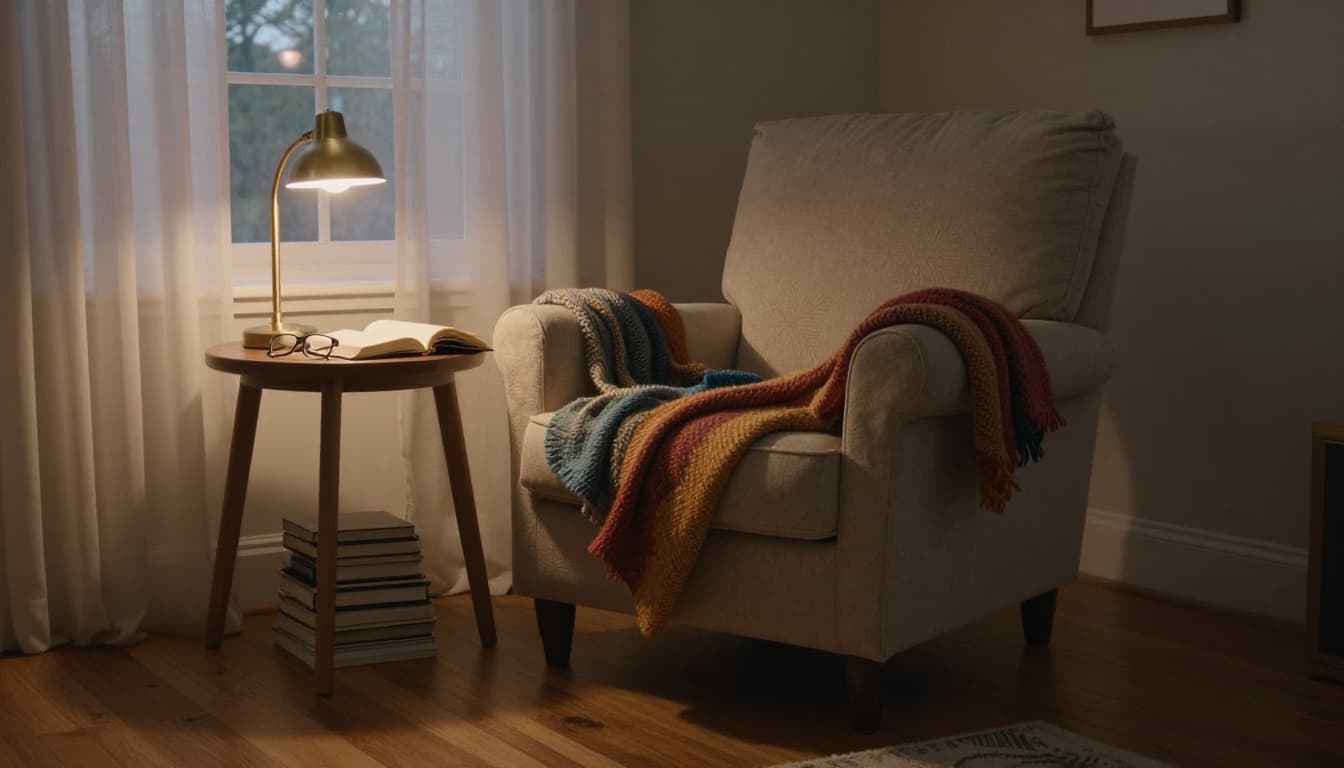 A cozy reading nook with a blanket and lamp
When I want “sweet” to actually feel sweet, I look for a few green flags that usually show up early. These are the cues that tell me the story will leave me satisfied instead of wrung out.
- Respectful communication: They don’t have to be perfect, but they talk like adults. Even the hard stuff gets handled without cruelty. (If you like thinking about how this shapes our expectations, how romance fiction influences our expectations of real love is a great companion read.)
- Supportive friends and community: Side characters feel like a safety net, not a pack of meddling chaos gremlins. I love a town that shows up with soup, rides, and quiet encouragement.
- Clear HEA or HFN signals: The tone promises comfort. I don’t need spoilers, I just want the book to feel like it’s building toward relief, not punishment.
- Problems mostly external to the couple: Work stress, family obligations, past grief, a business in trouble, a town project, anything that lets them be a team instead of enemies.
- A comfort setting that does real work: The diner, the bookstore, the pier, the community center, the bakery. The setting isn’t wallpaper, it’s a steady heartbeat. If that’s your favorite part too, 10 life lessons small coastal towns teach you captures the “why does this feel so good?” factor.
One more thing that matters to me: personal boundaries. If a scene, topic, or dynamic doesn’t feel good, I skip it. I don’t “push through” reading like it’s homework. Comfort reading is allowed to be comforting. If you want more language around what you’re actually looking for emotionally, I like Women’s Fiction Themes and Tropes and What Is Women’s Fiction? for quick clarity.
If I want more heat, I can still keep the sweet vibe
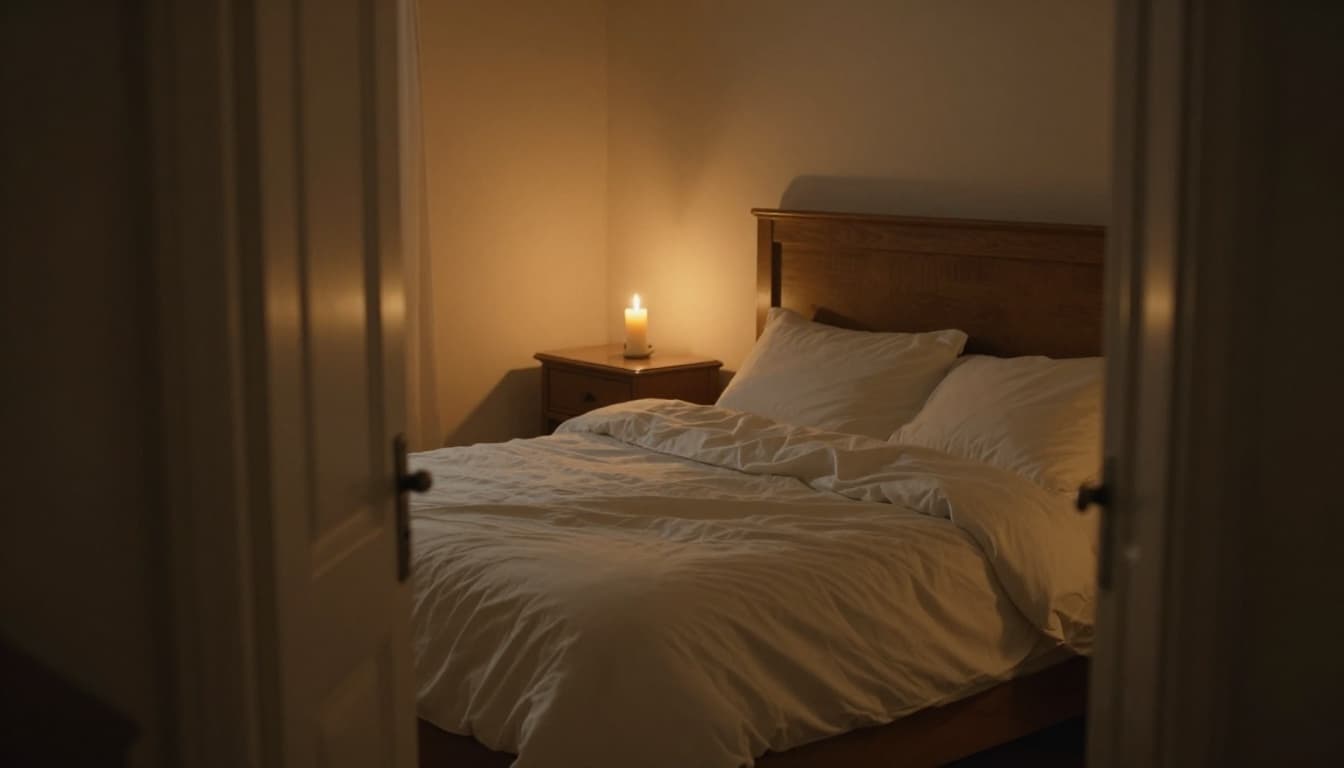 A candlelit bedroom doorway with soft lighting
I’ve noticed a clear shift in what a lot of readers want right now: more spice without losing tenderness. Not darker, not meaner, not loaded with chaos, just warmer chemistry on the page paired with that cozy, safe emotional tone.
That blend works for me when the heat feels like an extension of trust. It’s still a swoony sweet small town romance at its core, it just has a little more steam in the middle chapters.
When I’m trying to find that specific combo, these are the search and review tricks I use:
- I search phrases like “small town” + “steamy but low angst” or “sweet and spicy small town”. “Low angst” is the key that usually filters out the stories that lean heavy.
- I scan reviews for a few tells: “sweet hero,” “good communication,” “consent-forward,” “cozy town,” “supportive friends,” and “no third-act breakup” (or at least “third-act conflict isn’t relationship sabotage”).
- I pay attention to pacing comments. If reviewers say “slow burn with payoff” I’m in. If they say “miscommunication for chapters” I’m out.
If you’re the kind of reader who likes to name what’s happening structurally, Romance Subplot vs Main Plot helps a lot, especially when the story is mostly women’s fiction but still has real heat and a satisfying romantic arc.
And if you want more bookish signposts for finding your personal sweet spot, these posts help me triangulate my mood fast: Women’s Fiction Target Audience, Is Women’s Fiction a Genre, or Just a Marketing Label?, Best romance books with strong female leads, 10 best romance books with plus size FMCs, and (when I want a very specific trope mood) 10 best interracial pregnancy romance books.
When I get the mood match right, everything clicks. The town feels like home, the couple feels safe, and the pages turn themselves.
Book recommendations and author styles to try next (plus what to expect)
When I’m in the mood for a swoony sweet small town romance, I don’t just pick a trope, I pick a texture. Do I want salt air and morning coffee walks? Horses and big skies? A town so quirky it feels like it was built to trap two people into falling in love?
Below are a few author styles I reach for, grouped by vibe, with what I expect from each. (And yes, I’m the person who chooses books the way I choose candles.)
Cozy coastal and lake town vibes for that soft, breezy swoon
Coastal and lakeside romances are my go-to when I want my shoulders to drop by chapter two. These stories tend to run on routines, porch talks, and the gentle comfort of being recognized when you walk into town. If you love women’s fiction too, this is also where you’ll often get that “starting over” emotional thread without the book turning heavy.
Here are a few options I recommend when I want that soft, breezy swoon:
- Laurie Gilmore (Dream Harbor series): Cozy small-town charm with a seasonal, comfort-forward feel. I expect neighborly check-ins, familiar spots (cafés, shops, maybe a pier stroll), and a romance that builds like a warm friendship turning romantic.
- B.K. Borison (Lovelight Farms series): Found family is a big part of the payoff here. I expect gentle humor, supportive side characters who feel like real friends, and moments of care that hit harder than grand gestures.
- RaeAnne Thayne (Haven Point series): This is my pick when I want a softer, steadier emotional tone. I expect community events, family ties that matter, and a love story that feels safe and healing.
- Kristan Higgins (Blue Heron series): Witty, heartfelt, and grounded in messy, lovable community dynamics. I expect laugh-out-loud lines alongside tender scenes that sneak up on me.
If you want the emotional logic of why seaside fresh starts feel so calming, I keep coming back to why beach-town romances feel therapeutic. And if you’re the kind of reader who likes to make a whole ritual of it, these beach-read therapy kit gift ideas are ridiculously fun.
Image to generate here: a beach town pier with pastel shops.
Ranch and mountain town romances when I want rugged sweetness
When I want rugged sweetness, I want the setting to feel wide open, and the hero to feel steady. Ranch and mountain town romances scratch a specific itch for me: protective energy that never tips into control, real work ethic, and family ranch dynamics where love looks like showing up, pitching in, and making space at the table.
A few author styles I reach for:
- Lyla Sage (Rebel Blue Ranch series): This is pure family-ranch comfort with strong chemistry. I expect capable heroines, respectful heroes, and that “we’re in this together” vibe once the couple finally clicks.
- Elsie Silver (Chestnut Springs, also Rose Hill): She writes big feelings with a playful edge. I expect protective but competent men who listen, plus family chaos that reads more warm than stressful.
- Janet Dailey (select small-town ranch titles): When I want a classic, lived-in ranch feeling, I lean this way. I expect community ties, family history, and a slower, more traditional build.
- Maggie Gates and Bailey Hannah (mountain-town and ranch romance picks): These are great when I want modern voice, big-sky settings, and heroes who prove their care through consistent effort, not speeches.
If your favorite part of this subgenre is the women holding their own, you’ll probably like browsing romance novels featuring strong independent heroines and these romance novels with competent heroines. That’s where I go when I want the “ranch girl with a backbone” energy, even if the heroine isn’t literally running a ranch.
Image to generate here: a barn and wide field at golden hour.
Funny, quirky small towns when I need more laughs than tears
Sometimes I don’t want to cry. I want to exhale. Funny small-town romance is like watching a rom-com while wrapped in a blanket, it’s comfort with momentum. The best ones still deliver swoon because humor is a shortcut to intimacy. If I’m laughing with characters, I trust them faster. I believe their connection sooner. It’s like the story is saying, “These two can survive real life together, because they can still be playful inside it.”
My top “quirky town, big heart” recommendations:
- Sarah Adams (Rome, Kentucky series): Sweet, funny, and genuinely tender. I expect closed-door or low-spice vibes (depending on the book), lots of banter, and a hero who is all-in without being pushy.
- Lucy Score (small-town rom-com series, including Blue Moon or Bootleg Springs): When I want bigger casts and a town that feels like it’s constantly up to something, I go here. I expect chaos, chemistry, and surprisingly emotional moments tucked into the jokes.
- Cissy Mecca (Last Call): This one is great when I want flirty tension and a strong sense of place (the bar setting is basically its own little community hub). I expect humor, heat, and that satisfying “the town is rooting for them” feeling.
If you love heroines who feel emotionally real even in lighter books, why readers love complex strong heroines puts words to what makes that balance work. And if you want more inclusive feel-good picks, I keep a list of plus-size heroines in romance novels for when I want the love story to feel extra welcoming.
Image to generate here: a small-town festival banner with booths.
Conclusion
A swoony sweet small town romance works because it feels like coming home to a place that notices you, then watching love grow in a way that feels safe, earned, and ridiculously satisfying. I want the town traditions, the steady showing up, and the kind of intimacy that starts with attention, not pressure. When all the pieces line up, the happy ending feels less like luck and more like choice.
Setting: a town with routines, charm, and believable quirks
Kindness: respect, consent, and repair after mistakes
Chemistry: quiet magnetism, not mean behavior dressed up as “spark”
Community: meddling-lite support, casseroles, and real help
Trope match: pick the setup that fits my mood today
Heat level: whatever stays tender and true to tone
Happy ending: HEA or HFN, with relief in the last chapter
Thanks for reading, I’d love to hear yours, what’s your favorite small-town trope, and what kind of hero makes you swoon?
If you’re still deciding what to read next, I keep more comfort-read ideas over on my blog (plus a few posts about women’s fiction and the tropes we love to complain about, like miscommunication).


