

Women’s Fiction vs Family Saga: What Overlaps, What’s Different, and What I Reach For

I can’t count how many times I’ve stood in a bookstore aisle (or scrolled late at night) and read a blurb that sounds like my kind of book, only to see it labeled “women’s fiction,” “family saga,” both, or neither. Then I’m left wondering if I’m getting an intimate, character-close story… or a big, generational one.
If you’ve ever searched women’s fiction vs family saga and felt like the answers got a little too jargon-heavy, this is the simple version I wish I’d had earlier.
Here’s how I think about what each term usually means, where they overlap (a lot), and how I decide what I’m in the mood to read next.

What I mean by women’s fiction (and what it is not)
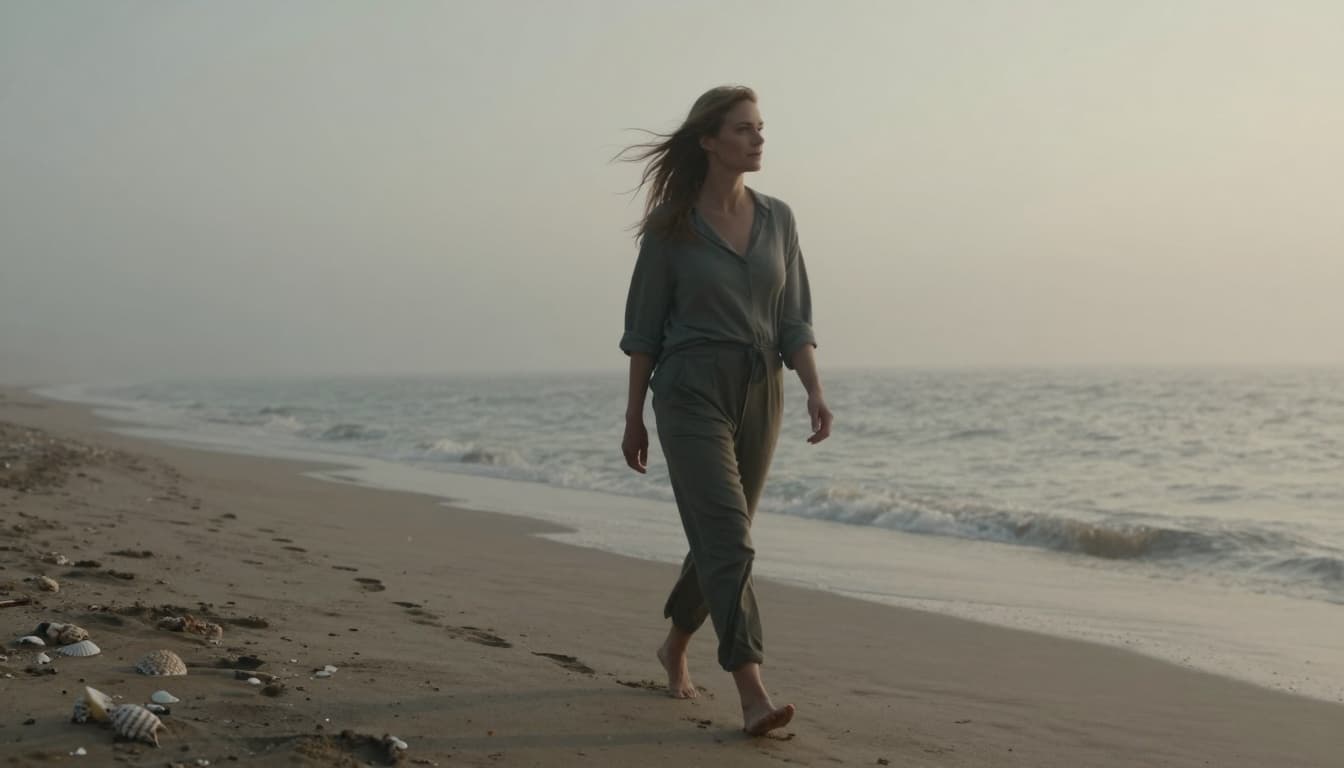 An introspective walk that mirrors an inner turning point
When I say “women’s fiction,” I mean a story where a woman’s emotional journey is the center of gravity. The plot can be quiet or dramatic, but what I’m really tracking is: Who is she at the start, what knocks her off balance, and who does she become?
The life stuff tends to feel familiar, even when the details are new, loss, divorce, an empty nest, aging parents, illness, a career shift, a friendship fracture, a move that’s half escape and half hope. These books often feel like sitting across from someone who tells you the truth they’ve been avoiding.
Romance can absolutely show up, and I usually love it when it does, but it’s not the whole point. If you want a clear explanation of how women’s fiction differs from romance in reader expectations, I found this breakdown of romance vs women’s fiction helpful, because it puts the focus on what the story promises emotionally.
Also, “women’s fiction” doesn’t mean “for women only.” Plenty of men love these stories, and plenty of women don’t. It’s a category based on narrative focus, not a velvet rope.
If you want an example of the kind of emotional, character-led story I’m talking about, A Season of Promise – Harbor’s Edge Book 1 is a good illustration of a woman processing grief, chasing answers, and choosing what her next chapter looks like.
The heart of the story is her inner change
 An intimate reading moment that matches the close emotional focus of women’s fiction
When women’s fiction is working for me, I can feel the character changing scene by scene. Not in a cheesy “lesson learned” way, but in small, human steps: she makes a choice she’s been dodging, she speaks up when she’d normally swallow it, she admits what she wants, she forgives someone (or doesn’t), she stops trying to be “fine.”
On the page, that emotional journey often looks like:
- Regret turning into clarity, once she finally names what hurt.
- Healing that isn’t linear, two steps forward, one step back, then a surprising leap.
- Identity shifts, where she has to re-meet herself outside of roles (wife, daughter, caregiver, achiever).
- A hopeful ending that still feels real, not a tidy bow, but a door opening.
That last point matters to me. I love hope, I need it, but I also want the ending to respect what the character has been through.
Common women’s fiction story ingredients readers recognize
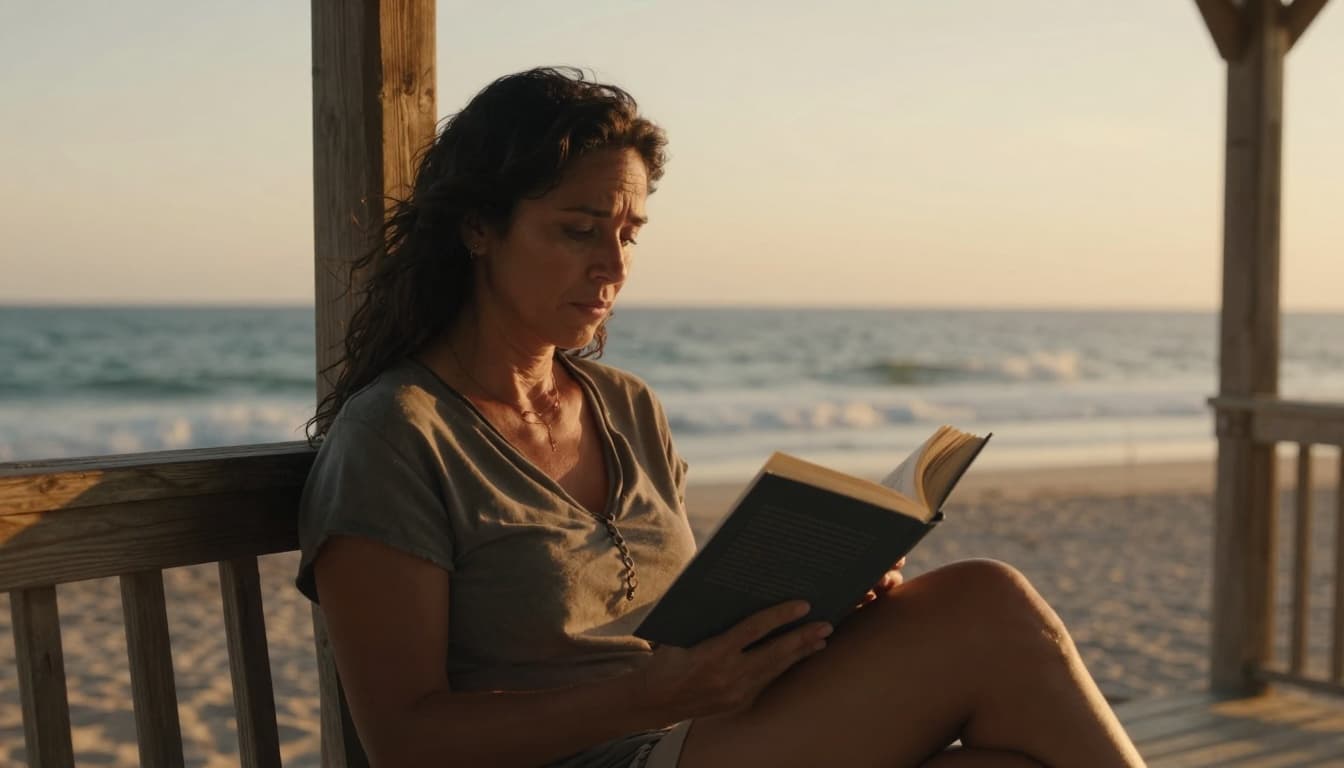 A reflective reading moment by the water
Even though women’s fiction can take place anywhere, I notice a few patterns that show up again and again, because they’re perfect containers for personal change:
- A fresh start: a new town, a new job, a new routine, sometimes chosen, sometimes forced.
- Complicated friendships: the friend who disappears, the friend who tells the hard truth, the unexpected new friend.
- Family secrets with emotional weight: not always a murder mystery secret, sometimes a quiet one that shaped a whole life.
- Caretaking roles: parenting, elder care, or being the “responsible one” until it breaks her.
- Second chances: love, work, purpose, self-trust.
The setting can be small-town cozy or big-city busy. For me, the key is the character arc. A coastal town can make the healing feel visible, but the story still lives inside her.
(If you love that “water helps me breathe again” feeling in fiction, I also enjoyed Megan Holley’s reflection on coastal comfort in What Is Beach Therapy? – blog post, because it explains why seaside settings pair so naturally with emotional stories.)
What makes a family saga a family saga
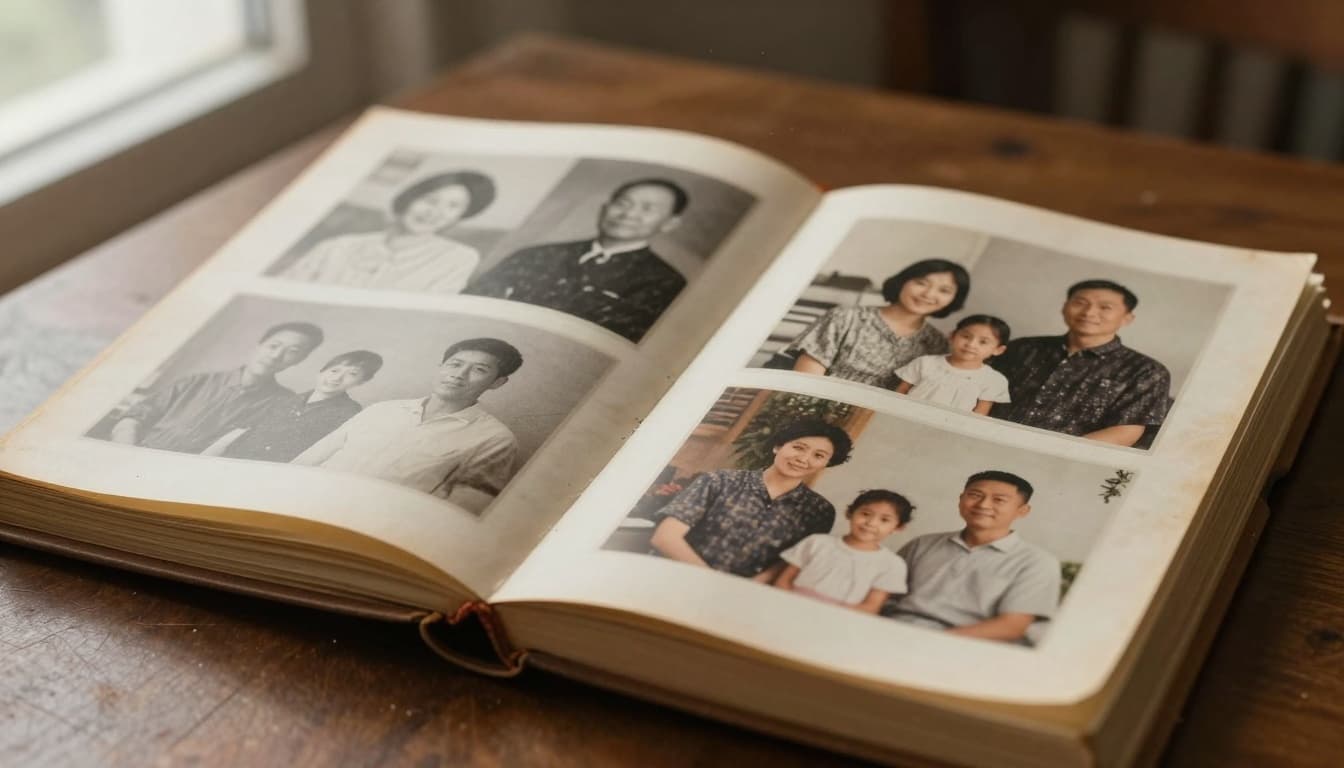 A visual metaphor for time passing across generations
A family saga, to me, is a story where the family line is the main engine. It’s focused on a connected group of people across years, and often across generations, with a bigger cast and a wider lens.
If women’s fiction feels like a close-up camera on one woman’s life, a family saga feels like stepping back to watch a whole system move: love, loyalty, rivalry, inheritance, tradition, duty, and the way one person’s choices echo long after they’re gone.
The time span is a major clue. Family sagas often cover decades, or they jump between “then” and “now.” They might be realistic, or they might include light touches of magical realism, destiny, folklore, or a sense that the land itself holds memory. Either way, the plot tends to be powered by family ties.
If you’re in the mood for recommendations, this list of sweeping family sagas captures the “big, absorbing, follow-them-for-years” vibe well.
The big clue is scope, years, generations, and a shared legacy
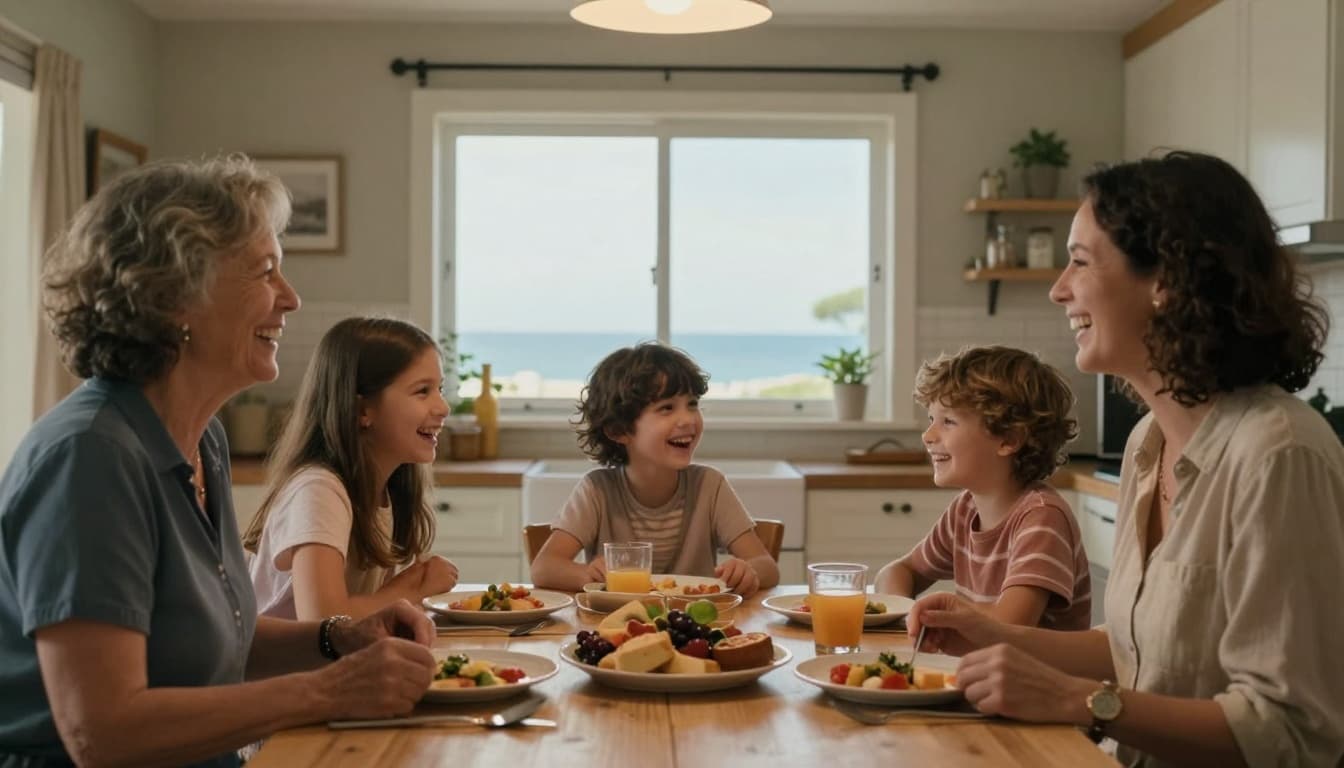 A multi-generation moment that hints at shared history
Family sagas handle time in a way that can feel both cozy and ruthless. You’ll see time jumps, multiple decades, and shifting viewpoints, sometimes even from one generation to the next. I love when a saga makes me think, “Oh, that’s where she got it,” meaning a temper, a talent, a fear, a pattern.
A few themes show up a lot:
- Inheritance: money, land, businesses, heirlooms, or even “you’re the oldest, so you carry this.”
- Repeating patterns: the same kind of marriage, the same kind of silence, the same kind of mistake.
- A secret with ripples: a hidden parentage, a betrayal, a long-ago choice that keeps shaping the present.
Right now (January 2026), I’m noticing more reader chatter around stories that combine family history with discovery: adult children finding out who their parents really were, sisters re-reading their childhood with new eyes, and families forced to talk about what they buried.
Relationship focus feels wider than a single main character
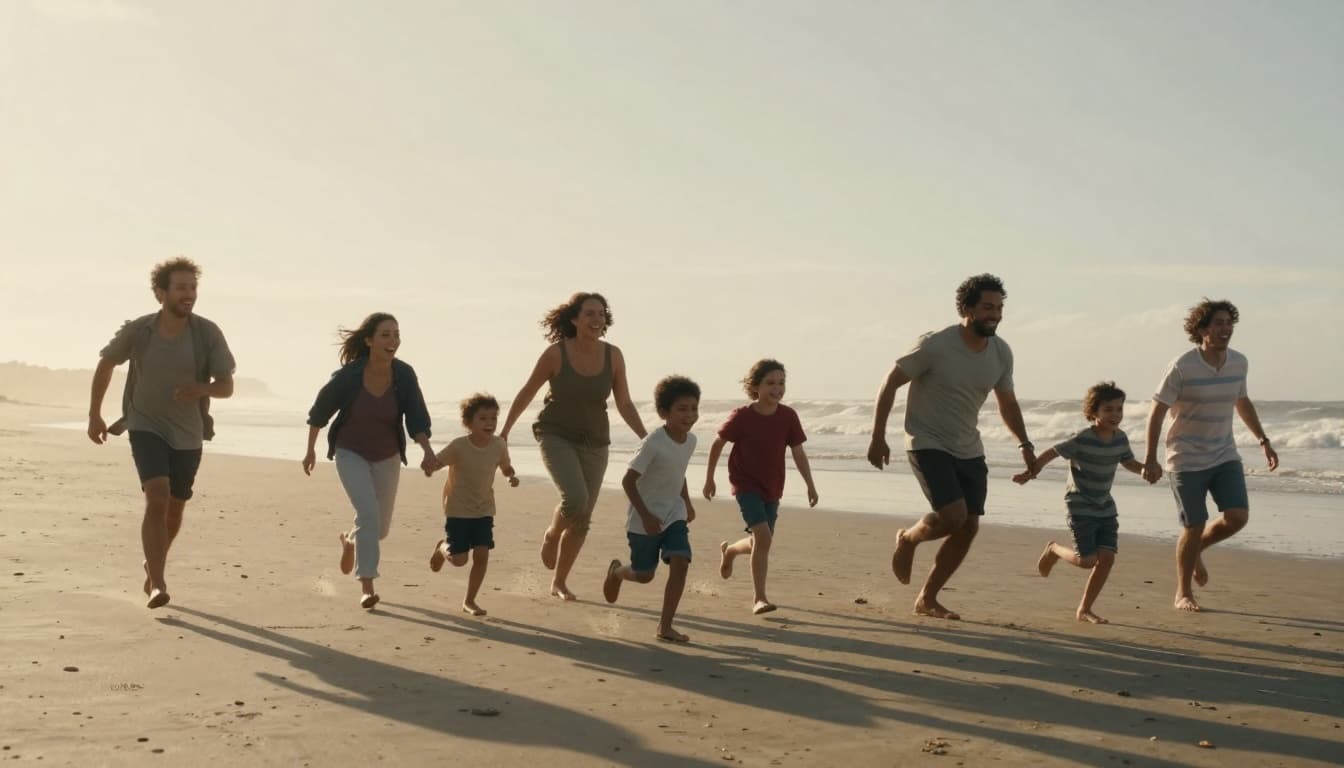 A wide-lens family moment that matches the scale of a saga
In a saga, the emotional payoff often comes from watching the family change over time, not just one turning point. The book might focus on mothers and daughters, sisters, cousins, in-laws, and sometimes chosen family that’s as binding as blood.
This is where sagas can feel so satisfying. You’re not only asking, “Will she heal?” You’re also asking, “What will this family become?” Sometimes the answer is messy. Sometimes it’s tender. Often it’s both.
If you like your sagas with big emotions and lots of secrets, this roundup of newer family saga reads is a fun way to spot what themes are popular with readers right now.
Where women’s fiction and family sagas overlap (and why so many books are both)
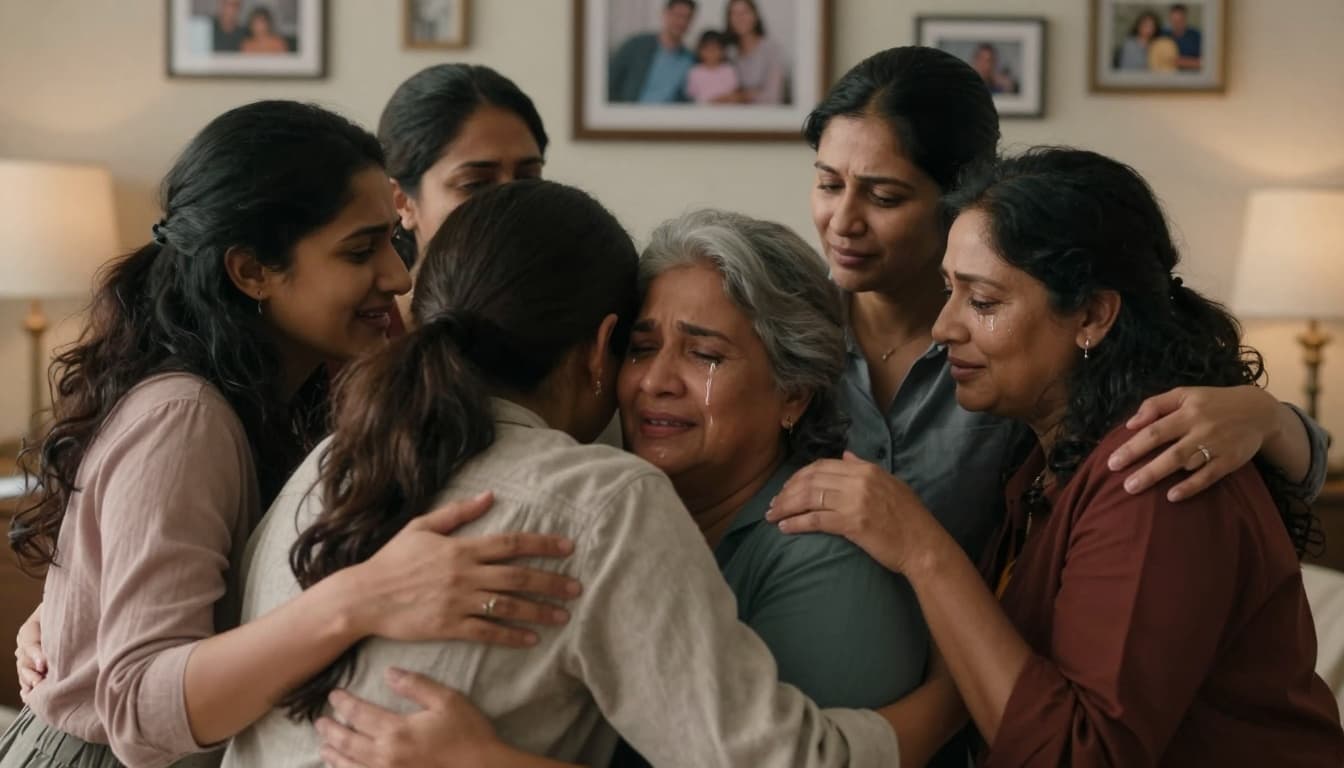 The kind of reunion scene that can fit in both categories
This overlap makes perfect sense, because family is often the deepest source of love and pain, and that’s exactly what women’s fiction is built to explore.
A lot of novels live in the middle: one woman’s growth is the emotional spine, but the family history is the storm system around her. Or the family spans generations, but one woman’s perspective is still the strongest thread.
When I’m trying to tell which way it leans, I do a quick “main thread” test:
- If one woman’s personal growth is the story I’d summarize in one sentence, it leans women’s fiction.
- If the family’s long arc is the story I’d summarize in one sentence, it leans family saga.
- If I honestly can’t choose, it might be both (and that’s usually a good sign for me).
For another plain-language look at how women’s fiction intersects with family-centered storytelling, I like this explanation of women’s fiction and family fiction categories, because it focuses on what the story is about emotionally.
Both love emotional stakes, secrets, and relationships that feel real
The reading experience overlaps in some core ways. Both kinds of books tend to deliver:
- Family secrets that aren’t just shocking, they’re personal.
- Grief and healing, sometimes quiet, sometimes sharp.
- Community support, the friend, the neighbor, the sister who shows up.
- Complicated love, especially when history sits at the table with everyone.
- Identity questions, who am I when I stop performing who I was told to be?
I also think both categories do one thing really well: they let people be contradictory. A mother can love her daughter and still hurt her. A sister can be loyal and jealous. A woman can crave peace and still choose chaos for a while.
A quick checklist I use to tell them apart while reading blurbs
When I’m standing in front of a blurb and trying to guess the vibe, I look for these signals:
- One main heroine and one major season of change: women’s fiction
- Multiple generations, multiple leads, decades of fallout: family saga
- Words like legacy, generations, matriarch, family line: usually saga
- Words like self-discovery, starting over, healing, friendship: usually women’s fiction
Publishers and bookstores don’t always label books the same way, so I don’t treat these as rules. I treat them like weather forecasts.
How I choose what to read next, based on my mood
Sometimes this choice is as personal as picking a playlist. Do I want the quiet song that makes me cry in the car, or the full album that tells a whole life story?
Here are the mood cues I use most:
If I want intimacy, I reach for women’s fiction. If I want scale, I reach for a family saga. Women’s fiction often feels close and immediate. Sagas often feel wide and layered, like the story has its own gravity.
For a good example of a story that leans into family tension and emotional repair in a coastal setting, Beachview Summer Guest – Seabrook Island Book 5 captures that “fractured family, one summer, everything shifts” energy that can sit right on the border between categories.
If I want a cozy deep dive, I reach for women’s fiction
Women’s fiction is what I pick when I want to feel like I’m living beside the character, not watching her from across a crowd. I want the close emotional camera: the text messages she doesn’t send, the memories that show up at the worst time, the moment she realizes she’s been shrinking herself.
I also love the everyday details that make the emotional beats hit harder, the coffee shop routine, the neighbor who knocks at the wrong time, the quiet friendship that becomes a lifeline. The cast is often smaller, which means the relationships can get more page time.
And yes, it can still be a page-turner. It’s just not turning pages because of epic scope. It’s turning pages because I need to know what she’s going to admit next.
If I want a big, sweeping story, I pick a family saga
A family saga is my choice when I want that “how did we get here?” feeling. I’m ready for time jumps, perspective shifts, old wounds resurfacing, and revelations that reframe everything I thought I knew.
I also love how sagas tie people to place: a house that holds too many memories, a family business that becomes a battleground, land that feels like it belongs to the ancestors as much as the living.
Some sagas stay firmly realistic. Others add a whisper of the uncanny, a family legend that might be true, a sense of fate, a tradition that feels almost sacred. Either way, I’m signing up for the long view, and I’m ready to get attached.
If you’ve never tried a saga (or you’ve never tried women’s fiction), I really do recommend sampling one of each. It’s the fastest way to learn what your reading brain craves.
Frequently Asked Questions About Women’s Fiction vs Family Saga
1. What’s the main difference between women’s fiction and a family saga?
Women’s fiction is usually built around one central character’s emotional journey, often a woman facing real life pressures like marriage trouble, grief, illness, identity shifts, or complicated friendships. The plot matters, but the core payoff is the character’s inner change and the choices she makes.
A family saga pulls the camera back. It follows a whole family over time, often across decades or multiple generations. Instead of one person’s turning point, you get a web of relationships (parents, siblings, spouses, cousins) and the ripple effects of secrets, loyalty, tradition, or long-standing conflicts.
Both can be emotional and relationship-driven, but their scope is different. Women’s fiction tends to be more focused and intimate. Family sagas tend to be broader, showing how one generation shapes the next.
2. Can a book be both women’s fiction and a family saga?
Yes. A lot of popular novels sit in the overlap.
If the book tracks a family across time but still keeps a woman’s inner growth as the emotional center, it can reasonably be described as both. The “primary lens” is what usually decides how readers talk about it. If you close the book thinking, “That was her story,” it often reads like women’s fiction. If you’re thinking, “That family’s history was wild,” it often reads like a saga.
Some family sagas also include elements like magical realism or a family “curse,” while others stay grounded in realistic family drama. For example, multi-generational stories like The House of the Spirits (Isabel Allende) or family-centered novels like Practical Magic (Alice Hoffman) are often discussed in saga terms because of their bigger timeline and family focus.
3. How do women’s fiction and family sagas differ from romance?
Romance has a clear promise: the love story is the main plot, and it ends with the couple together (a happy ending or happy-for-now).
Women’s fiction and family sagas can have strong romantic storylines, but romance usually isn’t “the boss” of the book. In women’s fiction, the relationship may matter most because it pushes the heroine toward growth, hard truths, or a new start. In a family saga, love stories may come and go across generations, and the bigger thread is the family’s long arc.
If you’re choosing your next read, a quick gut-check helps: if you’d still love the book without the romance plot, it’s probably not romance-first.
4. What should I expect in pacing and structure when I pick one genre over the other?
Women’s fiction often sticks to one main time period and keeps the cast tighter, so it can feel more immediate and character-close. You’ll usually spend a lot of page time inside the main character’s head, watching her process change as life happens around her.
Family sagas tend to cover many years, sometimes with time jumps, multiple points of view, and a larger cast. That bigger scope can make them feel more “epic,” even when the stakes are personal. You may get chapters that hand off focus from mother to daughter, or from one sibling to another, so the emotional payoff builds in layers.
If you’re in the mood for a cozy, character-driven ride with a strong heart line, women’s fiction often hits the spot. If you want history, secrets, and family dynamics unfolding over time, a saga is usually the better bet.
Conclusion
When I boil it down, women’s fiction centers on one woman’s inner transformation, while a family saga centers on a family’s long arc across time. Plenty of the best books do both, because personal growth doesn’t happen in a vacuum, it happens inside families, friendships, and history.
I’d love to know what you prefer when you pick your next read: the intimate, character-close journey, the sweeping generational story, or the satisfying overlap where you get a bit of both?


