

Has Smut Replaced Story? Heat vs Plot in 2026

Has spice taken over romance, or are we just seeing more options than ever? It’s 2026, and I keep hearing the same worry from romance and women’s fiction readers. It feels like every book is being sold by its spice level. Has smut replaced story? No, not really, but smut is louder right now, and it can make everything else feel quieter. BookTok moves fast, and when one vibe hits, your feed can start looking like every new release is high-heat.
When I say smut, I mean explicit, on-page sex. When I say story, I mean character goals, real conflict, clear stakes, and an emotional arc that changes someone by the end. Plenty of books still deliver all of that, even the very spicy ones, but the way we find books has changed.
BookTok and recommendation algorithms act like a volume knob. They tend to boost bold hooks, heat-forward tropes, and quick-to-summarize “spice ratings,” which can crowd out quieter, character-led recommendations, even when readers are hungry for them. (If you’ve ever wondered why “strong heroine” recs feel easier to trust than a hot quote card, you’re not alone, and I talk about that kind of character-first pull in posts like things women love in romance fiction and romance novels with competent heroines.)
I’m not here to shame any heat level. I read across the spectrum, from beach-town fresh-start comfort to romances with strong female leads and strong independent heroines.
In this post, I’m going to talk about why spicy books feel so dominant, what readers actually want (often both), and how to find your fit, whether that’s plus-size FMC romances (or curvy heroine picks), romances with Black female leads, or trope-driven comfort like pregnancy romance guides and unexpected pregnancy favorites.

Why it can feel like smut is everywhere (even if it is not)
If you’ve opened TikTok or scrolled Goodreads lately, it can feel like every romance is either “spiciest thing I’ve ever read” or “DNF because not enough spice.” That can mess with your sense of what’s actually on the shelves.
What’s happening is a mix of visibility and shorthand. Platforms reward what’s easy to explain fast, and “heat level” is faster than “the heroine’s trust issues slowly heal over 300 pages.” Meanwhile, publishers and indie authors are responding to what sells quickly, because attention is expensive and time is short.
BookTok, Goodreads, and the power of quick labels

Algorithms love simple signals. A “4.5 chili peppers” spice rating, plus a few tropes, tells a viewer what they’ll get in two seconds. That’s why feeds often flood with labels instead of deeper conversations about craft, pacing, or character growth. It’s not that readers don’t care about story, it’s that story is harder to compress into a seven-second clip.
On BookTok, “this scene” videos go viral because they’re instantly shareable. A charged quote, a look, a payoff moment, those are easy to clip. In contrast, “this character arc” takes context, and context doesn’t always perform. Even Goodreads, which is more text-heavy, still favors quick sorting because shelves and tags help people decide fast.
If you want the bigger picture of how platforms shape what rises to the top, this breakdown of social media transforming the romance genre connects a lot of dots.
Here’s the practical takeaway: when a book is marketed for spice, it doesn’t mean it has no story. It means the marketing is focusing on the easiest, clearest promise to communicate. Many romances still deliver layered emotional beats, including the exact things readers say they crave most (tension, comfort, payoff), which you’ll recognize in things women love to read in romance fiction.
If your feed makes it look like “spice is the whole book,” remember you’re seeing the loudest, most clip-able parts, not the full reading experience.
Publishing and self-publishing trends that push heat to the front
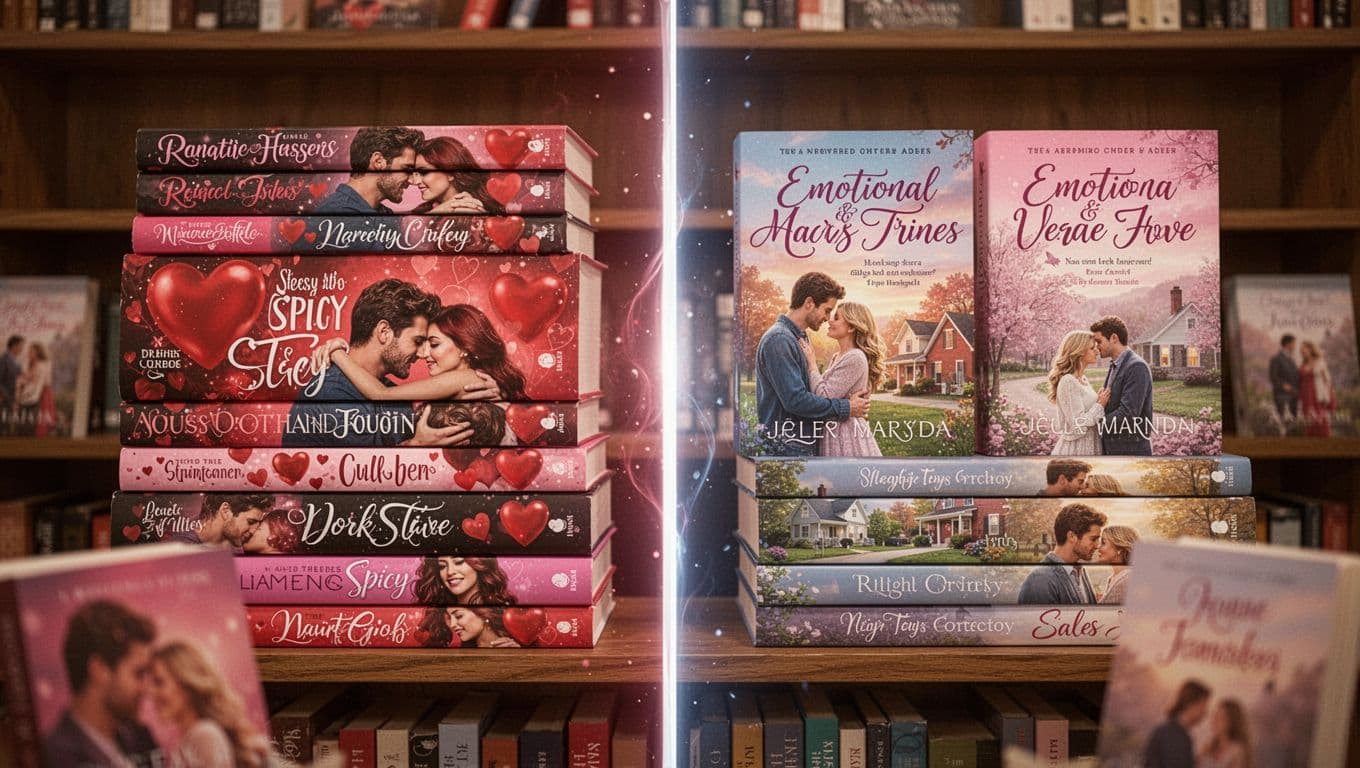 A visual split between “marketed as spicy” and “marketed as emotional” presentation
In both traditional publishing and self-publishing, blurbs, keywords, and category placement often push heat forward because it converts quickly. “Spicy small-town romance” is a clean sell. “Slow-burn emotional repair with a second-act identity shift” is accurate, but it takes longer to explain.
This is where the market reality matters: romance has stayed a major growth driver, and spice-forward talk gets louder when sales rise. Industry reporting tied to Circana BookScan shows romance growing in 2025, even when overall print growth was small. For example, Publishers Weekly reported that print book unit sales rose slightly in 2025, while romance units increased (and conversations about romance, including explicit content, kept expanding) in print book sales reporting for 2025. Shelf Awareness also highlighted romance as a leading growth category in 2025 in romance growth coverage.
The result is a feedback loop: heat-forward positioning gets clicks, clicks turn into sales, and sales teach everyone to keep using the same front-facing language. That can make story-driven romance feel quieter, even when it’s thriving.
Still, story-first books are not gone. Plenty of readers actively seek character-led narratives, especially women’s fiction fans who want emotional change more than spectacle. If you like that lane, this clear refresher on what women’s fiction is helps explain why some books feel “deep” even with low spice.
One more point that gets missed: spice can sit inside a story that has real stakes. Pregnancy romances are a good example, because they can be sweet, medium, or explicit, but the trope itself forces conversations and decisions. If that’s your thing, pregnancy trope romance books show how “heat” and “plot pressure” can coexist.
When “spice” becomes a stand-in for genre identity
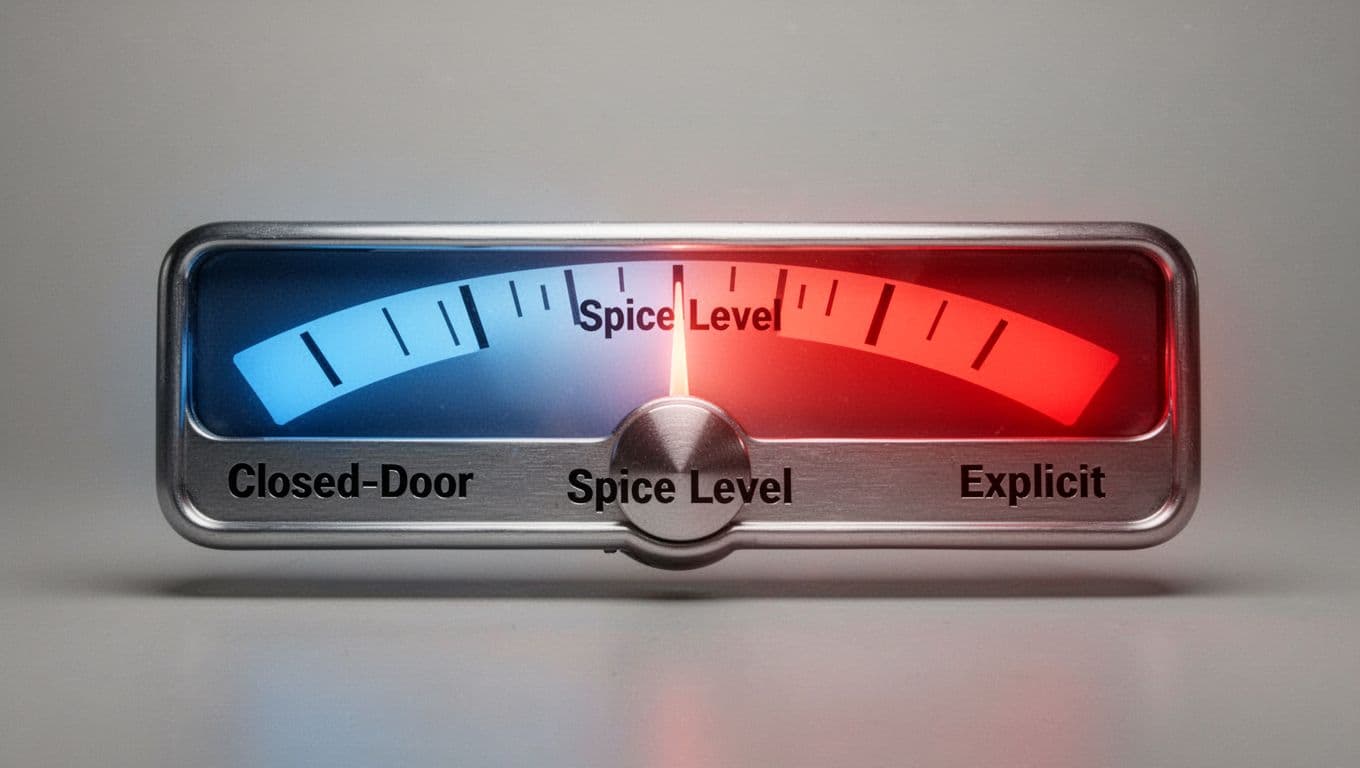 A simple visual “spice meter” from closed-door to explicit
Spice talk isn’t just hype, it’s also expectation management. Readers use heat level as a shortcut to avoid disappointment, and honestly, that’s fair. If you need closed-door because explicit scenes pull you out of the story, you want to know before you buy. If you want open-door because you read romance for on-page intimacy, you also want clarity.
The problem is that when spice becomes the main filter, conversations can sound like plot is optional. A thread will read like, “Is it spicy?” as if nothing else matters. Often, what people really mean is, “Will this match what I came here for?”
Think of spice level like a restaurant’s heat scale. A “5-alarm” dish might still be thoughtfully cooked, it’s just communicating the burn up front. In the same way, an explicit romance can still be character-driven and emotionally careful. Meanwhile, a closed-door romance can be packed with tension, longing, and payoff, without showing everything on the page.
If you notice readers getting heated (no pun intended) about “lazy plots,” it can help to separate two issues:
- Mismatch: The reader expected one thing and got another, so they feel misled.
- Execution: The book truly skimps on development, conflict, or emotional logic.
When execution is the problem, readers often complain about the same repeat offenders: stalled conflict, flimsy misunderstandings, or filler drama. If you want a cathartic laugh, this list of annoying romance tropes nails why some books feel empty no matter the spice level. And if you’ve ever screamed at a couple to speak like adults, you’re not alone, the miscommunication trope is basically a shared reader hobby at this point.
Finally, if you want comfort-first, plot-and-heart energy (with whatever heat level fits you), coastal and small-town stories often scratch that itch because the emotional through-line stays central. That’s why beach-town fresh-start stories can feel so satisfying, even when they’re gentle on-page.
Story has not vanished, it is just competing with the highlight reel
If romance sometimes feels like it’s all heat and no backbone lately, you’re not imagining the marketing shift. Social feeds reward the fastest, punchiest “best parts”, the kiss, the spice, the one-liner. That can make full-story romance look like it’s disappearing, when it’s really just harder to clip.
The good news is simple: story is still here. Plenty of readers still want that satisfied feeling of progress, where the couple changes, choices matter, and the ending feels earned. What’s changing is the way books get presented to you.
What romance readers mean when they say “I need more plot”
 Plot elements mapped out visually, the “why” behind each scene
When readers say, “I need more plot,” they’re usually not asking for explosions or a murder board. They mean the story feels like it’s looping. The couple talks, flirts, almost-hooks-up, hooks up, then repeats, with no new pressure added.
Here are the most common complaints in plain language:
- Scenes feel repeated: The same argument, the same misunderstanding, the same internal monologue, just in a new location.
- Conflict is thin: The only “problem” is that they refuse to say the obvious thing out loud, so the book stalls.
- Characters feel like props: The leads exist mainly to create spicy moments, not to want something real or risk something real.
Plot-forward romance fixes this by giving the relationship a track to run on. You can still have big feelings and high heat, but the book keeps moving because the characters have goals, obstacles, choices, and consequences.
A quick gut-check that usually works: if you removed the explicit scenes, would the story still have a strong shape? Plot-forward romance can answer yes because each scene does at least one job:
- Pushes a goal forward (get the promotion, save the family business, protect the kid, rebuild after heartbreak).
- Raises a cost (time, reputation, money, community trust, emotional safety).
- Forces a choice (tell the truth, walk away, commit, apologize, take the risk).
That’s why small-town and coastal comfort reads can feel so satisfying when they’re done well. The setting isn’t just cute wallpaper, it creates pressure. Everyone knows everyone, secrets don’t stay secret, and choices echo. In other words, plot is not “more stuff happening.” Plot is the story tightening its grip.
Plot is the chain of cause and effect, not the list of events.
For a broader look at how reader expectations get shaped by trend cycles and quick “vibe” labeling, see People’s 2026 bookish trends coverage.
Heat works best when it reveals character, not when it replaces it
 Quiet intimacy and real conversation, the kind that makes the romance land
Spice isn’t the enemy of story. Used well, it’s a spotlight. It shows you who someone is when they’re exposed, honest, and unable to hide behind charm. That’s why the best intimate scenes don’t feel like a pause button. They feel like a turning gear.
Heat tends to land best when it does at least one story job beyond “they want each other.” For example, an intimate moment can:
- Deepen trust: One character lets the other set the pace, asks what they like, listens, then follows through. That’s not just sexy, it’s characterization.
- Raise tension: They cross a line, then the stakes get sharper because feelings are now real, and walking away costs more.
- Reveal vulnerability: A confident character shows insecurity, grief, body anxiety, or a fear of being needed. The scene becomes an emotional tell.
Here are a few clean ways heat can function like plot, without quoting any specific book:
- Turning point: They finally stop playing it safe, and afterward they can’t go back to pretending it’s casual. The relationship has a new baseline.
- Reconciliation: They reconnect after a rupture, but the real payoff is the conversation and changed behavior that follows. The intimacy underlines the repair.
- Raising stakes: The relationship becomes “public” in a way, even if only between them. Now there’s something to lose: a friendship, a job, a custody agreement, a place in the community.
The difference is intention. If every spicy scene could swap places with any other and nothing changes, it starts to feel like filler. On the other hand, when intimacy creates consequences, the book gains weight.
This also explains why some readers are moving toward “no-spice” or closed-door romance right now. It’s not always a moral stance. Sometimes they just want the focus to stay on the build, the yearning, the earned commitment. The Christian Science Monitor captured part of that shift in its reporting on the rise of “no-spice” romance.
Romantasy and new hybrids are expanding the menu, not erasing the classics
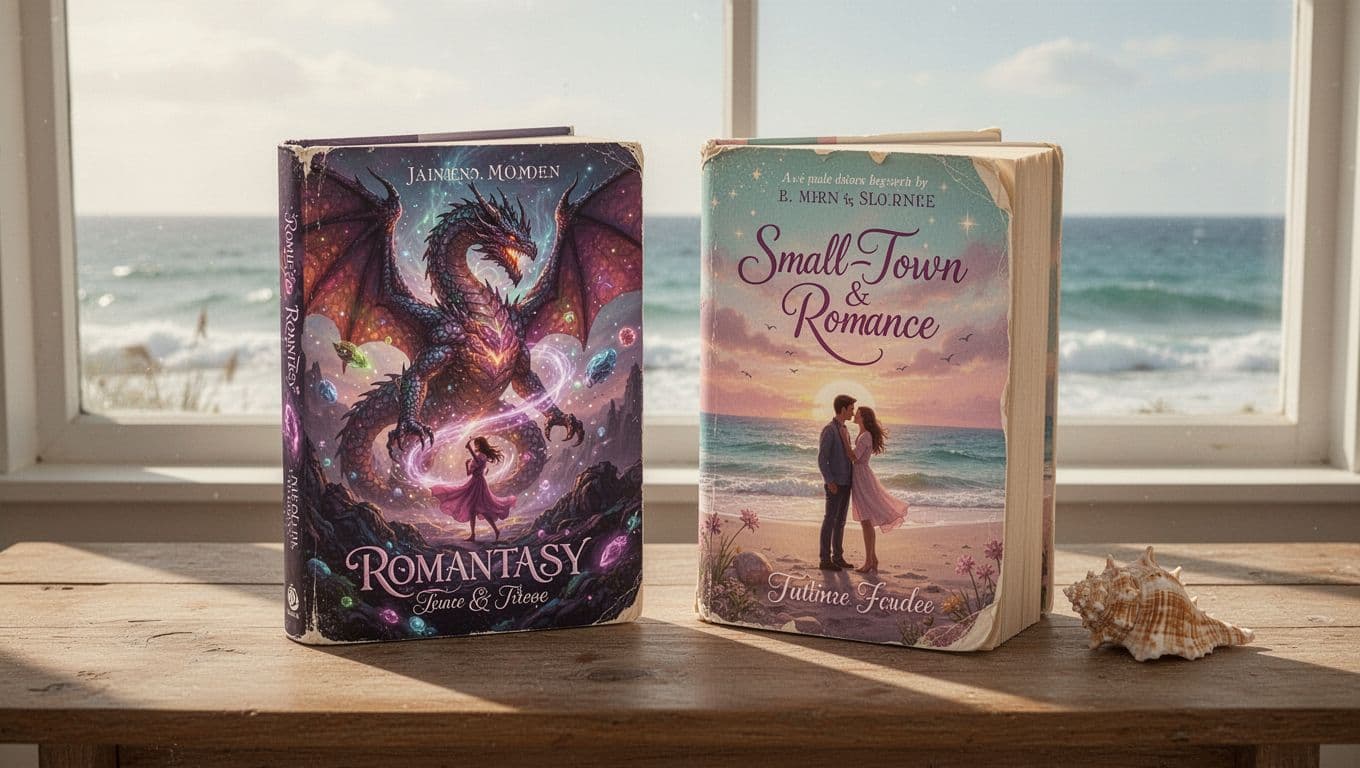 Two popular moods side by side, escape fantasy and cozy small-town comfort
Romantasy is still loud in 2026, and it’s easy to see why. Magic adds built-in stakes. Worlds add spectacle. A quest or a curse gives the couple an external reason to collide. So yes, it can feel like romantasy is “taking over,” especially when special editions flood your feed.
Trend coverage also points to more mash-ups, including darker blends some readers call “horromance” (romance plus horror elements like ghosts, dread, and survival tension). These hybrids stand out because they’re high-concept and easy to pitch in one sentence. That makes them perfect for social media.
If you want a snapshot of what’s getting attention right now, Book Riot’s roundup of anticipated romantasy books in 2026 shows how wide the category has gotten, from cozy to brutal.
Still, louder doesn’t mean longer-lasting for every reader. A lot of people want romance that feels like coming home. That’s where classics and steady sellers keep doing their job:
- Small-town romance: Community pressure, family history, and gossip create plot without needing dragons.
- Contemporary women’s fiction with romance: Emotional growth, reinvention, and relationships that feel like real life.
- Character-driven series: You stay for the people, not the premise, because you want to watch them change over time.
Hybrids expand options, not replace them. Think of the genre like a bookstore cafe. Romantasy is the seasonal drink everyone posts. Meanwhile, the regulars still order the same comforting latte, because it hits every time.
One more thing: fatigue is real. Even romantasy fans sometimes want a breather between big, war-heavy plots. When that happens, readers swing back to grounded stories, especially ones with strong emotional logic and a clear relationship arc. In short, the highlight reel may compete for attention, but the classics keep earning rereads.
How to spot “high spice, low story” before you waste your time
Sometimes you want heat. Sometimes you want plot. The annoying part is picking up a book that promises both, then gives you five spicy scenes and nothing to hang them on.
A “high spice, low story” romance usually isn’t “bad,” it’s just built for a different reading mood. If you’re craving character growth, real stakes, and a relationship that changes the characters (not just their clothes), these quick screens can save you hours.
Read the first 10 pages for voice, goals, and tension
 An e-reader and a quick checklist for spotting story signals early
The first 10 pages tell you more than a spice rating ever will. You’re not hunting for a big plot twist yet. You’re checking whether the author is building a track for the romance to run on.
Use this simple gut-check. After 10 pages, can you answer these three questions?
- What does the main character want right now? (A job, a fresh start, a quiet life, to prove something, to keep a secret.)
- What’s in the way? (Money, grief, a deadline, small-town gossip, a rival, a messy past.)
- Why does this love interest matter? Not just “they’re hot,” but “they complicate her choices,” or “he challenges her core belief,” or “she can’t ignore him without giving something up.”
Strong story shows up early through questions and stakes. Even a cozy small-town setup should spark curiosity: What’s she running from, what’s he hiding, what happens if they fail? If the pages feel like pure flirting with no friction, you might be in a vibes-first book.
This is also where voice matters. A story-forward romance often gives the main character a life outside the relationship. If you love that, you’ll usually click with books and lists centered on romance books with strong independent heroines, because those stories tend to show clear goals early.
If the first chapter has chemistry but no direction, the rest may loop the same scenes.
Use reviews the smart way (look for patterns, not hot takes)
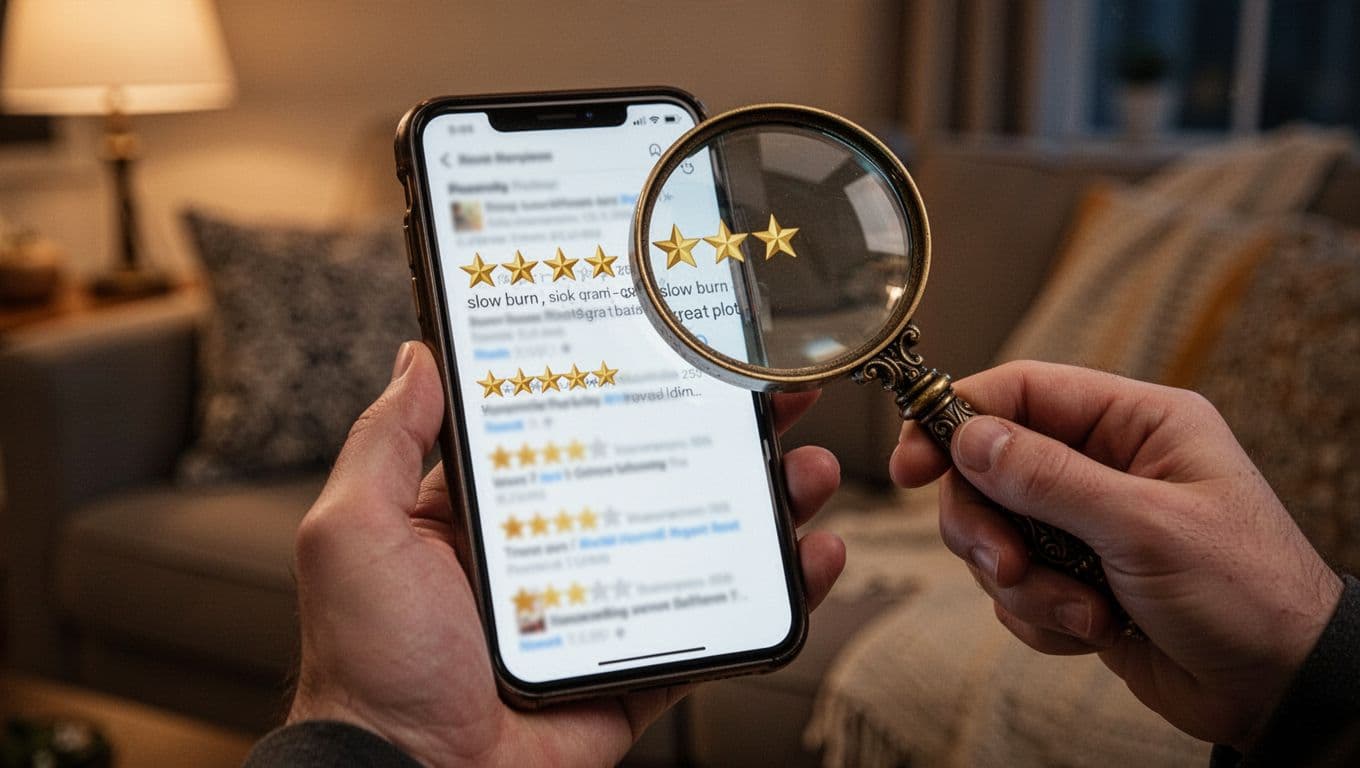 Scanning reviews for repeated story clues, not single opinions
Reviews can help, but only if you treat them like a weather report. One person saying “nothing happens” might mean “not enough spice,” or it might mean “no conflict.” You’re looking for repeat phrases across many reviews.
Skim for these plot-light warning patterns:
- “All vibes” or “just vibes”
- “No conflict” (especially if said by multiple reviewers)
- “Insta-love” without any meaningful reason they commit
- “Nothing happens” or “felt repetitive”
- “Spice carried it” (a real tell)
Now look for story-positive signals that usually mean you’ll get an arc:
- “Slow burn” (not always, but often)
- “Character growth” or “emotional payoff”
- “Strong third act” (a big one)
- “External conflict” or “high stakes”
- “Great pacing” or “tight plot”
If “insta-love” is a dealbreaker for you, it helps to know what that trope usually looks like so you can spot it fast in reviews and blurbs. This quick explainer on insta-love as a trope can help you name what you’re reacting to.
Finally, find two or three reviewers who match your taste. If you love comfort reads with real pressure (family, community, life changes), you might prefer the review styles that praise emotional logic over spice.
Learn the marketing signals that often mean less plot
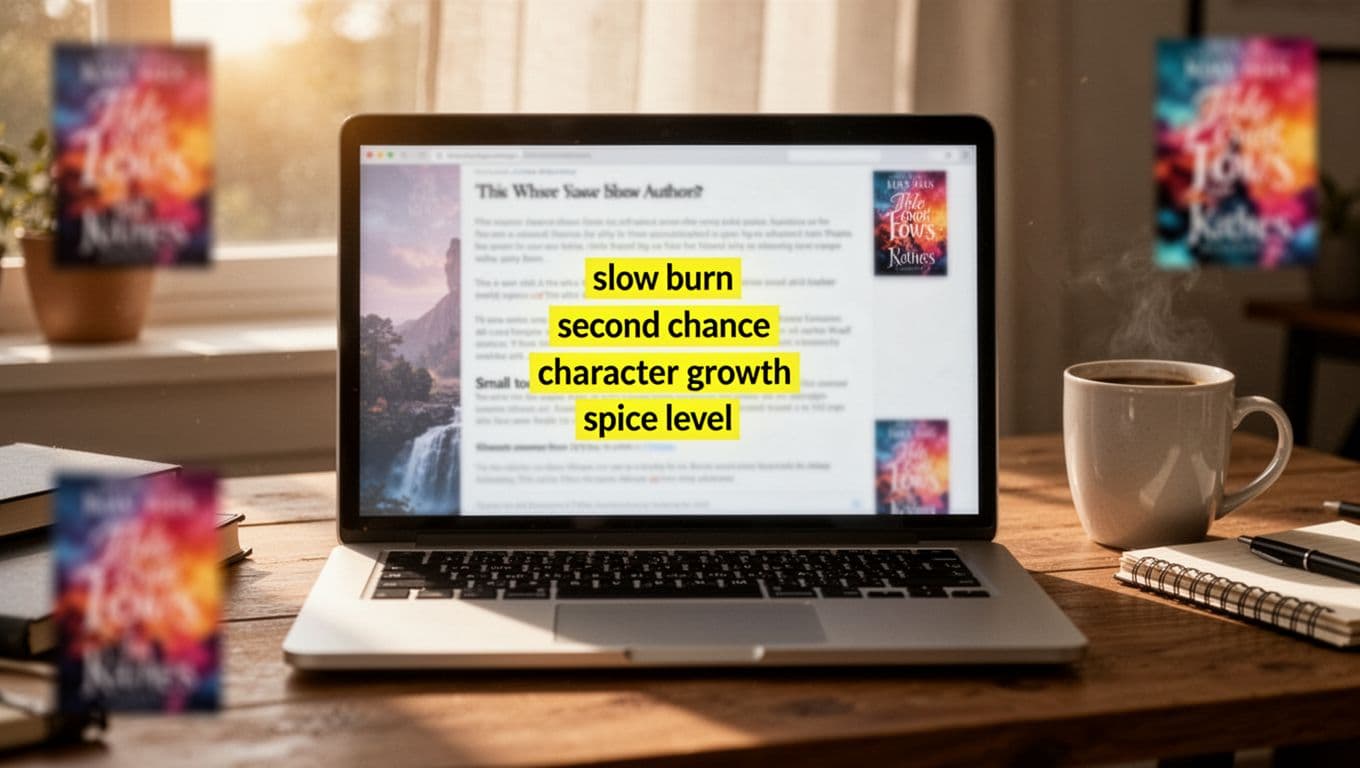 Tropes highlighted in a blurb style layout, useful but not the full story
Marketing copy is trying to sell a mood fast. That’s fine, but certain signals often correlate with a thinner plot.
Watch for these common tells:
- A heavy focus on spice rating (chili peppers, “spice level: 5,” etc.) with no mention of goals or stakes.
- Scene-count talk (“so many spicy scenes”) instead of relationship progression.
- A vague blurb that lists only tropes (“grumpy sunshine, forced proximity, only one bed”) but never tells you what problem they’re facing.
- “No third-act breakup” presented as the only promise, with zero external pressure named.
Here’s the balance, though: trope-forward blurbs can still hide great plots. Some authors keep blurbs vague to avoid spoilers, or because readers shop by trope. The fix is simple: match blurb energy with the first-chapter test and a quick review scan.
If you tend to enjoy romances where the couple earns their way back to each other, a trope like second chance often brings built-in history and stakes. This post on why second-chance romances heal explains why those stories can feel fuller, even when they’re sweet or medium-spice.
For a sense of how new releases get positioned, it can help to read a roundup and notice what gets emphasized (heat, vibe, premise, or character). BookPage’s list of best new romance in February 2026 is a good example of how blurbs and reviews frame expectations.
Try “story-first” filters that still leave room for chemistry
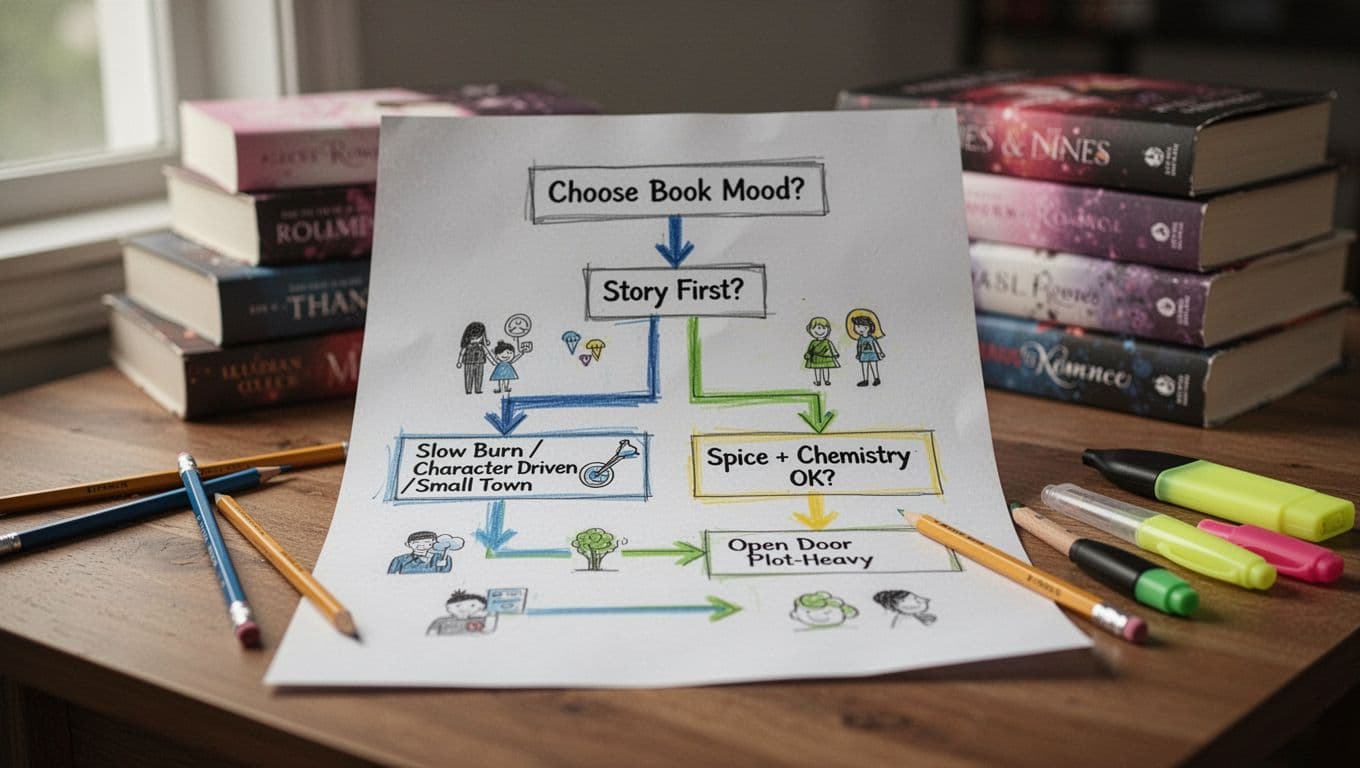 A simple flowchart approach for choosing romance by story and mood
If you’re tired of guessing, search like a reader who wants story. A few small wording changes can pull up books with stronger arcs, without banning chemistry.
Try search terms and filters like:
- “women’s fiction romance” (often more character-led)
- “character-driven” or “emotionally satisfying”
- “small-town second chance” (community pressure plus history)
- “slow burn” (usually more build, more tension)
- “closed door” or “fade to black” (if you want plot focus)
- “open door with plot” (yes, you can ask for both)
Then create a personal rule for your own “spice comfort,” so you stop rolling the dice. For example:
- If you want story-first: aim for 1 to 2 open-door scenes or “moderate spice,” and require reviews that mention conflict and growth.
- If you want heat and momentum: look for reviews that say “strong third act” plus “steamy.”
It also helps to pick subgenres that naturally bring structure. Pregnancy romances, for instance, tend to force decisions and honest conversations, even when the book is spicy. If that’s your lane, this guide to pregnancy trope romance recommendations breaks down how to choose the tone and stakes you want.
Meanwhile, if you’re more in the mood for reinvention and emotional rebuild, women’s fiction lists can point you toward books where the romance supports a bigger life arc. Start with women’s fiction books about starting over after divorce and borrow the keywords that match your mood (fresh start, healing, second chances, found community).
A healthier way to talk about smut vs story (without judging anyone)
The “smut vs story” debate gets loud because it touches something personal: what you read for comfort, for escape, for healing, or for a good cry. Still, preference isn’t proof of intelligence, maturity, or morals. It’s just a reading appetite.
It also helps to remember that “spice” and “story” are not opposites. A book can be high-heat and deeply character-driven, or closed-door and light as cotton candy. What tends to create drama is mismatch, when a reader expects one thing and gets another. That’s where calmer language, clear labels, and a little kindness go a long way.
Preference is not a personality test
 A reflective pause that fits books with emotional weight
Your favorite heat level is not a character flaw. It’s closer to how you take your coffee. Some days you want it sweet, other days you want it strong, and sometimes you just want it hot and comforting.
Reading tastes also change by season of life. A new parent, a burnt-out nurse, or someone grieving might want a story that’s easy to sink into. In contrast, another reader might crave depth, big emotions, and a sharper kind of catharsis. Many people want both, just not always in the same week.
It helps to name what you’re actually seeking, without turning it into a ranking system:
- Comfort and escape: cozy settings, familiar tropes, low stress, predictable safety.
- Depth and catharsis: harder choices, heavier themes, more internal change.
- Both at once: emotional growth plus chemistry, tenderness plus heat, plot that keeps moving.
This is why conversations around “story” often circle back to character agency. If you love romances where the heroine makes real choices (not just reacts), you’ll usually connect with books built around what defines a true heroine in novels and the kinds of arcs discussed in 13 character traits of strong heroines. Those traits show up in sweet romance and spicy romance alike.
The healthiest take is simple: you’re allowed to want what you want, and so is everyone else.
When you talk about books online, try swapping judgment words for fit words. “This was too much smut” becomes “This was higher-heat than I prefer.” “This was boring” becomes “I wanted more external stakes.” That shift lowers the temperature fast, and it makes recommendations more useful.
Why clear labeling helps everyone (and makes story easier to find)
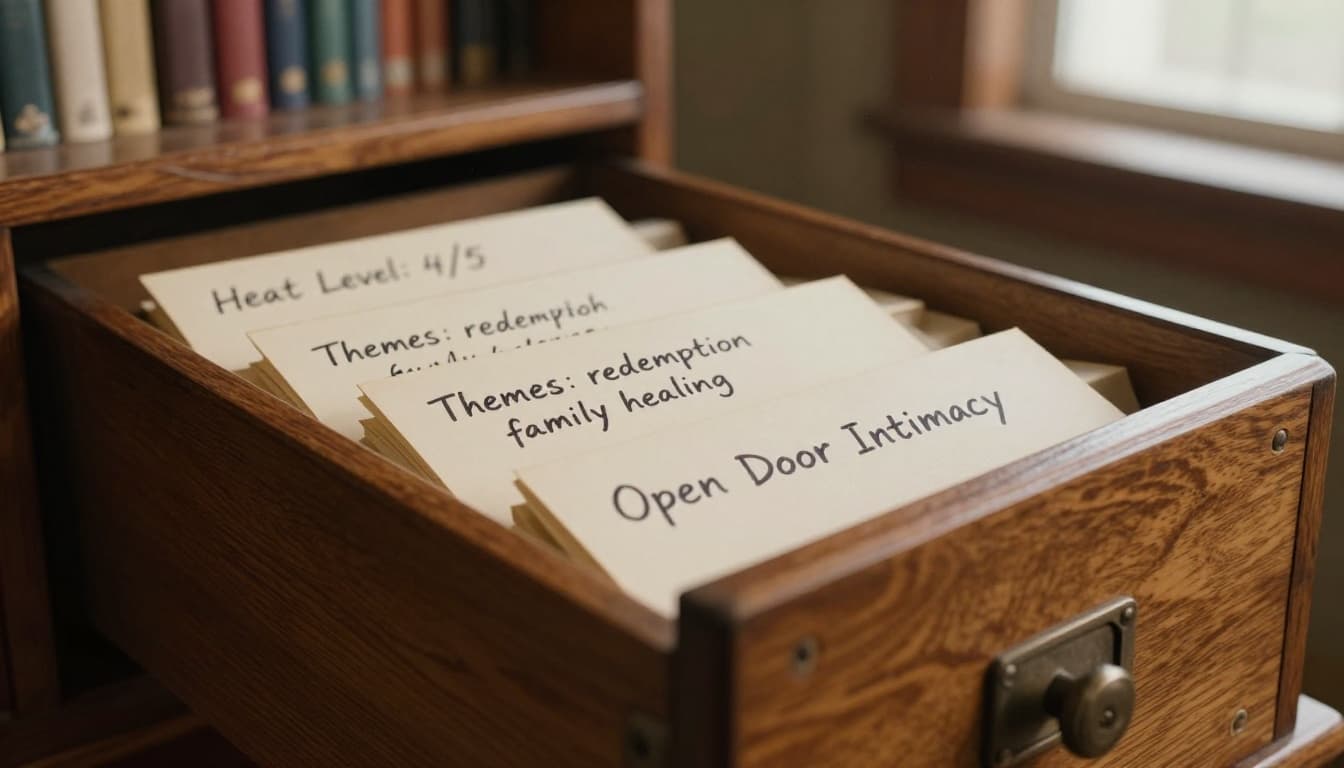 Simple “index card” labeling for heat level and themes
Clear labels are not censorship. They’re reader care. The more honest the description, the easier it is to find the right story without wasted money, time, or emotional whiplash.
Two terms matter most in romance right now:
- Open-door: intimate scenes happen on-page.
- Closed-door (fade-to-black): the door closes, and the story moves past it.
Neither is “better.” They just serve different readers. The same goes for content notes (often called trigger warnings). When a book flags grief, assault, addiction, pregnancy loss, or other heavy themes, it helps readers choose the right moment for that story.
Most “smut replaced story” complaints aren’t really about sex on the page. They’re about feeling misled. If the blurb sells a big external conflict, but the book is mostly bedroom scenes with minimal relationship work, readers feel tricked. On the other hand, if a book promises high spice and delivers closed-door, that reader also feels tricked. Better labels reduce that sense of betrayal, which lowers the volume of the whole debate.
If you want a quick vocabulary refresher for the way readers talk about tropes and themes, the romance tropes and themes glossary is a helpful reference. And if you’ve noticed blurbs leaning harder on trope tags lately, this overview of how tropes took over romance marketing explains why that shorthand is everywhere.
Here’s a reader-friendly way to think about labeling: it’s like food packaging. You don’t judge someone for checking ingredients. You’re just helping them avoid a bad time.
If you are a writer, here is how to balance heat and heart on the page
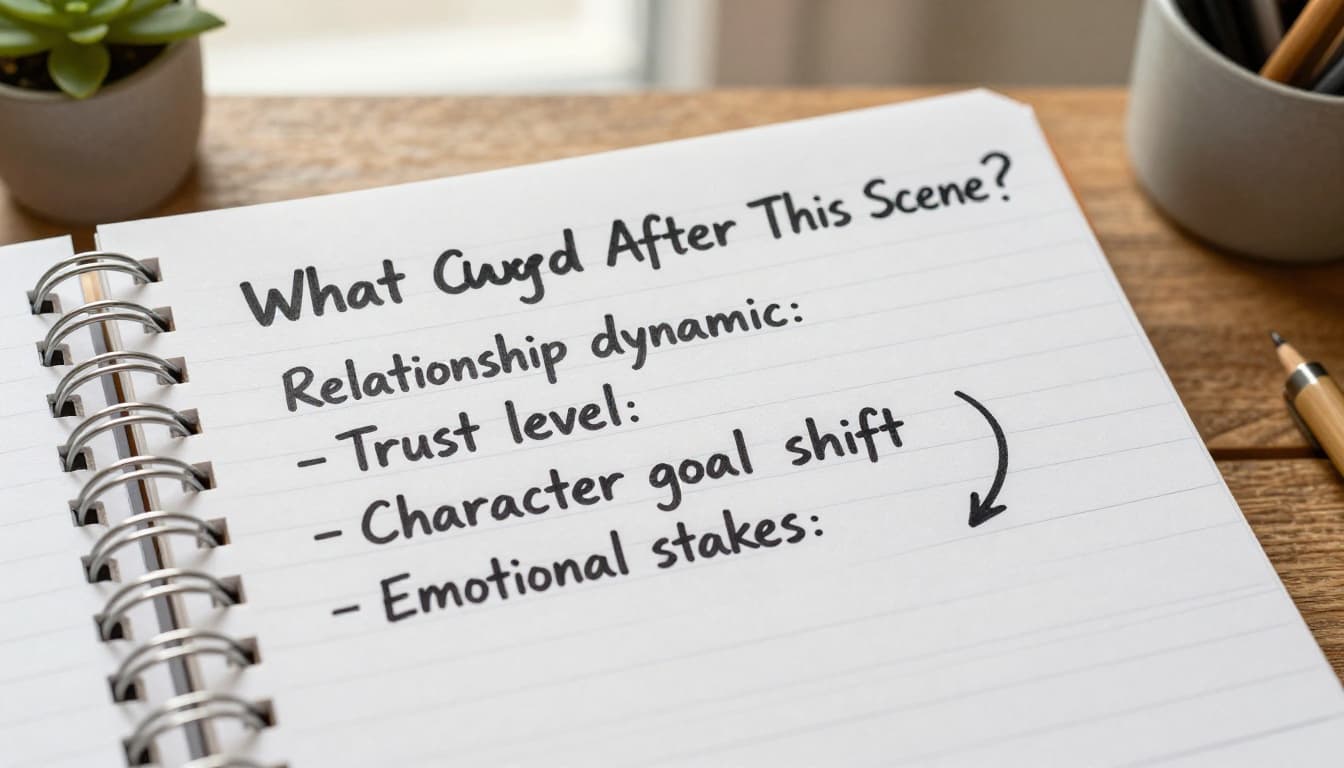 A simple notebook check that keeps intimate scenes tied to story change
If you’re writing romance (or dreaming about it), you don’t need to pick a side. You can write closed-door, open-door, or anything between. The goal is to make the romance feel like it grows, not like it loops.
Start with the basics, because they do most of the heavy lifting:
- Give each lead a goal. Not just “find love,” but something practical (keep the inn, protect the kid, save the bakery, get the job).
- Add real obstacles. Put something in the way that can’t be solved with flirting.
- Make choices cost something. Time, pride, reputation, money, family peace, emotional safety.
Next, treat intimate scenes like story scenes, because they are. Before you write one, ask: What changes because of this? If the honest answer is “nothing,” it may be a vibes scene, which is fine, but too many can flatten the plot.
A few simple craft guardrails keep the balance strong:
- Every intimate scene should shift the relationship. Trust increases, a fear gets named, a secret slips, a boundary gets set, or stakes rise afterward.
- Keep consent clear. It doesn’t need a speech, but it must be unmistakable in actions and words.
- Track emotional logic. If a character fears abandonment, don’t skip the reassurance and repair.
- Don’t skip relationship work. A love story is built in the kitchen scenes, apology scenes, and “I’m here” scenes, not only the heat.
This is also where character depth matters. Readers stick around when the heroine feels real, layered, and emotionally honest, which is exactly what’s explored in why readers crave complex strong heroines. Even if your book is spicy, the heart still has to make sense.
One last mindset shift helps: don’t write intimacy as a reward. Write it as a moment of exposure. Clothes come off, yes, but so do defenses. That’s where “heat” turns into “story,” and that’s where readers stop arguing and start rereading.
Conclusion
Spice talk is louder in 2026 because trends reward quick labels and shareable moments, especially on social platforms. Still, story has not gone anywhere, because the books readers finish, re-read, and recommend usually deliver momentum, emotional logic, and a payoff that feels earned.
Heat works best when it supports the arc. When intimacy reveals fear, builds trust, or raises stakes, it becomes part of the plot, not a detour. That’s why the real question isn’t “How spicy is it,” it’s whether the relationship changes the characters in a clear, satisfying way.
If you want to dodge high-heat, low-story frustration, keep using quick checks: scan the first pages for goals and tension, look for review patterns instead of one hot take, and treat vague trope-only blurbs as a signal to sample before you commit. Those small steps help you match the book to your mood, whether you want closed-door comfort or open-door emotional depth.
Thanks for reading, now tell me what you value most in romance, connection, plot twists, slow burn, cozy safety, or on-page intimacy with real heart?


