

7 Reasons Closed-Door Romance Is Making a Comeback in women’s fiction

Closed-door romance is back because a lot of us want the warm fluttery parts of love stories without turning every chapter into a graphic play-by-play. In plain language, closed-door romance means the couple might kiss, intimacy is implied, then the scene cuts away (often called “fade to black”). The emotional payoff stays on the page, the explicit detail doesn’t.
In 2026, I’m seeing more readers reach for that gentler heat level, especially when life already feels loud. It’s not about judging spicy romance at all, I still read it when I’m in the mood. It’s about choice, and mood reading, because sometimes I want butterflies and banter, not a scene that pulls focus from the characters I’m trying to fall in love with.
This matters a lot in beach-town women’s fiction novels and cozy small-town settings, where the comfort comes from community, second chances, and steady connection. If you’ve ever wondered how much romance can sit inside women’s fiction (and what kind of ending to expect), I break that down in women’s fiction vs romance fiction.
In this post, I’ll explain what closed-door romance is, why readers are craving it right now, which trends are pushing it forward, and how to find great closed-door books that still feel swoony, especially in coastal comfort reads like the ones I love writing and reading. If you’re also drawn to healing settings, you might like why beach-town fresh-start stories feel like therapy and my spoiler-free Seabrook Island character guide.

What closed-door romance really means, and what it is not
When I say I’m drawn to closed-door romance, I’m not talking about “no romance,” or “no chemistry,” or stories that feel watered down. I’m talking about where the camera sits. Closed-door keeps intimacy private (or implied), while still letting attraction, connection, and emotional payoff stay front and center, which is exactly why it fits so well inside beach-town women’s fiction novels.
The confusion usually starts because readers (and marketers) use overlapping labels. So before we talk craft and why it works, I want to make the vocabulary feel simple.
Closed-door vs clean vs sweet, the labels that confuse readers

Here’s how I define the big three, in plain language:
- Closed-door romance: Sexual intimacy may happen, but it’s not shown in explicit detail. The scene often “fades to black,” then we return afterward.
- Clean romance: Usually means no explicit sex, and often avoids strong profanity. Many clean romances are closed-door, but the label can also imply a more “wholesome” tone.
- Sweet romance: Focuses on tenderness and emotional warmth, often lighter in heat and conflict. Sweet can be closed-door, but it can also mean the story is more innocent in tone overall.
To make it even clearer, here’s what I expect to see on the page with each label:
- Closed-door
- Kissing: yes (often)
- Innuendo: sometimes
- Implied intimacy: yes (fade to black, closed bedroom door)
- Explicit sex scenes: no
- Clean
- Kissing: yes (often)
- Innuendo: minimal to none (varies)
- Implied intimacy: sometimes, usually mild
- Explicit sex scenes: no
- Sweet
- Kissing: maybe (often builds to it)
- Innuendo: usually very light
- Implied intimacy: rare
- Explicit sex scenes: no
If you like sorting out the difference based on story focus (not just spice), my breakdown of women’s fiction vs clean romance helps, and so does is women’s fiction romance?.
A quick reality check I wish more people said out loud: these labels aren’t regulated. They’re shorthand, not a guarantee.
That’s why labels vary so much by author, publisher, and reader comfort level. One reader’s “clean” is another reader’s “closed-door but still kind of flirty.” Reviews and sample pages help more than a single word on a cover.
Why tension still works when the bedroom door stays shut
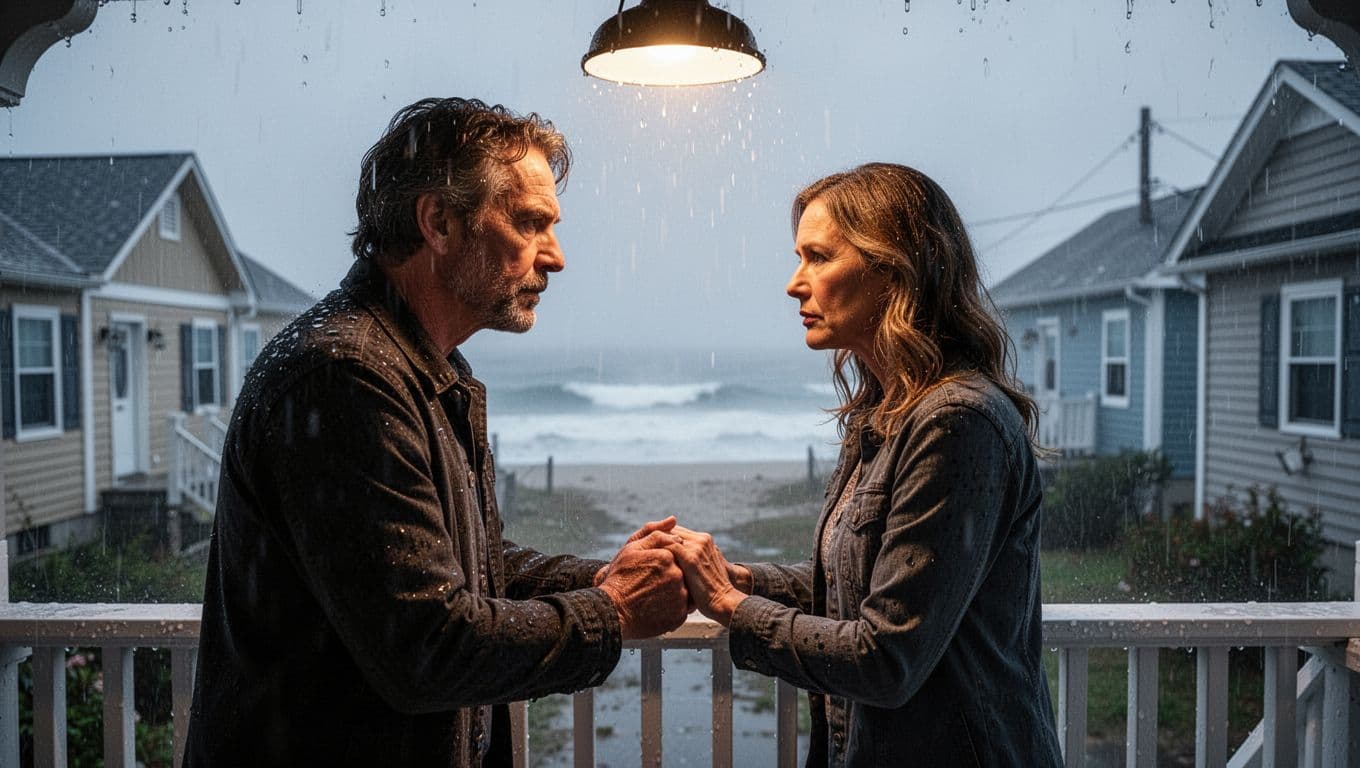 Longing and near-contact tension in a coastal porch moment
Closed-door romance works because tension is not the same thing as explicitness. Tension is anticipation. It’s restraint. It’s the emotional cost of wanting something and having reasons to wait, or being scared to reach.
These are the chemistry tools I see (and love) in closed-door stories:
- Longing: The “I shouldn’t want this, but I do” pull that keeps a scene humming.
- Near-misses: Almost-kisses, interrupted confessions, a moment that breaks at the wrong time.
- Meaningful touches: A hand at the small of the back, fingers brushing, an accidental hug that turns careful.
- Banter with bite: Teasing that reveals attention, and respect, and a shared rhythm.
- Emotional honesty: The quiet sentence that lands like a bell because it’s finally true.
- Earned trust: Showing up, keeping promises, and making space for boundaries.
I also think closed-door creates a specific kind of swoon because it forces the story to earn intimacy through character, not choreography. If you’re a character-first reader, you’ll probably also enjoy posts like Character Traits of Strong Heroines and Strong Heroines in Modern Women’s Fiction, because that same strength is what makes a fade-to-black feel satisfying instead of frustrating.
A few coastal and small-town examples that fit this vibe (and still feel romantic):
- Rainy porch confession: They’re trapped under the awning, rain loud enough to cover shaky breath. He admits the thing he has been holding back, and she takes a half-step closer, not quite ready, but not walking away either.
- Hand brushing in a bookstore: They reach for the same dog-eared paperback, fingers graze, and both pretend it meant nothing. Then they keep talking, a little softer now, as if the shelves are listening.
- Slow-burn first kiss by the water: After weeks of doing life side by side, she finally stops joking, looks at him, and says, “Don’t make me do this alone.” He asks, “May I?” first. That consent question is its own kind of heat.
If you like romance where the woman stays fully herself (instead of dissolving into the relationship), you might also like romance books with strong independent female protagonists and romance with competent heroines.
Where closed-door romance overlaps with women’s fiction
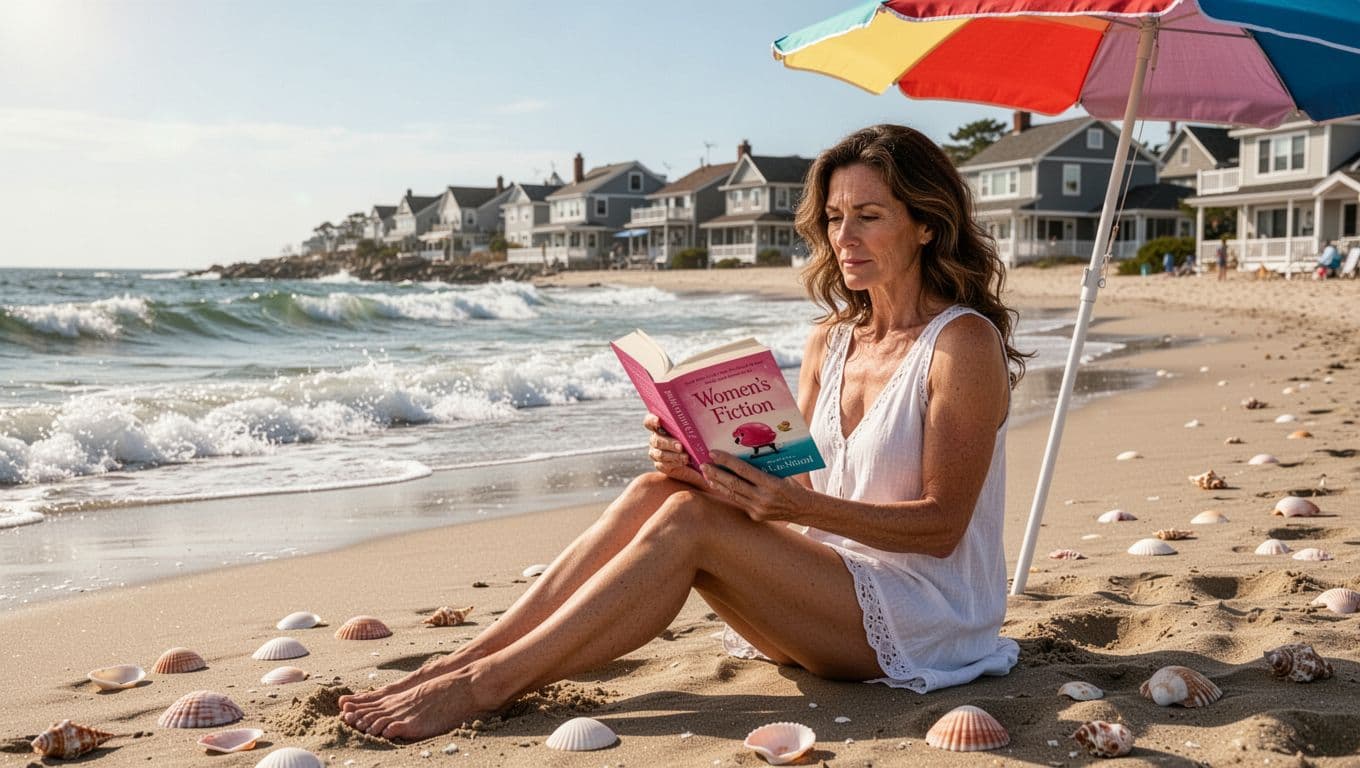 A quiet beach reading moment that matches women’s fiction’s reflective tone
In my reading life, women’s fiction is where I go when I want the story to care about healing as much as heart-eyes. It’s often about family patterns, identity shifts, grief, divorce, friendship, purpose, and second chances, with romance running through it like a steady thread instead of the whole rope.
That’s why closed-door romance fits so naturally here. When a book is already doing the deeper work of showing a woman rebuilding herself, explicit scenes can feel like they steal the microphone. Closed-door lets the story stay focused on what changes her life: the boundary she finally holds, the apology she finally accepts (or refuses), the moment she realizes she’s allowed to want more.
If you want the clearest “what promise am I making to a reader?” explanation, I wrote it out here: women’s fiction vs romance fiction. And if you want the bigger theme map, Women’s Fiction Themes and Tropes lays out why these stories hit so hard.
This overlap is also why coastal settings feel almost built for the closed-door approach. A small town has long memory, and the ocean has a way of making people tell the truth. If you’ve ever felt the calm pull of that setting, why women love beach stories worldwide explains it well, and life lessons small coastal towns teach you shows why “community” can be as romantic as a kiss.
When I’m choosing my next read in this lane, I look for the signs of a true women’s fiction core, like the ones I outlined in What Is Women’s Fiction? Women’s Fiction Explained Simply and the healing-forward reset energy you see in books about divorce and fresh starts. Closed-door romance slides right into that emotional structure, and it stays satisfying because the characters still earn every beat.
Why readers are choosing closed-door romance again in 2026
I keep noticing the same pattern in my own reading life and in reader conversations. When the world feels loud, a lot of us want love stories that feel steady. In 2026, closed-door romance is scratching that itch again, especially inside beach-town women’s fiction novels where the setting already promises a softer pace, familiar faces, and a safe place to land.
Closed-door is not “less romantic.” It simply changes what the story spotlights. Instead of zooming in on explicit detail, it lingers on the parts that make many readers melt, the look that lasts a second too long, the hand squeeze that means “I’m here,” the choice to show up again after a bad day.
Comfort reading is having a moment, and closed-door fits it perfectly
Comfort reads are the books I reach for when I need my nervous system to unclench. They tend to have cozy settings, manageable angst, and a satisfying ending that makes me feel taken care of as a reader. That last part matters more than people admit. When life feels heavy, I don’t always want to “brace myself” for a book.
Closed-door romance fits comfort reading because it often feels warm and safe. The intimacy is still there, but it stays private. That “fade-to-black” moment can feel like a respectful curtain closing, not a missing scene. I still get the emotional payoff, but the book doesn’t ask me to process graphic detail when I’m already tired.
Beach towns and small towns make this even easier to sink into. A coastal setting naturally slows the story down. You can smell sunscreen in the background. You can picture the boardwalk lights, the little bakery, the porch chairs that seem to invite truth-telling. That vibe pairs perfectly with found-family energy, because community becomes part of the romance. The town notices. Friends nudge. Aunties and neighbors feed people who are falling apart.
When I’m in this mood, I also notice I gravitate toward books that treat reading like a gentle ritual, not a test of my emotional stamina. I even see it in the kinds of reader “care packages” people share, like cozy beach reading essentials, because sometimes comfort is a whole experience, not just a plot.
If a book feels like a deep breath, I’m more likely to finish it, recommend it, and reread it later.
Closed-door romance helps create that deep-breath feeling, while still letting chemistry and connection stay front and center.
More people want romance they can recommend to anyone
One reason closed-door romance keeps rising again is simple: shareability. I can hand a fade-to-black love story to my sister, my coworker, my aunt, my teen niece (depending on the rest of the content), or my book club without needing a long disclaimer.
That matters because reading is social now, even for people who read alone. Friends swap recs in group chats. Book clubs choose titles with a wide comfort range. Library readers want “sweet but not childish.” Faith-friendly readers often want romance that stays tender without getting explicit, and plenty of other readers feel the same without attaching a label to it. Sometimes they just do not want on-page sex. No big reason. It is simply preference.
Closed-door also makes gifting easier. When I’m buying a present, I want the book to feel like a sure bet, not a gamble. That’s why I like having a few dependable guides bookmarked, like these bookish gift guides for women’s fiction. If I’m mailing a book to someone going through a hard season, I want it to comfort them, not make them feel awkward.
In beach-town women’s fiction novels, that “recommend-to-anyone” factor matters even more because coastal stories attract a broad mix of readers. Some show up for the setting. Others show up for the reinvention plot. Many want the romance thread, but they want it to stay gentle.
I also think we underestimate how often readers avoid recommending books they loved because of one spicy scene that feels hard to explain. Closed-door removes that barrier. It lets the story travel farther, from one hand to the next, like a favorite recipe card.
Chemistry, not explicit detail, is the main course for many readers
When I hear readers talk about closed-door romance, they rarely say, “I want less.” They say, “I want different.” They want the kind of chemistry you can feel in a simple scene at the grocery store, the kind where two people learn each other’s tells and start speaking a shared language.
That’s why emotional payoff matters so much right now. Closed-door romance often puts its energy into believable relationships and character arcs that actually change something. In beach-town women’s fiction novels, that can look like a woman rebuilding her life, learning how to trust again, and letting love add to her world instead of replacing it.
When readers tell me what they want most, it tends to sound like this:
- Slow burn that feels earned, not dragged out.
- Trust built in small, repeated actions.
- Laughter that shows compatibility, not just jokes.
- Acts of service (helping without keeping score).
- A solid HEA that feels calm, not chaotic.
That list is also why readers keep seeking romances with heroines who feel capable and real. If I’m picking my next read, I often want a heroine with a spine, which is why I like lists like romance books with strong female leads when I’m browsing.
And since chemistry is about who people are, not just what they do, I also see readers craving more variety in the kinds of love stories they collect and share, including rec lists like romance with Black female leads.
For a lot of us, the most romantic scene is not the bedroom. It is the moment someone chooses you in a hard season.
Closed-door romance leaves room for that choice to be the spotlight, which is exactly why it feels so satisfying right now.
The trends that are fueling the comeback, from small towns to “low-angst” love stories
I keep seeing the same two cravings show up in reader spaces: a setting that feels like a safe place to land, and a love story that feels emotionally kind. That mix naturally nudges more books toward closed-door romance, especially when the story sits inside beach-town women’s fiction novels, where community and comfort already set the tone.
This comeback also tracks with what I’m noticing in new releases and trend chatter: more yearning, more slow-burn connection, and less focus on explicit scenes. The door might close, but the feelings stay wide open.
Cozy small-town and coastal settings make emotional romance shine
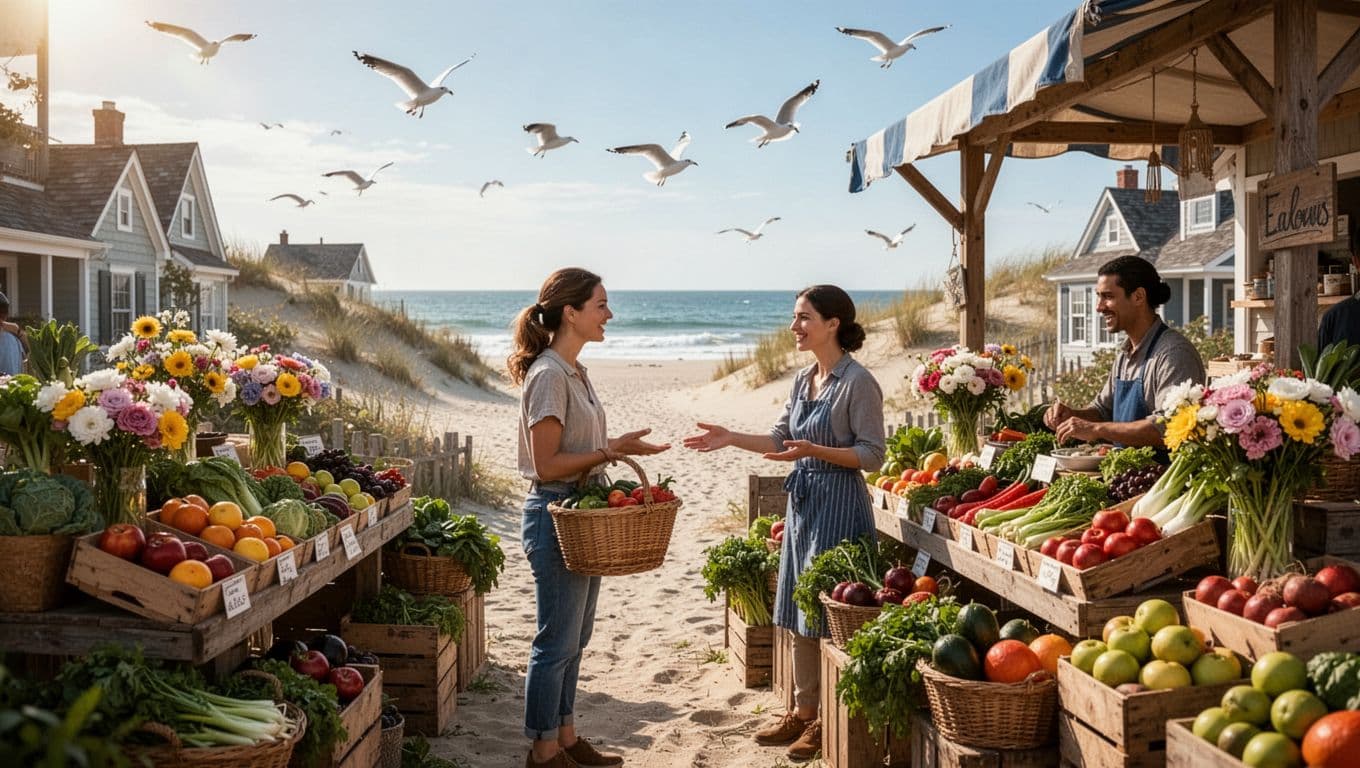 A quiet morning at a coastal farmers market
Small towns and beach towns do something magical for closed-door romance: they make love feel witnessed without making it performative. When everyone knows everyone, a relationship can’t hide behind big gestures or dramatic exits. It has to grow in the open, in everyday places, where respect and patience matter.
That’s why these settings support fade-to-black so well. The story is full of public spaces, which means intimacy often shows up as small, meaningful choices rather than private fireworks. A hand offered as someone steps off a curb. A jacket draped over shoulders when the wind turns sharp. A quiet “text me when you get home” that lands like a promise.
I also think the community layer does a lot of the heavy lifting. In a small town, the couple has parents, siblings, and neighbors in the orbit. There’s history, gossip, loyalty, and accountability. If a character messes up, they can’t just vanish. They still have to show up at the post office, the diner, the church fundraiser, the school pickup line.
Coastal settings add their own softness. The ocean builds in natural pause points for reflection. Walks on the beach give characters space to talk without feeling trapped. A local pier becomes a meeting place that’s both romantic and ordinary. In beach-town women’s fiction novels, that atmosphere makes emotional romance shine because the town itself encourages healing.
Here are a few “closed-door friendly” moments that small towns hand authors on a silver platter:
- Farmers markets: Flirty banter over peaches, a shared tote bag, a lingering look when someone says, “You came.”
- Beach walks: Two people walking side by side, letting the waves fill the silences until the truth comes out.
- Local diners: Coffee refills, comfort food, and the kind of conversation that turns into connection.
- Porch sits and neighborhood waves: Love that grows where everyone can see the effort, not just the result.
In other words, these settings make romance feel like part of life, not a separate hidden storyline. Closed-door fits because the sweetest parts are often the most public ones.
Low-angst romance is rising, and closed-door often comes with it
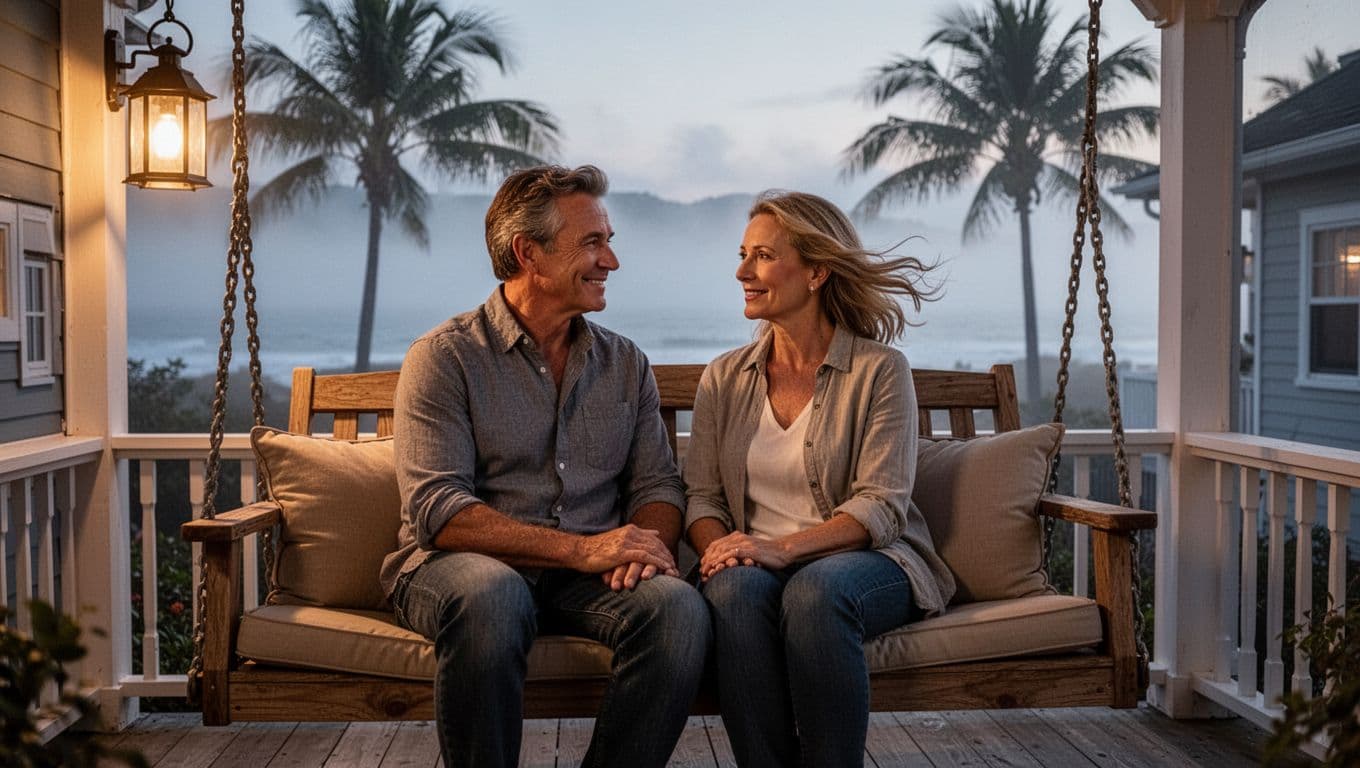 A calm porch-swing conversation with tender connection
When I say low-angst romance, I mean the couple isn’t constantly at war. The conflict still exists, but it usually comes from outside pressures or real-life circumstances, not endless misunderstandings that could be solved with one honest talk.
Low-angst often looks like this on the page:
- The couple communicates with kinder honesty.
- They assume good intent more often than not.
- They face external obstacles (grief, job stress, custody schedules, caregiving, a big move, old family patterns).
- When they argue, they don’t go for the throat.
That doesn’t mean the story is boring. It just means the tension comes from emotional stakes, not chaos. Think of it like the difference between a shaky bridge and a steady one. A steady bridge can still cross a deep ravine, it just doesn’t make you fear the whole structure will collapse.
Closed-door romance pairs naturally with this because both styles protect emotional safety. The story focuses on trust, consent, and comfort, which makes the romance feel like a place to rest, not another problem to solve. For many readers, especially in beach-town women’s fiction novels, that’s the whole point: the love story should feel like a warm light in the window.
I also love how low-angst raises the bar for what feels romantic. If the relationship isn’t fueled by chaos, then the book has to earn swoon through:
- reliability
- thoughtfulness
- shared humor
- a growing sense of “we” without losing the “me”
Low-angst isn’t low-emotion. It’s just love without the constant gut punch.
That’s a big reason this trend keeps growing. Readers still want big feelings, they just want them delivered with care.
Tropes that feel extra swoony when the story stays closed-door
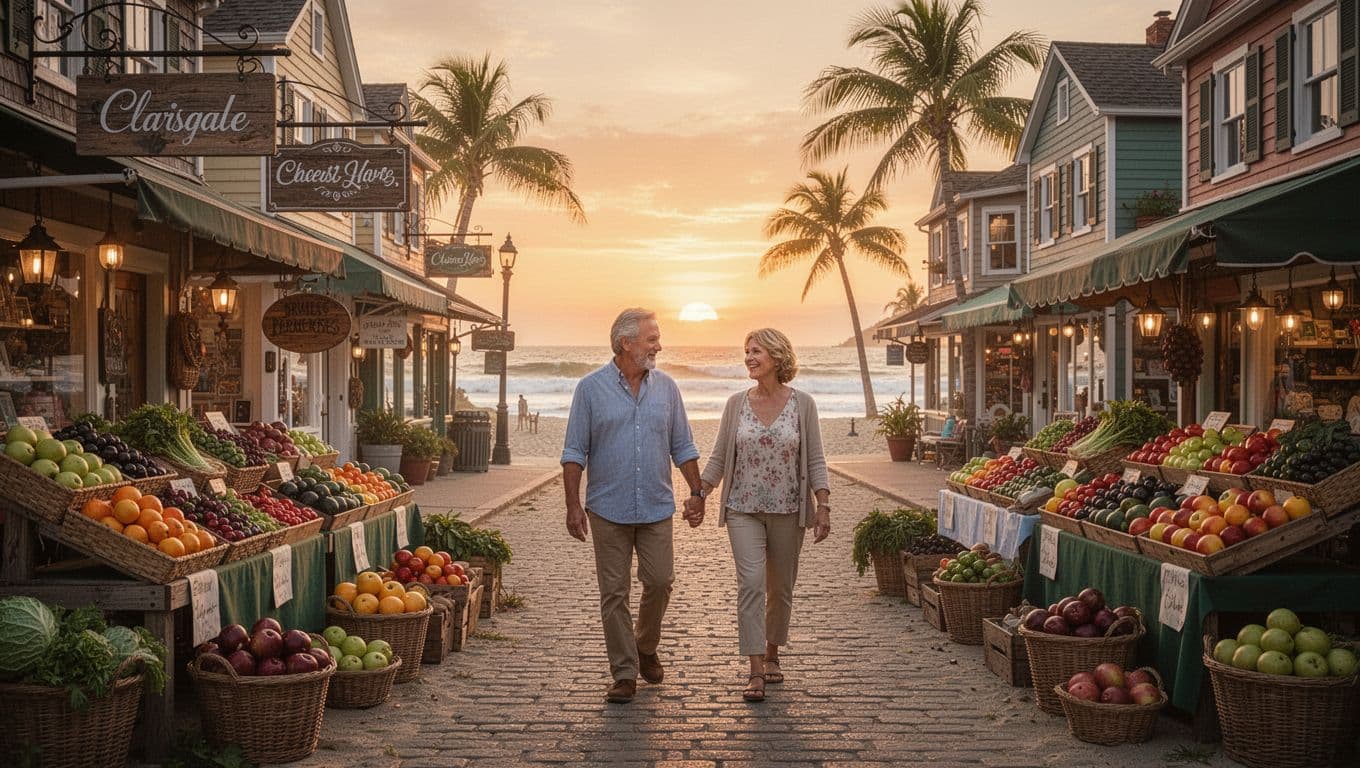 A golden-hour stroll through a coastal town that feels made for slow-burn romance
Some tropes feel tailor-made for closed-door because they thrive on anticipation. When the story “cuts away,” it forces the romance to build its heat in the spaces before the kiss, and in the quiet after.
These are the tropes that make me sigh the hardest in a closed-door setup:
- Slow burn: Every micro-moment matters, like a lingering look across the table that says more than a speech.
- Friends-to-lovers: Familiarity turns electric, so a protective gesture (a hand at the small of the back) feels like a confession.
- Second chance: Restraint becomes the point, because the “earned kiss” only works after accountability and change.
- Forced proximity: One bed, one car, one tiny beach cottage, so the tension lives in careful manners and almost-touching hands.
- Fake dating: The pretend stuff creates real feelings, and the closed-door approach keeps the focus on stolen glances and accidental softness.
- Single parent romance: The relationship grows in daylight, through patience and steadiness, which makes the first kiss feel truly chosen.
What I love most is how closed-door storytelling turns romance into a series of earned steps. It’s not about how fast people fall into bed. It’s about how they learn each other. It’s about the moment someone pauses, checks in, and chooses tenderness anyway.
And honestly, in beach-town women’s fiction novels, those micro-moments are the whole meal: the shared laughter at the local diner, the quiet beach walk after a hard day, the gentle hand squeeze that says, “I’m not leaving.”
How I pick a great closed-door romance, and how you can find your next favorite
When I’m choosing closed-door romance (especially inside beach-town women’s fiction novels), I’m not hunting for “less romance.” I’m hunting for a specific feeling. I want chemistry I can taste, emotional safety I can trust, and characters who act like adults even when their hearts are a mess.
The good news is you can spot that vibe pretty fast once you know what to look for. I do it the same way I pick a dessert at a new bakery: I scan the labels, I read a couple reviews, and I sample before I commit.
A quick checklist for spotting closed-door vibes before you buy
Before I buy, I do a quick scan of the blurb, categories, and a handful of reviews. Not fifty. Just enough to catch the book’s “temperature.”
Here’s the plain-language checklist I use:
- “Closed door”: This is usually the clearest sign. Expect kissing, attraction, and intimacy that happens off-page.
- “Fade to black”: A strong green flag. It often means the scene builds, then cuts away at the bedroom door moment.
- “Low spice”: Often closed-door or close to it, but not always. Sometimes it means “one mild scene,” so I still double-check reviews.
- “Sweet”: Usually tenderness-first. Think slow burn, gentle flirting, and emotional payoff.
- “Clean”: This varies a lot by reader. For some, it means no explicit sex and minimal swearing. For others, it also means no cohabiting, no drinking, or a faith-forward tone.
Reviews are where I get the real clues, but I read them with a translator’s brain. Here’s how I interpret common review language:
- “Swoony but not graphic” usually means closed-door or mild open-door.
- “Spice is minimal” can mean anything from fade-to-black to one short explicit scene.
- “Wholesome” often signals sweet tone, but it can also mean the conflict stays gentle.
- “More steam than I expected” is my sign to sample first.
Labels aren’t regulated, so I treat them like a weather forecast. Helpful, but I still look out the window.
Because “clean” and “sweet” mean different things to different people, sampling helps. I’ll read the opening chapters, then skim a scene or two later if the ebook preview allows it. That tiny bit of homework saves me from buying a book that doesn’t match my comfort level.
If you like seeing what romance readers tend to crave across tropes and tones, I keep this bookmarked: things women love to read about in romance fiction.
If you love women’s fiction, start with themes you already crave
I’ve noticed that the best closed-door romances in women’s fiction don’t feel like they’re “missing” anything. That’s because the story is already rich with the stuff that keeps me turning pages: reinvention, family knots, identity shifts, and the brave choice to begin again.
When I’m browsing, I start with the theme I want, then I choose the romance heat level second. These themes pair beautifully with closed-door because the emotional arc is the main course:
- Starting over: New towns, new routines, new boundaries. A fade-to-black love story fits because the focus stays on her growth and her choices. If you’re in a fresh-start mood, my favorite jumping-off point is women’s fiction books about starting over after divorce.
- Family and complicated love: Adult siblings, messy parents, caretaking seasons, and forgiveness that takes time. Closed-door keeps the romance intimate without pulling attention away from family stakes.
- Identity and self-trust: The “who am I now?” question hits harder when the book gives it space. I love when romance supports that journey instead of consuming it.
- Friendship and community: The best beach-town women’s fiction novels make the town feel like a character. When the romance stays closed-door, those friendships and small-town rhythms stay vivid.
- Healing and work-life reality: Sometimes I want a heroine who’s juggling a job, a kid, a parent, and her own burnout. In that mood, I reach for stories like the ones discussed in women’s fiction books about work-life balance.
Closed-door can also be a kindness to the pacing. When a book is already handling grief, divorce, or rebuilding, I don’t always want the story to pause for explicit detail. I want the relationship to deepen through conversations, choices, and the everyday ways two people show up.
Match the spice level to your mood, not to someone else’s reading rules
I read closed-door romance when I want comfort, but I don’t treat spice like a moral decision. I treat it like music. Some days I want quiet piano. Other days I want the whole chorus.
If you’re the same, here are a few mood matches that keep me from forcing myself into the wrong kind of book:
- “I want cozy and hopeful.”
That’s when I pick closed-door in a small town, ideally with a warm friend group and a steady love interest. I want the romance to feel like a porch light, not a fire alarm. - “I want big feelings without explicit scenes.”
This is my sweet spot for beach-town women’s fiction novels. I want longing, vulnerability, and an earned kiss, but I also want the story to stay focused on healing, family, and growth. - “I want laughter and banter.”
In a funny mood, I love flirtation that lives in dialogue. Teasing at the coffee shop, playful texting, a hero who can take a joke, and a heroine who doesn’t shrink to be loved.
You don’t owe anyone “consistency” in your reading. You only owe yourself a book that feels right in your hands tonight.
If you ever feel weird about switching between spicy and closed-door, I’ll say it plainly: you’re allowed. Reading is personal. Mood reading is smart. And your bookshelf can hold every version of you.
My favorite places to start, strong heroines, second chances, and beach-town escapes
When I recommend closed-door romance, I don’t start with titles, I start with ingredients. If the ingredients are right, the story almost always lands.
Here are the starting points I look for when I want that closed-door swoon inside beach-town women’s fiction novels:
- Strong heroines with soft strength: I want a woman who has boundaries, but still feels deeply. She doesn’t have to be loud to be powerful. When I’m craving that kind of character, I think about the ideas in why a soft, gentle woman can still be a strong heroine.
In practice, this looks like a heroine who can say “no,” ask for what she needs, and still risk love. - Second chances that require real change: I want apologies with action, not speeches. I want accountability, not excuses. If that trope heals you the way it heals me, you’ll probably enjoy why second-chance love stories feel like therapy.
Closed-door works well here because the tension lives in trust, not in explicit scenes. - Mature love that fits real life: Give me characters with jobs, history, and something to lose. I love romance where the couple builds a life that makes sense, including family ties and community expectations. That “real life” tone is also why it helps to understand women’s fiction vs chick lit, because the emotional weight and humor balance can be very different.
- Community and values on the page: Beach-town stories shine when the town has heart, not just scenery. I like books where the community protects people, challenges them, and pulls them back into connection.
- A backbone theme beyond the romance: If the story also cares about justice, voice, and women supporting women, I’m in. In those moods, I look for themes like the ones discussed in women’s fiction books about women’s rights.
If you want one more practical filter, I also watch for a romance that respects reader comfort without being coy. I’m fine with attraction. I’m fine with heat. I just want the door to close at the right moment, then reopen on the emotional consequences, the tenderness, and the choice to stay.
Conclusion
Closed-door romance is making a comeback because so many of us want stories that calm us down, not stories that crank us up. When I pick up a comfort read, I want a steady love arc, a hopeful ending, and just enough heat to feel the spark without turning the page into a private show.
It also helps that closed-door books are easy to share. I can recommend them to my book club, my sister, or a friend at work without adding a warning label. That kind of shareable romance travels fast, especially when readers are swapping recs like they swap recipes.
Most importantly, this style puts emotional chemistry back in the spotlight. The longing, the banter, the quiet acts of care, and the earned trust land harder when the story stays focused on who these people are and why they choose each other. Add a cozy beach town or small town setting, plus the low-angst trend, and it makes sense that fade-to-black is finding its footing again.
Thanks for reading, I’d love to hear from you. Do you prefer closed-door, open-door, or a mix, and what setting do you love most (beach town, small town, or city), especially in beach-town women’s fiction novels?


