

5 Key Differences Between Women’s Fiction and General Fiction in Bookstores

I’m standing in a bookstore with that familiar, happy problem: I want a heartfelt, character-driven story, the kind that makes me feel like I’ve lived another life for a few hours. But I’m stuck in the aisle, scanning signs that say Women’s Fiction, Fiction, and Romance.
If you’ve ever wondered why one book lands under “Women’s Fiction” while another sits in “General Fiction,” you’re not alone. These labels affect how we find books, how booksellers help us, and how writers position a story so it reaches the right readers.
Here’s how I think about women’s fiction vs general fiction, plus the practical cues bookstores use when they decide where a novel belongs.

What “women’s fiction” usually means (and what it does not)
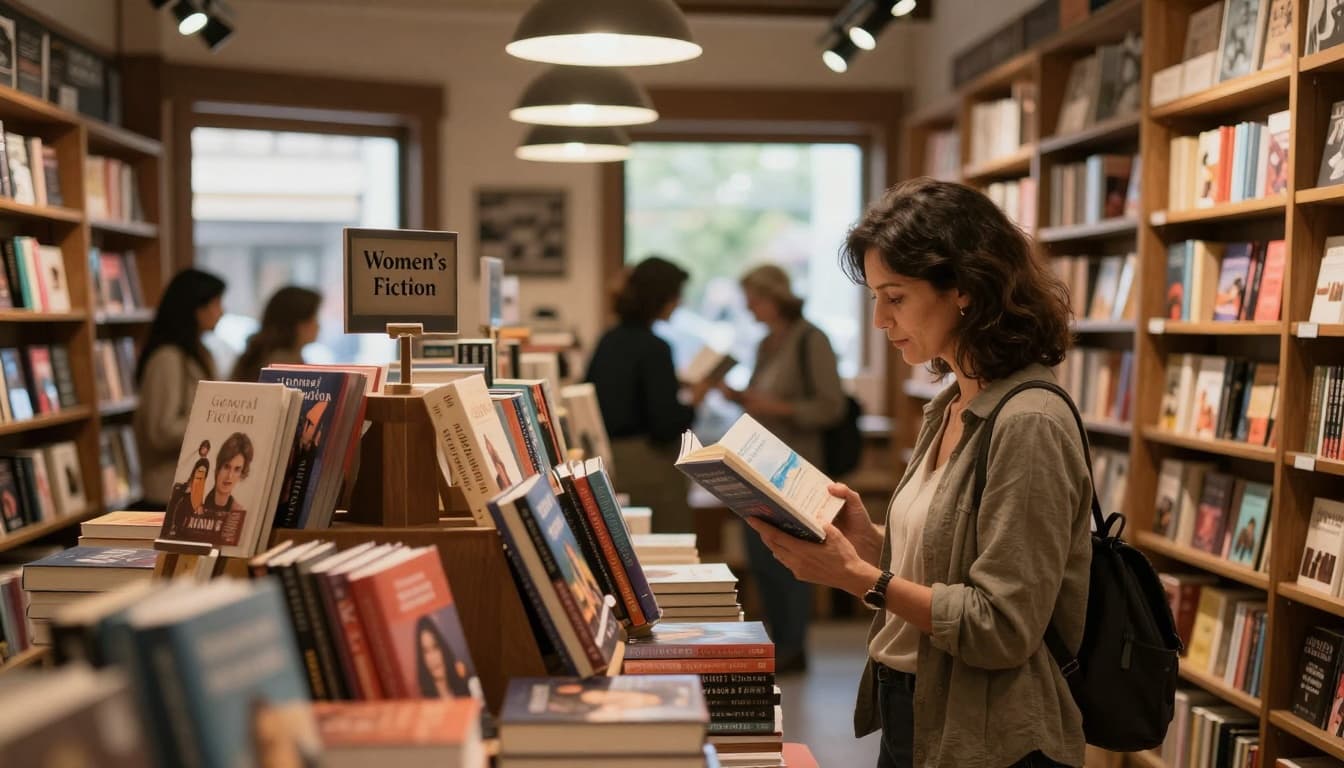 Browsing between Women’s Fiction and General Fiction shelves in a cozy bookstore
When I hear “women’s fiction,” I don’t hear “books only women can read.” I hear a promise about the kind of experience I’m going to have. Women’s fiction is usually centered on a woman’s inner life, her relationships, and her personal change.
That change might come from a divorce, a job loss, becoming a caregiver, moving back home, grief, or finally naming what she wants after years of putting everyone else first. The plot can still be busy, but the emotional arc is the spine.
A lot of women’s fiction also leans into themes like family ties, friendship, identity, and second chances. It often feels “close to real life,” even when the circumstances are dramatic.
I also want to say the quiet part out loud: the label can be messy. Some readers love it because it helps them find the exact vibe they want. Some hate it because it can sound like a smaller, less serious category. The truth sits in the middle. It’s a browsing tool, not a value judgment. For a thoughtful history and a clear, reader-friendly definition, I like Book Riot’s explanation of women’s fiction.
The heart of it: emotional change drives the story
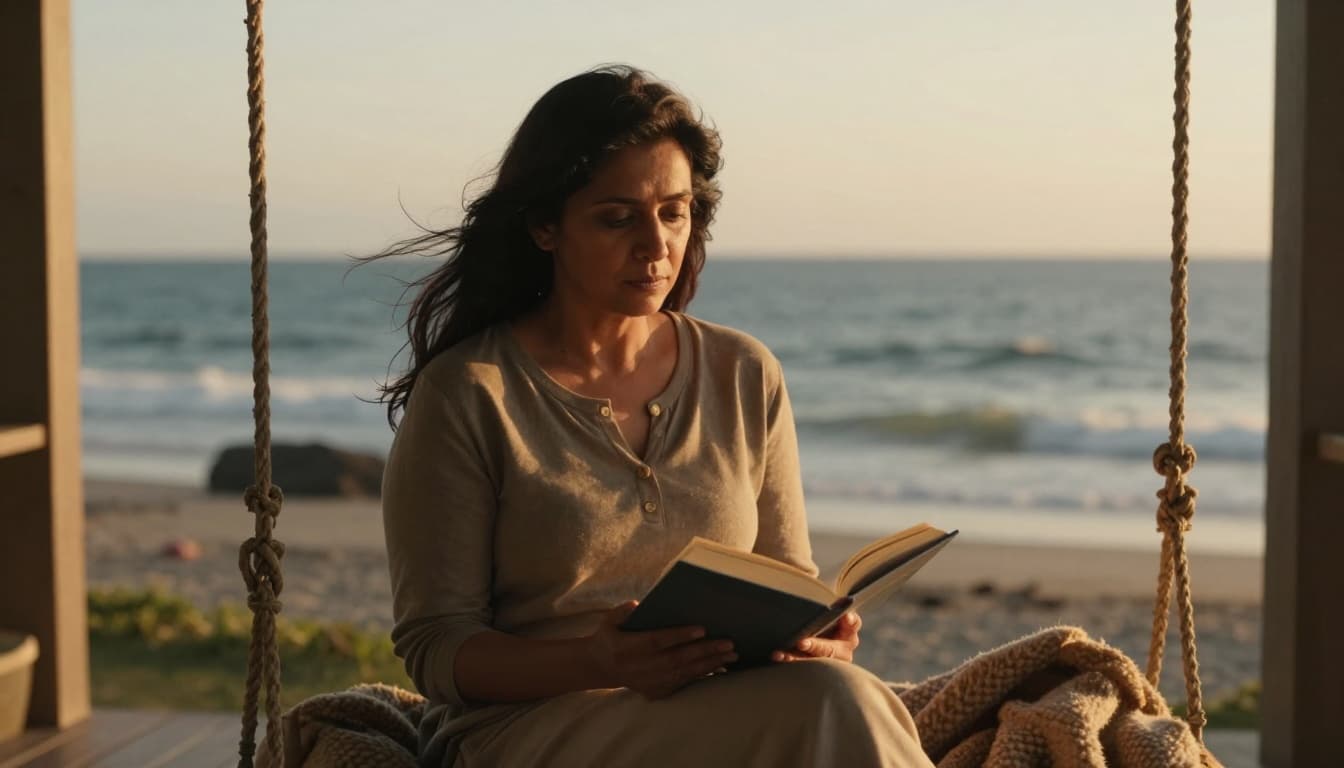 An intimate reading moment that matches the reflective tone many women’s fiction readers love
Here’s the simplest test I use: if you removed the main character’s inner growth, would the story still work?
In women’s fiction, the answer is usually no. The story depends on her emotional change. External events still matter, but they’re often pressure on the soul, not just action on the page.
A quick made-up example: A woman returns to her coastal hometown to settle her late mother’s estate. On paper, the plot might be “sell the house, split the money, go back to the city.” But the real story is that she’s confronting old shame, learning how her mother loved her (even imperfectly), and deciding what she wants her life to look like now.
If she doesn’t change, the ending doesn’t land. That’s the engine.
This is why I’ll sometimes pick up a “quiet” book and still feel wrung out in the best way. The biggest battle is internal: fear, grief, regret, self-trust.
Where romance fits when it is present
Romance shows up in women’s fiction all the time. The difference is what the book is about at its core.
In genre romance, the relationship is the main plot, and the ending needs to be happy or at least hopeful for the couple. That’s part of the reader promise.
In women’s fiction, love can matter a lot, but it isn’t always the center pole. The relationship may support the character’s growth, challenge it, or even fall apart because she’s changing.
When I’m trying to tell which shelf I’m holding, I ask myself a tiny checklist:
- Is the relationship the main problem to solve?
- Would the story feel “finished” without the couple ending up together?
- Does the back cover focus more on love, or on her life shift?
If you love a mix of emotional healing and a romantic thread, books marketed as “romantic women’s fiction” often scratch that itch. A good example of that feel (grief, starting over, small-town connection) is A Season of Promise – Harbor’s Edge Book 1 ebook, which frames romance as part of a larger personal reckoning.
So what counts as “general fiction,” and why that label is so broad
“General fiction” is the big, roomy closet of the bookstore. It’s where novels go when they aren’t clearly shelved as mystery, thriller, fantasy, science fiction, or romance, and when the store doesn’t want to carve out a more specific sub-section.
General fiction can be character-driven. It can also be plot-heavy. It can be funny, dark, experimental, historical, or sharp as glass. That’s why it’s hard to define with one sentence.
The key difference in women’s fiction vs general fiction isn’t quality or seriousness. It’s the primary promise. Women’s fiction usually signals: “Come for an emotional journey focused on a woman’s life change.” General fiction signals: “Come for a story, and the story could take many forms.”
Many books honestly could sit in either place. Some stores even merge women’s fiction into general fiction completely. That choice is about helping their local shoppers browse in a way that feels natural, not about declaring a rule.
General fiction can be about anything, not one specific reader promise
Here are a few short (made-up) setups that feel clearly “general fiction” to me:
A neighbor finds a hidden room in a crumbling apartment building, and every tenant has a different story about what happened there.
A group of friends reunites for a weekend after one of them becomes famous, and the narration shifts between them like a chorus.
A man in a small town starts receiving letters addressed to someone else, and the letters pull him into a moral decision that changes the community.
All of these could still be emotional. But the focus isn’t automatically “a woman’s transformation” as the main hook. It’s more about concept, cast, voice, or theme.
If you’ve ever heard terms like “book club fiction” or “upmarket fiction,” that’s part of this same sorting problem. They’re marketing and industry labels that don’t always match a physical shelf. This article on upmarket and book club fiction labels explains why we talk about them even when bookstores don’t always post a sign for them.
How bookstores decide where to shelve a book (and why it varies by store)
When I talk to booksellers, I’m reminded that shelving is practical. A store wants a reader to walk in, find what they came for quickly, and leave with a stack that makes them feel understood.
So bookstores use signals. Lots of them. They look at what the publisher says the book is, what the cover communicates at a glance, and how similar books have sold before.
Online retailers do something similar, but with algorithms and a wild number of category options. That’s why a book might show up as “Family Life Fiction” online but sit in “Women’s Fiction” in a store. The goal is still the same: help the right reader find it.
For a straight, sales-focused look at why categorization matters, I like Writer’s Digest on book categorization. Even if you’re “just a reader,” it explains the forces shaping what you see on the shelf.
The behind-the-scenes clues: categories, keywords, and sales history
The most invisible factor is metadata, the information attached to a book in sales systems. One piece of that is a BISAC category code, which is basically a standardized way to say “this is what this book is” so stores and online shops can list it properly.
A book can have more than one category attached to it, because stories overlap. But a physical store has to pick one main home most of the time. Shelf space is limited, and duplicate stocking gets expensive.
Sales history also matters. If a store knows that its shoppers buy emotional, character-led books from a certain table, that’s where similar new titles will go. In some places, “Women’s Fiction” is a strong, busy section. In others, it’s folded into “Fiction” because that’s how the locals browse.
Libraries influence this conversation too, because they also sort books for discoverability. Their systems aren’t the same as bookstores, but the underlying idea is similar: classification is about helping people find things. If you’re curious how formal cataloging thinks about genre and form, the Library of Congress has guidance like Assigning genre and form terms.
The “cover test” shoppers do in 3 seconds
Even when I try not to judge a book by its cover, I do it. We all do. Covers are shorthand.
Booksellers know that, so they pay attention to cover cues when they shelve. Not because they’re shallow, but because covers help readers self-sort fast.
Here’s a quick do-and-don’t list I keep in mind when I’m guessing a shelf (and it’s also useful for writers thinking about market fit):
- Do expect illustrated, bright covers to often signal lighter tone, romance-adjacent, or contemporary “feel-good” reads.
- Do expect soft photography, coastal scenery, and warm color palettes to often signal emotional, relationship-centered stories.
- Don’t assume “women’s fiction” means “no plot.” Many have strong external stakes.
- Don’t assume “general fiction” means “no feelings.” Plenty will break your heart.
Back cover copy matters too. If the blurb talks about a woman rebuilding her life, mending family ties, and learning to choose herself, I’m already drifting toward the women’s fiction shelf. If it emphasizes a broader societal theme, an ensemble cast, or an unusual concept, I’m looking at general fiction.
This is also why hybrid books float. A story can be women’s fiction with a mystery thread, or general fiction with a strong romantic subplot. The cover and copy often decide which part gets the spotlight.
A quick way I tell the difference when I’m browsing
When I’m in a store and I don’t want to overthink it, I run a simple path in my head.
First, I read the blurb and ask what kind of satisfaction the book is promising. Is it promising personal growth and emotional payoff? Or is it promising a bigger concept, a twisty setup, or a wide-angle view of a community?
Then I look at the relationships. If the story is built around mother-daughter tension, friendship repair, caregiving, reinvention, or finding a new home in midlife, I’m expecting women’s fiction, even if romance is present.
If the story is more about an event, an idea, or a web of characters, I’m expecting general fiction.
And when a book blends categories (women’s fiction with suspense elements, for example), I stop trying to “win” the classification game. I just ask: where would I go to find more books that feel like this?
If what I want is a coastal, emotional, second-chance experience with a strong personal arc, I know I’ll probably be happiest browsing stories like Beachview Summer Guest – Book 5 of the Seabrook Island series and other character-led reads that put healing and belonging front and center.
My 5-question shelf check for women’s fiction vs general fiction
- Who changes the most by the end of the book?
- What problem is the story really about beneath the plot?
- Does the ending focus on personal growth more than external victory?
- Is romance the main engine, or a supporting thread?
- What emotions does the description promise me up front?
If my answers keep circling back to identity, relationships, and inner change, I’m in women’s fiction territory. If they circle around concept, theme, or a wider cast, I’m leaning general fiction.
Frequently Asked Questions About Women’s Fiction vs General Fiction
What’s the simplest difference between women’s fiction and general fiction?
Women’s fiction is built around a character’s emotional journey and personal growth. The big “plot” is often what changes inside the main character, how she heals, what she learns, and how her relationships shift along the way.
General fiction (sometimes called mainstream fiction) is a broad umbrella for stories about people and life that aren’t defined by that specific emotional-growth focus. It can be character-driven too, but it isn’t marketed around women’s life experiences or a woman’s inner transformation as the main engine of the story.
Does women’s fiction have to have a female main character?
No. It often does, because the category is marketed to readers who enjoy stories centered on women’s lives and relationships. But it’s not a rule.
Many writers, agents, and publishers describe women’s fiction as a novel where the central arc is emotional change, and that can apply to any gender if the story is structured that way. In practice, though, if you’re browsing a bookstore shelf labeled “Women’s Fiction,” you’ll mostly find female-led, relationship-rich stories about family, friendship, love, identity, or second chances.
How is women’s fiction different from romance (and where do they overlap)?
The cleanest line is the story’s main promise.
In romance, the love story is the center, and the ending typically delivers a committed couple (often described as a happily ever after or happy for now). The relationship arc drives the book.
In women’s fiction, a romance can be important, but it’s usually one thread in a bigger emotional arc, like rebuilding after divorce, handling grief, repairing family ties, or finding a fresh start. If the love story is the whole engine, readers will likely expect it to be shelved and marketed as romance.
Why do some books feel like they could fit in either category?
Because categories are often about marketing as much as content. A character-driven novel about everyday life might be sold as women’s fiction if the publisher wants to reach readers who look for emotional, relationship-focused stories. The same book might be positioned as general fiction if the hook is broader, like a social theme, a setting, or a plot-first premise.
Hybrid books are common, especially “upmarket” stories that blend big feelings with strong pacing, or women’s fiction that borrows elements from mystery, historical, or suspense.
Is “women’s fiction” the same as “women’s writing”?
No. Women’s fiction describes a type of story (emotional journey, relationships, growth). Women’s writing usually refers to books written by women, across any genre, including thrillers, fantasy, literary fiction, and romance.
That’s why you’ll see women writing plenty of general fiction, and you may also see men writing women’s fiction. The label isn’t about the author’s gender, it’s about the reading experience and what the story puts front and center.
Conclusion
When I sort out women’s fiction vs general fiction, I remind myself that women’s fiction is usually built on an emotional journey and personal change, while general fiction is a wide umbrella that can hold almost anything. Bookstores shelve a book where they think it’ll be found fast, and bought with confidence, which means placement can be a marketing choice as much as a literary one.
Next time you’re in the aisle, try focusing on the promise, not the label. Then tell me this: which shelf do you walk to first, and what do you wish bookstores did differently with women’s fiction?


