

What I Mean by Upmarket Womens Fiction (and How to Spot It)

I’ve stood in a bookstore aisle, or scrolled Kindle deals at midnight, and felt that tiny flash of confusion: is this women’s fiction, romance, literary, or upmarket? The cover looks like one thing, the blurb hints at another, and the label doesn’t always help.
So what is upmarket womens fiction? It’s a story that blends page-turning readability with deeper themes and stronger writing craft, centered on a woman’s emotional journey. It’s the kind of book that pulls you in fast, then sticks with you after, because it has something real to say.
In this post, I’m going to keep it simple and practical. I’ll explain what upmarket women’s fiction is, what it’s not, the story ingredients that show up again and again (including the themes and emotional patterns in women’s fiction), and how I can tell if a book, or my own story idea, fits the category.
If you’ve ever loved a heartfelt, character-driven read, but still wanted a little more polish, tension, or bite on the page, you’re in the right place. If you want a quick refresher on the broader shelf label, my guide to what is women’s fiction helps. And if you’re stuck on where romance ends and women’s fiction begins, I break it down in women’s fiction vs romance: what’s the real difference?.

So what is upmarket women’s fiction, really?
When I say upmarket womens fiction, I’m talking about the sweet spot between two reading moods. I want the easy pull of a page-turner, but I also want writing that feels intentional, characters who act like real adults, and themes that stay in my head after I close the cover.
Upmarket usually means the story is emotion-first and character-led, with stakes that might be quiet on the outside but loud on the inside. It can be about grief, marriage, identity, friendship, motherhood, second chances, ambition, or starting over. The plot still moves, the hook still matters, but the real payoff is that inner shift, the moment the main character sees herself (and her life) differently.
 An intimate, character-driven reading vibe in a cozy space
The quick test I use to spot an upmarket read in the wild
When I’m browsing a bookstore table or scrolling samples, I don’t overthink it. I run a fast yes/no test. If I get mostly “yes,” it’s usually a solid upmarket womens fiction pick, even if the cover is sending mixed signals.
Here are the questions I ask:
- Would I recommend it to a mixed-age book club? Yes or no.
- Is the writing clean and thoughtful without being hard to follow? Yes or no.
- Is there a clear hook in chapter one (or at least a strong emotional question)? Yes or no.
- Does the main character change on the inside, not just in her circumstances? Yes or no.
- Do relationships matter in a real way (family, friends, love, community), not as decoration? Yes or no.
- Does it feel like the author understands people, including their blind spots? Yes or no.
- Does the ending feel earned, even if it’s complicated or bittersweet? Yes or no.
A quick example: I pick up a novel where the heroine moves back to her hometown after a divorce. On page one, she’s holding it together in public but privately spiraling. The writing is smooth, the tension is immediate, and there’s a promise that she will have to face old choices, old people, and the version of herself she left behind. That’s a “yes” pile book for me.
How to use this test while browsing: Read the back cover, then read the first two pages, then scan one random scene in the middle. Upmarket tends to feel consistent. You’ll notice voice, emotional clarity, and purpose on the page, not just a catchy setup.
If what you’re really chasing is that character-driven feeling of a woman who won’t shrink herself for the love story, you’ll probably also like my list of romance books with strong independent female protagonists. Different shelf, similar satisfaction.
 A bookstore browsing moment, the way many of us actually “test” a book before buying
Why publishers and readers love the “upmarket” label
The “upmarket” label sticks around because it signals something simple: this book can reach a lot of readers without feeling watered down.
For readers, upmarket womens fiction says:
- You’ll get a strong premise you can describe to a friend in one sentence.
- The writing will feel polished and careful, but not like homework.
- The story will have discussion value, the kind where you finish and immediately want to text someone about that one choice the heroine made.
- It may pull in crossover readers, including women’s fiction fans, romance readers who like deeper emotional arcs, and some literary readers who still want plot to move.
For publishers, it’s attractive for the same reason book clubs love it. Upmarket is pitchable (there’s a hook), but it’s also sticky (the themes linger). It’s the difference between “That was fun” and “I can’t stop thinking about her.”
A lot of this comes down to the lead. Upmarket heroines are rarely perfect, and they are almost never passive. They make choices, they regret things, they push back, they grow. If you want a quick lineup of strong heroines readers root for, I keep one here: strong heroines readers root for.
And if you’re trying to get a feel for what “strong” actually looks like on the page, it helps to look past the marketing and into the character work. I’ve broken that down in 13 key character traits of strong heroines, plus a broader set of examples in strong heroines defining modern women’s fiction. Those posts make it easier to spot the common thread: a woman with an inner life, under pressure, making real decisions.
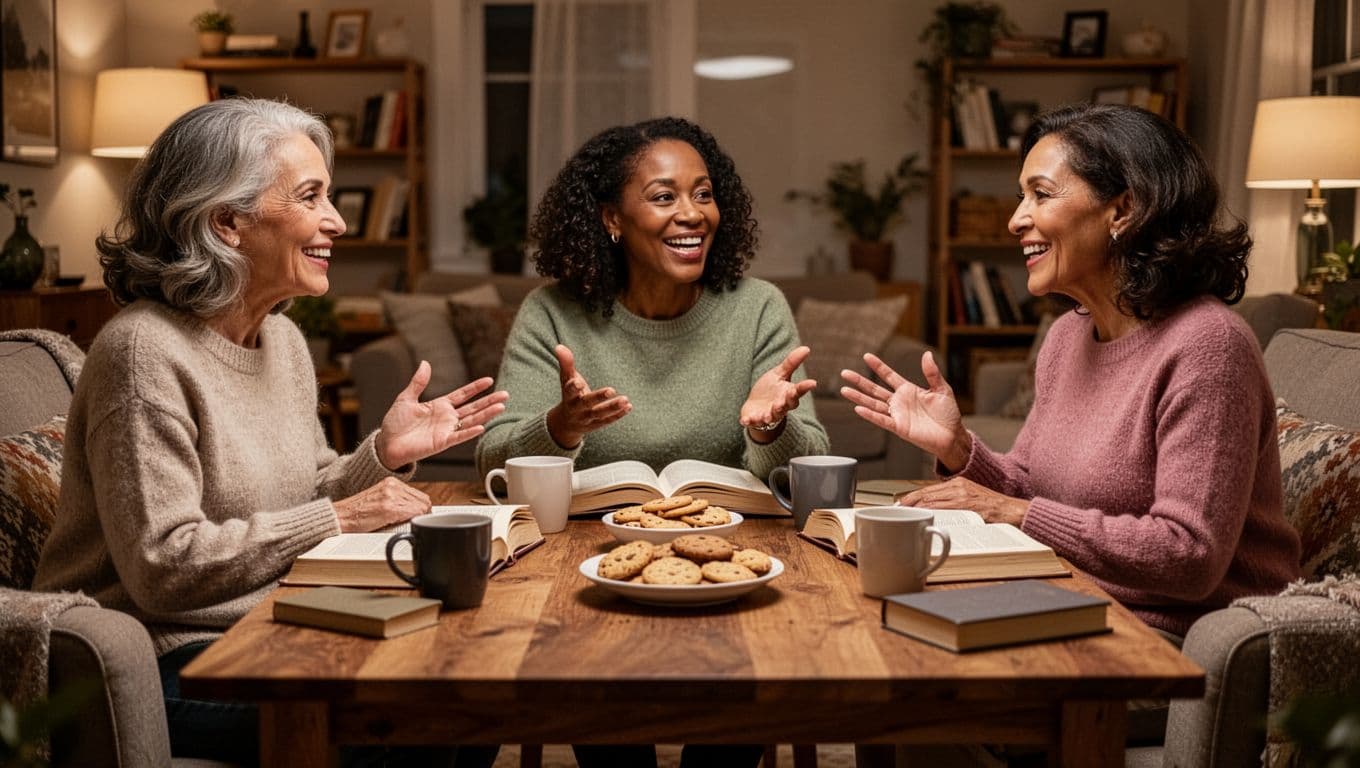 The kind of conversation-heavy reading experience upmarket books are built for
The ingredients that make upmarket women’s fiction feel different on the page
When I say a book feels like upmarket womens fiction, I’m talking about a specific blend I can almost sense in the first chapter. The story pulls me in with a premise that has teeth, but it doesn’t forget what it came here to do, put a real woman under real pressure, then make me care about who she becomes on the other side.
This is the “recipe” I notice again and again. It’s not about fancy language or trying to be impressive. It’s about tension + emotion + meaning, written in a way that’s easy to live inside.
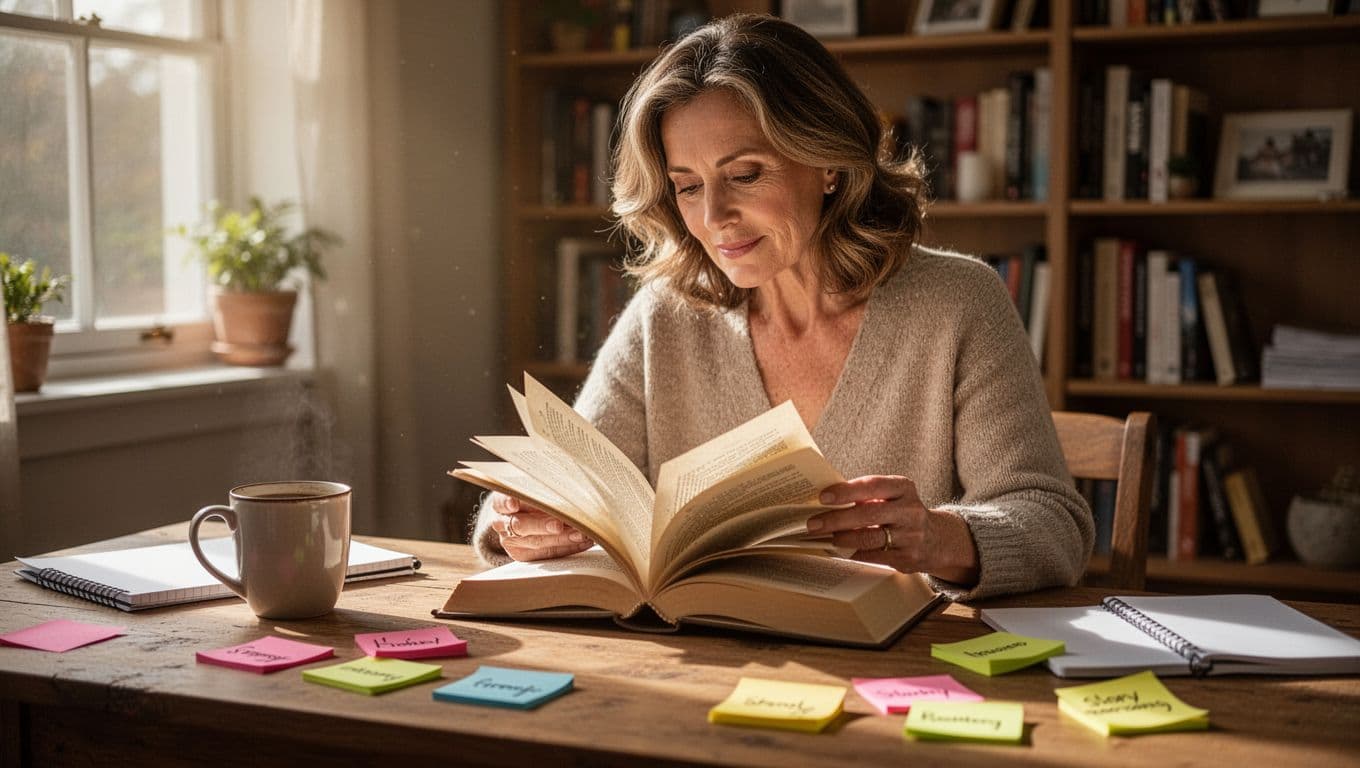 Story “ingredients” laid out like a working desk
A strong hook, but the heart of the story is still the character
The hook in upmarket women’s fiction usually hits fast, because the book still wants to be readable and hard to put down. The difference is that the hook is not the whole show. It’s a weight dropped into the heroine’s life, and we watch the ripples spread.
A hook in this space often looks like:
- A secret that won’t stay buried (and changes how she sees her family)
- A big life change (divorce, job loss, sudden move, empty nest)
- A scandal in a small community
- A missing person thread (not always a thriller, sometimes a “where did she go?” question)
- A wedding week gone wrong
- A retreat with strict rules and a social pressure-cooker vibe
- A family inheritance twist that forces old resentments into the light
I think of the hook as the book’s front door. It gets me inside. But once I’m in, the story turns into something more personal: Who is she when the plans collapse? What does she do when she can’t perform “fine” anymore?
Even tropes that show up a lot in romance, like an unplanned pregnancy, can slide into upmarket women’s fiction territory if the focus is the emotional aftermath, not just the setup. A surprise baby plot can absolutely be high-stakes, and you’ll see how well that pressure works as a catalyst in accidental or unexpected pregnancy romance stories. In upmarket, though, I’m not only tracking the logistics. I’m tracking the private spiral, the identity shift, the fear, the grief for the old life, and the slow, stubborn rebuilding.
That’s the core difference on the page: the hook isn’t a gimmick. It’s a vise that tightens until the heroine has to tell the truth.
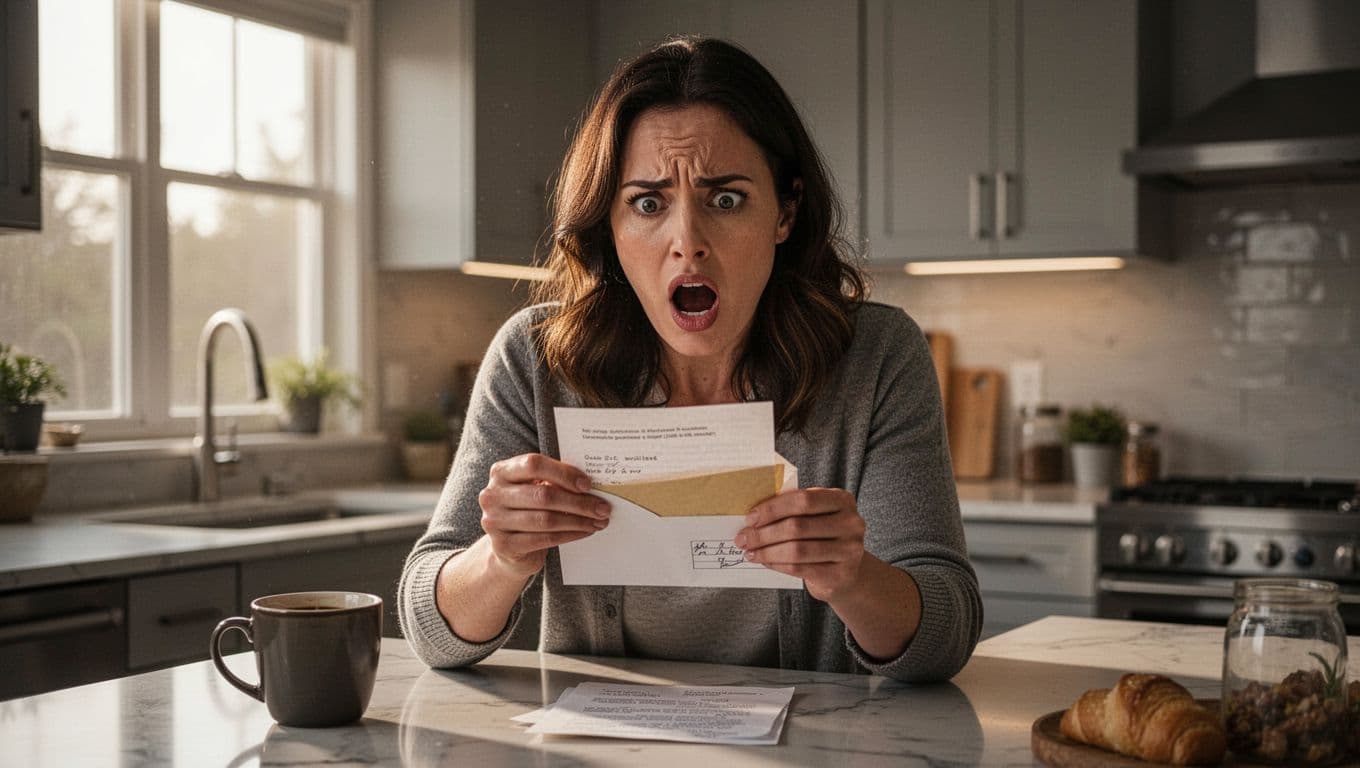 A hook moment, the kind that flips a character’s life sideways,
Theme and “meaning” without sounding like homework
Theme is the question the story keeps asking, even when no one says it out loud. It’s the undercurrent I feel in the quiet scenes, the ones that look ordinary but carry a punch. In upmarket womens fiction, theme is usually personal, emotional, and a little uncomfortable (in a good way).
The themes I see most often sound like:
- Who am I now? (after divorce, loss, motherhood, a mistake)
- What do I owe my family? (and what do I not owe them?)
- Can I forgive myself?
- What does “home” even mean?
- What happens when I stop being the “good” one?
- How do I want to be loved, and what will I no longer accept?
What makes this work is that the book doesn’t lecture. It tucks the theme into everyday moments. A phone call with a sister that turns sharp in two sentences. A parent’s health scare that forces the heroine to admit she’s been avoiding something for years. A career mistake that looks “fixable” on paper, but hits her self-worth like a bruise.
Sometimes it’s even smaller: she’s standing in the grocery store, staring at the cereal aisle, and realizing she’s been making choices for a version of her life that no longer exists.
That’s why book clubs eat this up. It gives people something to talk about that isn’t just “did you like it?” It becomes, “What would you do?” and “Have you ever felt that?” If you want a broader list of the big emotional threads that keep showing up, I collected them here: common themes and tropes in women’s fiction.
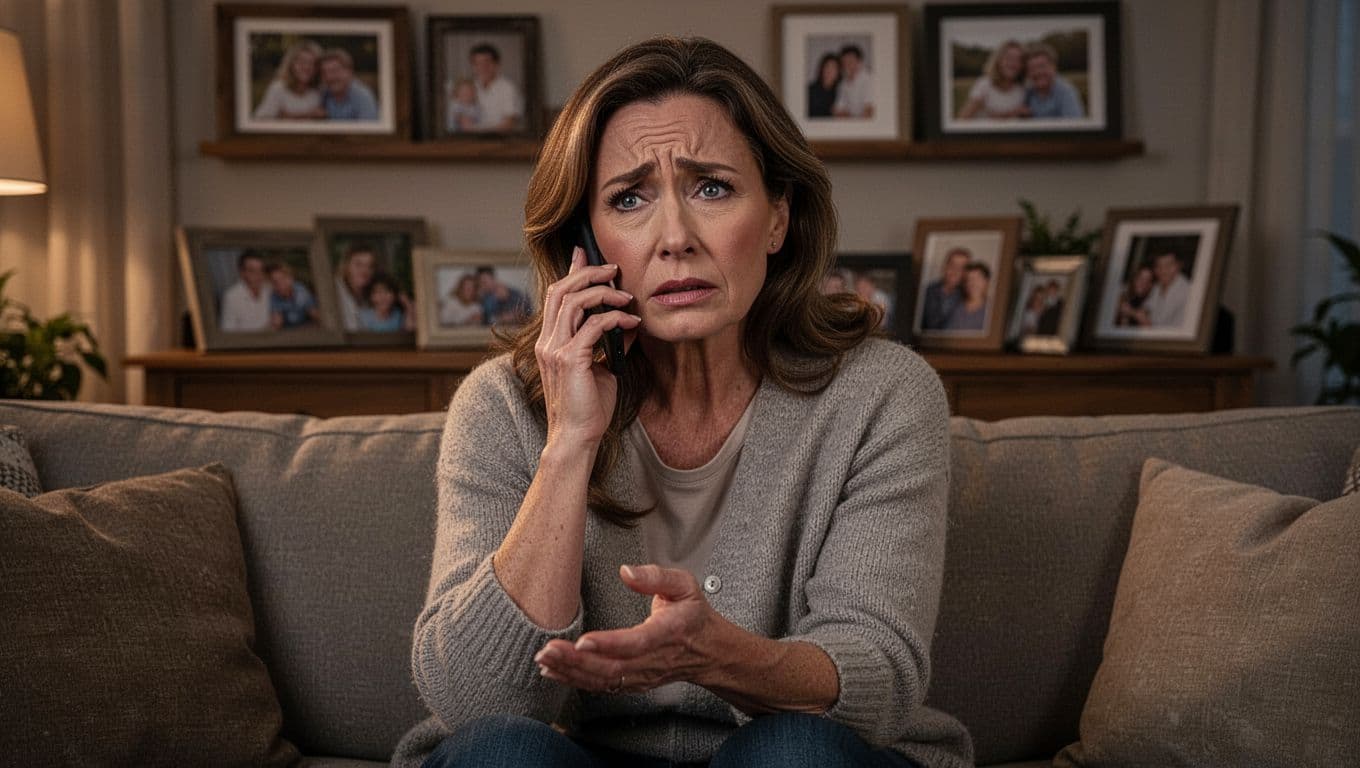 A theme-heavy moment in an everyday scene
The writing style: clean, vivid, and easy to keep reading
The “upmarket” feel is often something I notice before I can name it. The voice is confident. The sentences move. The dialogue sounds like people I know, not like a script trying to sound witty. And the details are specific enough to make the scene real, without drowning me in description.
Here’s what I mean when I say the style tends to be clean, vivid, and bingeable:
- Strong voice: I know who’s telling the story, and I trust her perspective (even when she’s wrong).
- Sensory detail in small doses: a smell, a texture, a tiny visual that sharpens the mood.
- Dialogue that sounds lived-in: interruptions, subtext, the things people say to avoid what they mean.
- Sentences that flow: not choppy and spare, not overly ornate, just smooth enough that I stop noticing the mechanics.
It’s not purple prose. Nobody is describing the “cerulean ache of heartbreak” for half a page. But it’s also not barebones. Upmarket women’s fiction still wants to give me a few well-placed lines that hit like a thumbprint on glass. Clear, intimate, impossible to ignore.
If I had to describe the reading experience without turning it into a genre lecture, I’d say it feels like this: a page-turner that still makes room for interior life. I get plot movement, but I also get emotional precision.
This is also why the heroines tend to stick. When the voice is sharp and human, I remember her like I remember a person. If you’re drawn to women who feel fully alive on the page, you’ll probably enjoy my roundup of strong female leads readers remember. Different shelf sometimes, same craving: a woman with agency, complexity, and a heartbeat.
 A clean, focused “voice on the page” vibe
Upmarket women’s fiction vs romance vs women’s fiction vs literary fiction
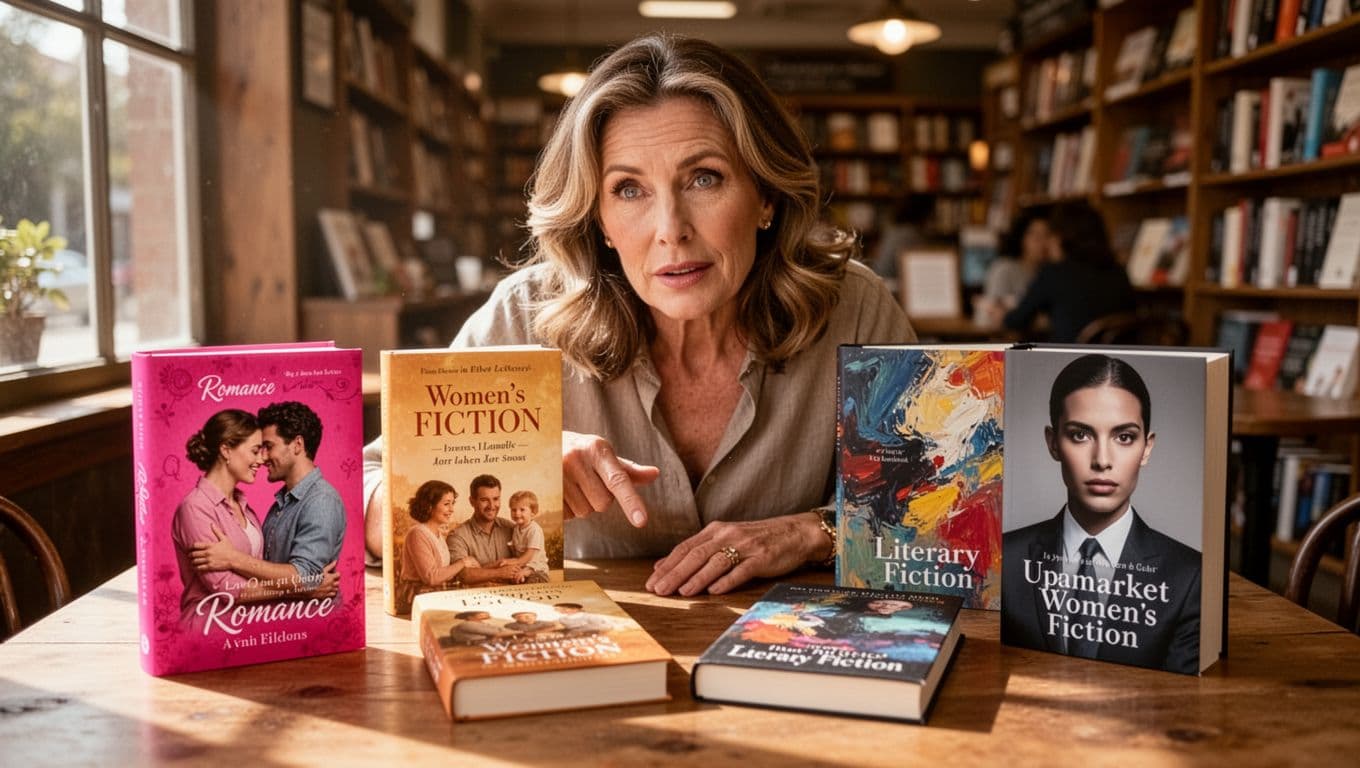 One reader, four “shelves,” and a lot of overlap
When I’m trying to sort out upmarket womens fiction vs romance vs women’s fiction vs literary fiction, I stop staring at the cover and start listening for the book’s core promise. What kind of emotional payoff is the story building toward? What question is it really asking?
These categories overlap on purpose. A book can be romantic and character-driven. It can be beautifully written and still fly through chapters. But each label signals something to readers, especially about what matters most, how the plot is shaped, and what kind of ending you’re being set up for.
How to tell if a book is romance or upmarket women’s fiction
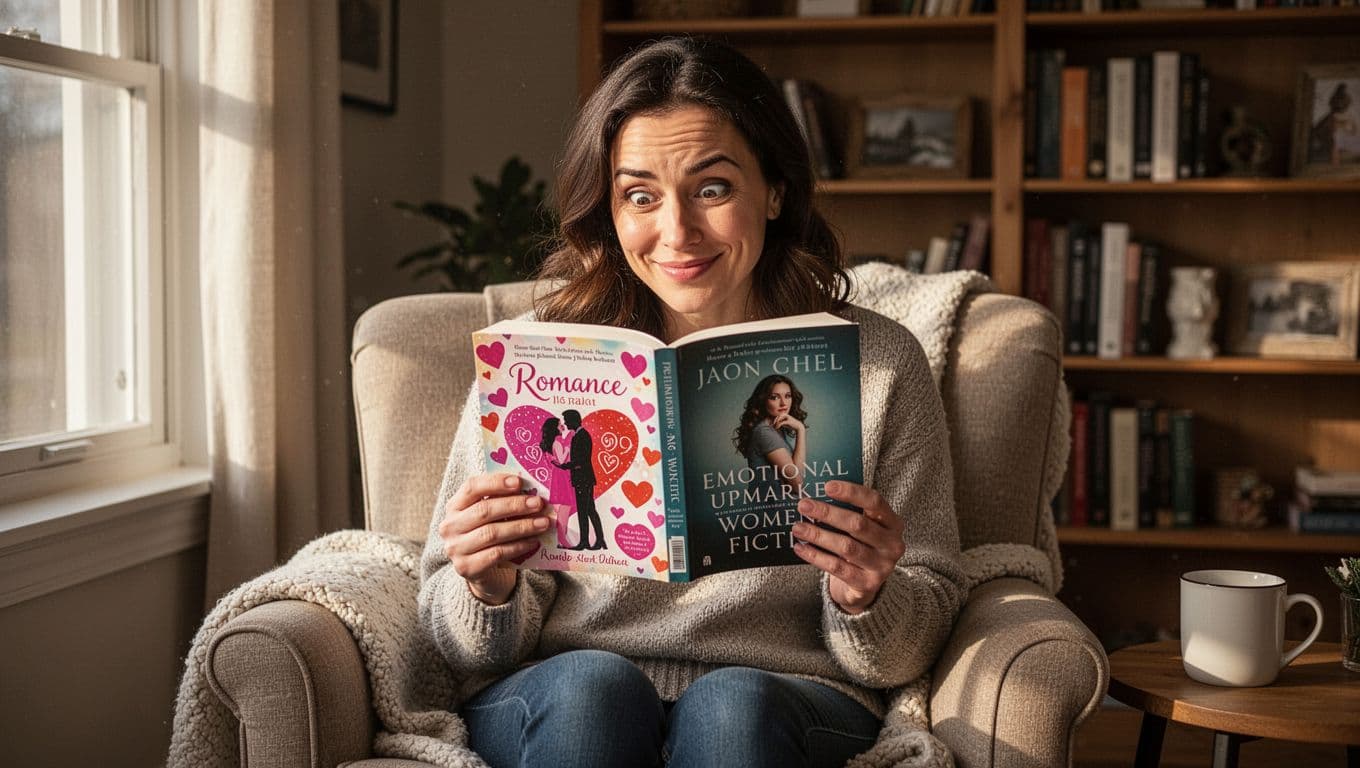 Comparing two story promises side by side
If you only remember one thing, remember this: romance is defined by the love story being the main event, and by the ending meeting a specific expectation.
Here’s the simple decision tree I use (and it works shockingly well):
- What is the main question of the book?
- If it’s “Will these two people end up together?” you’re probably in romance.
- If it’s “Who is she becoming, and what will she choose for her life?” you’re often in women’s fiction, including upmarket womens fiction.
- Is the love story the main payoff at the end?
- In romance, the emotional peak is the relationship commitment, reunion, or chosen partnership.
- Would the story still work if you removed the romance?
- If the whole structure collapses, that’s a romance spine.
- If the story still stands, and the romance is one strong thread among others, it’s more likely women’s fiction or upmarket.
This is where HEA/HFN matters. Romance readers often pick up a book expecting an HEA (happy ever after) or at least an HFN (happy for now). That expectation is not “picky,” it’s part of what makes romance feel safe and satisfying. If the ending doesn’t deliver that couple-based optimism, many romance readers feel like the book broke the promise.
If you decide you want romance-forward stories on purpose (especially with heroines who feel real on the page), this list is a fun place to start: 10 best romance books with plus-size FMCs.
Women’s fiction and upmarket women’s fiction: same family, different vibe
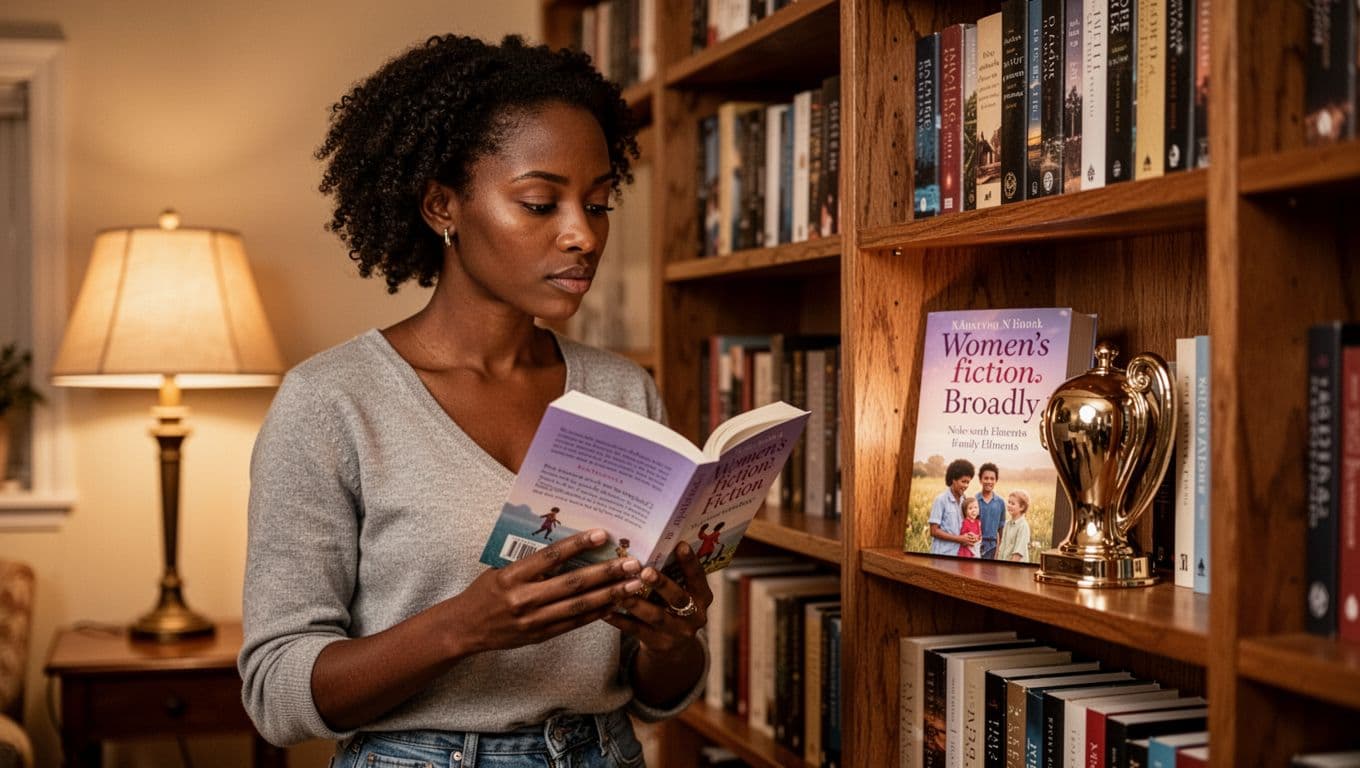 The “same shelf, different feel” moment
I think of women’s fiction as a big house with a lot of rooms. At its core, women’s fiction centers a woman’s emotional journey, usually through relationships (family, friendship, community, work, love, or all of the above). The point is not that men are absent, it’s that her inner change is the real plot engine.
So where does upmarket womens fiction fit?
To me, upmarket is women’s fiction with a more polished, talk-worthy feel. It still wants to be readable and emotionally direct, but it tends to bring:
- Cleaner, more intentional prose (without being showy)
- Sharper character work (more inner conflict, more layers)
- Themes that stick (the kind you want to argue about at book club)
Plenty of women’s fiction is upmarket. Some women’s fiction is more purely commercial, faster, lighter, and built for a pure comfort read. Both can be wonderful. I read both, depending on my mood, because sometimes I want a story that hugs me, and sometimes I want one that gently pokes the bruise.
If you’re hunting for character-led stories with range and representation, even when the shelf label shifts, I also love browsing lists like romance books with Black female leads. A strong, specific heroine can carry any category.
Literary vs upmarket: why one feels slower and the other feels snappier
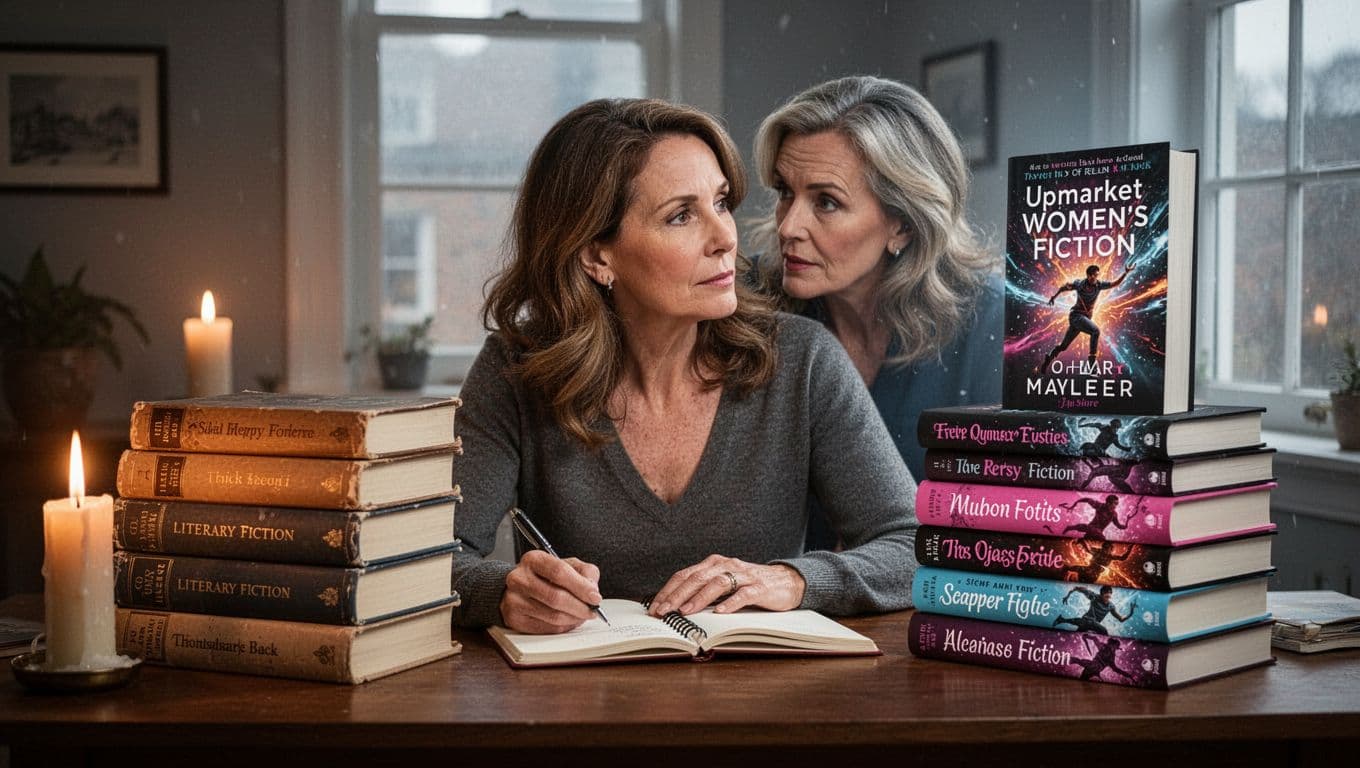 Two pacing styles, two kinds of satisfaction
When people ask me to explain literary vs upmarket, I usually talk about priority.
Literary fiction often prioritizes language, structure, and interior depth. It can take its time. It might be more comfortable with ambiguity, open endings, or a plot that feels like a slow walk instead of a sprint. The pleasure is in the sentences, the patterns, the meaning you notice on the second read.
Upmarket womens fiction still cares about craft, but it tends to keep momentum and clear stakes. It wants you to turn the page, and it usually frames the emotional question in a way that feels immediate and trackable. You can still get complex themes, but the story is more likely to feel like a moving current than a still pool.
Two quick “same theme, different handling” examples:
- Theme: A woman re-inventing herself after divorce
- Literary approach: the book might zoom in on memory, regret, and identity, with scenes that linger on small moments (a quiet kitchen, a voicemail she can’t delete). The question becomes, “Who was I inside that marriage, and what did I trade away?”
- Upmarket approach: the book might still hit those same emotions, but with a stronger external pressure (a sudden move, a career risk, a family crisis). The question becomes, “What am I going to do now, and what will it cost if I don’t change?”
- Theme: Grief and starting over
- Literary approach: the plot may be minimal, and the story may unfold in fragments or reflection-heavy chapters, where grief is the main weather of the book.
- Upmarket approach: grief is still central, but it often shares the stage with a driving situation (a secret uncovered, a decision deadline, a community conflict) that keeps the story taut.
Neither is “better.” They just scratch different reader itches. I reach for upmarket when I want depth and propulsion, and I reach for literary when I want to slow down and sit in the language.
If I’m shopping (or writing), here’s how I know this subgenre is for me
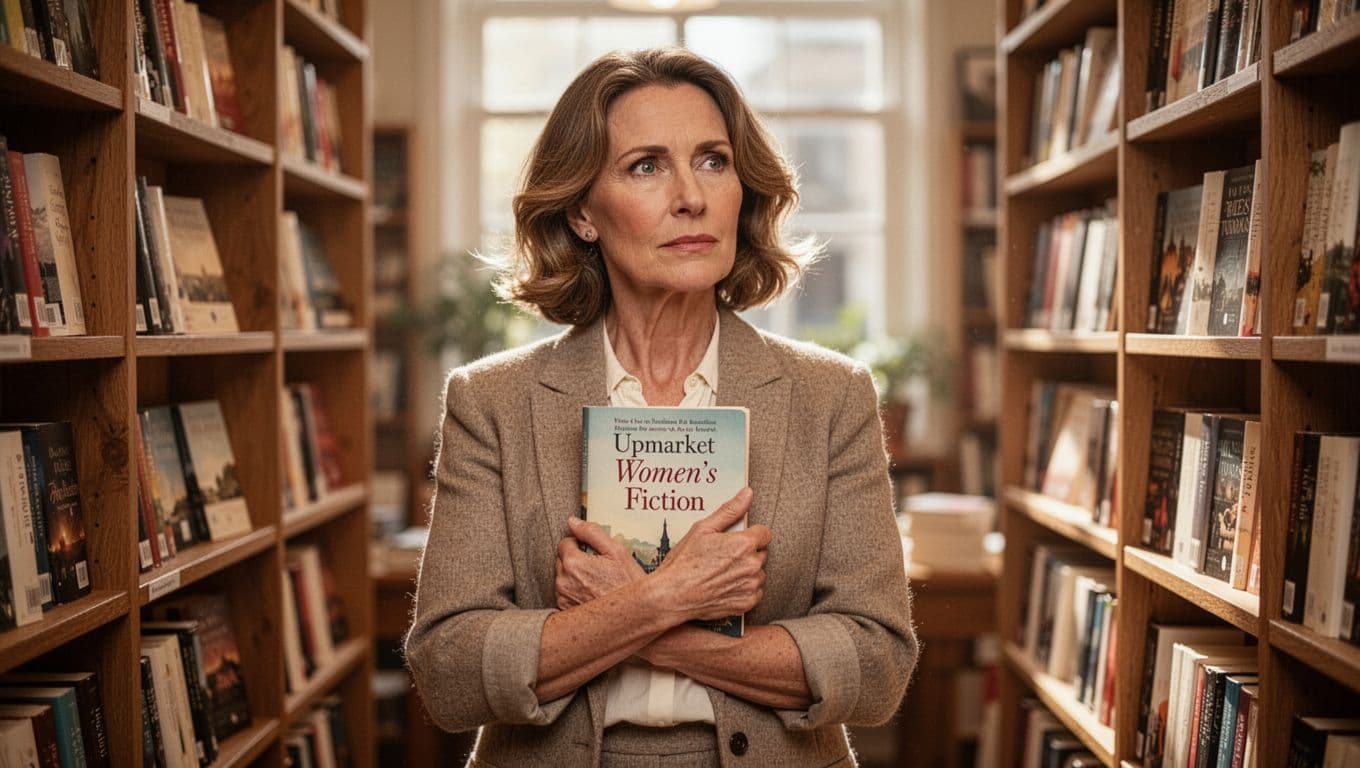 A reader deciding, in that familiar bookstore moment, what kind of story she wants
When I’m choosing my next read, I’m not only choosing a plot. I’m choosing how I want to feel for the next few hours (or days). That’s why upmarket womens fiction is such an easy yes for me when I want something that reads smoothly, hits me emotionally, and still has a point.
If you’ve ever finished a book and thought, “That was comforting, but it also made me look at my life a little differently,” you’re probably already circling this subgenre, even if the cover or the shelf label keeps trying to confuse you. And if you’re still sorting out the bigger category, it helps to anchor yourself in a simple definition like what is women’s fiction and then compare it against romance expectations in women’s fiction vs romance fiction.
Reader checklist: what mood does upmarket women’s fiction fit?
I reach for upmarket when I want a story that feels like real life, but with the emotional volume turned up just enough. If you’re wondering whether this is your lane, here’s the quick mood check I use.
- I want a tearjerker with hope, not misery for misery’s sake (the kind of healing that shows up in beach-town fresh-start stories as therapy).
- I want family secrets that change how the heroine sees herself, not just a twist thrown in for noise (I’m thinking of the “why did nobody tell me?” themes).
- I want friendship and found family, where the side characters matter and the community feels like part of the cure (the same cozy comfort I associate with beach read therapy kits for women’s fiction fans).
- I want a page-turner that still makes me think, with real consequences and adult choices.
- I want romance as a thread, not the whole rope, meaning love can be present, but the heroine’s identity shift is the real payoff.
- I want a heroine who feels like a grown woman, someone with blind spots, pride, tenderness, and grit.
- I want emotional complexity, where she can be strong and messy at the same time (I love the way this is framed in why readers crave emotionally complex strong heroines and also in can a soft gentle woman still be a strong heroine?).
- I want an ending that feels earned, even if it’s bittersweet, because the truth landed
If you’re someone who reads lighter romance as comfort food (same), my gentle suggestion is this: try one upmarket pick in between. Think of it like a richer dessert, not heavier, just more satisfying.
Writer checklist: the three promises I try to keep
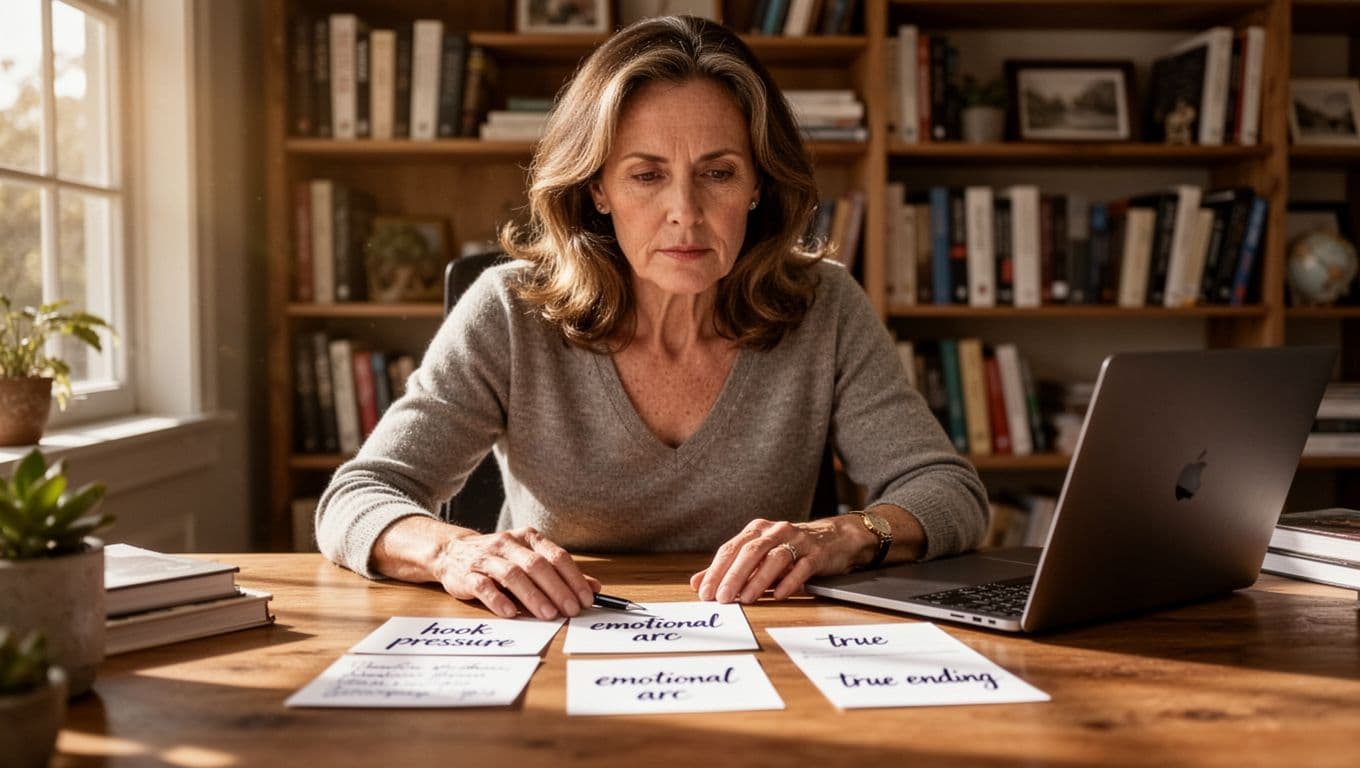 A writer sanity-checking the story promises that make this subgenre work
When I’m writing upmarket womens fiction, I’m always thinking in terms of promises. Not rules, not formulas, just the quiet agreements I’m making with the reader the moment she buys the book (or downloads the sample).
Here are the three promises I try hard to keep.
- I promise a hook that creates pressure early.
I don’t mean car chases or explosions. I mean emotional pressure, the kind that shows up as a question the heroine cannot avoid. Something is off-balance by page one or two, and she’s going to have to respond. When I forget this, the story starts to feel “nice,” but not urgent. It’s one of the fastest ways to end up with too much backstory up top, when what the reader really wants is the first domino to fall. - I promise an emotional arc that changes the heroine.
This is the heart of it. The point is not that her life changes, it’s that she changes. Maybe her standards shift. Maybe she finally tells the truth. Maybe she stops performing “fine.” The common pitfall here is a theme that’s preached instead of shown. If I find myself writing paragraphs that “explain the message,” I know I’m in trouble. The message should come from what she does under pressure, not what the narration lectures. - I promise a satisfying ending that feels true (not necessarily perfect).
In upmarket, I want closure that matches the story’s emotional honesty. Loose ends get tied where it matters, and the ending pays off the inner shift. Sometimes love is part of that, sometimes it isn’t, but the reader should feel like she arrived somewhere real. I also watch for the opposite pitfall here: not enough plot engine. If the book is only feelings with no forward motion, the ending can feel like it stops instead of lands. I keep this in mind even when I’m thinking about romance expectations, because romance readers are often trained to look for the “contract” of emotional payoff (it’s explored so well in how romance fiction influences our expectations of real love). Upmarket doesn’t always promise an HEA, but it does promise meaning.
When I hit all three promises, the book tends to sit in that sweet spot, readable, emotional, and still worth talking about afterward.
Conclusion
Upmarket womens fiction is the sweet spot I reach for when I want a story that reads smoothly, still has teeth, and leaves me with a quiet ache of recognition. It gives me a strong hook and real momentum, but the real payoff is the heroine, her choices, her blind spots, and the inner shift that feels honest when the last page turns.
I also don’t treat labels like law. They’re just tools that help me find the right reading mood faster, especially when covers and blurbs try to sell the same book three different ways. If the writing feels polished, the relationships matter, and the ending lands with truth, I’m usually in the right place.
Next time I want something meaningful but still bingeable, I grab one upmarket pick, or I use that quick yes or no test from earlier while I sample the first pages.
Thanks for reading. What kind of heroine stays in my head the longest, the one who breaks, or the one who finally stops pretending she’s fine?


